SEMrush vs Ahrefs vs Moz: SEO Tool Comparison

As you strive to optimize your website for search engines, you're likely to encounter a multitude of tools designed to aid in your quest for better rankings and increased traffic. Among these tools, SEMrush, Ahrefs, and Moz stand out as industry leaders, each offering a unique set of features and c
The Lankawebsites editorial team curates, fact-checks, and updates guides on personal finance, property, health, immigration, legal, business, and lifestyle topics relevant to Lankawebsites readers. Articles are produced with AI assistance and reviewed by the editorial team before publication.
As you strive to optimize your website for search engines, you're likely to encounter a multitude of tools designed to aid in your quest for better rankings and increased traffic. Among these tools, SEMrush, Ahrefs, and Moz stand out as industry leaders, each offering a unique set of features and capabilities. But how do you choose the right tool for your needs? In this article, you'll gain a deeper understanding of each tool's strengths and weaknesses, allowing you to make an informed decision that aligns with your SEO goals. By the end of this comparison, you'll be equipped with the knowledge to select the tool that best suits your strategy, whether you're a seasoned SEO expert or just starting to explore the world of search engine optimization.
Your choice of SEO tool can significantly impact your website's performance, influencing everything from keyword research and technical audits to backlink analysis and content creation. With the right tool, you can uncover hidden opportunities, rectify existing issues, and ultimately drive more traffic to your site. On the other hand, the wrong tool can lead to wasted resources, missed opportunities, and a lack of progress toward your goals. By understanding the nuances of each tool, you'll be better positioned to avoid common pitfalls and maximize your return on investment.
Introduction to SEO Tools
SEMrush, Ahrefs, and Moz are three of the most popular SEO tools on the market, each with its own set of features and specialties. SEMrush is known for its comprehensive audits and technical SEO capabilities, offering insights into website performance, backlink profiles, and competitor analysis. Ahrefs, on the other hand, excels in keyword research and backlink analysis, providing users with a vast database of keywords, content ideas, and link building opportunities. Moz, meanwhile, focuses on keyword research, link building, and content optimization, with a strong emphasis on user-friendly interfaces and accessible data.
When evaluating these tools, it's essential to consider your specific needs and goals. For example, if you're looking to improve your website's technical SEO, SEMrush might be the best choice, thanks to its advanced auditing and crawling capabilities. On the other hand, if you're focused on keyword research and content creation, Ahrefs or Moz might be a better fit. By understanding the strengths and weaknesses of each tool, you can make a more informed decision and avoid wasting resources on features you don't need.
A key consideration when choosing an SEO tool is the level of support and resources provided. All three tools offer extensive documentation, tutorials, and customer support, but some may be more suited to your learning style or preferences. For instance, SEMrush offers a wide range of webinars and training sessions, while Ahrefs provides an extensive blog and community forum. Moz, meanwhile, focuses on user-friendly interfaces and intuitive design, making it easier for beginners to get started.

Keyword Research and Planning
Keyword research is a critical component of any SEO strategy, and each of these tools offers unique capabilities in this area. Ahrefs, for example, provides an vast database of keywords, with advanced filtering and sorting options to help you identify the most relevant and high-potential terms. SEMrush, meanwhile, offers a keyword magic tool that allows you to analyze competitor keywords, identify gaps in your content, and uncover new opportunities. Moz, with its keyword explorer tool, provides a more user-friendly interface for keyword research, with features like keyword lists and prioritization.
When it comes to keyword planning, it's essential to consider your target audience, content strategy, and business goals. By using these tools in conjunction with your existing knowledge and expertise, you can develop a comprehensive keyword strategy that drives real results. For instance, you might use Ahrefs to identify high-potential keywords, then use SEMrush to analyze your competitors and identify gaps in your content. Finally, you could use Moz to prioritize your keywords and develop a content calendar that aligns with your business objectives.
A common mistake to avoid in keyword research is relying too heavily on generic, high-competition terms. Instead, focus on long-tail keywords and phrases that are more specific to your niche or industry. By targeting these terms, you can reduce competition, increase your chances of ranking, and drive more targeted traffic to your site. For example, instead of targeting the term "SEO tools," you might focus on "best SEO tools for small businesses" or "SEO tools for e-commerce websites."
Technical SEO and Auditing
Technical SEO is a critical component of any website's performance, and these tools offer a range of features to help you identify and rectify technical issues. SEMrush, with its advanced auditing capabilities, allows you to crawl your website, identify technical errors, and prioritize fixes based on potential impact. Ahrefs, meanwhile, offers a site audit tool that provides insights into website performance, mobile usability, and page speed. Moz, with its site crawl tool, provides a more user-friendly interface for technical audits, with features like crawl scheduling and custom alerts.
When it comes to technical SEO, it's essential to consider the nuances of your website's architecture, content, and user experience. By using these tools to identify technical issues, you can improve your website's crawlability, reduce errors, and enhance overall performance. For instance, you might use SEMrush to identify duplicate content issues, then use Ahrefs to analyze your website's internal linking structure and identify opportunities for improvement.
A key consideration in technical SEO is the importance of ongoing monitoring and maintenance. By scheduling regular audits and crawls, you can stay on top of technical issues, identify potential problems before they become major concerns, and ensure your website remains optimized for search engines. For example, you might set up a monthly crawl schedule with SEMrush, then use Ahrefs to analyze your website's performance and identify areas for improvement.
Backlink Analysis and Building
Backlinks are a critical component of any SEO strategy, and these tools offer a range of features to help you analyze and build high-quality links. Ahrefs, with its vast database of backlinks, provides insights into your website's link profile, including anchor text, link equity, and competitor analysis. SEMrush, meanwhile, offers a backlink analytics tool that allows you to analyze your website's link profile, identify potential issues, and develop a link building strategy. Moz, with its link explorer tool, provides a more user-friendly interface for backlink analysis, with features like link lists and prioritization.
When it comes to backlink building, it's essential to consider the quality and relevance of your links, rather than simply focusing on quantity. By using these tools to analyze your link profile and identify opportunities, you can develop a targeted link building strategy that drives real results. For instance, you might use Ahrefs to identify high-authority domains in your niche, then use SEMrush to analyze your competitors' link profiles and identify gaps in your own link building efforts.
A common mistake to avoid in backlink building is relying too heavily on low-quality or spammy links. Instead, focus on building high-quality, relevant links from authoritative domains, and prioritize link diversity and equity. By doing so, you can improve your website's link profile, increase your chances of ranking, and drive more targeted traffic to your site. For example, you might focus on building links from industry-specific directories, resource pages, or guest blogging opportunities.
Content Optimization and Creation
Content optimization and creation are critical components of any SEO strategy, and these tools offer a range of features to help you develop and refine your content. SEMrush, with its content analyzer tool, allows you to analyze your content's performance, identify gaps in your content strategy, and develop a content calendar that aligns with your business objectives. Ahrefs, meanwhile, offers a content gap tool that helps you identify content opportunities, develop a content strategy, and prioritize your content creation efforts. Moz, with its content optimizer tool, provides a more user-friendly interface for content optimization, with features like content scoring and recommendations.
When it comes to content creation, it's essential to consider your target audience, content strategy, and business goals. By using these tools to analyze your content's performance and identify opportunities, you can develop a comprehensive content strategy that drives real results. For instance, you might use SEMrush to analyze your content's performance, then use Ahrefs to identify content gaps and develop a content calendar that aligns with your business objectives.
A key consideration in content optimization is the importance of ongoing refinement and improvement. By regularly analyzing your content's performance, identifying areas for improvement, and refining your content strategy, you can ensure your content remains optimized for search engines and resonates with your target audience. For example, you might use Moz to analyze your content's performance, then use SEMrush to identify opportunities for improvement and develop a content refinement strategy.
Pricing and Plans Comparison
When it comes to pricing and plans, each of these tools offers a range of options to suit different budgets and needs. SEMrush, for example, offers a basic plan starting at $99.95 per month, with more advanced plans available for $199.95 and $449.95 per month. Ahrefs, meanwhile, offers a basic plan starting at $99 per month, with more advanced plans available for $179 and $999 per month. Moz, with its standard plan starting at $99 per month, offers more advanced plans for $179 and $249 per month.
When evaluating the pricing and plans of these tools, it's essential to consider your specific needs and goals. By understanding the features and capabilities of each tool, you can make a more informed decision and choose the plan that best aligns with your budget and objectives. For instance, if you're a small business or solo entrepreneur, you might opt for a basic plan with SEMrush or Ahrefs, while larger enterprises might require more advanced plans with additional features and support.
A key consideration when choosing a plan is the importance of scalability and flexibility. By selecting a tool with a range of plans and pricing options, you can ensure you have the flexibility to upgrade or downgrade as needed, without being locked into a rigid contract or pricing structure. For example, you might start with a basic plan with SEMrush, then upgrade to a more advanced plan as your business grows and your needs evolve.
Key Takeaways
In conclusion, the choice between SEMrush, Ahrefs, and Moz ultimately depends on your specific needs and goals. By understanding the strengths and weaknesses of each tool, you can make a more informed decision and choose the tool that best aligns with your SEO strategy. Remember to consider your budget, target audience, and content strategy when evaluating these tools, and don't be afraid to experiment and try out different options to find the one that works best for you.
As you move forward with your SEO journey, keep in mind the importance of ongoing learning, adaptation, and refinement. The world of SEO is constantly evolving, and the tools and strategies that work today may not be effective tomorrow. By staying up-to-date with the latest trends, best practices, and tool updates, you can ensure your website remains optimized for search engines and continues to drive real results for your business. So, what's the next step in your SEO journey, and which tool will you choose to help you get there?
Frequently Asked Questions
Related Articles

Canva vs Figma: Design Tool Comparison
Are you tired of struggling to create professional-looking designs without extensive experience in graphic design? You're not alone. Many individuals and businesses face the challenge of producing high-quality visual content without breaking the bank or spending countless hours learning complex des

Project Management Tools: Asana vs Monday.com vs Clickup
A staggering 77% of high-performing projects use project management software, according to a report by the Project Management Institute. If you're looking to boost your team's productivity and collaboration, you're likely considering investing in a project management tool. With numerous options ava

Video Conferencing: Zoom vs Microsoft Teams vs Google Meet
Imagine being able to connect with your team or clients from anywhere in the world, without having to worry about the hassle and expense of traveling. With video conferencing, you can do just that. As someone who's used video conferencing tools for years, I think it's amazing how much they've impro
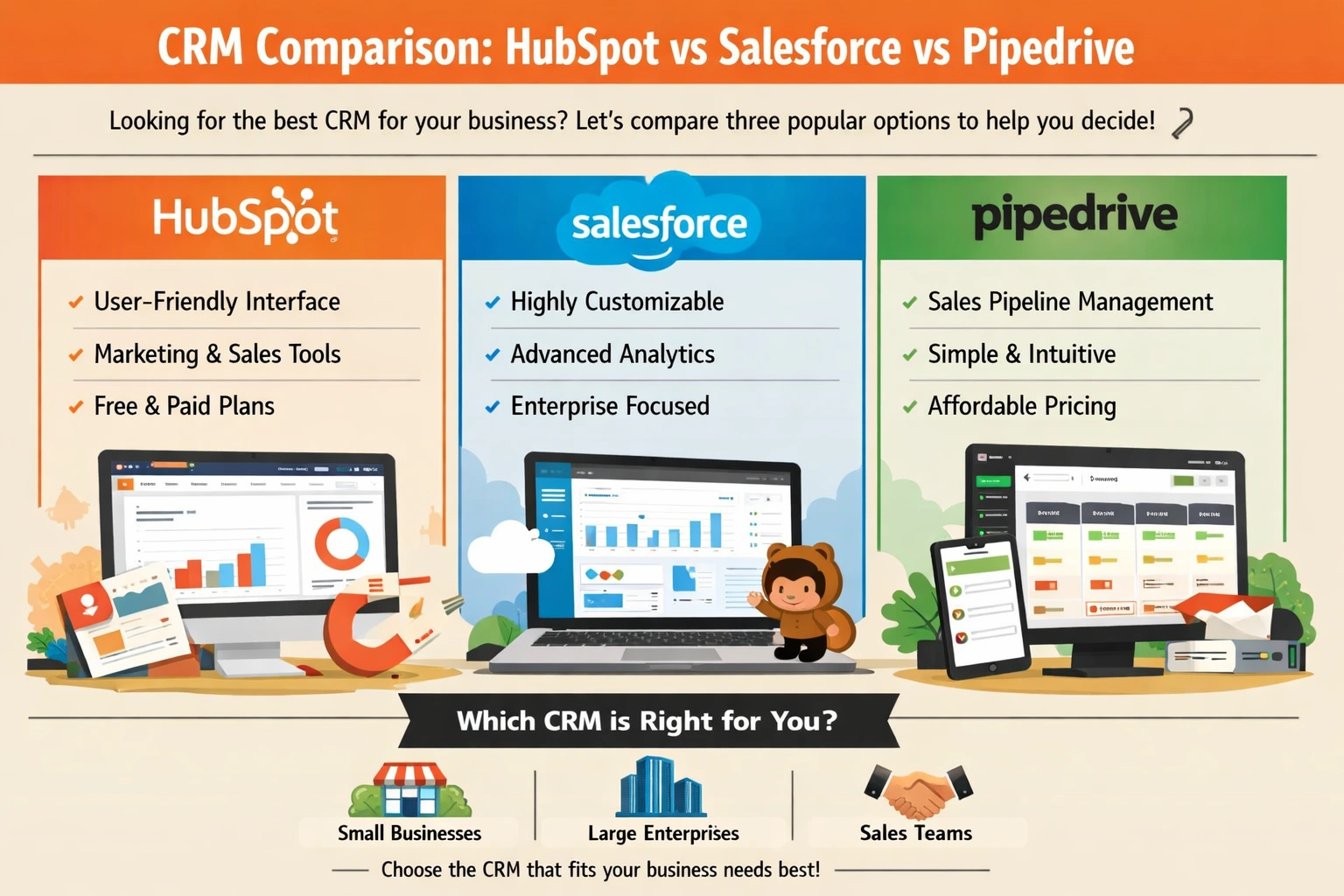
CRM Comparison: HubSpot vs Salesforce vs Pipedrive
You're sitting at your desk, staring at a pile of business cards, notes, and spreadsheets, trying to make sense of your customer interactions. You know that managing your relationships with customers is key to growing your business, but it's getting increasingly difficult to keep track of everythi