Freelancing for Local SMEs: How to Find & Serve Sri Lankan Small Businesses
Imagine turning your freelance skills into a steady stream of local clients right here in Sri Lanka—helping small tea shops in Nuwara Eliya build websites or apparel makers in Katunayake run targeted
The Lankawebsites editorial team curates, fact-checks, and updates guides on personal finance, property, health, immigration, legal, business, and lifestyle topics relevant to Lankawebsites readers. Articles are produced with AI assistance and reviewed by the editorial team before publication.
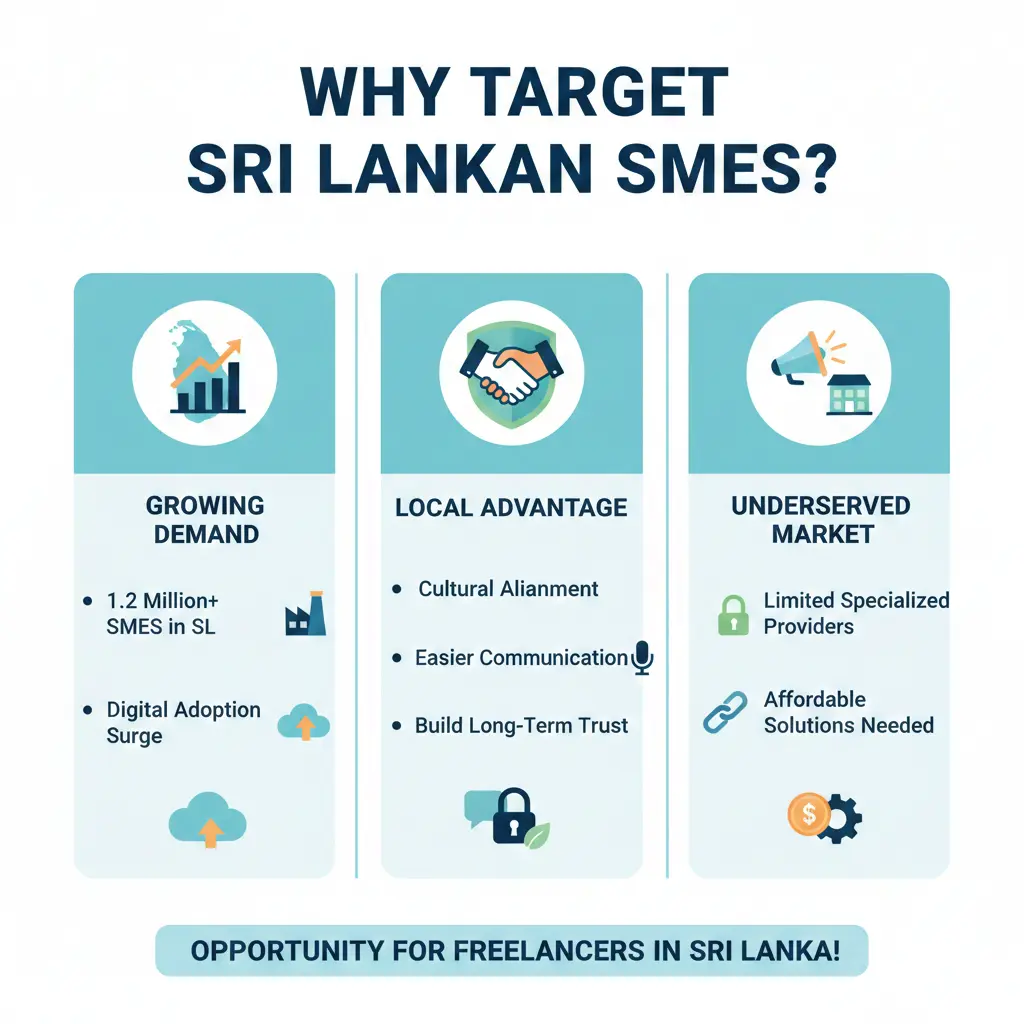
Imagine turning your freelance skills into a steady stream of local clients right here in Sri Lanka—helping small tea shops in Nuwara Eliya build websites or apparel makers in Katunayake run targeted Facebook ads. With SMEs making up over 75% of our businesses, contributing 52% to GDP and employing 45% of the workforce, there's massive untapped demand for services like website development, digital marketing, and digitisation. If you're a freelancer eyeing SME freelance opportunities with local clients and small businesses, this guide shows you how to find and serve them effectively in 2026.
Why Target Sri Lankan SMEs as a Freelancer?
Our local small business scene is ripe for service providers. SMEs dominate Sri Lanka's economy but many still lag in digital adoption—most Colombo, Gampaha, and Kandy businesses spend under 5% of their marketing budget on digital tools, leaving huge gaps you can fill. Digital transformation is now the top growth driver for South Asian SMEs, including ours, with governments pushing online business registration, taxes, and fintech access.
Freelancing for SMEs means steady, repeat work. A boutique in Galle might need a one-off website, but they'll come back for SEO, social media management, and e-commerce tweaks. Plus, with self-employment at 41.81% of total employment in 2023 (and holding steady), you're joining a familiar path for many Sri Lankans. In 2026, as economic recovery accelerates, SMEs crave affordable digitisation to compete—think WhatsApp commerce driving 25%+ of online sales.
Sri Lanka-Specific Opportunities in Website, Ads, and Digitisation
- Websites: Over 70% mobile penetration means responsive sites are essential. Help SMEs shift from Facebook pages to professional sites using free tools like WordPress.
- Ads: Local platforms like Facebook and Instagram dominate; teach SMEs Google Ads for export products like tea or spices.
- Digitisation: From cloud accounting to AI customer tools, SMEs need help going digital amid government pushes via the Ministry of Industries.
How to Find Local SME Clients in Sri Lanka
Finding local clients starts local. Skip global platforms like Upwork—focus on networks where Sri Lankan small businesses hang out.
Leverage Local Networks and Directories
Join chambers like the Ceylon Chamber of Commerce or regional ones in Kandy and Jaffna. Attend SME fairs organised by the Export Development Board (EDB)—they're goldmines for leads. Use free directories:
- Google My Business: List yourself as a SME freelance expert.
- Yellow Pages Sri Lanka or LankaPages.info for small business contacts.
- Facebook Groups like "Sri Lanka Small Business Network" (over 50k members).
Practical tip: Cold-email 10 SMEs daily from ikman.lk listings. Offer a free 30-minute audit: "I'll review your online presence and spot three quick wins."
Use Digital Ads and Social Media for Targeted Outreach
Run your own Facebook Ads geo-targeted to business owners in Colombo or Matara. Budget LKR 5,000 for a week—target "business owners" interested in "digital marketing Sri Lanka." WhatsApp Business lists are booming; build one by sharing value-first content like "5 Free Ways to Digitise Your SME in 2026."
In 2026, social commerce via WhatsApp drives impulse buys—mirror this by offering SME packages: Website + Ads Setup for LKR 50,000.
Partner with Local Ecosystems
Team up with accountants or microfinance lenders who serve SMEs. The planned National Credit Guarantee Institute will boost SME finance access, creating ripple demand for your services. Approach ICTA (Information and Communication Technology Agency) training programmes—they connect freelancers with SMEs needing digitisation.
Services to Offer: Tailored for Sri Lankan Small Businesses
Focus on high-impact, low-cost services. Sri Lankan SMEs face credit constraints—highest in the region per IFC data—so pitch quick ROI like "Double your leads in 30 days."
Website Development for SMEs
Build simple, mobile-first sites. Use local hosting like LankaHost (affordable at LKR 1,500/year). Integrate Dialog or Mobitel payments for e-commerce. Example: A Kandy spice exporter went from zero online sales to LKR 200,000/month after a LKR 30,000 site.
Actionable package: Basic site (5 pages) + domain for LKR 25,000. Upsell maintenance at LKR 2,000/month.
Digital Ads Management
Manage Facebook/Google Ads with local twists—target Sinhala/Tamil keywords like "ගම්මාන බඩු" (village goods). 2026 trends: Video ads on TikTok for youth-owned SMEs. Track with free Google Analytics.
Charge LKR 10,000 setup + 15% ad spend. Comply with Data Protection Act No. 9 of 2022 for client data.
Digitisation and Tech Upgrades
Help with cloud tools (Google Workspace, LKR 600/user/month), inventory apps, or AI chatbots for WhatsApp. Government's National SME Policy Framework pushes this—align your pitches.
| Service | Price Range (LKR) | Target SME Type |
|---|---|---|
| Website Build | 25,000 - 75,000 | Retail, Services |
| Ads Management | 10,000 + 15% spend | Exports, Food |
| Digitisation Audit | 15,000 | All SMEs |
Pricing, Contracts, and Legal Tips for Sri Lankan Freelancers
Price competitively: LKR 20,000-100,000 per project. Use 50% upfront to combat payment delays common in SMEs.
Contracts: Simple agreements via DocuSign. Include milestones, IP rights, and termination per Commercial High Court guidelines. Register as sole proprietor via Registrar of Companies (ROC) for LKR 5,000—unlocks bank loans.
Taxes: Report freelance income via IRD's e-Tax system. Deduct expenses like internet (Dialog fibre at LKR 3,000/month). Microfinance Act updates in 2026 mean better SME funding—your clients will have cash flow.
Overcoming Common Challenges
- Payment Issues: Use bank transfers or PayHere. Offer instalments.
- Skill Gaps: Free upskill via ICTA courses or Coursera (Google Digital Garage).
- Competition: Niche in local languages or regions like Eastern Province.
Next Steps to Land Your First SME Client
1. Build your portfolio site today (use free GitHub Pages).
2. List services on Google My Business. 3. Reach out to 20 local SMEs this week with a free audit offer. 4. Join a Facebook SME group and share one tip daily. 5. Track progress—aim for your first LKR 25,000 project in 30 days.Start small, deliver big, and watch your SME freelance business grow with Sri Lanka's vibrant small business ecosystem. We're here to help local freelancers thrive—contact Lanka Websites for your own site build.
Frequently Asked Questions
Sources & References
-
1
SME in Sri Lanka: Small and Medium-sized Enterprises (SMEs) of Sri Lanka — www.freiheit.org
-
2
Sri Lanka - Self-employed; Total (% Of Total Employed) — tradingeconomics.com
-
3
Digital Marketing Trends in Sri Lanka for 2026 — www.lankawebsites.com
-
4
Top SME Development Factors Shaping South Asia’s Business Landscape in 2026 — www.worldsmeindex.uk
-
5
Creating Markets in Sri Lanka (IFC Report) — www.ifc.org
Related Articles

How Much Can Sri Lankan Freelancers Earn? Real Income Data & Salary Benchmarks 2026
Imagine ditching the 9-to-5 grind in Colombo traffic for the flexibility of working from a Kandy café, earning dollars while sipping tea. That's the reality for thousands of Sri Lankan freelancers in

Content Creation Freelancing in Sri Lanka: YouTube, TikTok & Short-Form Video Income
Imagine turning your smartphone into a steady income stream right here in Sri Lanka, creating short videos for YouTube Shorts, TikTok, and Instagram Reels that brands and creators can't get enough of

LinkedIn for Freelancers: How Sri Lankan Professionals Land Clients & Build Personal Brand
Imagine turning your smartphone into a global office where Sri Lankan freelancers like you connect with clients from Colombo to California, all without leaving home. With LinkedIn's user base in Sri L

Earning USD as a Freelancer in Sri Lanka: Currency, Payments & Tax Guide 2026
Imagine landing that dream gig on Upwork or Fiverr, delivering top-notch work, and watching **USD roll into your account** while the LKR fluctuates. For us in Sri Lanka, earning in **foreign currency*