Freelance Translation & Localization: Sinhala-English & Regional Language Opportunities 2026

Imagine turning your fluency in Sinhala, Tamil, or English into a steady income stream from home, helping global companies reach Sri Lankan audiences while tapping into booming export markets. In 2026
The Lankawebsites editorial team curates, fact-checks, and updates guides on personal finance, property, health, immigration, legal, business, and lifestyle topics relevant to Lankawebsites readers. Articles are produced with AI assistance and reviewed by the editorial team before publication.
Imagine turning your fluency in Sinhala, Tamil, or English into a steady income stream from home, helping global companies reach Sri Lankan audiences while tapping into booming export markets. In 2026, with Sri Lanka's digital economy growing at 15% annually, freelance translation and localization offers locals a niche edge—leveraging our multilingual heritage to serve international businesses eyeing our 22 million population.
Whether you're bilingual from school or work experience, platforms like Upwork and Truelancer are connecting Sri Lankan freelancers with high-paying gigs in Sinhala translation, app localization, and more. This guide breaks down how to get started, thrive, and navigate local realities like tax rules and payment gateways.
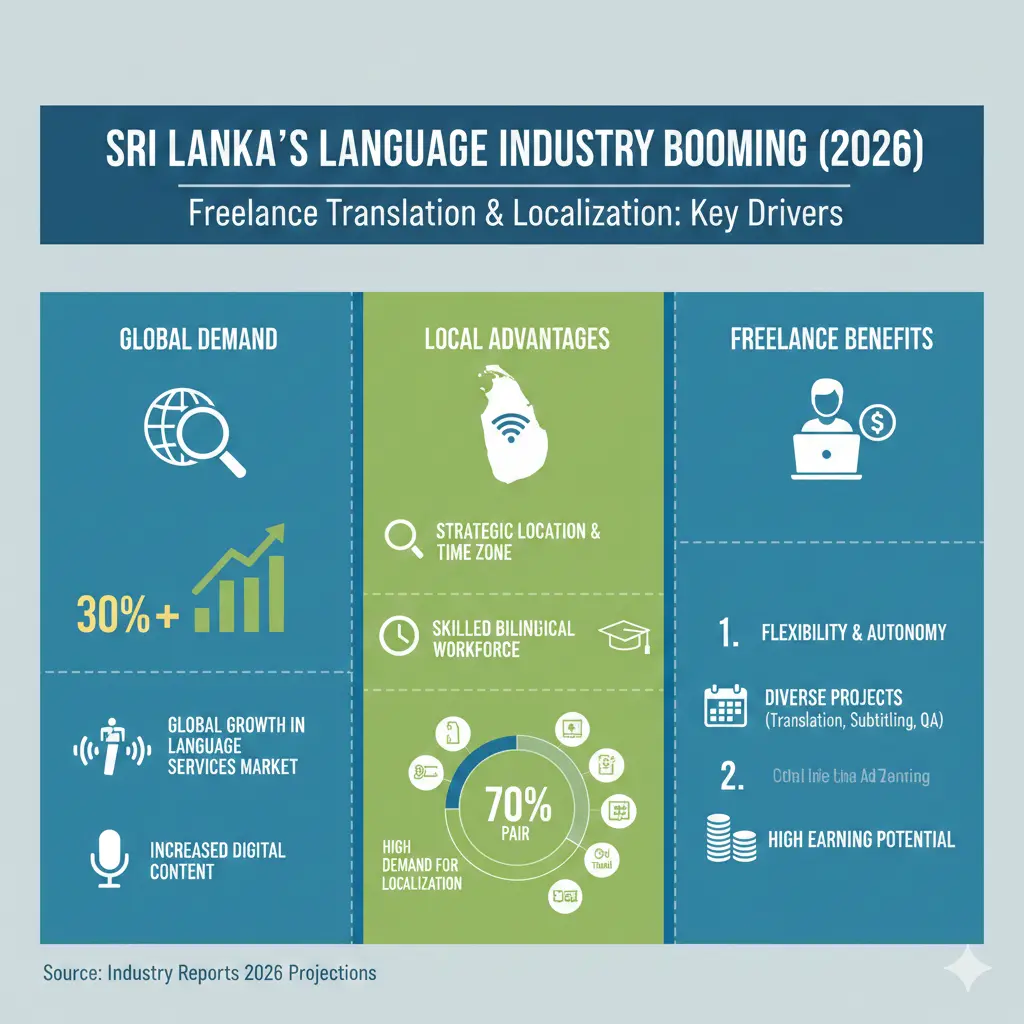
Why Freelance Translation and Localization is Booming in Sri Lanka
Sri Lanka's position as a multilingual hub—Sinhala (official), Tamil (official), and English (link language)—gives us a natural advantage. Global firms need content adapted not just translated, especially for apps, websites, and marketing targeting our market. Localization goes beyond words: it tweaks cultural references, like changing cricket analogies for baseball fans abroad or respecting local festivals in ads.
In 2026, demand spikes from e-commerce and tech exports. Think translating tourism sites for inbound visitors or localizing fintech apps for remittance users. Platforms report thousands of translation freelance opportunities, with Sri Lankans earning $10–$30 hourly—far above local averages.
The Multilingual Edge for Export Businesses
Our trilingual workforce supports Sri Lanka's export push in garments, tea, and IT-BPO, projected to hit $15 billion by 2026. Freelancers help exporters localize pitches for EU and US buyers, ensuring contracts and manuals resonate culturally. For instance, a Colombo-based garment exporter might hire you to adapt product labels for halal markets in the Middle East.
- Sinhala-English: Top pair, ideal for government docs, websites, and apps.
- Tamil-English: Growing for Northern Province content and diaspora outreach.
- Regional languages: Sinhala dialects or Tamil variants for hyper-local campaigns.
Key Skills Needed for Translation Freelance Success
You don't need a degree, but native fluency and practice are key. Top freelancers on Upwork boast 5–10 years' experience, using tools like CAT (Computer-Assisted Translation) software for speed without losing quality.
Essential Skills
- Manual Translation: No Google Translate—clients want human nuance. Focus on tone: formal for legal, casual for social media.
- Localization Expertise: Adapt idioms (e.g., "raining cats and dogs" becomes "වැහි ගහනවා" naturally). Understand Sri Lankan culture: avoid caste references in Tamil content.
- Tech Savvy: Handle SRT subtitles, WordPress plugins, or app strings. IT grads excel here.
- Proofreading & Transcription: Spot errors, transcribe audio with timestamps.
Industries hiring: IT (apps/websites), marketing, legal, medical, gaming. Rates? $0.05–$0.15 per word or $10–$30/hour, with volume discounts.
Top Platforms for Sinhala Translation and Language Services Gigs
Start local-global: Sri Lankan freelancers dominate these sites.
| Platform | Key Features | Avg. Earnings (LK) | Sri Lanka Focus |
|---|---|---|---|
| Truelancer | AI matching, 100% safe pay, 50% cost savings | LKR 3,000–10,000/job | Thousands of local translators |
| Upwork | Top-rated pros, hourly/fixed, 24/7 support | LKR 4,000–12,000/hour equiv. | 194+ Sinhala jobs, 5-star ratings |
| Freelancer.com | 25M+ jobs, app localization bids | Project-based, competitive | Sinhala-English searches high |
| Remote Sites (Jobgether, RemoteRocketship) | 200+ remote translator roles | Flexible, work-from-home | Sri Lanka-specific listings |
Pro Tip: Build a profile with samples—translate a Sri Lankan tourism brochure to English. Platforms like TM-Town connect to specialized jobs.
How to Get Started as a Freelancer in Sri Lanka
Actionable steps tailored for us:
Step 1: Build Your Toolkit
- Free CAT tools: OmegaT or MemoQ trial.
- Portfolio: Translate public docs (e.g., Central Bank reports) with before/after samples.
- Certifications: Optional but boosts credibility—check Andovar for editor roles.
Step 2: Register and Optimise Profiles
Sign up on Upwork/Truelancer (free). Use keywords: "translation freelance", "Sinhala translation", "localization Sinhala". Add video intro in English/Sinhala. Sri Lankans get fast approvals with verified IDs.
Step 3: Find and Bid on Jobs
Search "Sinhala English translation Sri Lanka". Bid low initially (LKR 2,000/small job) for reviews. Aim for 4.8+ ratings like top pros.
Legal and Practical Tips for Locals
Register as sole proprietor via Inland Revenue (ird.gov.lk) if earning over LKR 3 million/year—2026 tax rate 18% on freelance income. Use Payoneer or Wise for USD payments; avoid bank delays. Comply with Data Protection Act 2022 for client confidentiality.
Workspace: Reliable Jio/LTE internet (Rs. 2,000/month plans). Track time with Toggl for hourly gigs.
Challenges and How to Overcome Them
Competition is fierce, but niches win: specialize in Tamil tech docs or Sinhala gaming. Clients hate delays—deliver 20% early. Common pitfalls: machine translation (banned by pros) or ignoring deadlines.
"Localize your content, which is more delicate than translation. The words are better chosen to match the target audience."
Scale up: Join groups like Sri Lanka Freelancers on Facebook (50k+ members) for tips and referrals.
Real Sri Lankan Success Stories
Dinuka Situge, Upwork top-rated, charges $22/hour for Sinhala-English, handling 22+ jobs in transcription and localization. Another with 194 jobs at $10/hour specializes in app localization for IT/marketing—proof our skills sell globally.
Next Steps to Launch Your Freelance Career
Today: Create Upwork profile, upload 3 samples. Bid on 5 "language services" jobs. Track progress weekly. Network at Colombo Digital Summit 2026 for leads. With consistency, you'll join the thousands earning flexibly while boosting Sri Lanka's global voice.
Frequently Asked Questions
Sources & References
-
1
Hire best Translators in Sri Lanka - Truelancer — www.truelancer.com
- 2
-
3
Hire the Best Translators in Sri Lanka - Upwork — www.upwork.com
-
4
Sinhala english translation jobs in Sri Lanka - Freelancer — www.freelancer.com
-
5
Remote Translator Jobs in Sri Lanka – Remote Rocketship — www.remoterocketship.com
-
6
Remote Translator Jobs in Sri Lanka - Jobgether — jobgether.com
-
7
Freelance Translators, Post Editors & Editors - Andovar Careers — careers.andovar.com
-
8
Professional Freelance Translators in Sri Lanka - TM-Town — www.tm-town.com
Related Articles

How Much Can Sri Lankan Freelancers Earn? Real Income Data & Salary Benchmarks 2026
Imagine ditching the 9-to-5 grind in Colombo traffic for the flexibility of working from a Kandy café, earning dollars while sipping tea. That's the reality for thousands of Sri Lankan freelancers in

Content Creation Freelancing in Sri Lanka: YouTube, TikTok & Short-Form Video Income
Imagine turning your smartphone into a steady income stream right here in Sri Lanka, creating short videos for YouTube Shorts, TikTok, and Instagram Reels that brands and creators can't get enough of

LinkedIn for Freelancers: How Sri Lankan Professionals Land Clients & Build Personal Brand
Imagine turning your smartphone into a global office where Sri Lankan freelancers like you connect with clients from Colombo to California, all without leaving home. With LinkedIn's user base in Sri L

Earning USD as a Freelancer in Sri Lanka: Currency, Payments & Tax Guide 2026
Imagine landing that dream gig on Upwork or Fiverr, delivering top-notch work, and watching **USD roll into your account** while the LKR fluctuates. For us in Sri Lanka, earning in **foreign currency*