Skilled Migrant Category in New Zealand for Sri Lankans: Step-by-Step

If you're a skilled professional from Sri Lanka considering a move to New Zealand, the Skilled Migrant Category (SMC) Resident Visa could be your pathway to permanent residence. With significant chang
The Lankawebsites editorial team curates, fact-checks, and updates guides on personal finance, property, health, immigration, legal, business, and lifestyle topics relevant to Lankawebsites readers. Articles are produced with AI assistance and reviewed by the editorial team before publication.
If you're a skilled professional from Sri Lanka considering a move to New Zealand, the Skilled Migrant Category (SMC) Resident Visa could be your pathway to permanent residence. With significant changes coming into effect in 2026, now's the perfect time to understand how the new system works and whether you qualify. Whether you're an IT professional, engineer, healthcare worker, or tradesperson, New Zealand's updated immigration framework is designed to recognise your skills and experience.
What is the Skilled Migrant Category Resident Visa?
The Skilled Migrant Category is New Zealand's primary visa pathway for skilled workers who want to live and work permanently in the country. Rather than sponsoring you for a specific job, this visa recognises your skills, qualifications, and work experience to determine your eligibility for residence. It's different from employer-sponsored visas because you're not tied to a single employer—once you have residence, you can work for anyone.
The visa requires you to meet a points-based system. You'll need at least 6 skilled resident points to be eligible, and you must have a job offer with an accredited New Zealand employer paying at least 30 hours per week.
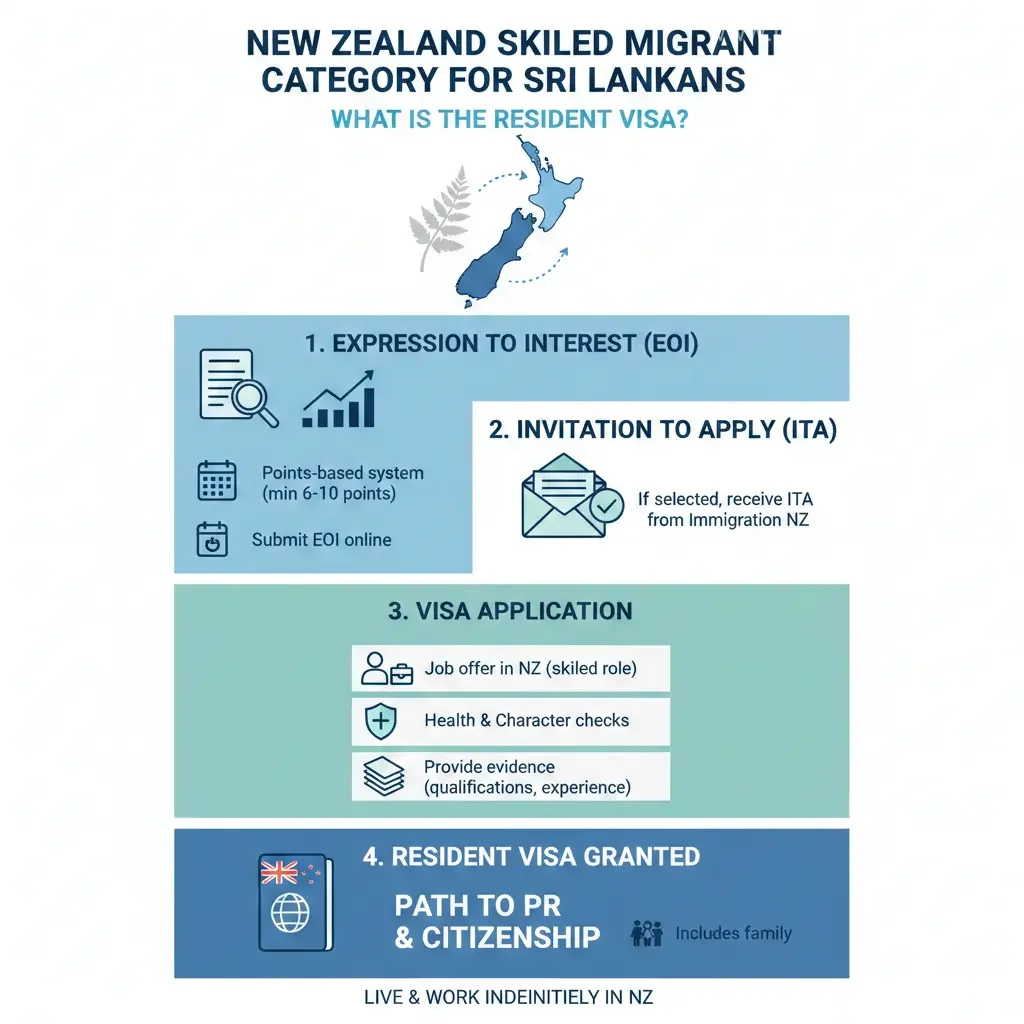
Key Changes Coming in 2026
New Zealand's government has announced significant reforms to make the SMC more competitive and accessible. Here's what's changing from mid-2026:
Two New Residence Pathways
Instead of a one-size-fits-all approach, you'll now have options based on your background:
- Skilled Work Experience Pathway – For professionals in ANZSCO skill levels 1–3 (managers, professionals, technicians). You'll need at least 5 years of directly relevant work experience, with a minimum of 2 years in New Zealand paid at least 1.1 times the median wage.
- Trades and Technician Pathway – For tradespeople and technicians with a Level 4 qualification (minimum 120 credits) and at least 4 years of post-qualification work experience, including 18 months in New Zealand at or above the median wage.
Reduced New Zealand Work Experience Requirements
Previously, you needed up to 3 years of work experience in New Zealand. This has been reduced to a maximum of 2 years for most pathways. This means you can progress to residence faster, which is particularly beneficial if you're already working in New Zealand on a work visa.
Simplified Wage Requirements
The old system required you to meet the wage threshold at the start of your New Zealand work experience and again when applying for residence. The new system is simpler: you must meet the wage threshold at the beginning of your work experience and maintain it throughout. This removes the pressure to constantly chase wage increases.
Higher Recognition for New Zealand Qualifications
If you've studied at a New Zealand university, you'll now get more points recognition, making it easier to progress to residence. This is good news if you've completed a degree or postgraduate qualification here.
Step-by-Step Guide to Applying
Step 1: Check Your Eligibility
Before you invest time and money, confirm you meet the basic requirements. You must have:
- A job offer from an accredited New Zealand employer
- At least 30 hours per week guaranteed work
- One of three skill indicators: occupational registration, a Bachelor's degree or higher, or income of at least 1.5 times the median wage
- Relevant work experience (5 years for the Skilled Work Experience Pathway, or 4 years post-qualification for the Trades Pathway)
Step 2: Gather Your Documentation
You'll need to prove your qualifications and work experience. Collect:
- Educational certificates and transcripts (have these officially translated if not in English)
- References from previous employers confirming your work experience
- Your job offer letter from your New Zealand employer
- Proof of your current salary or job offer salary
- Health and character certificates
- Evidence of English language proficiency (if required)
For Sri Lankan applicants, you may need to get your qualifications assessed by a New Zealand-recognised body. Many professional bodies have reciprocal arrangements with Sri Lankan institutions.
Step 3: Calculate Your Points
Under the SMC, you earn points for:
- Qualifications: Bachelor's degree (10 points), Master's degree (15 points), Doctoral degree (20 points)
- Work experience: Up to 3 points for skilled work in New Zealand (1 point per year, maximum 3 years)
- Age: Points for being under 30
- Occupational registration: If your profession is registered in New Zealand
You need at least 6 points to be eligible.
Step 4: Submit Your Application
Once you've gathered everything, submit your application through Immigration New Zealand's online portal. Include your job offer and all supporting documents. Processing times vary, but you should expect several months.
Step 5: Attend Your Interview (If Required)
Immigration New Zealand may ask you to attend an interview to verify your information and assess your genuine intention to live and work in New Zealand.
Step 6: Receive Your Visa Decision
If approved, you'll receive your Skilled Migrant Category Resident Visa, which grants you permanent residence in New Zealand.
Important Considerations for Sri Lankans
As a Sri Lankan applicant, here's what you should know:
English Language Requirements: You'll need to prove English proficiency. If you've studied in English or worked in an English-speaking environment, you may be exempt from language tests like IELTS.
Credential Recognition: New Zealand recognises qualifications from Sri Lankan universities, but you may need official assessment. Check with the relevant New Zealand professional body for your field.
Cost: Application fees, health checks, and credential assessments add up. Budget NZD $3,000–$5,000+ for the entire process.
Job Market: New Zealand has skills shortages in healthcare, IT, engineering, and construction. If you work in these fields, you'll have better prospects.
Next Steps
If you're serious about moving to New Zealand under the SMC, start by:
- Visiting Immigration New Zealand's official website to review the latest requirements
- Assessing whether your qualifications need formal recognition in New Zealand
- Beginning your job search with New Zealand employers in your field
- Consulting with a licensed immigration adviser if you need guidance (especially important given the 2026 changes)
- Preparing your documentation well in advance
The Skilled Migrant Category remains one of the most accessible pathways for skilled professionals to gain permanent residence in New Zealand. With the 2026 changes making the process more flexible and recognising diverse skill sets, it's an exciting time for Sri Lankan professionals to explore this opportunity. Start your research now, and you could be building a new career in New Zealand within the next year or two.
Frequently Asked Questions
Sources & References
-
1
Skilled migrant category pathway to residence — www.immigration.govt.nz
-
2
Skilled Migrant Category – Proposals for Change — www.mbie.govt.nz
-
3
Upcoming changes to the Skilled Migrant Category in 2026 — relocatedownunder.com
-
4
Changes to the Skilled Migrant Category Resident Visa announced — www.immigration.govt.nz
- 5
Related Articles

Long-Distance Marriages: Practical Tips for Sri Lankans Working Overseas
This article references the following sources for accuracy and further reading:

Pathways for Sri Lankan Engineers to Work in Canada, Australia, and the Middle East
This article references the following sources for accuracy and further reading:

Specified Skilled Worker (SSW) Visa for Sri Lankans: Full 2026 Guide
This article references the following sources for accuracy and further reading:

Schooling Abroad: What Sri Lankan Parents Should Know Before Moving with Children
This article references the following sources for accuracy and further reading: