Is the Migration Dream Fading? A Reality Check for Sri Lankans Planning to Leave

The dream of working abroad has long been a beacon of hope for many Sri Lankans seeking better opportunities and financial security. Yet as we enter 2026, it's worth asking: is this dream still as gol
The Lankawebsites editorial team curates, fact-checks, and updates guides on personal finance, property, health, immigration, legal, business, and lifestyle topics relevant to Lankawebsites readers. Articles are produced with AI assistance and reviewed by the editorial team before publication.
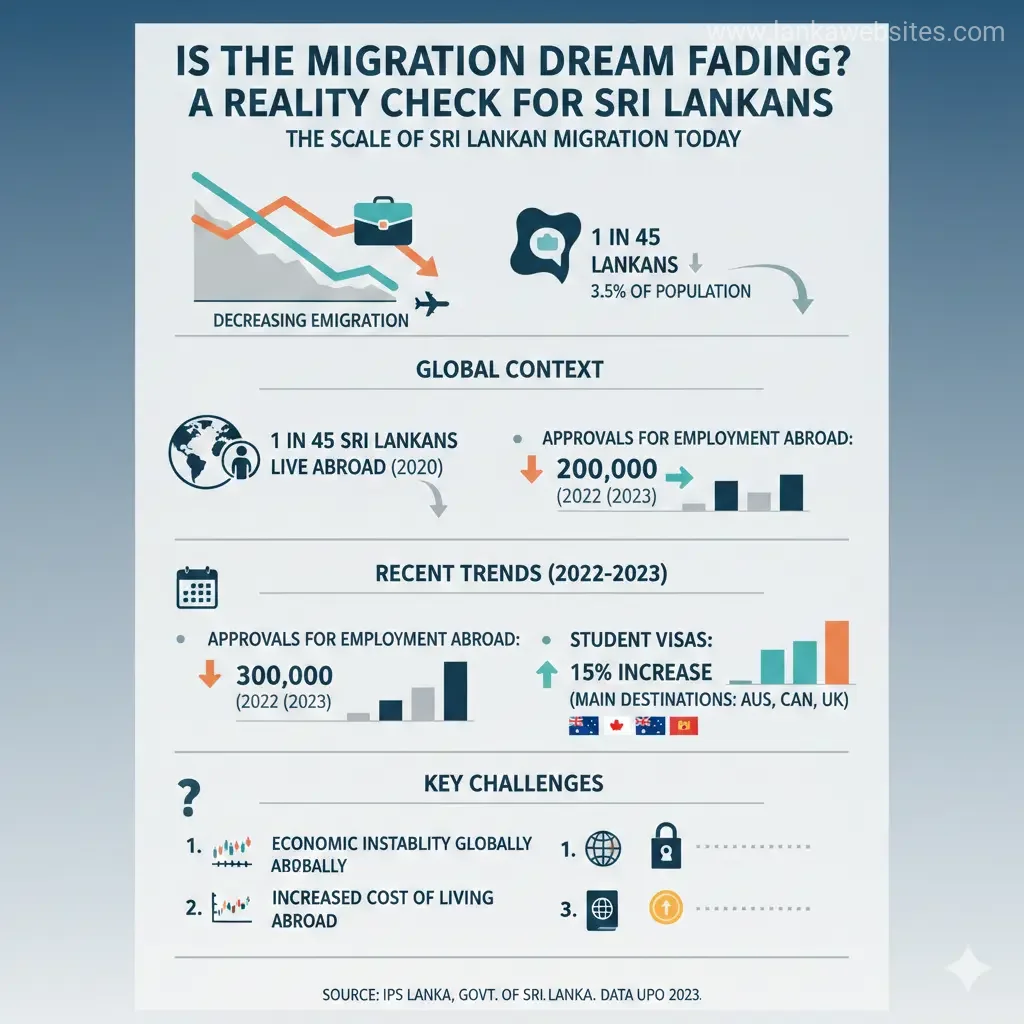
The dream of working abroad has long been a beacon of hope for many Sri Lankans seeking better opportunities and financial security. Yet as we enter 2026, it's worth asking: is this dream still as golden as it once seemed? With over 300,000 Sri Lankans leaving annually for overseas work, the reality is more complex than ever—filled with both remarkable opportunities and serious challenges that deserve careful consideration before you pack your bags.
The Scale of Sri Lankan Migration Today
Sri Lanka is experiencing what many call a significant brain drain. Data from the Sri Lanka Foreign Employment Bureau shows that more than 300,000 people left the country in 2022 with secured jobs overseas, reaching an all-time high. However, the actual figure is likely much higher. Nearly 900,000 passports were issued in 2022 alone—a 129 per cent increase in just one year—suggesting that skilled professionals beyond the bureau's tracking are also departing.
What's particularly striking is which sectors are losing talent. In the medical field alone, more than 600 doctors including specialists left the country in 2022. The Ministry of Health is receiving at least 40 applications per day from doctors seeking migration approval, and some rural hospitals are on the verge of collapse due to staff shortages. Universities have even been forced to close entire courses—one institution had to shut down its paediatrics programme because all the department's professors had left.
Why Are Sri Lankans Leaving?
The reasons are straightforward and deeply rooted in our country's recent economic challenges. The migration surge has been driven by food, fuel, and medicine shortages, high inflation, and new personal taxes. For many families, leaving isn't a choice—it's a necessity.
What's interesting is that our government itself is actively encouraging migration. Public sector doctors, for example, can take five years of unpaid leave to work abroad, provided they remit between US$100–500 per month. This policy reflects a strategic approach: reduce the public sector wage bill while increasing remittances that boost our foreign currency reserves.
The Financial Reality: Remittances vs. Brain Drain
Here's where the picture becomes genuinely complicated. Yes, migration is weakening our country's development capacity and social infrastructure. But our economy is also heavily dependent on what those migrants send home. Remittances are the biggest source of Sri Lanka's foreign earnings. In 2025, remittances amounted to US$8 billion—higher than the earnings from both exports and tourism combined.
This creates a paradox: we're losing our best talent, but we desperately need the money they send back. For many families, overseas remittances are the difference between financial stability and hardship.
The Hidden Costs of Migration
Impact on Children and Families
While remittances help financially, research shows that parental migration carries real social costs. A study published in the World Development journal examined a 2013 policy restricting mothers' overseas migration in Sri Lanka. The findings were significant: when mothers were unable to migrate, children experienced fewer hospital admissions and fewer illness-related inpatient stays, indicating improvements in overall health. Educational outcomes also improved, particularly for older siblings, who were less likely to repeat a school grade.
This doesn't mean migration is bad—it means the decision to leave affects more than just your bank account. If you have young children or dependents, you'll need to carefully weigh financial gains against the impact on their health, education, and emotional wellbeing.
Skills Shortage at Home
The departure of skilled professionals is creating genuine gaps in critical sectors. Healthcare, education, IT, accounting, and banking are all experiencing talent shortages. This makes it harder for Sri Lanka to develop and grow, which ultimately affects all of us living here.
The Bright Side: International Opportunities Are Real
It's not all cautionary tales. International opportunities for Sri Lankans are genuine and growing. UK student visa approvals for Sri Lankan students rose by 875 per cent in 2022 compared to 2019. Young people are increasingly seeking international qualifications, and many countries actively recruit Sri Lankan professionals in healthcare, IT, and other fields.
The demand is real, the salaries are often significantly higher than what we earn locally, and the career advancement opportunities can be transformative. For many, migration has genuinely changed their lives and their families' futures for the better.
What You Should Consider Before Migrating
Financial Planning
- Calculate your actual earnings after tax, accommodation, and living costs in your destination country
- Understand how much you can realistically remit home each month
- Research whether your qualifications are recognised in your target country
- Budget for visa costs, travel, and initial settling-in expenses
Personal Factors
- Consider the impact on your family, especially children and elderly parents
- Think about your mental health and ability to adapt to a new culture
- Research the living conditions and social environment in your destination
- Plan how you'll maintain family relationships across distances
Career Development
- Ensure your qualifications are transferable and recognised internationally
- Research job market demand in your field before committing
- Consider whether this move advances your long-term career goals
- Look into whether your experience will be valued when you return to Sri Lanka
The Real Picture
The migration dream isn't fading—it's evolving. The opportunities are real, the financial benefits are genuine, and for many Sri Lankans, working abroad has been transformative. But it's not a magic solution, and it comes with real costs—to families, to our country's development, and sometimes to your own wellbeing.
Before you decide to leave, take time to honestly assess whether migration aligns with your personal, financial, and family goals. Research thoroughly. Connect with Sri Lankans already working in your target country. Understand the practical realities, not just the dream. And remember: the best migration decision is one made with clear eyes and realistic expectations.
If you do decide to migrate, do it strategically. If you decide to stay, know that building your career in Sri Lanka is equally valid. What matters most is making a conscious choice based on your circumstances, not on pressure or assumption.
Frequently Asked Questions
Sources & References
-
1
British Council — Migration of professionals from Sri Lanka — opportunities-insight.britishcouncil.org
-
2
Travel and Tourism World — Sri Lanka's Tourism Sector Soars in 2026 — www.travelandtourworld.com
- 3
-
4
Sunday Times — Migration weakening country's development capacity and social welfare — www.sundaytimes.lk
- 5
-
6
Permanent Mission of Sri Lanka to the UN Geneva — Migration — live.lankamission.org
Related Articles

Long-Distance Marriages: Practical Tips for Sri Lankans Working Overseas
This article references the following sources for accuracy and further reading:

Pathways for Sri Lankan Engineers to Work in Canada, Australia, and the Middle East
This article references the following sources for accuracy and further reading:

Specified Skilled Worker (SSW) Visa for Sri Lankans: Full 2026 Guide
This article references the following sources for accuracy and further reading:

Schooling Abroad: What Sri Lankan Parents Should Know Before Moving with Children
This article references the following sources for accuracy and further reading: