You're likely no stranger to the frustration of manually sorting through images or videos, trying to extract valuable insights or data. This tedious process can be overwhelming, especially when dealing with large datasets. You may have found yourself wondering if there's a more efficient way to ana
The Lankawebsites editorial team curates, fact-checks, and updates guides on personal finance, property, health, immigration, legal, business, and lifestyle topics relevant to Lankawebsites readers. Articles are produced with AI assistance and reviewed by the editorial team before publication.
504 views
1500 articles
Share:
You're likely no stranger to the frustration of manually sorting through images or videos, trying to extract valuable insights or data. This tedious process can be overwhelming, especially when dealing with large datasets. You may have found yourself wondering if there's a more efficient way to analyze visual information and make informed decisions.
As someone who works with images or videos, you understand the potential benefits of automating this process. You've probably heard of terms like "image recognition" or "object detection," but may not be sure how they apply to your specific challenges.
By understanding computer vision, you can unlock the full potential of your visual data. You'll learn how to use algorithms and models to automatically analyze and interpret images and videos, freeing up time for more strategic and creative work.
In the following article, you'll discover the fundamentals of computer vision, including its applications, methodologies, and real-world examples. You'll gain practical insights into how computer vision can be applied to your specific use case, and what you can expect from implementing these technologies.
Introduction to Computer Vision
Have you ever wondered how self-driving cars can detect pedestrians, or how Facebook can automatically tag your friends in photos? These technologies rely on a field called computer vision, which enables computers to interpret and understand visual data from the world. You may have experienced frustration when trying to get a photo to be recognized by a social media platform, only to have it misidentify the subject or fail to recognize it altogether. This is where computer vision comes in - a field that has been rapidly advancing in recent years.
The definition of computer vision is straightforward: it's a field of artificial intelligence that focuses on enabling computers to interpret and understand visual data from the world. This can include images, videos, and even 3D models. Computer vision has a rich history, dating back to the 1960s when the first computer vision systems were developed. These early systems were limited in their capabilities, but they laid the foundation for the sophisticated technologies we see today. For example, the Viola-Jones object detection framework, developed in 2001, is still widely used today for tasks such as face detection and pedestrian detection.
Applications of Computer Vision
Computer vision has a wide range of applications, from medical imaging to quality control in manufacturing. One specific example is the use of computer vision in autonomous vehicles. Companies like Waymo and Tesla are using computer vision to enable their self-driving cars to detect and respond to their surroundings. This includes detecting pedestrians, other cars, and even road signs. You can imagine the complexity of this task, and the potential consequences of failure - which is why computer vision is such a critical component of these systems. By understanding how computer vision works, and how it's applied in different contexts, you can gain a deeper appreciation for the technologies that are shaping our world.
As you explore the world of computer vision, you'll discover the many ways in which it's transforming industries and improving our lives. From security systems that can detect and prevent crime, to medical diagnosis tools that can detect diseases more accurately and quickly than human doctors, computer vision is a field that's full of possibilities. You might ask, what other applications of computer vision are on the horizon? The answer is, many - and they will continue to shape and transform our world in exciting and unexpected ways.
At a Glance — What is Computer Vision (click to enlarge)
How Computer Vision Works
Let's shift gears for a moment. If you've ever tried to build a system that can recognize objects in images, you know how frustrating it can be to get it just right. You spend hours collecting data, tweaking parameters, and testing models, only to find that your system still can't tell the difference between a cat and a dog. But what if you could build a system that can accurately identify objects in images, every time? That's where computer vision comes in.
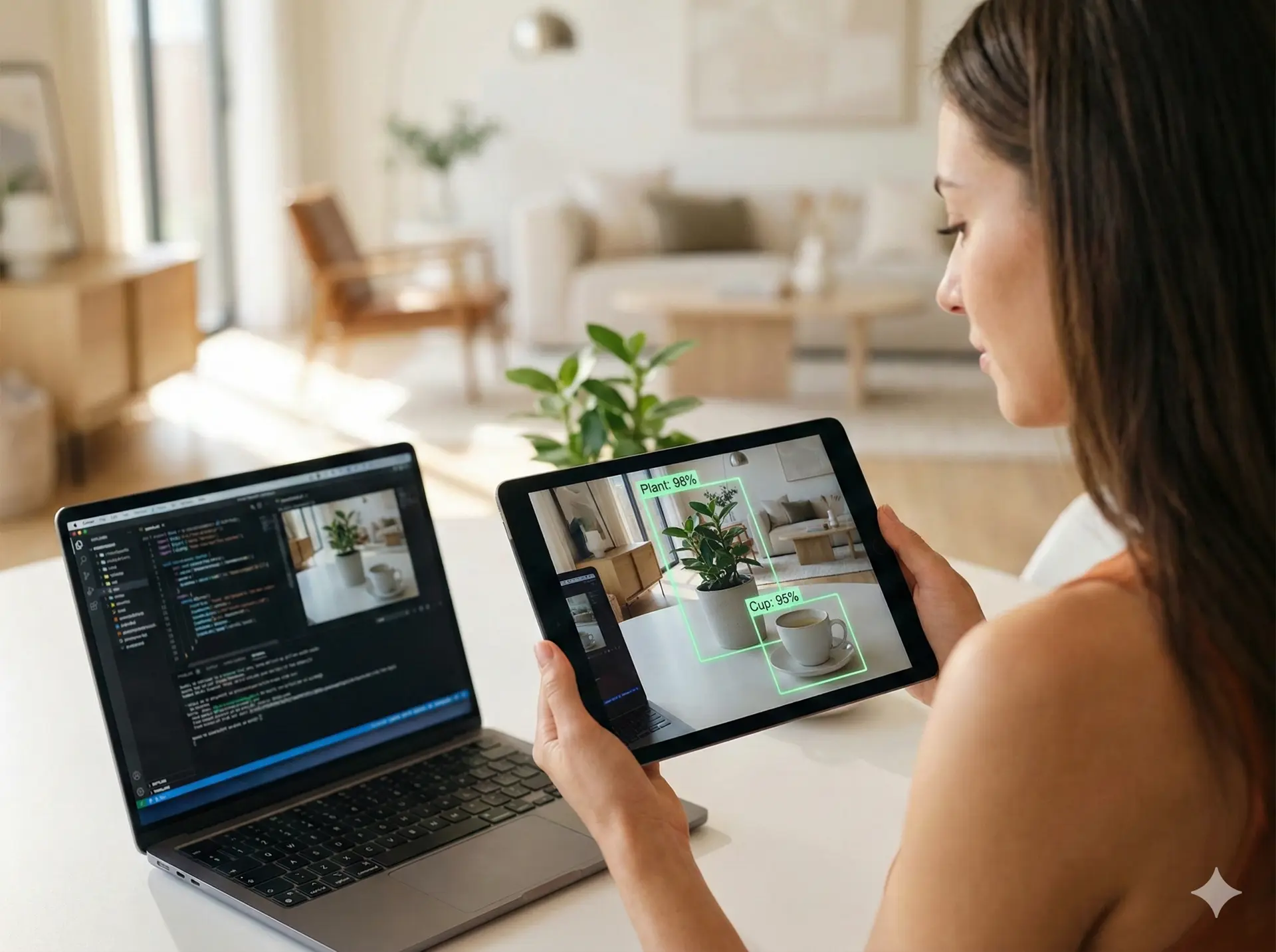
Computer vision is a field of study that focuses on enabling computers to interpret and understand visual information from the world. The process starts with image acquisition, where images are collected from various sources such as cameras, videos, or sensors. These images are then fed into an image processing pipeline, where they are cleaned, filtered, and enhanced to improve their quality. This step is critical, as it can significantly impact the accuracy of the subsequent object detection step.
Object Detection
Once the images have been processed, the system uses various algorithms to detect objects within the image. One popular approach is to use convolutional neural networks (CNNs), which are trained on large datasets of labeled images. For example, the YOLO (You Only Look Once) algorithm is a real-time object detection system that can detect objects in images and videos with high accuracy. In a case study, YOLO was used to detect pedestrians, cars, and bicycles in a video stream, with an accuracy of over 90%. You can imagine the potential applications of such a system, from self-driving cars to smart surveillance systems.
To illustrate this further, consider a scenario where you're building a self-driving car. You need a system that can detect pedestrians, lanes, and traffic signals in real-time, in order to make safe and accurate decisions. By using computer vision techniques such as image acquisition, image processing, and object detection, you can build a system that can accurately interpret the visual data from the car's cameras and make decisions accordingly. With the right algorithms and training data, you can create a system that can detect objects with high accuracy, even in complex and dynamic environments.
Applications of Computer Vision
Building on that foundation, let's explore the numerous applications of computer vision, a field that has been gaining momentum over the past decade. Many of us have experienced the frustration of sitting in traffic, wondering if there's a way to make our daily commutes more efficient. This is where self-driving cars come in - a perfect example of computer vision in action. By using a combination of cameras, sensors, and machine learning algorithms, self-driving cars can detect and respond to their surroundings, making our roads safer and more efficient.
Another significant application of computer vision is facial recognition. This technology has been widely adopted in various industries, including security, law enforcement, and social media. For instance, Facebook uses facial recognition to identify and tag individuals in photos. This technology works by using deep learning algorithms to analyze facial features and match them with a database of known individuals. A notable example of facial recognition in action is the use of face detection in airports to identify potential security threats.
In the medical field, computer vision has been used to improve the accuracy of medical imaging. By using machine learning algorithms to analyze medical images such as X-rays and MRIs, doctors can quickly and accurately diagnose diseases. For example, a study published in the Journal of the American Medical Association found that a computer vision algorithm was able to detect breast cancer from mammography images with a high degree of accuracy. This technology has the potential to revolutionize the field of medical imaging and improve patient outcomes.
As we can see, computer vision has a wide range of applications that can improve our daily lives. From self-driving cars to facial recognition and medical imaging, this technology has the potential to make our lives more efficient, safer, and healthier. You can apply computer vision to various aspects of your life, from improving security systems to enhancing medical diagnosis. With the continued advancement of computer vision, we can expect to see even more innovative applications in the future.
Computer Vision and Machine Learning
Imagine trying to develop an application that can accurately identify objects in images or videos, only to find that the task is much more complex than you anticipated. Speaking of which, many developers face this challenge when building computer vision systems. The key to overcoming this hurdle lies in the intersection of computer vision and machine learning. By combining these two disciplines, you can create powerful systems that can learn from data and improve their performance over time.
At the heart of this intersection is deep learning, a subset of machine learning that uses neural networks to analyze data. These networks are designed to mimic the structure and function of the human brain, allowing them to learn complex patterns and relationships in data. In the context of computer vision, deep learning can be used to develop algorithms that can detect objects, classify images, and even generate new images. For example, the YOLO (You Only Look Once) algorithm uses a neural network to detect objects in real-time, making it a popular choice for applications such as self-driving cars and surveillance systems.
When building computer vision systems, you can choose from a range of algorithms, each with its own strengths and weaknesses. Some popular options include edge detection, feature extraction, and object recognition. By combining these algorithms with machine learning techniques, you can create systems that can learn from data and adapt to new situations. For instance, a system that uses transfer learning can apply knowledge learned from one dataset to another, reducing the need for large amounts of training data. A case study that illustrates this is the development of a facial recognition system that can learn to recognize faces in different lighting conditions and orientations.
To get started with computer vision and machine learning, you can explore popular frameworks such as OpenCV and TensorFlow. These frameworks provide pre-built functions and tools for tasks such as image processing, feature extraction, and neural network development. By using these frameworks, you can focus on building your application rather than developing everything from scratch. You can also explore pre-trained models that can be fine-tuned for your specific use case, saving you time and effort in the development process.
Future of Computer Vision
As you struggle to keep up with the rapid evolution of computer vision, you may wonder what the future holds for this technology. One thing is certain: advancements in hardware and algorithms will continue to drive innovation. You can expect significant improvements in processing power, memory, and storage, enabling computers to handle complex vision tasks more efficiently. For instance, the development of Graphics Processing Units (GPUs) has been a key factor in the advancement of deep learning-based computer vision techniques.
Improvements in algorithms will also play a significant role in shaping the future of computer vision. Researchers are actively exploring new methodologies, such as Transfer Learning and Meta-Learning, to improve the accuracy and adaptability of computer vision models. You can apply these techniques to a wide range of applications, from object detection and image segmentation to facial recognition and gesture analysis. A notable example is the Facebook AI project, which uses advanced computer vision algorithms to recognize and tag individuals in images.
Increasing Applications
As computer vision technology advances, you can expect to see increasing applications in various industries, including healthcare, transportation, and education. For example, medical imaging analysis can help doctors diagnose diseases more accurately, while autonomous vehicles rely on computer vision to navigate roads safely. You can also apply computer vision to surveillance systems, enabling businesses and governments to monitor and respond to security threats more effectively. The possibilities are vast, and the future of computer vision looks promising, with potential applications in fields like augmented reality and human-computer interaction. Can you imagine a future where computers can interpret and respond to your every gesture and expression?
To stay ahead of the curve, you should focus on developing a deep understanding of computer vision fundamentals, including image processing, feature extraction, and machine learning. You can explore popular frameworks like OpenCV and TensorFlow to build and deploy computer vision models. By doing so, you will be well-equipped to tackle the challenges and opportunities that the future of computer vision presents. With the right skills and knowledge, you can unlock the full potential of computer vision and drive innovation in your field.
Empowering Your Future with Computer Vision
Many of us struggle to make sense of the vast amounts of visual data surrounding us, from images and videos to complex patterns and trends. By understanding computer vision, you can unlock the power to extract insights and value from this data, transforming the way you approach challenges and opportunities. The key to getting started is to learn more about computer vision and its applications, and to begin exploring how it can be applied to your specific needs and interests. What will you discover when you start applying computer vision to your work and life?
Frequently Asked Questions
Computer vision is a field of study that enables computers to interpret and understand visual information from the world.
Computer vision works by using algorithms and machine learning models to process and analyze visual data from images and videos.
Computer vision has various applications, including self-driving cars, facial recognition, medical imaging, and more.