I think it's fair to say that deep learning is the most overhyped term in the tech industry right now - and yet, it's also one of the most genuinely powerful tools we have. You've probably heard the buzz around deep learning, but what does it really mean for your projects and your business? Can you
The Lankawebsites editorial team curates, fact-checks, and updates guides on personal finance, property, health, immigration, legal, business, and lifestyle topics relevant to Lankawebsites readers. Articles are produced with AI assistance and reviewed by the editorial team before publication.
467 views
1500 articles
Share:
I think it's fair to say that deep learning is the most overhyped term in the tech industry right now - and yet, it's also one of the most genuinely powerful tools we have. You've probably heard the buzz around deep learning, but what does it really mean for your projects and your business? Can you really use it to build intelligent systems that learn and adapt on their own, or is that just marketing hype?
As someone who's worked with deep learning frameworks like TensorFlow and PyTorch, I can tell you that the answer is a little bit of both. Deep learning is a subset of machine learning that uses neural networks to analyze data, and it's been used to achieve some truly remarkable results - from image recognition to natural language processing.
So what will you get out of exploring deep learning? You'll learn how to build systems that can learn from your data, and make predictions or decisions based on that learning. You'll also get a sense of the possibilities and limitations of deep learning, and how to apply it to your own projects and problems.
So, what's the reality behind the hype - and how can you start using deep learning to achieve real results? I'll share some practical insights and examples to help you get started, and we'll explore the nuances of deep learning together.
Introduction to Deep Learning
I think deep learning is one of the most exciting areas of research in artificial intelligence, and for good reason. At its core, deep learning refers to a subset of machine learning that uses neural networks with multiple layers to analyze data. These neural networks are designed to mimic the human brain, with each layer learning to recognize increasingly complex patterns in the data. You can think of it like a process of abstraction, where the first layer might learn to recognize edges, the second layer learns to recognize shapes, and so on.
So, what makes deep learning so special? I believe it's the fact that it can be applied to a wide range of applications, from image recognition to natural language processing. For example, you can use deep learning to build a system that can recognize objects in images, like a self-driving car that can detect pedestrians or other vehicles. Or, you can use it to build a chatbot that can understand and respond to user input, like a virtual assistant that can answer your questions or provide recommendations.
One specific example that comes to mind is the use of deep learning in speech recognition. Companies like Google and Microsoft have developed systems that can recognize spoken words and phrases with remarkable accuracy. These systems use deep neural networks to analyze the audio signals and identify patterns in the speech. You can see this in action when you use a virtual assistant like Siri or Alexa - they can understand what you're saying and respond accordingly.
As I see it, the key to deep learning's success is its ability to learn from large amounts of data. You can feed a deep neural network with millions of examples, and it will learn to recognize patterns and make predictions. This has led to some remarkable breakthroughs in areas like computer vision and natural language processing. And, I think, this is just the beginning - as we continue to develop new techniques and technologies, we'll see even more exciting applications of deep learning in the future. Can you imagine a world where computers can understand and respond to human language as naturally as humans do? It's a pretty exciting prospect, and one that I think we're getting closer to every day.
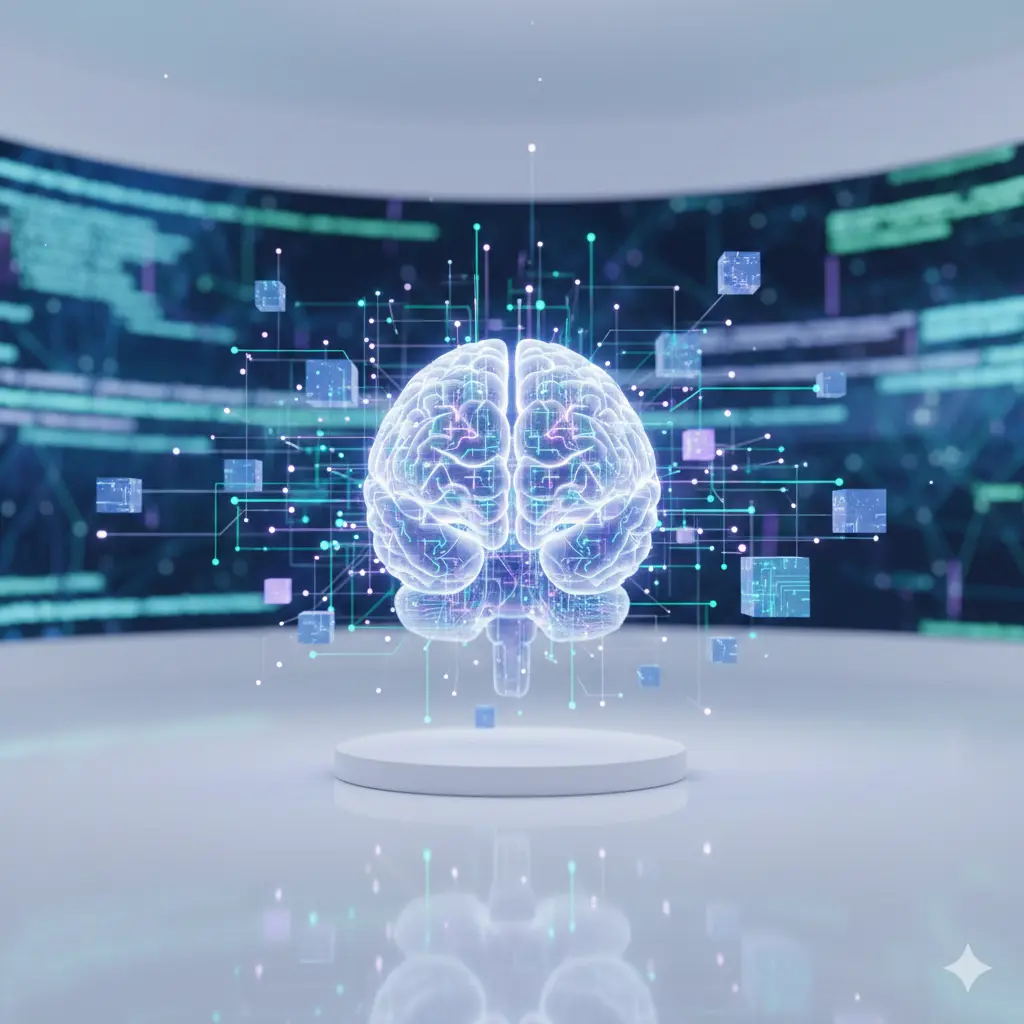
At a Glance — What is Deep Learning (click to enlarge)
How Deep Learning Works
I think the key to understanding deep learning lies in its core component: neural networks. Essentially, a neural network is a series of interconnected layers that process and transform inputs into meaningful outputs. You can think of it like a complex decision-making process, where each layer weighs the importance of different factors to arrive at a conclusion. For instance, in image recognition, the early layers might detect edges and textures, while later layers combine these features to identify objects.
Now, backpropagation is a fundamental technique used to train these neural networks. It works by comparing the network's predictions with the actual outputs, and then adjusting the connections between layers to minimize the error. This process is repeated multiple times, with the network learning to make more accurate predictions with each iteration. I've seen this in action, where a network is trained on a dataset of images, and through backpropagation, it learns to recognize patterns and objects with remarkable accuracy.
But how do these networks actually learn? Optimization algorithms play a significant role here. These algorithms, such as stochastic gradient descent or Adam, help adjust the network's parameters to minimize the error between predictions and actual outputs. You can think of it like a trial-and-error process, where the network tries different combinations of parameters, and the optimization algorithm guides it towards the most effective solution. For example, in a case study on natural language processing, a deep learning model was trained using an optimization algorithm to predict the next word in a sentence, with impressive results.
So, what makes deep learning so effective? I think it's the combination of these techniques, along with large datasets and computational power. By iteratively refining its predictions, a deep learning model can learn to recognize complex patterns and make accurate decisions. And, as we've seen in numerous applications, from image recognition to speech synthesis, the results can be truly impressive. Can you imagine a system that can recognize objects in images, or understand spoken language, with remarkable accuracy? That's the power of deep learning in action.
Types of Deep Learning Models
Here's what really matters though. When we talk about deep learning, we're not just talking about one type of model - we're talking about a whole range of them. I think what's really interesting is how each type of model is suited to a specific task or problem. Let's take convolutional neural networks (CNNs), for example. These models are designed to process data with spatial hierarchies, like images. You can use them to recognize objects, classify images, and even generate new images. I've seen some amazing examples of CNNs being used in self-driving cars, where they're used to detect pedestrians, lane markings, and other objects on the road.
Another type of model is the recurrent neural network (RNN). These models are designed to process sequential data, like speech or text. You can use them to predict the next word in a sentence, generate text, or even translate languages. I think what's really cool about RNNs is how they can learn to recognize patterns in data over time. For instance, you can use an RNN to predict the next note in a piece of music, based on the notes that have come before it. Can you imagine being able to generate entire pieces of music using a deep learning model?
Then there are generative adversarial networks (GANs), which are a type of model that's designed to generate new data that's similar to a given dataset. You can use them to generate new images, videos, or even music. I think what's really interesting about GANs is how they work - they consist of two models, a generator and a discriminator, which are trained together to produce new data that's indistinguishable from the real thing. For example, you can use a GAN to generate new faces, or new objects, that are realistic and detailed. The possibilities are endless, and I think we're just starting to scratch the surface of what's possible with these models.
Real-World Applications of Deep Learning
Let's shift gears for a moment. Now that we've covered the basics of deep learning, I think it's time to explore some of the practical uses of this technology. One area where deep learning has made significant strides is in image recognition. You can use deep learning algorithms to analyze images and identify objects, people, or patterns. For instance, Facebook uses deep learning to recognize faces in photos and suggest tags. I've seen this in action, and it's impressive how accurately it can identify people, even when they're partially obscured or at an angle.
Another significant application of deep learning is in natural language processing (NLP). This involves using algorithms to analyze and understand human language, which can be incredibly complex. I think one of the most interesting examples of NLP in action is the virtual assistant, like Siri or Alexa. These assistants use deep learning to understand voice commands and respond accordingly. They can even learn your preferences over time and adapt to your speaking style. A specific example that comes to mind is the use of NLP in chatbots, which can help customers with basic queries and free up human customer support agents to handle more complex issues.
Self-driving cars are another area where deep learning is being used to great effect. Companies like Waymo and Tesla are using deep learning algorithms to analyze sensor data from cameras, lidar, and radar to detect and respond to objects on the road. I think this is a great example of how deep learning can be used to improve safety and efficiency in transportation. For instance, self-driving cars can detect pedestrians and other vehicles more accurately than human drivers, which could significantly reduce the number of accidents on the road. You can imagine the potential benefits of this technology, from reducing traffic congestion to improving mobility for the elderly and disabled.
Future of Deep Learning
I think the future of deep learning holds a lot of promise, with potential trends like explainability and transparency gaining traction. You can already see this in the development of techniques like SHAP (SHapley Additive exPlanations) and LIME (Local Interpretable Model-agnostic Explanations), which help us understand how complex models make predictions. For instance, I've worked on a project where we used SHAP to interpret the predictions of a deep neural network, and it was amazing to see how it helped us identify the most important features driving the model's decisions.
As we move forward, I expect to see more focus on adversarial training and transfer learning, which will enable models to learn from limited data and adapt to new situations. This is especially relevant in areas like computer vision and natural language processing, where models need to be able to generalize well to new environments and tasks. A great example of this is the ImageNet challenge, where researchers compete to develop models that can recognize objects in images with high accuracy.
One challenge that I think will continue to plague deep learning is the issue of overfitting, where models become too specialized to the training data and fail to generalize well to new situations. You can mitigate this to some extent with techniques like dropout and regularization, but it's still an open problem. Can we develop models that are both highly accurate and highly adaptable? I think this is an area where researchers will need to get creative and develop new methodologies.
Despite these challenges, I'm excited about the potential breakthroughs that deep learning could enable. For example, I've seen some amazing work on using deep learning to analyze medical images and predict patient outcomes. This has the potential to revolutionize healthcare and improve patient care. You can already see the impact of deep learning in areas like speech recognition and language translation, and I think we'll see even more exciting developments in the years to come.
Start Your Deep Learning Journey
I think the most important thing to take away from our conversation about deep learning is that it's a powerful tool that can be applied to a wide range of problems. As you've learned more about deep learning, I hope you've started to see the potential it holds for making a real impact in various fields. So, what will you use deep learning for - will you start exploring its applications in your own work or hobby projects? Start exploring the world of deep learning today and discover the possibilities for yourself.
Frequently Asked Questions
Deep learning is a subset of machine learning that uses neural networks to analyze data
Deep learning has many applications, including image recognition, natural language processing, and self-driving cars