I've lost count of how many people have told me that starting a podcast is as simple as hitting record on your phone and uploading the file to a hosting platform. But as someone who has spent years producing and hosting my own podcasts, I can confidently say that's a misconception. The reality is t
The Lankawebsites editorial team curates, fact-checks, and updates guides on personal finance, property, health, immigration, legal, business, and lifestyle topics relevant to Lankawebsites readers. Articles are produced with AI assistance and reviewed by the editorial team before publication.
655 views
1500 articles
Share:
I've lost count of how many people have told me that starting a podcast is as simple as hitting record on your phone and uploading the file to a hosting platform. But as someone who has spent years producing and hosting my own podcasts, I can confidently say that's a misconception. The reality is that creating a high-quality podcast takes careful planning, attention to detail, and a willingness to learn and adapt.
When you start a podcast, you're not just creating content - you're building a relationship with your listeners. You're inviting them into your world, sharing your ideas and perspectives, and asking them to trust you with their time. That's a big responsibility, and it requires a thoughtful and intentional approach.
As you consider starting your own podcast, you're probably wondering what it takes to succeed. You want to know the secrets to creating engaging content, growing your audience, and making your podcast stand out in a crowded field. That's exactly what you'll learn in this article - the practical, real-world strategies and techniques you need to launch and grow a successful podcast that resonates with your listeners.
Introduction to Podcasting
Podcasting has often been misunderstood as a medium that's only suitable for amateur enthusiasts, but this couldn't be further from the truth. With over 800,000 active podcasts and more than 28 million episodes available, podcasting has become a serious platform for content creators to share their ideas, stories, and expertise with a global audience. As a seasoned podcaster, I can attest that the medium offers a unique opportunity for individuals to connect with their audience in a more intimate and personal way than traditional broadcasting.
So, what is podcasting? Simply put, podcasting is a form of audio content that's released on a regular schedule, often weekly or biweekly, and can be subscribed to by listeners. There are several types of podcasts, including interview-style podcasts, where hosts engage in conversations with experts or thought leaders, storytelling podcasts, which feature narrative-driven content, and educational podcasts, which focus on teaching listeners new skills or knowledge. For example, the popular podcast How I Built This features interviews with successful entrepreneurs, offering insights into the world of business and innovation.
Why Start a Podcast?
Starting a podcast can be a great way to establish yourself as an expert in your field, build a community around your brand, and create a unique marketing channel. You can use podcasting to share your passion, showcase your personality, and connect with like-minded individuals. Many successful podcasters have used their shows to build a loyal following, launch new products or services, and even secure book deals or speaking engagements. For instance, The Tim Ferriss Show has become a platform for Tim Ferriss to interview successful people from various fields, and his podcast has been a key factor in his success as a bestselling author and entrepreneur.
By understanding the basics of podcasting and its benefits, you can begin to explore the possibilities of this medium and how it can help you achieve your goals. Whether you're looking to build a personal brand, promote a business, or simply share your ideas with the world, podcasting offers a unique opportunity for creative expression and connection with your audience. You can create a podcast that showcases your expertise, provides value to your listeners, and sets you apart from others in your industry.
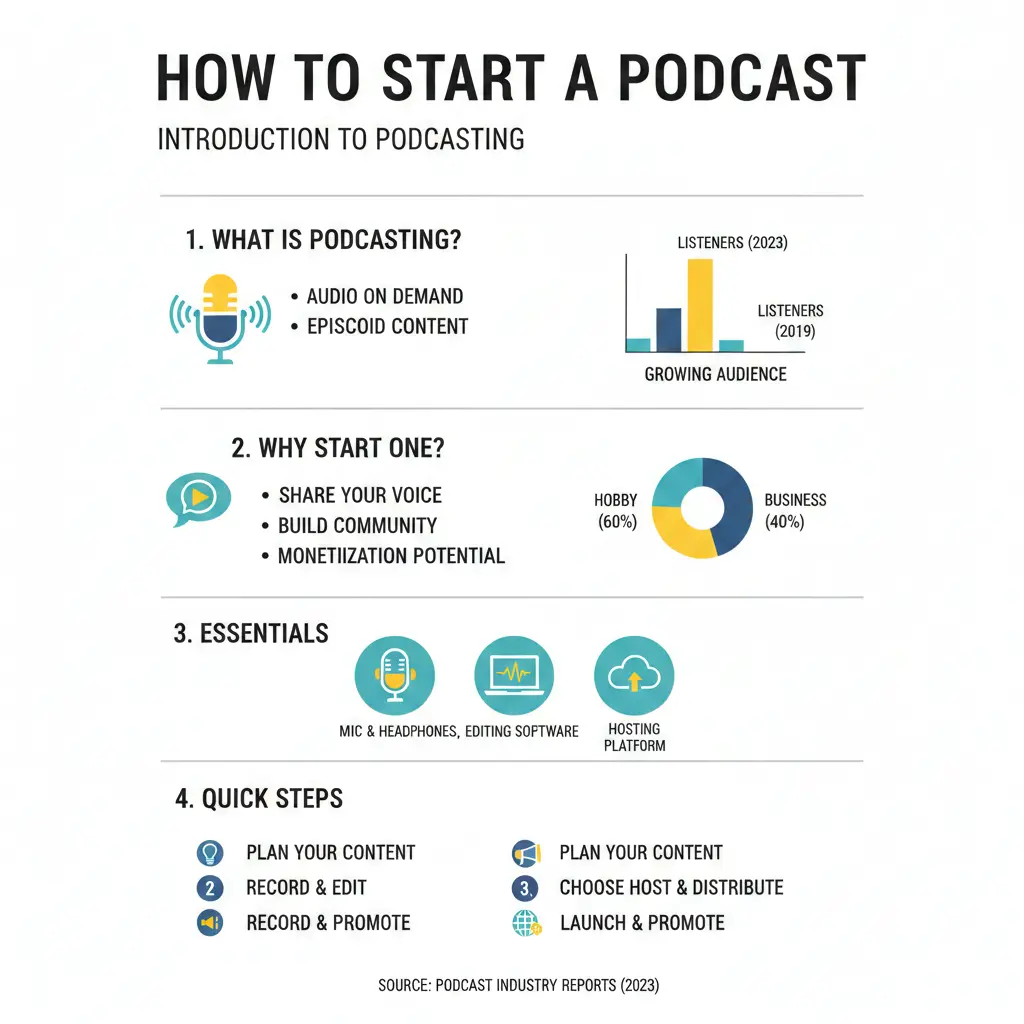
At a Glance — How to Start a Podcast (click to enlarge)
Choosing a Niche and Format
And this is where things get practical. When starting a podcast, many aspiring creators are told to "follow their passion" and choose a topic they love. While this advice is well-intentioned, it's often misguided. The truth is, your passion may not necessarily align with the interests of your target audience. You need to define your target audience and select a niche that resonates with them.
A common misconception is that your niche should be extremely broad to appeal to a wide audience. But research shows that a more focused approach can be more effective. For example, instead of creating a podcast about "health and wellness," you could focus on "mindfulness for busy professionals" or "plant-based nutrition for athletes." This targeted approach allows you to tailor your content to the specific needs and interests of your audience. A great example of this is the podcast "How I Built This" by Guy Raz, which focuses on the stories behind some of the world's most successful companies.
Once you've defined your niche, you need to choose a format that complements your content. Will your podcast be an interview-style show, a narrative storytelling podcast, or a panel discussion? The format you choose will depend on your goals, resources, and target audience. For instance, if you're creating a podcast about complex scientific topics, a narrative storytelling approach may be more effective than a straightforward interview-style show. You can also experiment with different formats, such as serialized storytelling or interactive episodes, to keep your content fresh and engaging.
Ultimately, the key to choosing a successful niche and format is to understand your audience and create content that resonates with them. By doing so, you can build a loyal following and create a podcast that stands out in a crowded market. Consider the example of the podcast "My Favorite Murder," which has built a massive following by focusing on true crime stories and creating a sense of community among its listeners. By taking the time to define your target audience and choose a niche and format that aligns with their interests, you can create a podcast that is both successful and fulfilling.
Setting Up Your Podcast Equipment
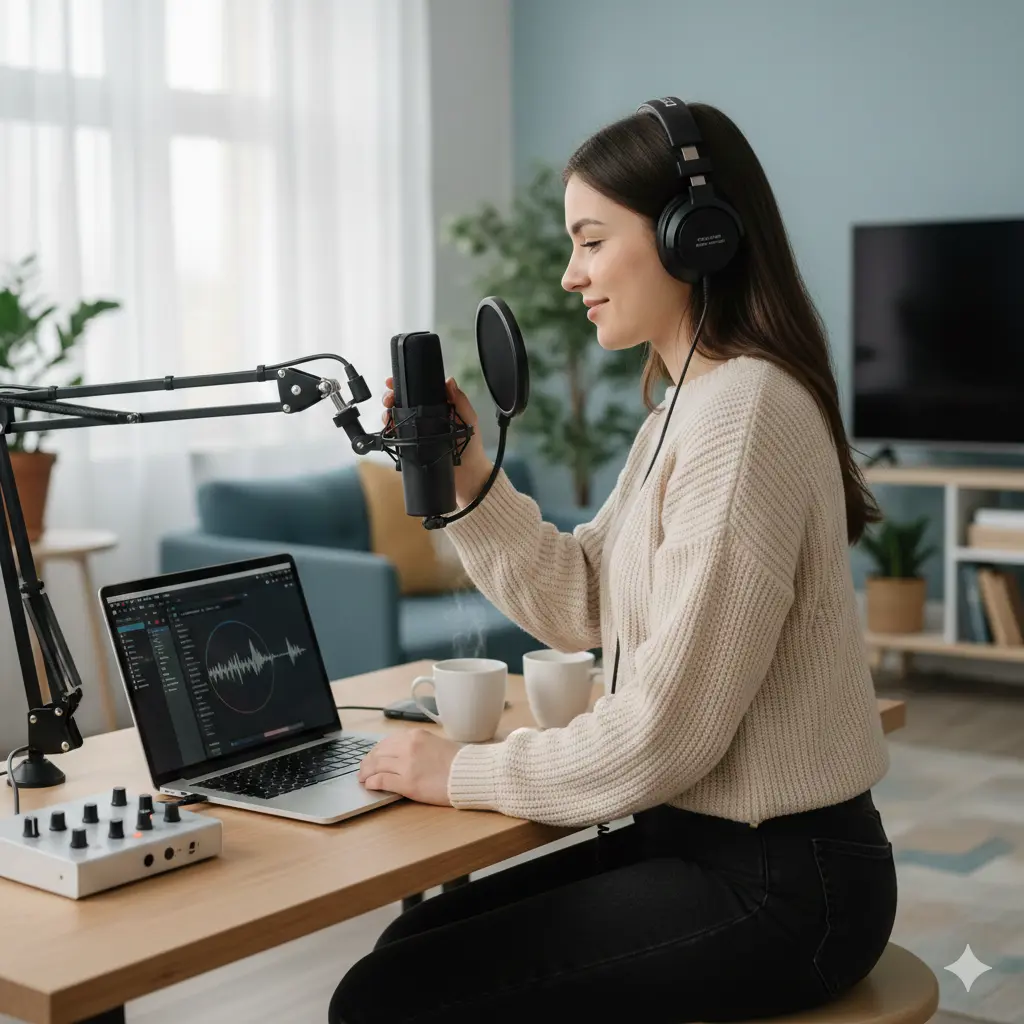
This brings us to something often overlooked: the equipment you need to record and produce your podcast. Many people assume that you need to spend a fortune on high-end gear to produce a quality podcast, but that's simply not true. You can start with the basics and upgrade as you go. Let's take a closer look at the essential equipment you'll need to get started.
First and foremost, you'll need a good quality microphone. The Blue Yeti is a popular choice among podcasters, and for good reason. It's a USB microphone that's easy to set up and use, and it produces clear, crisp audio. Another option is the Rode NT-USB, which is a studio-grade microphone that's designed specifically for podcasting. Both of these microphones are relatively affordable, with prices starting at around $100.
In addition to a microphone, you'll also need a pair of headphones. Good quality headphones will help you to monitor your audio and catch any mistakes or issues before you start recording. Look for headphones that are comfortable to wear and have good sound quality. The Sony MDR-7506 is a popular choice among podcasters, and they're relatively inexpensive, with a price tag of around $50.
Finally, you'll need some recording software to bring it all together. Audacity is a free, open-source program that's perfect for beginners. It's easy to use and has all the features you need to record and edit your podcast. Another option is Adobe Audition, which is a more advanced program that's designed for professional podcasters. Whichever software you choose, make sure you take the time to learn how to use it properly. For example, you can use Audacity to record and edit a test episode, and then use that as a template for future episodes.
Recording and Editing Your Podcast
Let's shift gears for a moment. Many podcasters assume that recording and editing are the most technically demanding aspects of creating a podcast. While this may be true to some extent, I'd like to challenge the conventional wisdom that you need to be an audio engineer to produce high-quality episodes. With the right techniques and tools, you can achieve professional-sounding recordings and edits, even if you're new to podcasting.
A key aspect of recording is microphone technique. You don't need to invest in an expensive microphone to get good sound quality. For example, the Blue Yeti is a popular and affordable option that can deliver great results. When recording, make sure to position the microphone correctly, about 6-8 inches from your mouth, and speak directly into it. You can also use pop filters to reduce plosive sounds and prevent distortion.
When it comes to editing, there are many software options available, including Audacity, Adobe Audition, and GarageBand. These programs offer a range of features, such as noise reduction, EQ, and compression, that can help you refine your recordings. For instance, you can use noise reduction tools to remove background hiss or hum, and EQ to adjust the tone and balance of your voice. You can also add music and sound effects to enhance the listening experience and create a more engaging atmosphere.
For example, the popular podcast How I Built This uses a combination of music and sound effects to create a unique and recognizable sound. The show's host, Guy Raz, has a distinctive voice and style, but the music and sound effects add an extra layer of depth and emotion to the storytelling. You can achieve similar results by experimenting with different music and sound effects in your own podcast, and finding the right balance to complement your content.
Publishing and Promoting Your Podcast
A common misconception about podcasting is that submitting your show to major directories like Apple Podcasts and Spotify is enough to attract a large audience. While getting listed in these directories is essential, it's only the first step in promoting your podcast. To truly reach your target listeners, you need a more comprehensive strategy. You can start by creating a dedicated podcast website, which will serve as a central hub for your show. This website should include essential information like episode summaries, guest bios, and links to subscribe on various platforms.
When building your podcast website, consider using a platform like WordPress or Wix, which offer user-friendly interfaces and customizable templates. For example, the popular podcast "How I Built This" has a website that features a clean design, easy-to-find episodes, and a prominent call-to-action to subscribe. By creating a similar website, you can establish a professional online presence and make it easy for listeners to find and engage with your content. You can also use your website to share behind-the-scenes stories, bonus content, or exclusive interviews to keep your audience engaged.
Promotion Strategies
Promoting your podcast on social media is another key aspect of attracting listeners. You can share short clips or quotes from your episodes, engage with your audience by responding to comments and messages, and collaborate with other podcasters or influencers in your niche. For instance, you can use Twitter to share bite-sized summaries of your episodes, or Instagram to post behind-the-scenes photos of your recording sessions. By using social media effectively, you can build a loyal community of listeners who will help spread the word about your podcast. You can also use social media analytics tools to track your performance and adjust your promotion strategy accordingly.
To maximize your reach, you should also submit your podcast to smaller, niche directories and platforms, such as Stitcher or Castbox. These platforms may have smaller audiences, but they can still help you reach listeners who are passionate about your topic. By taking a multi-faceted approach to promoting your podcast, you can increase your visibility, attract new listeners, and build a loyal following. You can also experiment with different promotion strategies, such as running contests or offering exclusive content to your loyal listeners, to keep your audience engaged and coming back for more.
Key Takeaways
Contrary to popular belief, starting a successful podcast doesn't require a large audience or a significant investment. With careful planning and a clear vision, anyone can create a engaging and informative podcast that resonates with listeners. The key to success lies in identifying your niche and creating content that speaks to your target audience. By focusing on quality and consistency, you can build a loyal following and establish yourself as a thought leader in your industry. Start planning your podcast today and join the thousands of podcasters already sharing their ideas and stories with the world: what unique perspective will you bring to the airwaves?
Frequently Asked Questions
It can take anywhere from a few days to a few weeks to start a podcast, depending on the complexity of your setup and the frequency of your episodes
While some technical knowledge can be helpful, it's not necessary to be tech-savvy to start a podcast. Many podcasting platforms and tools are user-friendly and easy to use
The cost of starting a podcast can vary widely, depending on the equipment and software you choose. However, it's possible to start a podcast with minimal investment, using free or low-cost tools and software