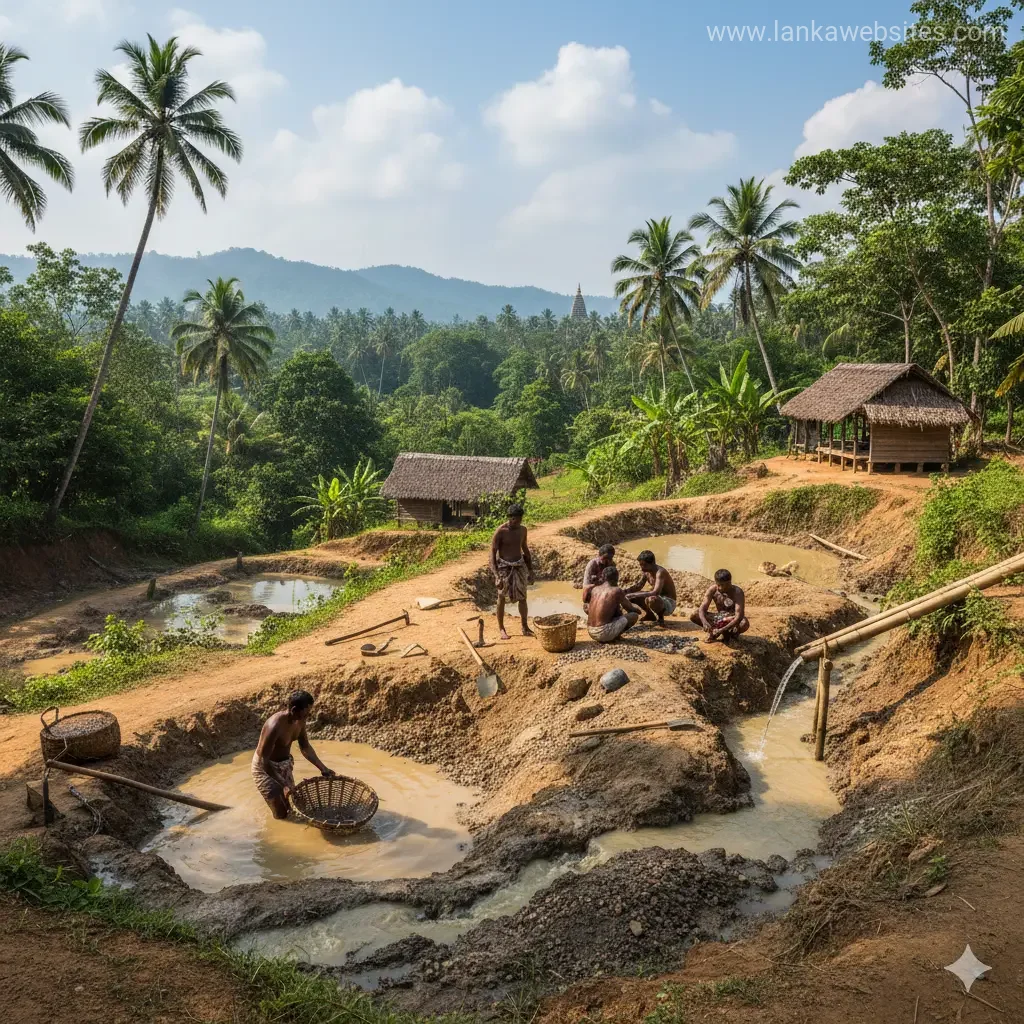
Ruby Mining in Sri Lanka

Introduction to Ruby Mining in Sri Lanka As a New Zealander, you might not immediately think of Sri Lanka when it comes to ruby mining. However, this smal
Introduction to Ruby Mining in Sri Lanka
As a New Zealander, you might not immediately think of Sri Lanka when it comes to ruby mining. However, this small island nation in the Indian Ocean has a rich history of producing some of the world's most beautiful and valuable rubies. In fact, Sri Lankan rubies are renowned for their deep red colour and are highly prized by collectors and jewellery enthusiasts alike. If you're interested in learning more about ruby mining in Sri Lanka, you're in the right place. In this article, we'll delve into the history of ruby mining in Sri Lanka, the mining process, and what you need to know if you're considering purchasing a Sri Lankan ruby.
Sri Lanka's gemstone industry is a significant contributor to the country's economy, with rubies being one of the most valuable and sought-after gemstones. The country's unique geology, with its high-pressure and high-temperature metamorphic rocks, creates an ideal environment for rubies to form. As a result, Sri Lanka has been a major source of rubies for centuries, with the gemstone playing an important role in the country's culture and history. Whether you're a seasoned gemstone enthusiast or just starting to learn about rubies, Sri Lanka is definitely a country worth exploring.
If you're planning a trip to Sri Lanka or simply interested in learning more about ruby mining, there are a few things you should know. First, ruby mining in Sri Lanka is typically done by small-scale miners, who use traditional methods to extract the gemstones from the earth. This can be a labour-intensive and time-consuming process, but it's also an important part of the country's cultural heritage. In addition, Sri Lanka has a number of laws and regulations in place to protect the environment and ensure that ruby mining is done in a responsible and sustainable way. In the following sections, we'll take a closer look at the history of ruby mining in Sri Lanka, the mining process, and what you need to know if you're considering purchasing a Sri Lankan ruby.
History of Ruby Mining in Sri Lanka
The history of ruby mining in Sri Lanka dates back over 2,000 years, with the gemstone being highly valued by ancient civilisations such as the Greeks and Romans. The country's ruby deposits were first discovered in the Ratnapura district, which is still one of the most important ruby-producing areas in Sri Lanka today. Over the centuries, ruby mining in Sri Lanka has been influenced by a number of different cultures, including the Portuguese, Dutch, and British, who all played a role in the country's gemstone industry.
- The ancient Sri Lankans believed that rubies had magical powers and were a symbol of wealth and status.
- The Portuguese introduced new mining techniques and tools, which helped to increase ruby production in Sri Lanka.
- The Dutch established a number of gemstone trading companies, which helped to export Sri Lankan rubies to other parts of the world.
- The British established a number of laws and regulations to control the gemstone industry and ensure that ruby mining was done in a responsible way.
Today, ruby mining in Sri Lanka is a significant industry, with thousands of small-scale miners working in the country's gemstone-producing areas. The industry is regulated by the National Gem and Jewellery Authority, which is responsible for issuing mining licenses and ensuring that ruby mining is done in accordance with environmental and social regulations.
The Ruby Mining Process
The ruby mining process in Sri Lanka is typically done by small-scale miners, who use traditional methods to extract the gemstones from the earth. The process involves a number of stages, including:
Exploration
The first stage of the ruby mining process is exploration, which involves searching for areas where rubies are likely to be found. This can be done using a variety of techniques, including geological mapping, soil sampling, and gemstone hunting.
Mining
Once a potential ruby deposit has been identified, the next stage is mining. This involves excavating the earth to extract the rubies, which can be a labour-intensive and time-consuming process. In Sri Lanka, ruby mining is typically done using traditional methods, such as pit mining or tunnel mining.
Sorting and Cleaning
After the rubies have been extracted from the earth, they need to be sorted and cleaned. This involves separating the rubies from other gemstones and minerals, and then cleaning them to remove any dirt or debris.
Cutting and Polishing
The final stage of the ruby mining process is cutting and polishing. This involves cutting the ruby into a specific shape and size, and then polishing it to bring out its natural colour and beauty.
Buying a Sri Lankan Ruby
If you're considering purchasing a Sri Lankan ruby, there are a few things you should know. First, make sure you're buying from a reputable dealer who can provide you with documentation and certification. This will help ensure that your ruby is genuine and of high quality.
- Research the dealer: Make sure you're buying from a reputable dealer who has experience in the gemstone industry.
- Check the certification: Look for certification from a reputable organisation, such as the Gemological Institute of America (GIA) or the International Gemological Institute (IGI).
- Examine the ruby: Carefully examine the ruby to ensure it's of high quality and free from any defects.
It's also important to be aware of the potential risks associated with buying a ruby, such as the risk of buying a treated or synthetic stone. To avoid these risks, make sure you're buying from a reputable dealer and that you have the ruby certified by a reputable organisation.
Environmental and Social Considerations
Ruby mining in Sri Lanka can have a significant impact on the environment and local communities. The mining process can cause soil erosion, water pollution, and habitat destruction, which can have long-term consequences for the environment and local ecosystems.
- Soil erosion: The mining process can cause soil erosion, which can lead to landslides and other environmental problems.
- Water pollution: The mining process can also cause water pollution, which can have a significant impact on local aquatic ecosystems.
- Habitat destruction: The mining process can cause habitat destruction, which can lead to the loss of biodiversity and other environmental problems.
To mitigate these impacts, the Sri Lankan government has established a number of laws and regulations to control the gemstone industry and ensure that ruby mining is done in a responsible and sustainable way. These regulations include requirements for environmental impact assessments, waste management, and rehabilitation of mined areas.
Conclusion and Key Takeaways
Ruby mining in Sri Lanka is a significant industry that has been shaped by the country's unique geology and cultural heritage. If you're considering purchasing a Sri Lankan ruby, make sure you're buying from a reputable dealer and that you have the ruby certified by a reputable organisation. It's also important to be aware of the potential risks associated with buying a ruby, such as the risk of buying a treated or synthetic stone.
- Research the dealer: Make sure you're buying from a reputable dealer who has experience in the gemstone industry.
- Check the certification: Look for certification from a reputable organisation, such as the GIA or IGI.
- Examine the ruby: Carefully examine the ruby to ensure it's of high quality and free from any defects.
- Consider the environmental and social impacts: Be aware of the potential environmental and social impacts of ruby mining and consider purchasing from a dealer who prioritises sustainability and responsible mining practices.
By following these tips and being mindful of the potential risks and impacts associated with ruby mining, you can help ensure that your purchase is not only beautiful and valuable but also responsible and sustainable.