Best Retirement Accounts for Self-Employed

If you're self-employed in Sri Lanka, you're responsible for your own retirement planning—and that's both a challenge and an opportunity.
If you're self-employed in Sri Lanka, you're responsible for your own retirement planning—and that's both a challenge and an opportunity. Unlike employees who benefit from employer contributions to the Employees Provident Fund (EPF), self-employed individuals need to actively choose and manage retirement accounts that work best for their income and goals. The good news? Several solid options exist, and we'll walk you through them so you can make an informed decision.
Why Retirement Planning Matters for the Self-Employed
As a self-employed person, you don't have an employer setting aside money for your retirement. This means you're entirely responsible for building your nest egg. Without a structured retirement plan, many self-employed individuals reach their 60s without adequate savings, forcing them to work longer than they'd like or rely on family support.
The good news is that Sri Lanka offers several retirement schemes specifically designed for self-employed persons. These accounts provide tax benefits and help you build wealth systematically over time. Starting early—whether you're 25 or 45—makes a significant difference due to compound growth.
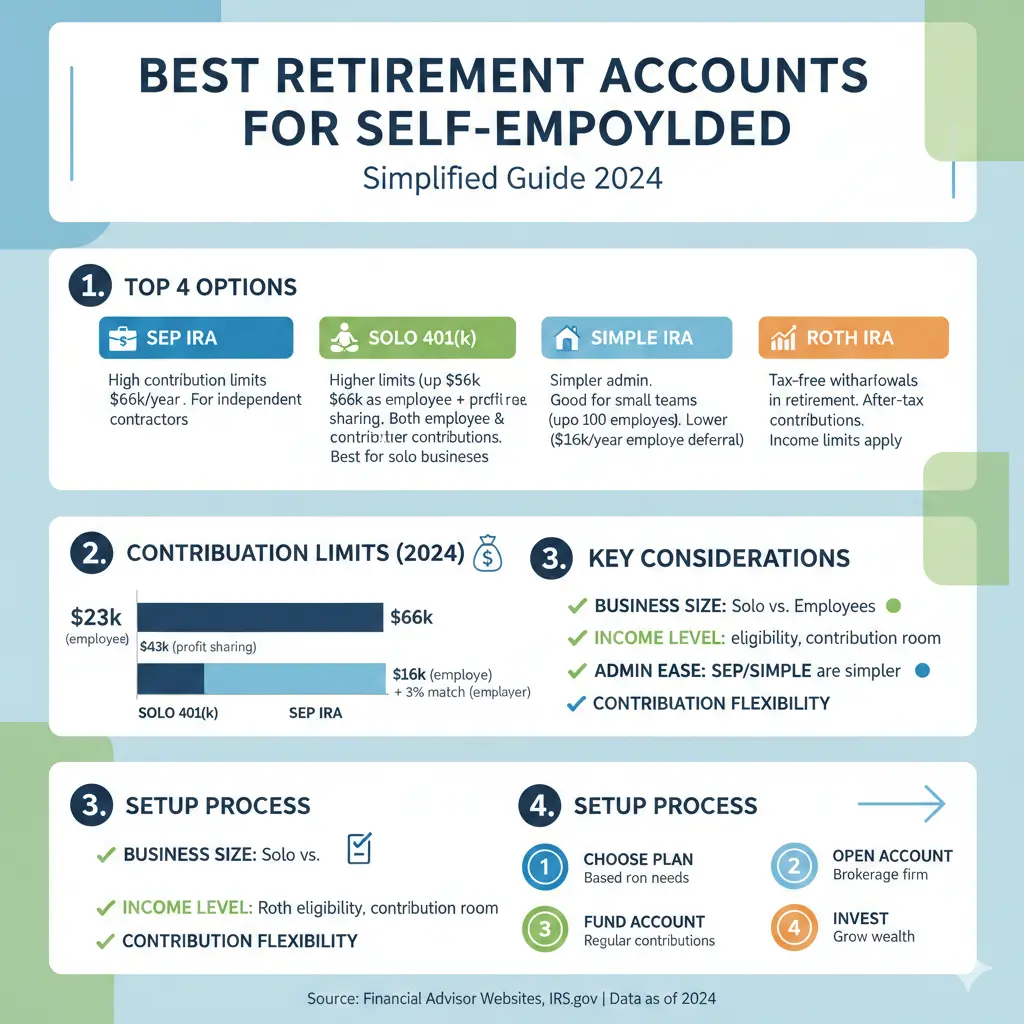
Best Retirement Accounts Available in Sri Lanka
1. BOC Abhimana Retirement Scheme
Bank of Ceylon's Abhimana Retirement Scheme is one of the most accessible options for self-employed individuals in Sri Lanka.[1] Here's what you need to know:
- Who can join: Any self-employed person aged 18 and above
- How it works: You make regular monthly deposits, and Bank of Ceylon credits monthly retirement benefits directly to your savings account
- Flexibility: You can withdraw your monthly pension from any BOC branch or ATM
- Important condition: If you miss 12 consecutive monthly instalments, the plan terminates and your outstanding amount is returned[1]
This scheme is straightforward and doesn't require complex paperwork. It's ideal if you want a simple, disciplined approach to retirement savings with guaranteed monthly income once you reach retirement age.
2. Commercial Bank's Future Pensions Plan
Commercial Bank offers the Future Pensions Plan, which caters to self-employed individuals aged 18 to 65.[1] Key features include:
- Pension range: Monthly pension amounts from Rs. 10,000 up to Rs. 100,000[1]
- Flexibility in amount: You choose how much monthly pension you want to receive in retirement
- Penalty for missed payments: If you miss payments for two consecutive months, the plan converts to an ordinary savings account at standard interest rates[1]
This option gives you more control over your retirement income level. If you want a higher monthly pension, you'll contribute more; if you prefer modest retirement income, you can contribute less. It's perfect for self-employed individuals with variable income who want to adjust contributions based on business performance.
3. NSB Pension +
National Savings Bank's Pension + scheme is available to Sri Lankan citizens aged 16 and above.[1] This scheme offers flexibility in how you receive your retirement benefits:
- Lifetime pension option: Receive a pension for life, with your nominee benefiting from any residual value
- Periodic pension option: Receive a pension over a specified period with no residual value
- Lump sum option: Take your entire balance as a one-time payment
- Combination option: Mix any of the above approaches[1]
NSB Pension + is excellent if you want maximum flexibility. You're not locked into one retirement income approach—you can tailor it to your personal circumstances and family needs.
Understanding Sri Lanka's Tax Benefits for Retirement Savings
One of the biggest advantages of using formal retirement accounts is tax efficiency. Sri Lanka's personal income tax rate is progressive, reaching a maximum of 24%.[2] Contributions to approved retirement schemes may provide tax relief, though it's worth confirming current regulations with the Inland Revenue Department.
Additionally, individuals whose assessable income doesn't exceed Rs. 1,800,000 for the year of assessment 2025/2026 are eligible to submit a valid self-declaration to the Inland Revenue Department.[3] This simplified process makes tax filing easier for many self-employed individuals with modest incomes.
How Much Should You Contribute?
The amount you contribute depends on three factors:
- Your current income: How much can you afford to set aside monthly without straining your business?
- Your desired retirement income: What monthly amount do you need to live comfortably?
- Your age and time horizon: The earlier you start, the less you need to contribute monthly due to compound growth
As a rough guide, if you're 35 and want a monthly retirement pension of Rs. 50,000, you'll need to contribute less monthly than someone starting at age 50 aiming for the same amount. The power of starting early cannot be overstated.
Comparing the Three Main Options
| Scheme | Provider | Age Range | Pension Range | Flexibility |
|---|---|---|---|---|
| Abhimana Retirement Scheme | Bank of Ceylon | 18+ | Based on contributions | Standard monthly payments |
| Future Pensions Plan | Commercial Bank | 18–65 | Rs. 10,000–Rs. 100,000 | Choose your pension level |
| Pension + | National Savings Bank | 16+ | Based on contributions | Multiple payout options |
Practical Steps to Get Started
Ready to open a retirement account? Here's what to do:
- Visit your chosen bank: Go to Bank of Ceylon, Commercial Bank, or NSB with your national identity card and proof of address
- Discuss your goals: Talk to the bank officer about your desired retirement income and timeline
- Complete the application: Fill out the retirement scheme application form
- Set up monthly contributions: Arrange automatic transfers from your business account to ensure you don't miss payments
- Review annually: Check your account balance and contributions yearly to ensure you're on track
Common Mistakes Self-Employed People Make
Avoid these pitfalls when planning retirement:
- Starting too late: The longer you wait, the more you'll need to contribute monthly to reach your retirement goal
- Missing payments: Irregular contributions derail your plan. Set up automatic transfers to stay disciplined
- Underestimating expenses: Many people think they'll need less in retirement than they actually do. Account for healthcare, living costs, and inflation
- Putting all eggs in one basket: Consider combining a retirement scheme with other savings (fixed deposits, investments) for diversification
- Ignoring inflation: A pension of Rs. 50,000 today won't have the same purchasing power in 20 years
Frequently Asked Questions
Can I contribute to multiple retirement schemes at once?
Yes, there's no legal restriction preventing you from contributing to more than one scheme. However, you'll want to ensure you can afford the combined monthly contributions without straining your business cash flow. Many self-employed individuals prefer focusing on one main scheme to keep things simple.
What happens to my retirement account if I pass away before retirement?
Most schemes allow you to nominate a beneficiary who'll receive the accumulated balance or ongoing pension. Confirm the nomination process with your chosen bank when opening the account.
Can I withdraw money from my retirement account early?
Early withdrawal terms vary by scheme. Generally, these accounts are designed for retirement, so early withdrawals may come with penalties or restrictions. Check your scheme's specific terms before opening an account.
How much should I contribute monthly?
There's no fixed amount—it depends on your income and retirement goals. Start with an amount you can comfortably afford, even if it's modest. You can increase contributions as your business grows. Many self-employed individuals contribute between Rs. 5,000 and Rs. 25,000 monthly.
Are there tax deductions for retirement contributions?
Tax treatment of retirement contributions can change annually. Consult with the Inland Revenue Department or a tax professional to understand current tax benefits for your chosen scheme.
What's the difference between a pension and a lump sum?
A pension provides regular monthly income for life (or a set period), while a lump sum gives you the entire balance at once. Pensions offer steady income security; lump sums give you flexibility but require disciplined spending.
Your Next Steps
Retirement planning isn't glamorous, but it's one of the most important financial decisions you'll make. As a self-employed person in Sri Lanka, you have three solid retirement schemes to choose from—each with different features to suit different needs.
Don't wait for the "perfect time" to start. The best time to open a retirement account is today. Visit your nearest Bank of Ceylon, Commercial Bank, or NSB branch this week. Have a conversation with a bank officer about which scheme fits your situation. Set up automatic monthly contributions, and let compound growth work in your favour over the coming decades.
Your future self will thank you for taking action now.
Sources & References
Useful Tools
Related Articles

How to Negotiate Credit Card Debt
Did you know that over 40% of Americans carry credit card debt from month to month? This staggering statistic is a sobering reminder that managing credit card debt is a challenge many of us face. I've seen it firsthand - a friend of mine was struggling to pay off a balance of over $10,000, with int...

How to Analyze Stocks for Beginners
If you're thinking about investing in stocks but don't know where to start, you're not alone. Many Sri Lankan investors feel overwhelmed by market jargon, complex charts, and endless investment options.
Cryptocurrency Trading for Beginners
A staggering 27% of millennials prefer investing in cryptocurrencies over traditional stocks, according to a Charles Schwab survey. This shift in investment preferences is not surprising, given the potential for high returns in the cryptocurrency market. If you're considering joining the ranks of c...

Best Bitcoin Wallets 2026
What Is a Bitcoin Wallet and Why Does It Matter? A Bitcoin wallet is software or hardware that stores your private keys—essentially the passwords that prove you own your cryptocurrency.