2026 Battery Maintenance Checklist for Sri Lankan Vehicles
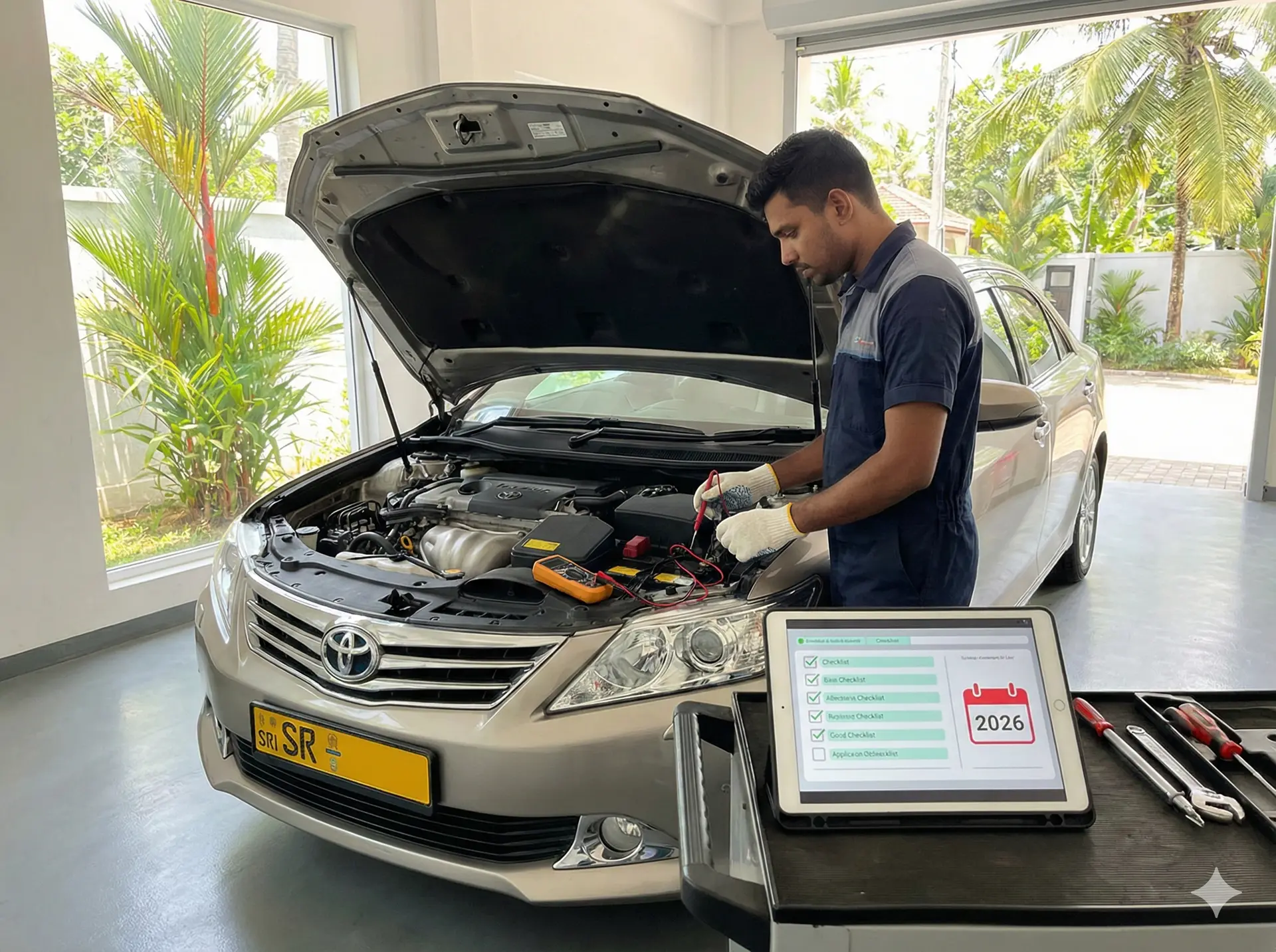
Comprehensive battery maintenance checklist for Sri Lankan vehicles. Learn how to prevent corrosion and extend battery life in tropical conditions.
The Lankawebsites editorial team curates, fact-checks, and updates guides on personal finance, property, health, immigration, legal, business, and lifestyle topics relevant to Lankawebsites readers. Articles are produced with AI assistance and reviewed by the editorial team before publication.
Your vehicle's battery works harder in Sri Lanka's hot, humid climate than it would in temperate countries. Studies show that for every 10°C rise in ambient temperature, a typical car battery's lifespan is cut in half . With our tropical conditions pushing temperatures well above 30°C year-round, that battery which might last five years elsewhere could fail in just two to three years here . The good news? Proper maintenance can significantly extend your battery's life and prevent those frustrating roadside breakdowns.
This comprehensive checklist will help you keep your vehicle's battery in peak condition despite Sri Lanka's challenging climate, focusing particularly on preventing corrosion—the most common issue in our humid weather.
Understanding Battery Challenges in Sri Lanka's Climate
Sri Lanka's tropical environment creates unique challenges for vehicle batteries that you won't find in cooler climates . The combination of high heat and humidity—often exceeding 85% in coastal areas—accelerates two destructive processes: internal chemical breakdown and external corrosion .
Heat increases the rate of chemical reactions inside your battery, causing faster degradation of electrodes and electrolytes . Meanwhile, our humid air promotes moisture accumulation around terminals and connections, leading to that characteristic white or greenish corrosion you've likely noticed . Coastal areas like Negombo, Galle, and Trincomalee face particularly severe corrosion due to salt-laden air, which can cause terminal oxidation at rates 3.7 times higher than inland areas .
How Long Should Your Battery Last?
In Sri Lanka's climate, you can typically expect a car battery to last 2.5 to 3 years with air conditioning use . Batteries in vehicles without regular AC use or those parked in shaded areas may last slightly longer, whilst those in vehicles making frequent short trips or parked in direct sunlight often fail sooner . If your battery is approaching the three-year mark, it's worth having it professionally tested even if it seems to be working fine.

Monthly Battery Maintenance Checklist
Performing these checks once a month will help you catch problems early and prevent unexpected failures. Set a reminder on your phone for the same day each month to build the habit.
Visual Inspection
Start by opening your bonnet and locating your battery. Look for any physical damage such as cracks, bulges, or leaks in the battery case . A swollen or bloated battery case indicates overcharging and should be addressed immediately, as it can lead to leaks or even explosions . Check that the battery is securely mounted—vibrations from a loose battery can cause internal damage and short circuits .
Inspect the battery terminals and cable connections for corrosion, which appears as a white, blue, or greenish powdery substance . Even minor corrosion can create resistance that prevents your car from starting efficiently. Also check the battery tray beneath the battery for accumulated dirt, debris, or acid leaks .
Terminal Inspection and Tightness Check
Ensure battery terminals are tight and secure without being overtightened . Loose terminals cause intermittent starting problems and poor electrical connections. You should be able to gently wiggle the cable clamps, but they shouldn't move on the terminal posts. If they're loose, carefully tighten them with a spanner—but don't force them, as overtightening can crack the terminal.
Check for Moisture Accumulation
In our humid climate, condensation can form around terminals and wiring . Regularly wipe down the battery surface with a clean, dry cloth to remove moisture. Ensure any battery cover or shield is intact, as these help protect against moisture buildup .
Deep Cleaning: Removing Battery Corrosion
Corrosion is the most common battery issue in Sri Lanka's humid climate. Here's a step-by-step guide to safely clean it, preventing the stranding issues that plague many drivers during the rainy season.
Materials You'll Need
Gather these items before starting: baking soda, warm water, a small bowl, protective gloves and safety glasses, an old toothbrush or wire brush, clean rags or paper towels, and a spanner set . You may also want battery terminal spray or petroleum jelly for protection after cleaning .
Step-by-Step Cleaning Process
1. Safety first: Turn off your engine and remove the keys. Put on your safety glasses and gloves to protect against battery acid .
2. Disconnect the battery: Always disconnect the negative terminal (marked with a minus sign or black cable) first, then the positive terminal (marked with a plus sign or red cable) . This prevents short circuits during cleaning.
3. Prepare the cleaning solution: Mix four tablespoons of baking soda with about a quarter cup of warm water in your bowl . Stir until you get a paste-like consistency similar to toothpaste .
4. Apply the paste: Using your brush, apply the baking soda paste to the corroded areas. The mixture will fizz as it neutralises the battery acid . Work the paste into any large chunks of corrosion, brushing slowly away from you to avoid splashing .
5. Scrub the terminals: Use the wire brush to scrub away corrosion from both the battery posts and the cable clamps. Continue until all visible corrosion is removed and the metal looks clean .
6. Clean the battery tray: Don't forget the battery tray beneath the battery, as accumulated acid and debris here can cause corrosion . Clean it with the same baking soda solution.
7. Rinse and dry: Wipe everything down with a damp rag to remove the baking soda residue, then dry thoroughly with a clean cloth . Ensure no moisture remains before reconnecting.
8. Apply protective coating: Once everything is clean and dry, apply a thin layer of battery terminal protector spray or petroleum jelly to the terminals . This creates a moisture barrier that helps prevent future corrosion.
9. Reconnect the battery: Reconnect the positive terminal first, then the negative terminal—the reverse order of removal . Tighten the connections securely.
Quarterly Maintenance Tasks
Every three months, perform these additional checks to ensure your battery's charging system is functioning properly and to catch developing issues.
Test Battery Voltage
Use a multimeter to check your battery's voltage. A fully charged, healthy battery should read around 12.6 volts or higher when the engine is off . If your reading is below 12.4 volts, your battery may be undercharged and could be nearing the end of its lifespan . With the engine running, voltage should read between 13.7 and 14.7 volts, indicating your alternator is properly charging the battery .
Check Electrolyte Levels
If you have a non-sealed (serviceable) battery, carefully remove the cell caps and check the electrolyte levels . The fluid should cover the internal plates. If levels are low, top up with distilled water only—never tap water, as minerals in tap water can damage your battery . Avoid overfilling, as this can cause spillage during charging or when temperatures rise .
Inspect the Charging System
Your vehicle's charging system is crucial for battery health. A malfunctioning alternator can lead to overcharging or undercharging, both of which significantly reduce battery lifespan . If you notice dimming lights, difficulty starting, or if your battery keeps dying despite being relatively new, have a qualified mechanic check your alternator and charging system.
Best Practices for Sri Lankan Conditions
Beyond regular maintenance, these practices will help maximise your battery's lifespan in our climate.
Parking Strategies
Whenever possible, park in shaded areas or a garage to minimise direct exposure to sunlight . This helps regulate battery temperature and reduces heat stress. In Colombo and other urban areas where covered parking isn't always available, consider using a windscreen sunshade to reduce interior heat, which indirectly helps your battery.
Driving Habits
Avoid frequent short trips when possible, as they prevent your alternator from fully recharging the battery . The strain of starting your engine combined with running air conditioning and accessories drains the battery, but short journeys don't give the alternator enough time to replenish that charge. Try to combine errands into longer trips of at least 20-30 minutes .
Keep the Battery Dry
During Sri Lanka's monsoon seasons (May to September in the southwest, October to January in the northeast), pay extra attention to keeping your battery and engine bay dry . After driving through heavy rain or floods, open your bonnet and wipe down the battery to remove moisture.
Use Quality Batteries Suited to Tropical Climates
When replacement time comes, choose batteries specifically designed for hot, humid climates. Brands like Exide and Amaron manufacture batteries suited to Sri Lankan conditions . Whilst they may cost more upfront, these batteries are engineered to handle our tropical environment and typically offer better value over their lifespan.
Consider Battery Insulation
Battery heat shields or insulation wraps can help regulate temperature by deflecting heat from the engine bay . These are particularly helpful if your battery is mounted in a hot area of the engine compartment.
When to Replace Your Battery
Even with excellent maintenance, all batteries eventually need replacement. Watch for these warning signs that indicate it's time for a new battery.
Warning Signs
Replace your battery if you notice: slow engine cranking, especially in the morning; dimming headlights or interior lights when idling; a battery warning light on your dashboard; the battery age exceeding three years, even if it seems functional; frequent jump-starts needed; or a swollen battery case .
Professional Testing
Have your battery professionally tested at least once a year, particularly before the start of monsoon season when battery failures are most common . Most automotive service centres in Colombo, Kandy, Galle, and other major cities offer free battery testing. This simple check can prevent inconvenient breakdowns.
Staying Powered in Paradise
Regular battery maintenance isn't just about preventing breakdowns—it's about maximising your investment and ensuring reliable transportation. In Sri Lanka's demanding tropical climate, a battery that receives proper care can serve you well for three years or more, whilst a neglected one might fail in half that time.
Set monthly reminders to perform visual inspections and terminal checks. Keep a simple maintenance kit (baking soda, a brush, and protective spray) in your garage. Clean corrosion as soon as you spot it rather than waiting for it to worsen. These small efforts will save you from the inconvenience and expense of unexpected battery failures.
If you're uncomfortable performing any of these maintenance tasks yourself, visit a reputable automotive service centre. The modest cost of professional maintenance is far less than a new battery or the hassle of being stranded. Your vehicle's battery is its heart—treat it well, and it'll keep you moving through whatever adventures Sri Lanka has in store.
Frequently Asked Questions
Sources & References
-
1
Car Battery Maintenance Tips for Conditions Unique to Asia — www.rbbattery.com
-
2
Average Lifetime of a Car Battery in Sri Lanka — forums.autolanka.com
-
3
Enhancing EV Battery Life in Sri Lankan Tropical Weather — www.linkedin.com
-
4
Sri Lankan Tropical Humidity Batteries: Redefining Energy Resilience — esite.hj-net.com
-
5
How Heat and Humidity Impact Your Car Battery's Performance — www.batterycrew.co.za
-
6
How to Look After Your Used Truck in Sri Lanka's Climate — grctrucks.com
-
7
Car Battery Care Tips for Hot & Humid Climates — davidmills.net
-
8
15 Battery Maintenance Checklist Every Car Owner Needs — heartautocare.com
-
9
Used Truck Maintenance in Sri Lanka's Climate — grctrucks.com
-
10
Battery Maintenance in Hot Humid Climates — davidmills.net
-
11
Addressing Humidity Challenges for Car Batteries — davidmills.net
-
12
How to Clean Car Battery Corrosion Safely — www.interstatebatteries.com
-
13
Wurth Battery Terminal Protector — takas.lk
-
14
How to Clean Battery Corrosion — andreadekker.com
-
15
Baking Soda Cleaning Solution Recipe for Battery Terminals — www.interstatebatteries.com
-
16
Voltage Level Monitoring for Car Batteries — www.batterycrew.co.za
-
17
Check Electrolyte Levels in Car Batteries — davidmills.net
-
18
Protection Tips for Car Batteries in Heat and Humidity — www.batterycrew.co.za
-
19
Drive Smart: Sri Lanka's Seasonal Car Care Guide — www.mercstop.com
-
20
Exide Motorcycle Batteries for Sri Lanka — www.brownsgroup.lk
-
21
Why Car Batteries Fail in Summer Heat — pedalcommander.com
-
22
Cleaning Battery Corrosion: Baking Soda vs Water Discussion — www.reddit.com
Related Articles
Best Engine Oils for Sri Lankan Roads in 2026: Comparisons and Recommendations
Driving on Sri Lanka's roads means battling heat, humidity, dust from the dry zones, and heavy traffic in Colombo. With temperatures often soaring above 30°C and our tropical climate accelerating engi
Preparing Your Car for Sri Lanka's 2026 Southwest Monsoon
Protect your vehicle from monsoon damage with this comprehensive preparation guide for Sri Lanka's 2026 southwest monsoon season.
Top Mechanics in Colombo for 2026 Car Servicing
Discover Colombo's most trusted mechanics for 2026, from DIMO and Sterling to independent workshops. Get expert tips on choosing reliable car service.

Hybrid vs Petrol Cars: Best Choice for Sri Lanka 2026
Comparing hybrid vs petrol cars in Sri Lanka for 2026. Discover real fuel costs, maintenance expenses, and which option suits your driving needs best.