Fuel Efficiency Hacks for Sri Lankan Drivers Facing 2026 Fuel Prices
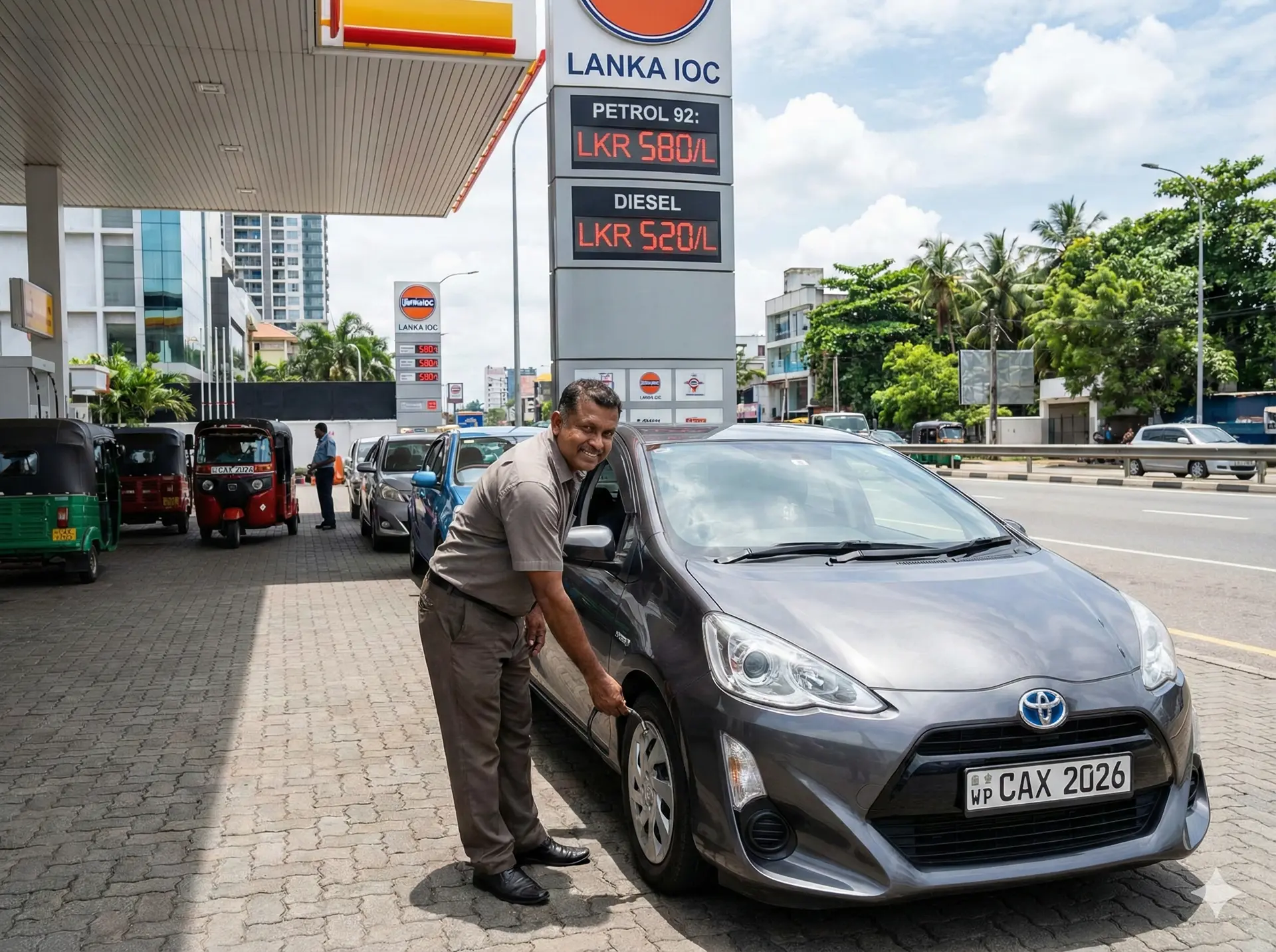
Practical fuel-saving tips for Sri Lankan drivers facing 2026 fuel prices. Learn maintenance and driving hacks that reduce consumption by up to 25%.
The Lankawebsites editorial team curates, fact-checks, and updates guides on personal finance, property, health, immigration, legal, business, and lifestyle topics relevant to Lankawebsites readers. Articles are produced with AI assistance and reviewed by the editorial team before publication.
With petrol at Rs. 292 per litre and diesel at Rs. 277 as of February 2026, Sri Lankan drivers are feeling the pinch at the pump . Whilst fuel prices have seen slight reductions from previous months, every rupee counts when you're filling up regularly. The good news? You don't need an expensive hybrid to slash your fuel costs – smart driving habits and simple maintenance can cut your consumption by up to 25%.
Understanding Your Fuel Costs in 2026
The Ceylon Petroleum Corporation reduced Petrol 92 Octane and Auto Diesel prices by Rs. 2 each in February 2026, bringing relief to motorists . However, Petrol 95 Octane remains at Rs. 340 per litre, whilst Super Diesel sits at Rs. 323 . These prices fluctuate monthly based on global oil markets, making fuel efficiency more crucial than ever for household budgets.
For the average Sri Lankan driver covering 1,000 km monthly, improving fuel economy by just 15% could save over Rs. 5,000 annually. Multiply that across a family with multiple vehicles, and the savings become substantial .

Master Your Driving Technique
Accelerate Gently and Smoothly
Aggressive driving is the fastest way to drain your tank. Rapid acceleration, harsh braking, and speeding can lower your fuel economy by up to 40% in stop-and-go traffic and 30% on highways . Instead, imagine you've got a cup of tea on your dashboard – accelerate smoothly enough that you wouldn't spill a drop.
Take about 5 seconds to reach 20 km/h from a complete stop . This gentle approach gives your engine time to work efficiently rather than guzzling fuel to meet sudden power demands. On Colombo's congested roads, this technique alone can save litres every week.
Maintain Steady Speeds
Constantly varying your speed – accelerating hard, then braking – can increase fuel consumption by 20-48% . When traffic permits, use your accelerator to maintain a consistent pace rather than the stop-start pattern many drivers fall into.
On highways like the Southern Expressway, cruise control helps maintain steady speeds and can improve efficiency significantly . However, switch it off in hilly areas like Kandy or Nuwara Eliya – letting your vehicle naturally slow uphill and regain momentum downhill actually saves more fuel than cruise control fighting to maintain constant speed.
Reduce Idling Time
Sri Lankan drivers often leave engines running whilst waiting – outside schools, at railway crossings, or in bank queues. If you're stopped for more than one minute, turn off your engine . Modern vehicles use less fuel restarting than idling for extended periods, and you'll reduce emissions too.
Essential Maintenance for Maximum Efficiency
Check Tyre Pressure Monthly
This is the single easiest way to improve fuel economy. Under-inflated tyres increase rolling resistance, forcing your engine to work harder. Properly inflated tyres can improve fuel efficiency by up to 3%, whilst every 1 PSI drop in pressure reduces economy by approximately 0.3% .
Check your tyre pressure monthly and before long journeys. You'll find the correct PSI on a sticker inside your driver's door or in your owner's manual. In Sri Lanka's heat, check pressure when tyres are cold – ideally first thing in the morning before you've driven anywhere.
Regular Oil Changes Matter
Fresh, high-quality engine oil reduces friction and helps your engine run smoothly. Using the manufacturer's recommended grade and changing oil on schedule can improve fuel economy . Neglected oil becomes thick and dirty, making your engine work harder and consume more fuel.
Replace Air Filters
A clogged air filter restricts airflow to your engine, reducing efficiency. Replacing a dirty air filter can improve fuel economy, particularly in dusty Sri Lankan conditions where filters clog faster than in temperate climates . Check your filter every few months and replace it when it looks dirty.
Fix Problems Promptly
Ignoring that check engine light? A faulty oxygen sensor alone can reduce fuel economy by up to 40%, whilst a poorly tuned engine might cost you 4% in efficiency . Address mechanical issues quickly – the money you save on fuel will often cover the repair cost.
Smart Habits That Save Litres
Lighten Your Load
Every extra 50 kg in your vehicle reduces fuel economy by approximately 1-2% . Clean out your boot – those old cricket bats, unused tools, and accumulated junk are costing you money. Remove roof racks when you're not using them, as they create aerodynamic drag even when empty.
Use Air Conditioning Wisely
Air conditioning can increase fuel consumption by 8-20%, depending on conditions . In Sri Lanka's heat, that's a difficult trade-off. At low speeds around town, consider opening windows instead. However, at highway speeds above 80 km/h, closed windows with AC is actually more efficient than the drag created by open windows .
When you first start your car on a hot day, open the windows briefly to let hot air escape before turning on the AC. Once the cabin cools, reduce the fan speed or increase the temperature slightly – you don't need it blasting continuously once you're comfortable .
Plan and Combine Trips
A cold engine uses significantly more fuel than a warm one. Combining errands into one trip rather than making multiple short journeys can dramatically improve overall fuel economy . Plan your route to avoid backtracking and heavy traffic areas when possible.
Avoid Peak Traffic
Sitting in Colombo's rush-hour gridlock burns fuel whilst going nowhere. Frequent braking, idling, and acceleration waste petrol and diesel . If your schedule allows, travel during off-peak hours. The time you save and fuel you conserve make it worthwhile.
Shift Gears Efficiently
For manual transmission drivers, shift up at around 2,000 RPM rather than revving high before changing gears . Higher gears are more economical, so get into top gear as soon as traffic conditions allow. When slowing down, stay in gear with your foot off the accelerator – this cuts fuel supply to the engine .
Long-Term Strategies
Consider Your Vehicle Choice
When it's time to replace your vehicle, fuel efficiency should be a top consideration. Smaller engines, hybrid technology, and modern fuel-efficient designs can halve your fuel costs compared to older, larger vehicles. Calculate the total cost of ownership, not just the purchase price.
Explore Alternatives
Can you walk, cycle, or use public transport for some journeys? Car-pooling with colleagues splits fuel costs and reduces wear on your vehicle. Even switching one or two trips per week to alternative transport adds up over a year .
Frequently Asked Questions
Sources & References
-
1
Sri Lanka Fuel Price Revision February 2026 — www.onlanka.com
-
2
Ceylon Petroleum Corporation Official — ceypetco.gov.lk
-
3
Sri Lanka Gasoline Prices — www.globalpetrolprices.com
-
4
Maximizing Fuel Efficiency Tips — www.eastrise.com
-
5
Fuel-Efficient Driving Techniques — natural-resources.canada.ca
-
6
Fuel Efficient Driving Guide — learn.eartheasy.com
-
7
Driving Tips to Increase Gas Mileage — www.acg.aaa.com
-
8
Tire Maintenance and Fuel Efficiency — www.continental-tires.com
-
9
How Oil Changes Maximize Fuel Efficiency — www.parracarcare.com
-
10
Vehicle Maintenance for Fuel Economy — www.eastrise.com
-
11
How Much Fuel Does Air Conditioning Use — www.kwik-fit.com
-
12
Do Cars Use More Fuel With AC On — myjackfrost.com.au
-
13
Practical Eco-Driving Strategies — www.winssolutions.org
Useful Tools
Related Articles
Best Engine Oils for Sri Lankan Roads in 2026: Comparisons and Recommendations
Driving on Sri Lanka's roads means battling heat, humidity, dust from the dry zones, and heavy traffic in Colombo. With temperatures often soaring above 30°C and our tropical climate accelerating engi
Preparing Your Car for Sri Lanka's 2026 Southwest Monsoon
Protect your vehicle from monsoon damage with this comprehensive preparation guide for Sri Lanka's 2026 southwest monsoon season.
Top Mechanics in Colombo for 2026 Car Servicing
Discover Colombo's most trusted mechanics for 2026, from DIMO and Sterling to independent workshops. Get expert tips on choosing reliable car service.
Hybrid vs Petrol Cars: Best Choice for Sri Lanka 2026
Comparing hybrid vs petrol cars in Sri Lanka for 2026. Discover real fuel costs, maintenance expenses, and which option suits your driving needs best.