How Many Tablespoons in a Cup
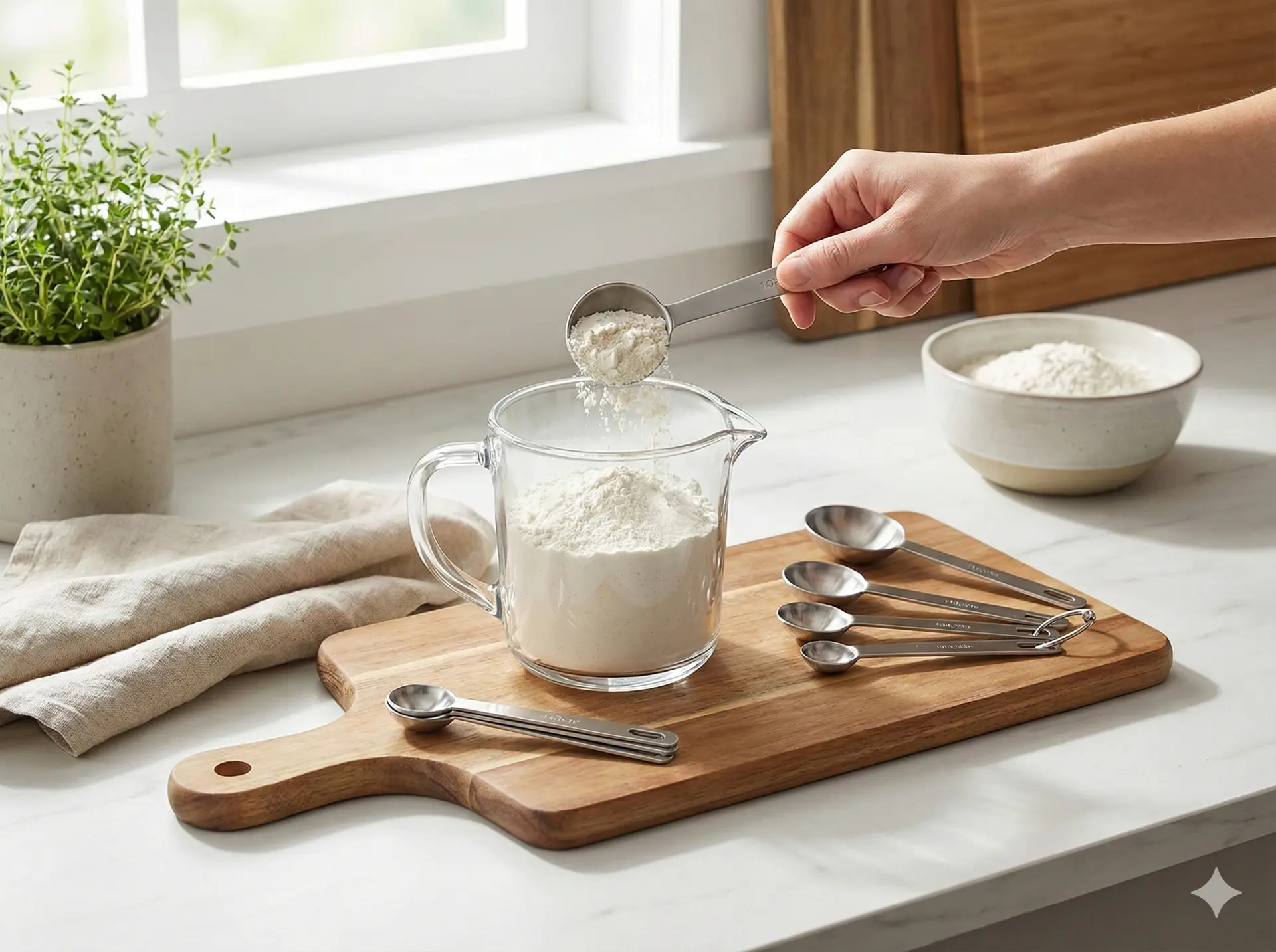
As you stand in your kitchen, surrounded by the tools of your trade, you're faced with a question that has puzzled many a cook and baker: how many tablespoons are in a cup? You may think it's a simple query, but the answer can make all the difference in the success of your recipe. You're about to l
The Lankawebsites editorial team curates, fact-checks, and updates guides on personal finance, property, health, immigration, legal, business, and lifestyle topics relevant to Lankawebsites readers. Articles are produced with AI assistance and reviewed by the editorial team before publication.
As you stand in your kitchen, surrounded by the tools of your trade, you're faced with a question that has puzzled many a cook and baker: how many tablespoons are in a cup? You may think it's a simple query, but the answer can make all the difference in the success of your recipe. You're about to learn the secrets of measuring cups and spoons, and how to use them to achieve perfect conversions every time. By the end of this article, you'll be equipped with the knowledge to tackle even the most complex recipes with confidence.
Your journey to mastering cup to tablespoon conversions begins with a deep understanding of the tools of the trade. Measuring cups and spoons are the foundation of accurate cooking and baking, and using them correctly is essential to achieving the desired results. You'll learn about the different types of measuring cups and spoons, how to use them, and the common mistakes to avoid. So, let's get started on this journey to culinary precision, and explore the world of measuring cups and spoons.
Introduction to Measuring Cups and Spoons
Measuring cups and spoons are the most basic tools in your kitchen, yet they're often the most misunderstood. Measuring cups come in various sizes, including 1 cup, 2 cup, 4 cup, and 8 cup. Each size has its own set of markings, usually in cups, ounces, and milliliters. When it comes to measuring spoons, you'll typically find sets that include 1 tablespoon, 1 teaspoon, 1/2 teaspoon, 1/4 teaspoon, and sometimes even 1/8 teaspoon. Understanding the different types of measuring cups and spoons is essential to accurate conversions.
For example, when using a 1 cup measuring cup, you'll notice that it has markings for 1/4 cup, 1/2 cup, and 3/4 cup. These markings are essential for measuring ingredients accurately. Measuring spoons, on the other hand, are used for smaller measurements, such as adding a pinch of salt or a dash of spice. Using the right size measuring cup and spoon is critical to achieving the desired results in your recipe. A good set of measuring cups and spoons is an investment that will pay off in the long run, as it will help you to produce consistent and accurate results.
In addition to understanding the different types of measuring cups and spoons, it's also important to know how to use them correctly. When measuring dry ingredients, such as flour or sugar, it's essential to scoop the ingredient into the measuring cup and then level it off with a straight edge. This ensures that you're getting an accurate measurement. When measuring liquids, such as water or oil, it's best to place the measuring cup on a flat surface and read the measurement at eye level. By following these simple tips, you'll be well on your way to mastering the art of measuring cups and spoons.

How Many Tablespoons in a Standard Cup
A standard cup is equal to 16 tablespoons. This conversion rate is essential to understanding how to measure ingredients accurately. To understand why this conversion rate is important, let's take a look at how it's calculated. A standard cup is equal to 8 fluid ounces, and there are 2 tablespoons in 1 fluid ounce. Therefore, there are 16 tablespoons in 1 cup. This conversion rate is critical to achieving accurate results in your recipes.
For example, if a recipe calls for 1 cup of sugar, you can convert this to tablespoons by multiplying the number of cups by 16. So, 1 cup of sugar is equal to 16 tablespoons of sugar. This conversion rate is essential to understanding how to measure ingredients accurately, and it's a critical component of mastering cup to tablespoon conversions. By understanding this conversion rate, you'll be able to tackle even the most complex recipes with confidence.
In addition to understanding the conversion rate, it's also important to know how to apply it in practice. When converting cups to tablespoons, it's essential to consider the ingredient being measured. For example, when measuring flour, it's best to use a digital scale to ensure accuracy. However, when measuring liquids, such as water or oil, it's best to use a measuring cup. By understanding how to apply the conversion rate in practice, you'll be able to achieve accurate results in your recipes.
Converting Cups to Tablespoons for Different Ingredients
When converting cups to tablespoons, it's essential to consider the ingredient being measured. Different ingredients have different densities, which affect the conversion rate. For example, 1 cup of flour is not equal to 1 cup of sugar, as flour is less dense than sugar. To accurately convert cups to tablespoons, you need to understand the density of the ingredient being measured.
For example, when measuring flour, 1 cup is equal to 12-13 tablespoons, depending on how the flour is scooped. When measuring sugar, 1 cup is equal to 16-17 tablespoons, depending on the type of sugar being used. When measuring liquids, such as water or oil, 1 cup is equal to 16 tablespoons. By understanding the density of the ingredient being measured, you'll be able to achieve accurate results in your recipes.
In addition to understanding the density of the ingredient, it's also important to consider the type of ingredient being measured. For example, when measuring brown sugar, it's best to pack the sugar into the measuring cup to ensure accuracy. When measuring honey or syrup, it's best to use a digital scale to ensure accuracy. By understanding the type of ingredient being measured, you'll be able to achieve accurate results in your recipes.
Some common ingredients and their conversion rates include:
- Flour: 1 cup = 12-13 tablespoons
- Sugar: 1 cup = 16-17 tablespoons
- Brown sugar: 1 cup = 12-13 tablespoons (packed)
- Honey or syrup: 1 cup = 16 tablespoons (use a digital scale for accuracy)
Using Measuring Cups and Spoons for Accurate Conversions
When using measuring cups and spoons, it's essential to follow a few simple tips to ensure accurate conversions. First, always use a flat surface when measuring liquids, and read the measurement at eye level. Second, when measuring dry ingredients, such as flour or sugar, scoop the ingredient into the measuring cup and then level it off with a straight edge. Third, always use the right size measuring cup and spoon for the ingredient being measured.
For example, when measuring flour, it's best to use a 1 cup measuring cup and a straight edge to level off the flour. When measuring liquids, such as water or oil, it's best to use a 1 cup measuring cup and read the measurement at eye level. By following these simple tips, you'll be able to achieve accurate results in your recipes.
In addition to following these tips, it's also important to invest in a good set of measuring cups and spoons. A good set of measuring cups and spoons is an investment that will pay off in the long run, as it will help you to produce consistent and accurate results. Look for measuring cups and spoons that are made of durable materials, such as stainless steel or silicone, and that have clear markings and measurements.
By using measuring cups and spoons correctly, you'll be able to achieve accurate results in your recipes, and you'll be able to tackle even the most complex recipes with confidence. Remember, accurate measurements are the foundation of good cooking and baking, and using measuring cups and spoons correctly is essential to achieving success in the kitchen.
Common Mistakes to Avoid When Converting Cups to Tablespoons
When converting cups to tablespoons, there are several common mistakes to avoid. One of the most common mistakes is not considering the density of the ingredient being measured. Different ingredients have different densities, which affect the conversion rate. For example, 1 cup of flour is not equal to 1 cup of sugar, as flour is less dense than sugar.
Another common mistake is not using the right size measuring cup and spoon. Using a measuring cup that is too small or too large can result in inaccurate measurements, which can affect the final result of the recipe. For example, if a recipe calls for 1 cup of flour, using a 1/2 cup measuring cup can result in too little flour being used, which can affect the texture and consistency of the final product.
In addition to these mistakes, it's also important to avoid not leveling off ingredients when measuring dry ingredients. When measuring dry ingredients, such as flour or sugar, it's essential to scoop the ingredient into the measuring cup and then level it off with a straight edge. This ensures that you're getting an accurate measurement, and it helps to prevent errors in the recipe.
Some other common mistakes to avoid include:
- Not reading the measurement at eye level when measuring liquids
- Not using a digital scale when measuring ingredients that require high accuracy
- Not considering the type of ingredient being measured, such as packed brown sugar or honey
Mastering Cup to Tablespoon Conversions for Perfect Recipes
Mastering cup to tablespoon conversions is essential to achieving perfect recipes. By understanding how to convert cups to tablespoons, you'll be able to tackle even the most complex recipes with confidence. To master cup to tablespoon conversions, it's essential to practice, practice, practice. The more you practice, the more comfortable you'll become with converting cups to tablespoons, and the more accurate your measurements will be.
For example, let's say you're making a recipe that calls for 2 cups of flour. To convert this to tablespoons, you would multiply the number of cups by 12-13, depending on the type of flour being used. So, 2 cups of flour would be equal to 24-26 tablespoons of flour. By understanding how to convert cups to tablespoons, you'll be able to achieve accurate results in your recipes, and you'll be able to tackle even the most complex recipes with confidence.
In addition to practicing cup to tablespoon conversions, it's also important to invest in a good set of measuring cups and spoons. A good set of measuring cups and spoons is an investment that will pay off in the long run, as it will help you to produce consistent and accurate results. Look for measuring cups and spoons that are made of durable materials, such as stainless steel or silicone, and that have clear markings and measurements.
Some examples of recipes that require accurate cup to tablespoon conversions include:
- Cakes and cupcakes, which require precise measurements of flour, sugar, and liquids
- Cookies, which require precise measurements of flour, sugar, and butter
- Bread, which requires precise measurements of flour, yeast, and liquids
Key Takeaways
In conclusion, mastering cup to tablespoon conversions is essential to achieving perfect recipes. By understanding how to convert cups to tablespoons, you'll be able to tackle even the most complex recipes with confidence. Remember to always use a flat surface when measuring liquids, and to level off ingredients when measuring dry ingredients. Invest in a good set of measuring cups and spoons, and practice, practice, practice to become more comfortable with converting cups to tablespoons.
So, the next time you're faced with a recipe that requires cup to tablespoon conversions, don't be intimidated. With the knowledge and skills you've gained from this article, you'll be able to tackle even the most complex recipes with confidence. What recipe will you try first, and how will you apply the skills you've learned to achieve perfect results?
Frequently Asked Questions
Related Articles

How Many Feet in a Mile
Have you ever found yourself wondering how many feet are in a mile? Perhaps you're a runner trying to track your progress, a contractor estimating materials for a construction project, or simply someone who's curious about the world around you. Whatever your reason, understanding the relationship b

How Much Sleep Do I Need
Have you ever wondered how much sleep you really need? I think it's a question we've all asked ourselves at some point, especially after a long night of tossing and turning. You might be surprised to learn that the amount of sleep you need can vary greatly depending on your age, lifestyle, and othe
How Much Water Should I Drink
Have you ever found yourself feeling sluggish, tired, and struggling to focus, only to realize that you haven't had a glass of water all day? You're not alone. Many of us underestimate the importance of staying hydrated, and it can have a significant impact on our overall health and wellbeing. As y
How Many Ounces in a Cup
Did you know that a staggering 75% of home cooks in the United States use cups as their primary unit of measurement when following recipes? This statistic, reported by the National Kitchen and Bath Association, highlights the importance of understanding the relationship between cups and ounces. As