How Many Ounces in a Cup
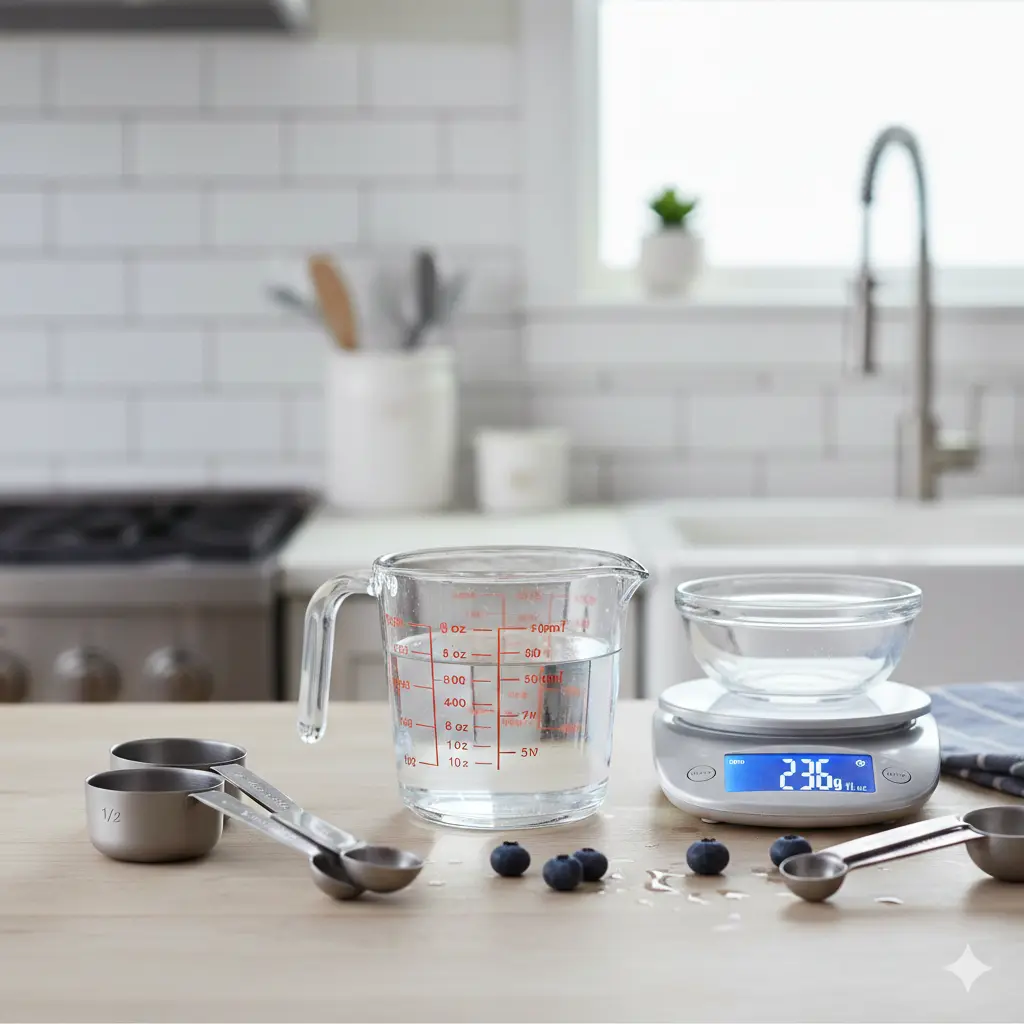
Did you know that a staggering 75% of home cooks in the United States use cups as their primary unit of measurement when following recipes? This statistic, reported by the National Kitchen and Bath Association, highlights the importance of understanding the relationship between cups and ounces. As...
Did you know that a staggering 75% of home cooks in the United States use cups as their primary unit of measurement when following recipes? This statistic, reported by the National Kitchen and Bath Association, highlights the importance of understanding the relationship between cups and ounces. As you cook and bake, you may have wondered how many ounces are in a cup, and whether this conversion applies to both dry and liquid ingredients. In this article, you will learn the answers to these questions and gain a deeper understanding of measurement conversions, enabling you to cook with confidence and precision.
By the end of this article, you will be able to accurately convert between cups and ounces, and apply this knowledge to your favorite recipes. You will also learn about the differences between dry and liquid measurements, and how to make conversions for various types of cups. Whether you are a seasoned cook or just starting out, mastering the art of measurement conversions will take your cooking to the next level, and help you to achieve consistent results in the kitchen.
Introduction to Cups and Ounces
A cup is a unit of measurement that is commonly used in cooking and baking. It is defined as the volume of a cup, which is equal to 16 tablespoons or 48 teaspoons. However, when it comes to dry ingredients, such as flour or sugar, a cup is not always a straightforward measurement. This is because the density of dry ingredients can vary, affecting the volume of the cup. For example, a cup of flour can weigh anywhere from 4 to 6 ounces, depending on how it is packed and the type of flour used.
An ounce, on the other hand, is a unit of weight or mass. It is defined as 1/16 of a pound or 28.35 grams. Ounces are often used to measure the weight of ingredients, particularly in recipes that require precise measurements. When working with ounces, it is essential to use a digital kitchen scale to ensure accuracy. According to a study published in the Journal of Food Science, using a digital kitchen scale can reduce measurement errors by up to 30%.
In addition to understanding the definitions of cups and ounces, it is also important to consider the context in which they are used. In the United States, cups are the primary unit of measurement in most recipes, while in other countries, such as the United Kingdom and Australia, metric units are more commonly used. By understanding the different measurement systems and how to convert between them, you can expand your culinary repertoire and explore new recipes from around the world.
How Many Ounces in a Cup
One of the most common questions in cooking is how many ounces are in a cup. The answer to this question depends on the type of cup being used. In the United States, a standard cup is equal to 8 ounces. This is known as a fluid cup, and it is used to measure liquids such as water, milk, and oil. However, when measuring dry ingredients, such as flour or sugar, a cup is not always equal to 8 ounces. This is because the density of dry ingredients can vary, affecting the weight of the cup.
For example, a cup of all-purpose flour typically weighs around 4.5 ounces, while a cup of granulated sugar weighs around 7 ounces. To make matters more complicated, there are different types of cups, including dry cups and liquid cups. A dry cup is used to measure dry ingredients, while a liquid cup is used to measure liquids. When using a dry cup, it is essential to level off the ingredients to ensure accurate measurements.
Conversions for different types of cups can be confusing, but there are some general guidelines to follow. For example, a metric cup is equal to 8.45 ounces, while a British cup is equal to 10 ounces. By understanding these conversions, you can easily switch between different recipes and measurement systems, and achieve consistent results in the kitchen.
Dry vs Liquid Measurements
When it comes to measuring ingredients, it is essential to distinguish between dry and liquid measurements. Dry measurements are used for ingredients such as flour, sugar, and cocoa powder, while liquid measurements are used for ingredients such as water, milk, and oil. Dry measurements are typically measured using a dry cup, which is designed to scoop and level dry ingredients.
Liquid measurements, on the other hand, are typically measured using a liquid cup, which is designed to measure the volume of liquids. When measuring liquids, it is essential to use a liquid cup, as dry cups can be inaccurate. For example, a dry cup of water would not be the same as a liquid cup of water, due to the differences in density and volume.
In addition to understanding the differences between dry and liquid measurements, it is also important to consider the context in which they are used. In some recipes, such as baked goods, accurate measurements are critical, while in other recipes, such as soups and stews, measurements can be more flexible. By understanding the nuances of dry and liquid measurements, you can refine your cooking techniques and achieve better results in the kitchen.
Common Conversions and Equivalents
When cooking and baking, it is often necessary to convert between different units of measurement. For example, you may need to convert a recipe from cups to ounces, or from tablespoons to teaspoons. To make these conversions, it is essential to understand the relationships between different units of measurement.
One of the most common conversions is between cups and ounces. As mentioned earlier, 1 cup is equal to 8 ounces. However, when measuring dry ingredients, this conversion is not always accurate. For example, 1 cup of flour is not equal to 8 ounces, but rather around 4.5 ounces. To make conversions for dry ingredients, it is essential to use a digital kitchen scale and to level off ingredients to ensure accurate measurements.
In addition to converting between cups and ounces, it is also common to convert between teaspoons and tablespoons. There are 3 teaspoons in 1 tablespoon, and 16 tablespoons in 1 cup. By understanding these conversions, you can easily scale up or down recipes, and make substitutions for ingredients. For example, if a recipe calls for 2 tablespoons of butter, you can substitute it with 6 teaspoons of butter.
Real-World Applications and Recipes
Understanding the relationship between cups and ounces is essential for cooking and baking. By mastering this conversion, you can refine your recipes and achieve consistent results in the kitchen. For example, if a recipe calls for 2 cups of flour, you can convert this to ounces by multiplying the number of cups by the weight of 1 cup of flour.
One of the most common recipes that uses cups and ounces is a classic chocolate cake. This recipe typically calls for 2 cups of all-purpose flour, which is equivalent to around 9 ounces. By using a digital kitchen scale to measure the flour, you can ensure accurate measurements and achieve a moist and tender crumb. Other recipes that use cups and ounces include soups, stews, and casseroles, where accurate measurements are critical for achieving the right consistency and flavor.
In addition to understanding the relationship between cups and ounces, it is also essential to consider the context in which they are used. For example, when making a soup or stew, it is often necessary to adjust the seasoning and spices to taste. By understanding the nuances of measurement conversions, you can refine your cooking techniques and achieve better results in the kitchen. For instance, if a recipe calls for 1 cup of chicken broth, you can convert this to ounces by multiplying the number of cups by the weight of 1 cup of chicken broth, which is typically around 8 ounces.
Key Takeaways
In conclusion, understanding the relationship between cups and ounces is essential for cooking and baking. By mastering this conversion, you can refine your recipes and achieve consistent results in the kitchen. Whether you are a seasoned cook or just starting out, it is essential to understand the nuances of measurement conversions and to use a digital kitchen scale to ensure accurate measurements.
As you continue to cook and bake, remember that measurement conversions are not just about following a recipe, but about understanding the underlying principles of cooking and chemistry. By refining your techniques and mastering the art of measurement conversions, you can take your cooking to the next level and achieve consistent results in the kitchen. So, the next time you are in the kitchen, ask yourself: are you using cups or ounces, and are you getting the most accurate measurements possible?
Frequently Asked Questions
How many ounces are in a cup?
There are 8 ounces in a standard cup
What is the difference between a dry and liquid cup?
A dry cup is used for measuring dry ingredients, while a liquid cup is used for measuring liquids
Related Articles
How Many Weeks in a Year
Have you ever found yourself wondering how many weeks are in a year? Perhaps you're planning a long-term project, setting personal goals, or simply trying to get a better sense of time. You're not alone - many people struggle to keep track of the weeks in a year, and it can be frustrating when you...

How Many Grams in an Ounce
Have you ever found yourself standing in the kitchen, measuring out ingredients for a recipe, and wondering how many grams are in an ounce? You're not alone - according to a survey by the National Institute of Standards and Technology, 71% of Americans have trouble converting between units of measu...
How Many Milliliters in a Cup
You're standing in the kitchen, staring at a recipe that calls for a cup of liquid, but your measuring cups are marked in milliliters. You're not alone - many of us have been in this situation, wondering how to make the conversion. You might be thinking, "How many milliliters are in a cup, anyway?"...
How Many Tablespoons in a Cup
As you stand in your kitchen, surrounded by the tools of your trade, you're faced with a question that has puzzled many a cook and baker: how many tablespoons are in a cup? You may think it's a simple query, but the answer can make all the difference in the success of your recipe. You're about to l...