Best Japanese Used Cars for Sri Lankan Roads in 2026
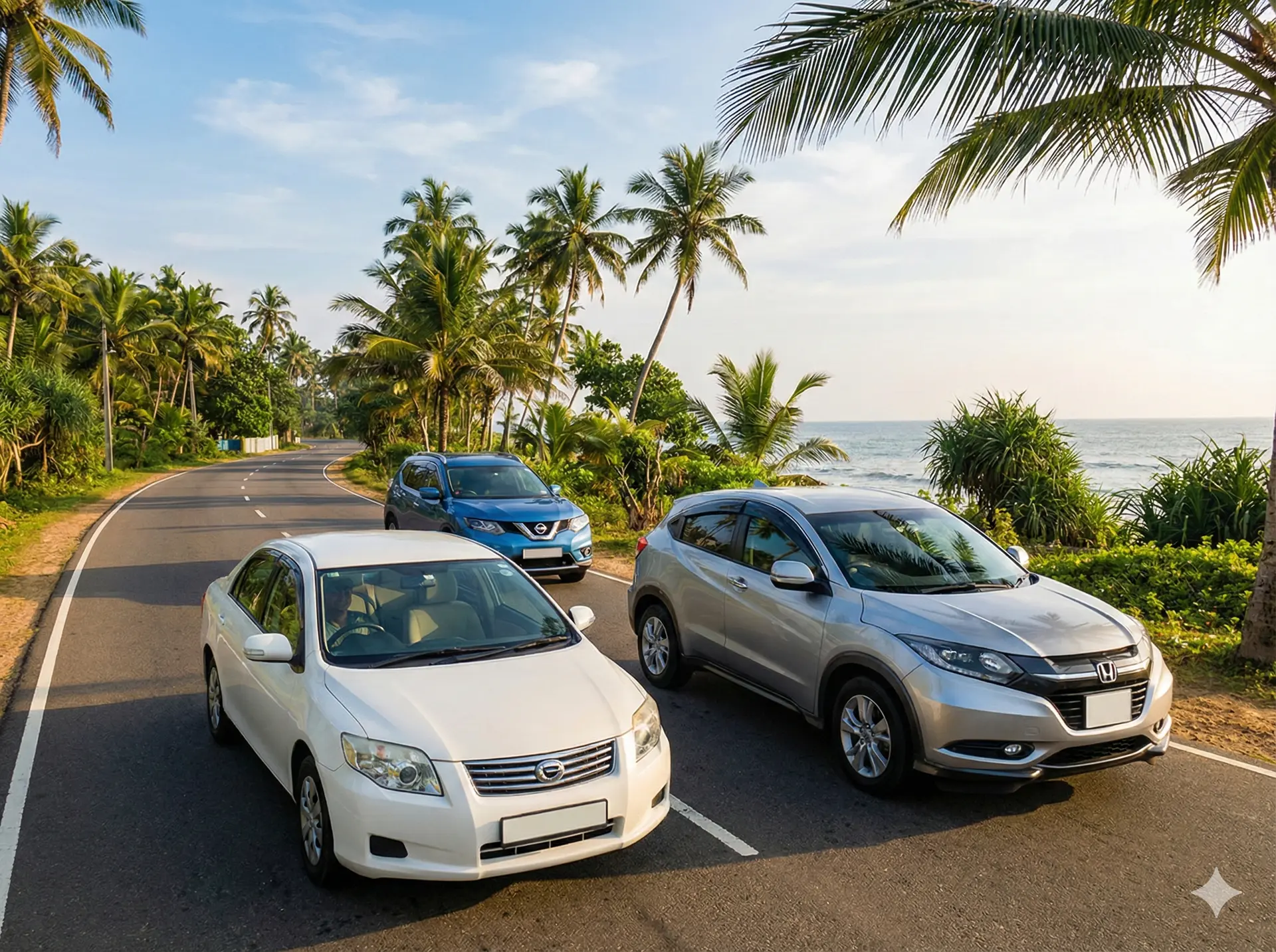
Discover the best Japanese used cars for Sri Lankan roads in 2026. Expert comparison of reliability, fuel efficiency, parts availability, and value.
The Lankawebsites editorial team curates, fact-checks, and updates guides on personal finance, property, health, immigration, legal, business, and lifestyle topics relevant to Lankawebsites readers. Articles are produced with AI assistance and reviewed by the editorial team before publication.
With Sri Lanka's vehicle import market fully reopened in 2026, Japanese used cars continue to dominate our roads for good reason. Their legendary reliability, excellent fuel efficiency, and widespread parts availability make them the smart choice for navigating our unique road conditions—from Colombo's congested streets to the mountainous terrain of Kandy. If you're planning to import a vehicle this year, understanding which Japanese models offer the best value for Sri Lankan drivers will help you make an informed decision.
Why Japanese Cars Excel on Sri Lankan Roads
Japanese manufacturers have built their reputation on engineering vehicles that combine reliability, innovation, and affordability . These qualities are particularly valuable in Sri Lanka's challenging environment, where tropical heat, monsoon rains, and varied road conditions demand durable vehicles. Japanese cars typically feature conservative engineering that prioritises long-term durability over cutting-edge features, resulting in vehicles that consistently exceed ownership expectations .
The availability of spare parts across Sri Lanka is another crucial advantage. Major suppliers like Japan Lanka Auto Parts, Jayasiri Auto Parts, and Vikasitha Auto maintain extensive inventories of both new and reconditioned components . This widespread parts availability translates to lower maintenance costs and shorter repair times compared to European or American alternatives. Additionally, Sri Lankan mechanics have decades of experience servicing Japanese vehicles, ensuring quality repairs at reasonable prices.

Top Japanese Brand Rankings for Sri Lankan Conditions
Toyota: The Reliability Champion
Toyota consistently ranks among the top three most reliable brands globally, with Consumer Reports placing it at the pinnacle of dependability studies . In Sri Lankan conditions, Toyota's reputation remains unmatched, with owners routinely reporting 200,000+ kilometres with minimal major repairs . The brand's extensive service network throughout the island—from Colombo to Jaffna—ensures convenient maintenance access regardless of location .
Honda: Performance Meets Reliability
Honda ranks fourth globally for reliability and demonstrates particular strength in engine durability and transmission reliability . The brand's VTEC technology and precise engineering make Honda vehicles exceptionally long-lasting. Honda's manufacturing quality results in vehicles that handle Sri Lanka's heat and humidity exceptionally well, with air conditioning systems, electrical components, and engine cooling systems showing superior durability .
Nissan: Innovation and Practicality
Nissan demonstrates solid reliability performance with particular strengths in engine technology and innovative features . Recent improvements in quality control have enhanced the brand's reputation. Nissan vehicles show good adaptation to tropical conditions, with reliable air conditioning systems and electrical components . The brand's focus on fuel efficiency combines well with dependable operation for Sri Lankan driving conditions.
Best Models for Different Needs
Budget-Conscious Urban Commuters
The Toyota Vitz (Yaris) stands out as the ideal choice for city driving. This compact, affordable, and fuel-efficient hatchback appeals to younger drivers and families in urban areas . Its small size makes it perfect for navigating Sri Lanka's crowded streets, whilst the widespread availability of spare parts ensures low maintenance costs . The Vitz's 1.0L engine achieves up to 20 km/l, making it economical for daily commuting .
The Suzuki Wagon R offers another excellent budget option, particularly popular for handling Sri Lanka's congested roads and high traffic . Its large interior and elevated seating position provide the driver exceptional visibility. With a 1.0L engine achieving up to 20 km/l fuel efficiency, the Wagon R delivers impressive economy . It's widely used as both a personal vehicle and for taxi services, demonstrating its durability and practicality.
Hybrid Efficiency Champions
The Toyota Aqua dominates the hybrid segment thanks to its outstanding fuel efficiency, making it ideal for both urban commutes and long-distance travel . With its eco-friendly design and low running costs, the Aqua is a top pick for environmentally conscious drivers . Rising fuel costs in Sri Lanka have made fuel-efficient vehicles like the Aqua extremely popular amongst cost-conscious buyers .
The Toyota Prius, as a pioneer in hybrid technology, has gained significant traction in Sri Lanka for its impressive fuel economy and reduced carbon footprint . In comparative testing, Toyota's Hybrid Synergy Drive (HSD) system—a full-hybrid that can operate on electric-only power at low speeds—demonstrates architectural advantages in many driving conditions . The Corolla Hybrid, another Toyota option, has returned about 50.7 mpg in independent testing, beating its EPA estimates .
Family Sedans
The Toyota Axio has earned its place as one of Sri Lanka's most popular vehicles. Known for its reliability, comfort, and practicality, the Axio sedan is widely used by families and professionals alike . It's particularly appreciated for its spacious interior and affordable maintenance . The 1.5L engine provides up to 21 km/l of fuel efficiency, making it a sensible choice for Sri Lankan buyers .
The Mitsubishi Lancer offers another reliable sedan option with a reputation for elegant styling and top-notch performance . Known for its durability and smooth performance, the Lancer has maintained a steady presence in Sri Lanka's auto market . Its 1.6L engine achieves 13 km per litre whilst providing adequate power for highway driving .
Versatile Crossovers and SUVs
The Honda Vezel stands out as a subcompact crossover SUV that combines style, practicality, and fuel efficiency . It's a hit with families and professionals who need a versatile vehicle for both city and highway driving . The Vezel's elevated driving position provides better visibility in traffic whilst maintaining manageable dimensions for urban parking.
The Nissan X-Trail offers a larger option for families seeking adventure capability. This compact SUV is ideal for both urban and off-road adventures, with its spacious interior and reliability making it a family favourite . It handles Sri Lanka's varied terrain well, from coastal roads to hill country routes.
Fuel Efficiency Considerations
Fuel efficiency remains a critical factor for Sri Lankan buyers, particularly as petrol and diesel prices continue to fluctuate. Toyota generally leads in hybrid fuel efficiency, with its Hybrid Synergy Drive system providing a full-hybrid experience that optimises efficiency across various driving conditions . Real-world tests consistently show Toyota hybrids meeting or exceeding their official fuel economy ratings .
Honda's hybrid system uses the engine to drive the vehicle when running on motorways, whilst offering strong electric motor performance . This approach provides excellent efficiency in mixed driving conditions. Nissan's e-POWER system operates differently, with the engine functioning primarily as a generator and the electric motor driving the wheels . For compact vehicles, Honda Fit achieves excellent fuel economy whilst providing a spacious interior, making it particularly popular among urban drivers who value practicality and affordability .
Parts Availability and Service Network
Toyota maintains the most extensive service network in Sri Lanka, with authorised service centres, dealerships, and independent mechanics throughout the country . This comprehensive coverage ensures convenient maintenance access and competitive pricing. Honda follows with a good service network, though not as extensive as Toyota's . Genuine and aftermarket parts for both brands are readily available from numerous suppliers.
Established parts suppliers like Jayasiri Auto Parts import customer-demanded reconditioned automotive parts with reliable certificates at reasonable prices, with delivery typically within two weeks for special orders . Their 65,000 square feet facility in Nugegoda maintains extensive inventory for Japanese vehicles . Nissan and Suzuki parts are also widely available, though the network is more moderate compared to Toyota . Mazda has a moderate service network, whilst Subaru's limited presence in Sri Lanka means parts may require longer lead times .
Understanding Import Regulations for 2026
Sri Lanka maintains strict age restrictions on vehicle imports that you'll need to consider when selecting a used Japanese car. Passenger cars, SUVs, motorcycles, and pickup trucks must be within three years of manufacture . This means for 2026, you can import vehicles manufactured in 2023 or later. The age is calculated as the period between the date of first registration and the date of shipment .
An interesting aspect of Japanese used cars is their surprisingly low mileage, attributed to the Shaken Law—a rigorous vehicle inspection programme that encourages owners to sell their cars after a few years of use to avoid increased inspection and registration costs . This practice results in a plentiful market of well-maintained, low-mileage used cars that are ideal for the Sri Lankan market. All imported vehicles must undergo pre-shipment inspection by approved agencies and obtain a roadworthiness certificate .
Total Cost of Ownership Analysis
When considering purchase price, maintenance costs, fuel efficiency, and resale value, Toyota and Honda typically offer the lowest total cost of ownership over 5-10 years in Sri Lankan conditions . Toyota's conservative engineering and widespread parts availability minimise unexpected repair costs. Honda's precise manufacturing results in fewer component failures, reducing long-term maintenance expenses.
Resale value is another crucial consideration. Toyota vehicles consistently command strong resale prices in Sri Lanka's secondary market, thanks to their reliability reputation and buyer demand. Honda models also hold their value well, particularly popular models like the Vezel and Fit. Hybrid models from both manufacturers have shown strong resale performance as fuel efficiency becomes increasingly important to buyers.
Making Your Selection
Your choice should align with your specific needs and driving patterns. For daily urban commuting with budget constraints, the Toyota Vitz or Suzuki Wagon R offer excellent value. If fuel efficiency is your priority and you're willing to invest more upfront, the Toyota Aqua provides unmatched economy. Families needing space and comfort will find the Toyota Axio or Honda Vezel ideal, whilst those requiring versatility for diverse terrain should consider the Nissan X-Trail or Mitsubishi Outlander.
Consider the total cost of ownership rather than just the purchase price. Factor in expected fuel consumption based on your daily mileage, anticipated maintenance costs, insurance premiums, and likely resale value. Research parts availability for your chosen model and identify nearby service centres. Reading owner reviews from Sri Lankan drivers on platforms like Reddit and local automotive forums can provide valuable insights into real-world performance in our specific conditions.
Next Steps
With vehicle imports fully operational in 2026, now is an excellent time to explore the Japanese used car market. Start by clearly defining your needs—daily commute distance, passenger requirements, and budget constraints. Research specific models that match your criteria, paying attention to reliability ratings, fuel efficiency, and parts availability. Contact reputable importers who specialise in Japanese vehicles and can guide you through the import process, ensuring compliance with current regulations. Visit local dealerships to inspect similar models and get a feel for interior space and features. Finally, calculate your total cost of ownership including purchase price, expected fuel costs, insurance, and maintenance to ensure your choice fits your long-term budget. Japanese used cars remain the smart choice for Sri Lankan roads, offering proven reliability, efficiency, and value that few alternatives can match.
Frequently Asked Questions
Sources & References
-
1
Selection of Japanese Cars for Sri Lanka — lankasara.com
-
2
5 Most Reliable Japanese Car Brands for Sri Lankan Roads — haautomart.lk
-
3
Jayasiri Auto Parts — www.jayasirimotors.lk
-
4
Sri Lanka's Top 10 Most Popular Vehicles — fixrichauto.com
-
5
Report: Honda vs Toyota — Which Is More Fuel Efficient? — www.vendortruth.org
-
6
Toyota, Honda, Nissan: Which Hybrid System Is the Best? — www.youtube.com
-
7
In Sri Lanka | Best quality Japanese used cars for sale - SBT Japan — www.sbtjapan.com
Related Articles
Best Engine Oils for Sri Lankan Roads in 2026: Comparisons and Recommendations
Driving on Sri Lanka's roads means battling heat, humidity, dust from the dry zones, and heavy traffic in Colombo. With temperatures often soaring above 30°C and our tropical climate accelerating engi
Preparing Your Car for Sri Lanka's 2026 Southwest Monsoon
Protect your vehicle from monsoon damage with this comprehensive preparation guide for Sri Lanka's 2026 southwest monsoon season.
Top Mechanics in Colombo for 2026 Car Servicing
Discover Colombo's most trusted mechanics for 2026, from DIMO and Sterling to independent workshops. Get expert tips on choosing reliable car service.
Hybrid vs Petrol Cars: Best Choice for Sri Lanka 2026
Comparing hybrid vs petrol cars in Sri Lanka for 2026. Discover real fuel costs, maintenance expenses, and which option suits your driving needs best.