Spare Tyre Maintenance Tips to Avoid Sri Lankan Road Emergencies
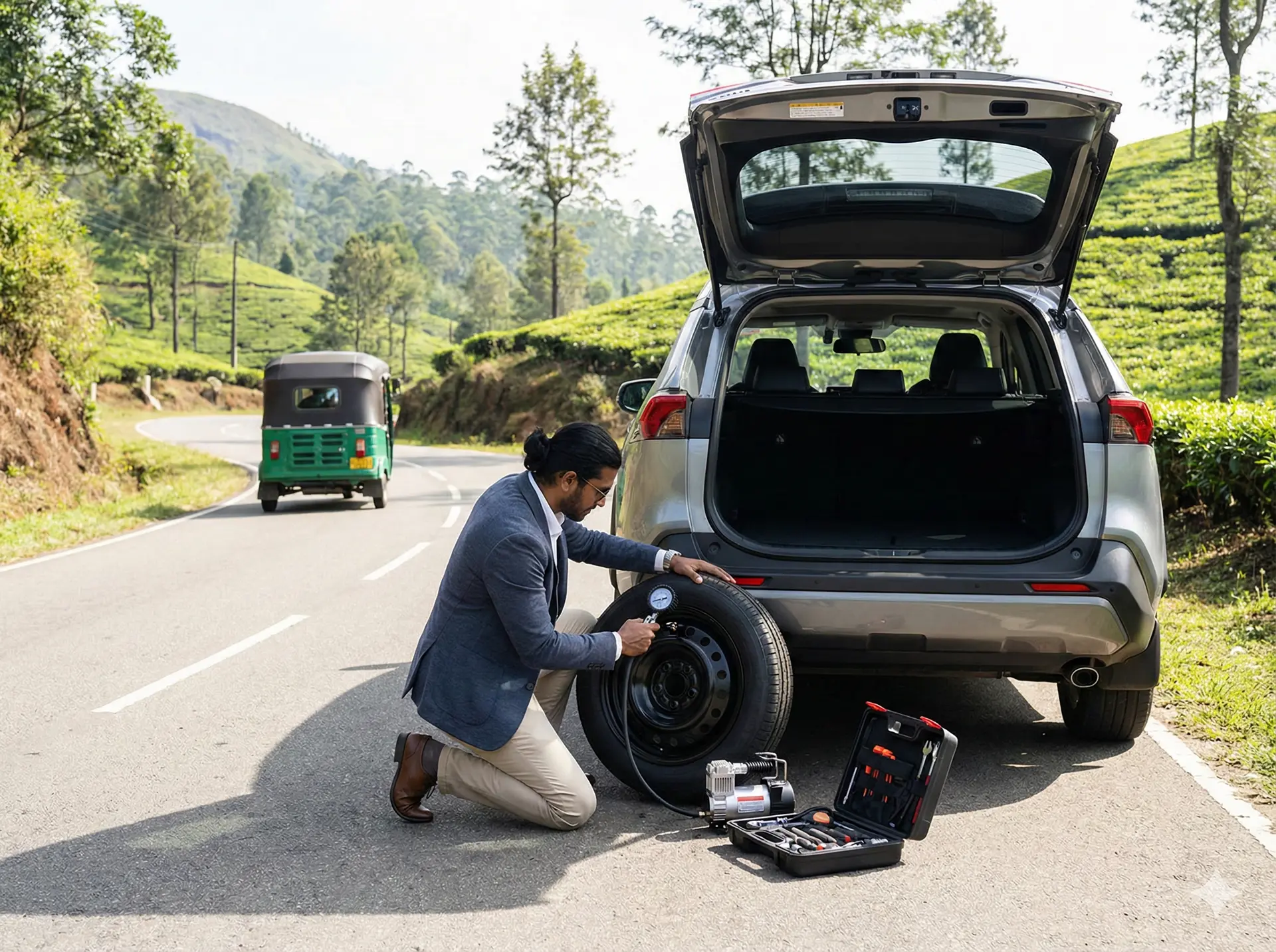
Master spare tyre maintenance to avoid roadside emergencies in Sri Lanka. Monthly checks, proper storage, and expert tips to keep you safe on our roads.
The Lankawebsites editorial team curates, fact-checks, and updates guides on personal finance, property, health, immigration, legal, business, and lifestyle topics relevant to Lankawebsites readers. Articles are produced with AI assistance and reviewed by the editorial team before publication.
Picture this: you're driving through Ella's scenic roads or heading home late on the Southern Expressway when you hear that dreaded sound—a flat tyre. You pull over, open your boot with confidence, only to discover your spare tyre is completely deflated. What should have been a 15-minute fix now means calling for a tow truck and paying Rs. 6,000 or more for roadside assistance . This scenario plays out countless times across Sri Lanka, yet it's entirely preventable with proper spare tyre maintenance.
Your spare tyre is your insurance policy against roadside emergencies, but like any insurance, it only works when you maintain it properly. Whether you're navigating Colombo's traffic or exploring rural roads where help isn't readily available, a well-maintained spare tyre can save you significant time, money, and stress. Let's explore exactly how to keep your spare in perfect working condition.
Why Spare Tyre Maintenance Matters in Sri Lanka
Sri Lanka's diverse road conditions make spare tyre preparedness particularly crucial. Whilst main highways connecting Colombo to major cities are generally well-maintained, rural areas and mountain roads often present challenges including potholes, debris, and uneven surfaces . These conditions increase puncture risks, especially during monsoon seasons when roads deteriorate further.
The Real Cost of Neglect
When your spare fails during an emergency, you'll need professional towing services. The Automobile Association of Ceylon (AAC) charges members Rs. 5,250 for towing within Colombo city limits, whilst non-members pay Rs. 7,500 . If you're outside Colombo, services like Lespri charge Rs. 6,000 for the first 25 kilometres, plus Rs. 60 per additional kilometre and Rs. 1,500 crew allowance per night for outstation assistance . These costs quickly exceed what you'd spend on proper spare tyre maintenance.
Beyond financial costs, consider the inconvenience and potential safety risks. Being stranded on rural roads, especially at night or in remote areas, creates genuine safety concerns. With proper spare tyre maintenance, you avoid these situations entirely .
Understanding Your Spare Tyre Type
Before maintaining your spare, you need to understand what type you have, as maintenance requirements and usage limitations differ significantly.
Space-Saver Spare Tyres
Most modern vehicles come equipped with space-saver spare tyres, also called 'donuts'. These compact, lightweight tyres save boot space and reduce vehicle weight but come with strict limitations. Space-savers typically require higher pressure—around 60 PSI compared to 30-35 PSI for regular tyres . They're designed for temporary use only, with speed limits typically restricted to 80 km/h and driving distances limited to 80-113 kilometres .
The narrower tread of space-savers affects vehicle braking, handling, and ABS systems. Your speedometer may also become inaccurate . Some vehicles specify that space-savers can only be fitted on certain axles, meaning you might need to swap tyres around before using the spare .
Full-Size Spare Tyres
Full-size spares match your regular tyres in size and performance, eliminating speed and distance restrictions. They provide normal handling and stability, making them ideal for extended use and Sri Lanka's varied terrain . If you frequently travel to remote areas or on rural roads, a full-size spare offers superior peace of mind. The trade-off is reduced boot space and slightly higher fuel consumption due to the additional weight .
Monthly Spare Tyre Inspection Routine
Tyres naturally lose pressure over time, typically dropping 1-3 PSI (pounds per square inch) each month . Your spare experiences the same gradual deflation, even though it's not being used. Establishing a monthly inspection routine ensures your spare remains ready when needed.
Checking Tyre Pressure Correctly
Always check tyre pressure when tyres are cold—meaning the vehicle has been parked for at least three hours or driven less than 2 kilometres . Find your spare tyre's recommended pressure in your vehicle's owner's manual or on the placard sticker typically located on the driver's door jamb. Remember that spare tyres, especially space-savers, often require significantly higher pressure than your regular tyres .
You'll need a reliable tyre pressure gauge, which you can purchase from retailers like Daraz for reasonable prices . Digital gauges provide easier, more accurate readings than manual ones. To check pressure, remove the valve cap, press the gauge firmly onto the valve stem, and note the reading . If the pressure is low, inflate using an air compressor at petrol stations. If overinflated, release air by pressing the valve core with the gauge or your fingernail .
Visual Inspection for Damage
Whilst checking pressure, inspect your spare for visible damage. Look for cracks in the tyre sidewalls, bulges indicating internal damage, or signs of dry rot from age and exposure . Check the tread depth—even though your spare hasn't been used, degraded tread won't provide adequate traction in wet conditions. Examine the wheel itself for rust or damage that could prevent proper mounting.
If your spare has been stored in your boot for several years, pay particular attention to rubber condition. Sri Lanka's tropical heat accelerates rubber degradation, even in stored tyres. Any visible cracks or excessive hardening indicate the tyre needs replacement regardless of tread depth .
When to Replace Your Spare Tyre
Spare tyres don't last forever, even if never used. The rubber compounds degrade over time due to oxidation, heat exposure, and environmental factors.
Age-Based Replacement
Most experts recommend replacing spare tyres after 6-10 years, regardless of appearance or usage . To determine your tyre's age, check the DOT code stamped on the sidewall. The last four digits indicate the week and year of manufacture—for example, '2618' means the 26th week of 2018.
In Sri Lanka's hot, humid climate, consider replacing spares closer to the 6-year mark, particularly if stored in the boot where temperatures can become extreme. The heat accelerates rubber deterioration, reducing the tyre's structural integrity even though it looks fine .
Condition-Based Replacement
Replace your spare immediately if you notice cracks in the sidewall or tread, bulges or blisters on the tyre surface, exposed cords or fabric, or severe dry rot. Don't wait for scheduled replacement if visible damage exists—a compromised spare offers no safety benefit .
If you've used your spare following a puncture, have it inspected by a professional before returning it to storage. Space-savers particularly should be carefully checked after use, as they're not designed for extended driving .
Essential Tools and Equipment
A properly maintained spare tyre is useless without the tools to fit it. Your vehicle should always carry a complete tyre-changing kit.
Basic Requirements
Every vehicle needs a functional jack capable of lifting your car safely, a lug wrench (sometimes called a wheel brace) that fits your wheel nuts, and wheel chocks or blocks to prevent the vehicle rolling . Many vehicles come with scissor jacks and combination lug wrenches, but these can be awkward to use, especially for those with limited mechanical experience.
Consider upgrading to a small hydraulic jack for easier lifting, particularly if you have a heavier vehicle or SUV. A telescopic lug wrench provides better leverage, making wheel nut removal much easier. Both items are available from automotive shops in Colombo or online through platforms like Daraz .
Additional Helpful Items
Beyond the basics, keep a portable tyre pressure gauge in your vehicle for checking pressure on the road . A powerful torch or head lamp is essential for night-time tyre changes—Sri Lanka's rural roads often lack street lighting. Work gloves protect your hands from sharp edges and road grime. Reflective warning triangles alert approaching traffic to your presence, crucial on busy roads .
A basic tyre repair kit containing sealant and plugs can temporarily fix minor punctures, potentially eliminating the need for the spare altogether. Keep a piece of cardboard or wood to kneel on whilst working, particularly useful during rainy conditions .
Proper Storage Practices
How you store your spare tyre significantly affects its longevity and reliability.
Temperature and Environmental Factors
Most spares live in vehicle boots, where temperatures in Sri Lanka's climate can reach extreme levels. Whilst you can't fully control boot temperature, you can minimise exposure. Avoid storing other items directly on top of the spare, as weight can cause flat spots over time. If your spare is mounted underneath the vehicle, regularly check that the mounting mechanism isn't corroded—coastal areas are particularly prone to rust .
Keep the spare away from petroleum products, solvents, or chemicals that can degrade rubber. If you carry fuel cans or lubricants, ensure they're sealed and separated from the tyre. Clean the spare periodically, removing dirt and debris that can hold moisture against the rubber .
Protecting Against Theft
In urban areas, externally mounted spare tyres can be theft targets. Ensure your spare uses locking mechanisms, particularly if mounted on a rear door or underneath the vehicle. When parking in public areas, be mindful of this vulnerability .
Roadside Emergency Procedures
Even with perfect maintenance, eventually you'll need to use your spare. Knowing the correct procedure before an emergency occurs makes the process much smoother.
Safety First
When you get a flat tyre, move as far off the road as safely possible. Sri Lanka's roads can be narrow, so getting completely off the carriageway is crucial . Activate your hazard lights immediately. If you have warning triangles, place them at least 50 metres behind your vehicle to alert approaching traffic. Never change a tyre on a busy highway unless absolutely necessary—it's safer to call for professional assistance .
The Changing Process
Before jacking the vehicle, loosen the wheel nuts slightly whilst the tyre is still on the ground—this prevents the wheel spinning when you apply force. Position the jack on firm, level ground at the designated jacking point specified in your owner's manual. Never rely on memory for jack placement; incorrect positioning can damage your vehicle or cause injury .
Once the vehicle is lifted with the flat tyre clear of the ground, remove the wheel nuts completely and carefully remove the damaged wheel. Mount your spare, hand-tighten the wheel nuts in a star pattern (tighten opposite nuts alternately), then lower the vehicle. Once the tyre is bearing weight, fully tighten the wheel nuts in the same star pattern .
If you've fitted a space-saver spare, remember the speed and distance restrictions. Drive carefully to the nearest tyre shop—in Colombo, you'll find numerous options, whilst other towns typically have at least one reputable garage. Don't attempt long-distance travel on a space-saver .
Professional Services and Support
Despite best efforts, situations arise where professional assistance is necessary.
Breakdown Services in Sri Lanka
The Automobile Association of Ceylon (AAC) offers 24/7 breakdown services throughout the country, with trained technicians and accredited service points island-wide . AAC membership provides peace of mind for regular travellers, offering not just towing but also roadside repairs including tyre changes, jump starts, and emergency fuel delivery. Members receive preferential rates and can access up-to-date road condition information .
Commercial operators like Lespri Auto Recovery, Road Squad, and Breakdown 24/7 provide similar services without membership requirements . These companies operate across the island, including remote areas, though response times vary depending on location. Keep emergency contact numbers stored in your phone—services like Road Squad offer WhatsApp booking at 0717247247 for convenient assistance .
When to Call for Help
Don't hesitate to call professionals if you're on a dangerous road section with heavy traffic, feel unsafe changing the tyre yourself, lack the physical ability to safely complete the change, or discover your spare is also flat or damaged . Your safety is more important than the cost of a tow truck. If you're a woman travelling alone or in a remote location at night, professional assistance is always the safer choice.
Common Mistakes to Avoid
Several common errors compromise spare tyre reliability or create dangerous situations.
Never ignore your spare tyre until you need it—monthly checks take five minutes but prevent hours of roadside frustration . Don't assume your spare is properly inflated just because it looks fine; tyres lose pressure invisibly over time. Avoid continuing to drive on a space-saver beyond recommended distances or speeds—this risks tyre failure and vehicle damage .
Don't forget to repair or replace your punctured regular tyre promptly after using your spare. Many people drive indefinitely on their spare, leaving themselves vulnerable if another puncture occurs. Replace your spare back into storage as soon as you've repaired your main tyre .
Never jack a vehicle on soft ground, slopes, or unstable surfaces—this creates serious injury risks if the jack fails. Don't work under a vehicle supported only by a jack; if you need to access underneath, use proper axle stands .
Building a Comprehensive Maintenance Schedule
Integrate spare tyre maintenance into your regular vehicle care routine for best results.
Check your spare tyre pressure monthly, ideally when you're checking your regular tyres. This takes mere minutes using your tyre pressure gauge . Conduct a thorough visual inspection quarterly, looking for damage, cracks, or deterioration. This is particularly important before long trips outside Colombo or into rural areas .
Annually, or before major journeys, remove your spare completely for detailed inspection. Check the wheel mounting points, ensure all tools are present and functional, and verify that your jack operates smoothly. Practise using your jack and changing a tyre at home in comfortable conditions—you'll be much more confident if you ever need to do it on the roadside .
Keep records of when you last checked your spare and when it was manufactured. Set phone reminders for monthly pressure checks so it becomes automatic. Consider scheduling spare tyre checks alongside your regular vehicle service appointments—most mechanics will gladly include this for no additional charge .
Special Considerations for Different Vehicles
Different vehicle types have unique spare tyre considerations worth noting.
SUVs and 4x4 Vehicles
Larger vehicles require higher-capacity jacks and more robust tools. The standard scissor jack in your vehicle might struggle with heavier SUVs, particularly on soft ground common on rural Sri Lankan roads. Consider investing in a high-lift jack or bottle jack for these vehicles . Full-size spares are particularly important for 4x4s that venture off-road, as space-savers are unsuitable for rough terrain .
Hybrid and Electric Vehicles
Some modern hybrids and electric vehicles don't include spare tyres at all, instead providing tyre repair kits and inflation pumps. If your vehicle falls into this category, ensure your repair kit is complete and that you understand how to use it. Consider purchasing a space-saver spare if you regularly travel to remote areas where repair kits might prove insufficient .
Making Spare Tyre Maintenance a Habit
The difference between a minor inconvenience and a major roadside emergency often comes down to five minutes of monthly maintenance. Your spare tyre sits quietly in your boot, asking nothing of you until that critical moment when you need it most. Don't let that moment reveal negligence that could have easily been prevented.
Start today: go outside right now and check your spare tyre pressure. Inspect it for visible damage. Verify that your jack and tools are present and functional. Add a reminder to your phone calendar for the same day next month. That's it—you've just dramatically reduced your risk of being stranded on Sri Lankan roads.
Whether you're commuting daily in Colombo, driving to Kandy for the weekend, or exploring the southern coast, a well-maintained spare tyre provides invaluable peace of mind. Combined with membership in a breakdown service like AAC for additional security, you're prepared for whatever our roads throw at you. The small investment of time in spare tyre maintenance pays enormous dividends in safety, convenience, and cost savings. Make it part of your routine, and you'll never find yourself helplessly stranded with a flat tyre and an unusable spare.
Frequently Asked Questions
Sources & References
- 1
-
2
Lespri Auto Recovery - Towing and Roadside Assistance Sri Lanka — www.lespri.lk
-
3
Essential Tips for Driving Across Sri Lanka — www.rofi.lk
-
4
What to Do When Your Car Breaks Down in Sri Lanka — www.rofi.lk
-
5
Spare Tyre Lifespan, Pressure & Fitting Guide — www.vredestein.co.in
- 6
-
7
Space Saver vs Full Size Spare Tyres Guide — www.tyrereview.com.au
-
8
Spare Tyre Maintenance - Tyrepower — www.tyrepower.com.au
-
9
Car Tyre Pressure Guide - Bridgestone — www.bridgestone.com.au
-
10
Buy Tire Gauges Online in Sri Lanka - Daraz — www.daraz.lk
-
11
Spare Tyre Safety: Must-Know Tips for Every Driver — tayaria.com
-
12
How Often Should You Change Your Spare Tyre — www.f1autocentres.co.uk
-
13
Essential Spare Tyre and Tools for Roadside Emergencies — www.crossroadshelpline.com
-
14
Buy Jack Repair Kit Online in Sri Lanka — www.daraz.lk
-
15
Tyre Changing Equipment to Keep in Your Car — www.uniroyal-tyres.com
- 16
-
17
How to Change a Tire with Car Jack Tutorial — www.youtube.com
-
18
Road Squad - Nationwide Car Carrier and Roadside Assistance — roadsquad.lk
-
19
AA Ceylon Colombo - Automobile Association Services — www.auto-lanka.com
-
20
Hybrid & EV Buying Guide for Sri Lanka — www.lankawebsites.com
Related Articles
Best Engine Oils for Sri Lankan Roads in 2026: Comparisons and Recommendations
Driving on Sri Lanka's roads means battling heat, humidity, dust from the dry zones, and heavy traffic in Colombo. With temperatures often soaring above 30°C and our tropical climate accelerating engi
Preparing Your Car for Sri Lanka's 2026 Southwest Monsoon
Protect your vehicle from monsoon damage with this comprehensive preparation guide for Sri Lanka's 2026 southwest monsoon season.
Top Mechanics in Colombo for 2026 Car Servicing
Discover Colombo's most trusted mechanics for 2026, from DIMO and Sterling to independent workshops. Get expert tips on choosing reliable car service.

Hybrid vs Petrol Cars: Best Choice for Sri Lanka 2026
Comparing hybrid vs petrol cars in Sri Lanka for 2026. Discover real fuel costs, maintenance expenses, and which option suits your driving needs best.