Responsible Tourism in Sri Lanka: How to Travel Ethically
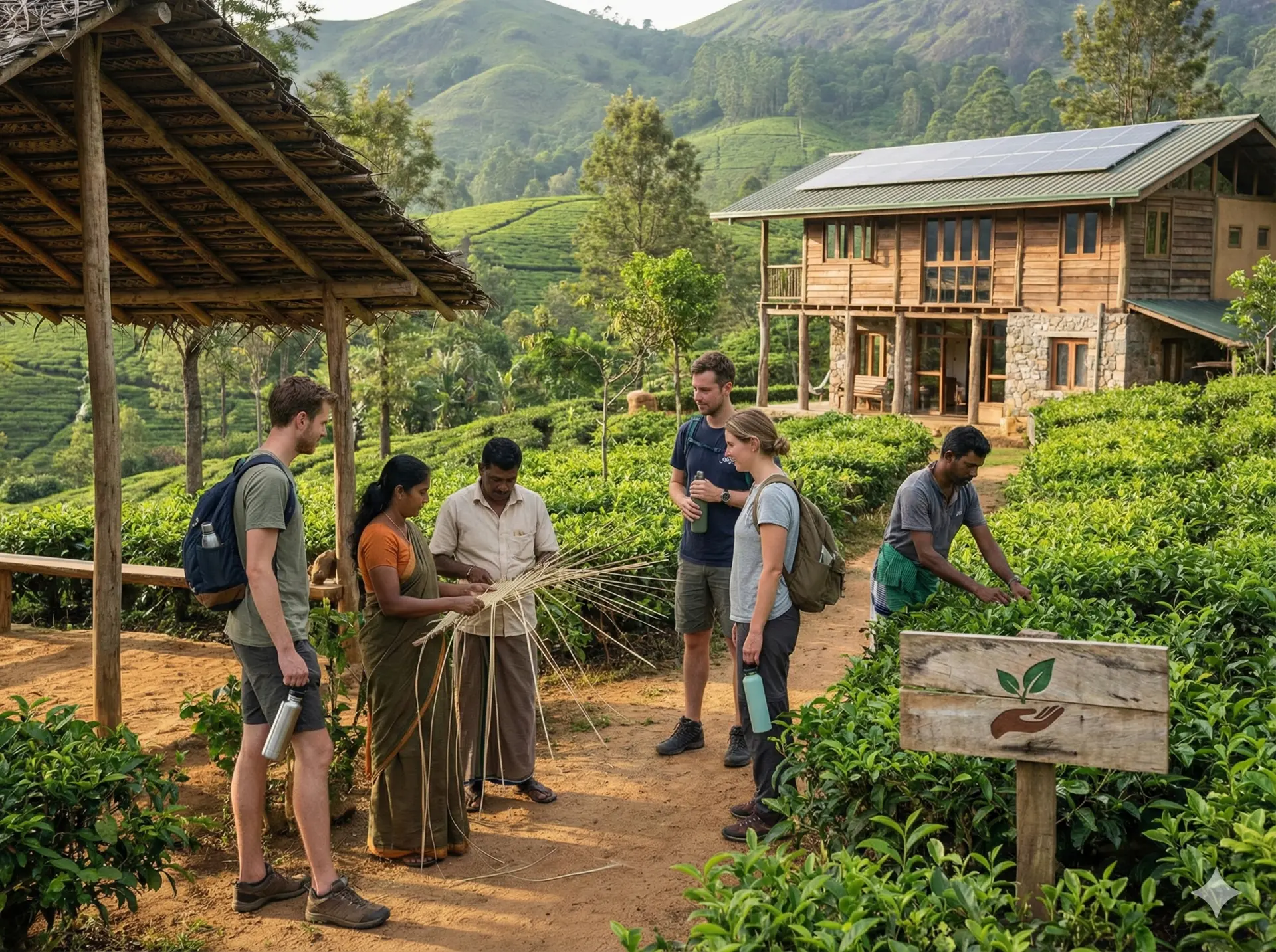
As locals, we cherish Sri Lanka's pristine beaches, ancient temples, and lush hill country, but with tourism booming towards 3 million visitors in 2026, it's on us to ensure our island paradise thrive
The Lankawebsites editorial team curates, fact-checks, and updates guides on personal finance, property, health, immigration, legal, business, and lifestyle topics relevant to Lankawebsites readers. Articles are produced with AI assistance and reviewed by the editorial team before publication.
As locals, we cherish Sri Lanka's pristine beaches, ancient temples, and lush hill country, but with tourism booming towards 3 million visitors in 2026, it's on us to ensure our island paradise thrives for generations.Responsible tourism means travelling ethically—choosing practices that protect our environment, support local communities, and respect our culture. Whether you're planning a weekend getaway to Ella or a family trip to Yala, these practical steps will help you make a positive impact.
Why Responsible Tourism Matters in Sri Lanka
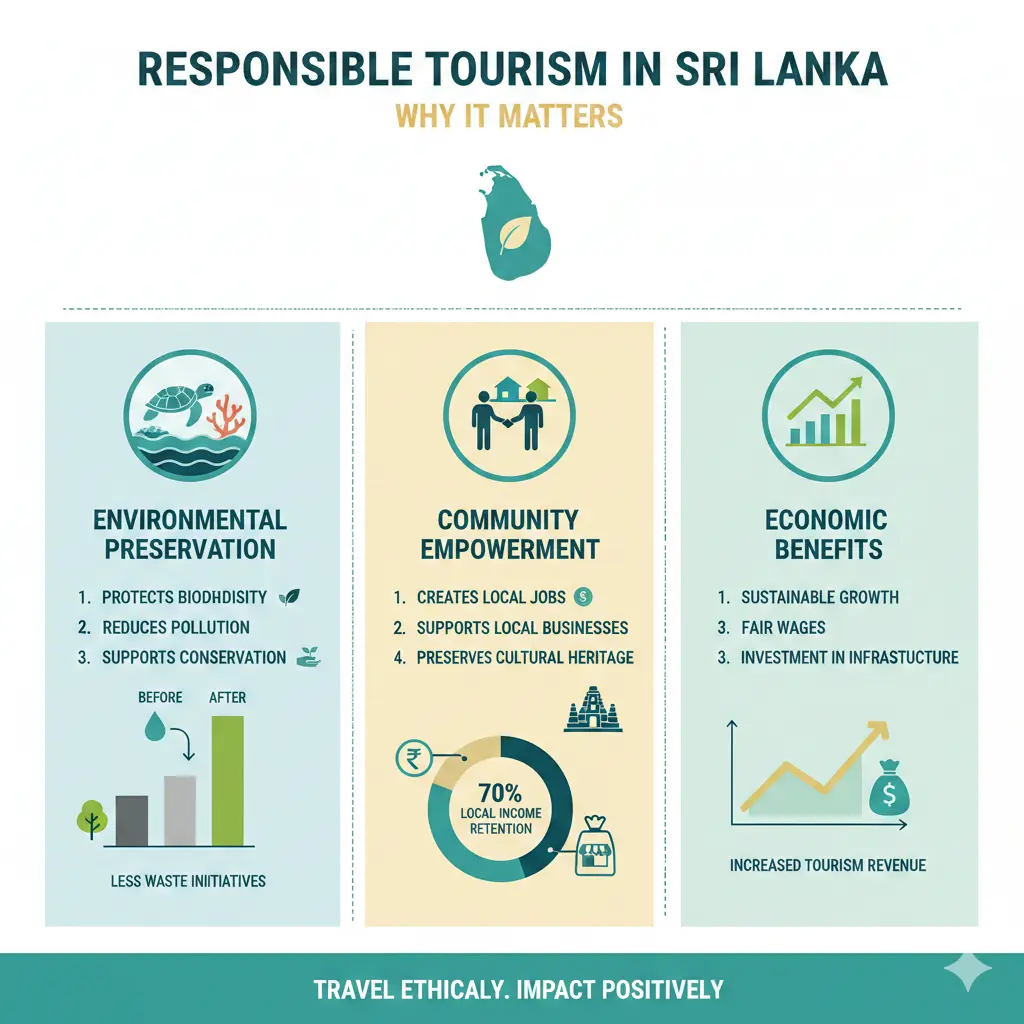
Our tourism sector is transforming, with the Sri Lanka Tourism Development Authority (SLTDA) leading the charge through ambitious 2026 plans that prioritise sustainability alongside growth. Targeting 3 million arrivals—a 27% jump from previous years—the focus is on eco-friendly practices, off-peak travel, and community benefits to balance economic gains with environmental protection.
Sri Lanka's natural wonders, from Sigiriya's ancient rock fortress to the whale-watching waters off Mirissa, face pressures from overtourism. The SLTDA's sustainable policies aim to preserve these for locals and visitors alike, ensuring positive impacts on our environment, culture, economy, and experiences. Minister Vijitha Herath emphasises repositioning tourism towards quality, resilience, and environmentally responsible practices that protect communities and elevate our global brand.
For us Sri Lankans, responsible tourism isn't just a buzzword—it's about safeguarding the livelihoods tied to our beaches and highlands. Certified businesses report 15-20% income boosts, proving ethical travel fuels local prosperity.
Key Principles of Ethical Travel in Sri Lanka
Adopt these core principles to travel responsibly, drawn from SLTDA guidelines and global standards adapted for our context.
SUPPORT SUSTAINABLE ACCOMMODATION
Choose lodgings with National Sustainable Tourism Certification (NSTC), a SLTDA-UNDP initiative aligned with Global Sustainable Tourism Council standards. Over 200 SMEs, including homestays in rural areas like Ella and Dambulla, have earned this for eco-practices like solar power, zero plastic, and local sourcing. Look for NSTC logos on Booking.com or SLTDA sites—these spots cut waste, use 80% solar energy in some cases, and boost community incomes.
- Opt for homestays in the Cultural Triangle to directly support village families.
- Avoid mega-resorts in peak seasons; pick off-peak gems in the Knuckles Range for quieter stays.
- Verify certifications via SLTDA's sustainability page.
RESPECT WILDLIFE AND NATURE
Sri Lanka's elephants, leopards, and blue whales draw crowds, but ethical encounters are vital. Skip elephant rides or orphanage selfies—they harm animals. Instead, join SLTDA-approved ethical safaris in Yala or Udawalawe, where trained guides maintain distance and fund conservation.
- Use refillable water bottles; many NSTC homestays offer stations to ditch plastic.
- Stick to marked trails in Sinharaja rainforest to prevent erosion.
- Support the Sri Lanka Tourism Alliance's projects for wildlife protection.
BOOST LOCAL ECONOMIES
Keep money in our communities by buying from artisans in Kandy's markets or eating at family-run rice and curry spots in Galle Fort. Entrepreneurs like Dinali in the hills partner only with local SMEs, ensuring tourism revenue circulates locally.
- Hire licensed guides from the Tourist Board—check IDs to avoid scams.
- Shop for batik or tea directly from planters in Nuwara Eliya.
- Choose group tours via certified operators for fair wages.
MINIMISE YOUR ENVIRONMENTAL FOOTPRINT
Simple habits add up: sort waste at your stay (many NSTC spots lead here), use public buses or trains between Colombo and Kandy, and avoid single-use plastics banned in many coastal areas. SLTDA's 2026 push includes energy-efficient upgrades across hotels.
Practical Tips for Ethical Trips Around Sri Lanka
Here's actionable advice tailored for us locals exploring our own backyard or guiding overseas friends.
PLANNING YOUR ITINERARY
Embrace SLTDA's off-peak call: visit Bentota in May or the Hill Country in September for fewer crowds and better deals. Use the ETA app for seamless domestic travel planning, and download the SLTDA visitor guide for hidden spots like the Pekoe Trail.
| Popular vs Ethical Alternative | Why Choose Ethical? |
|---|---|
| Elephant orphanage shows | Udawalawe ethical safaris—supports conservation |
| Peak season Mirissa beaches | Off-peak Tangalle—less crowded, community-focused |
| Chain hotels in Colombo | NSTC homestays in Negombo—local income boost |
ON THE GROUND: DAILY HABITS
- Carry a reusable bag for markets—plastic bans are strict in tourist zones.
- Tip fairly: Rs. 100-200 per service supports low-wage workers.
- Respect temple dress codes and remove shoes—it's our culture.
- Report issues to the Tourism Police hotline: 1997.
TRAVELLING WITH KIDS OR GROUPS
Teach the little ones: pick litter on Hikkaduwa beaches or join community clean-ups via local NGOs. For groups, book through the Sri Lanka Tourism Alliance for training-backed operators.
Real Stories: Locals Leading the Way
"We've gone plastic-free with biodegradable bins and solar power—guests love it, and our income's up 20%."—Tharanga, NSTC-certified homestay owner
From Shama's zero-waste operations to Dinali's local artisan partnerships, these entrepreneurs show how ethical practices redefine hospitality. Join them by choosing certified spots.
Next Steps for Your Ethical Adventure
Start today: visit SLTDA's site to find NSTC spots, pack your reusable bottle, and plan an off-peak trip. By choosing responsibly, we're not just travelling—we're preserving the Sri Lanka we love. Share your ethical travel stories with friends to spread the word. Let's make 2026 our most sustainable year yet!
Frequently Asked Questions
Sources & References
-
1
Explore Sri Lanka Like Never Before in 2026: SLTDA's Ambitious Tourism Plan — www.travelandtourworld.com
-
2
Sustainability - Sri Lanka Tourism Development Authority — www.sltda.gov.lk
- 3
-
4
Sri Lanka Tourism Alliance - Promoting Sustainable Tourism — www.srilankatourismalliance.com
- 5
-
6
Sri Lanka Aims For 3 Million Tourists In 2026 — www.ndtv.com
Related Articles

Safety Tips for Tourists in Sri Lanka: Scams, Local Laws & Health Advice
Whether you're planning a beach getaway in Mirissa or a temple visit in Kandy, staying safe as a tourist in Sri Lanka means knowing the local ropes. We've got your back with practical tips on dodging

How Much Does a Trip to Sri Lanka Cost? Budget, Mid-Range & Luxury
Planning a trip around our beautiful island? Whether you're dreaming of a budget getaway to Ella's misty hills or a luxurious escape at a Bentota beach resort, understanding costs helps you make the m

Internet, eSIMs & Connectivity in Sri Lanka: Staying Online While You Travel
Whether you're hopping between Colombo's bustling streets and Ella's misty hills or just need reliable data for work on the go, staying connected in Sri Lanka has never been easier—or more essential

Sri Lanka Visa & ETA Guide for Tourists: How to Apply and Common Mistakes
Planning a trip with international friends or family visiting our beautiful island? Whether you're hosting tourists from abroad or helping them prepare, understanding Sri Lanka's visa and ETA system i