Kataragama: Multi-Religious Sacred Site
Kataragama stands as one of Sri Lanka's most remarkable spiritual destinations, where Buddhism, Hinduism, Islam, and indigenous traditions converge in a place of profound reverence. Located in the ext
The Lankawebsites editorial team curates, fact-checks, and updates guides on personal finance, property, health, immigration, legal, business, and lifestyle topics relevant to Lankawebsites readers. Articles are produced with AI assistance and reviewed by the editorial team before publication.
Kataragama stands as one of Sri Lanka's most remarkable spiritual destinations, where Buddhism, Hinduism, Islam, and indigenous traditions converge in a place of profound reverence. Located in the extreme southeast corner of our island, this ancient shrine has drawn pilgrims for thousands of years, transcending the boundaries that typically divide religious communities. What makes Kataragama truly exceptional isn't just its religious significance, but its living testament to Sri Lanka's unique multicultural heritage—a place where people of different faiths worship side by side, united by their devotion to a sacred space that belongs to all of us.
The Ancient Origins of Kataragama
The history of Kataragama stretches back into antiquity, with archaeological evidence indicating that the area has been inhabited for thousands of years. This sacred precinct holds deep meaning across multiple religious traditions, each with its own narrative about how Kataragama became hallowed ground.
According to Buddhist tradition, Kataragama is one of the 16 sacred places in Sri Lanka visited by the Buddha during his third visit to the island. The Mahavamsa, our nation's ancient chronicle, records that when the Buddha delivered his sermon at the Kihiri Forest in Kataragama, the local ruler King Mahasena listened to the dharma and attained enlightenment. In gratitude, he built a stupa on the site made sacred by the Buddha's presence.
The Kiri Vehera, a large stupa believed to date back to the 3rd century BCE, stands as a physical reminder of this ancient Buddhist connection. This monumental structure remains one of the most significant archaeological landmarks in Kataragama, highlighting the area's long-standing religious importance.
Hindu and Sinhala Traditions
According to Sinhala legend, King Dutugemunu undertook the blessings of the God Kataragama around 160 BC to undertake his expedition against Chola invader King Elara and rescue the country from foreign rule. After his victory, out of gratitude to God Kataragama and in fulfilment of his vow, he built the temple and dedicated it to the god.
For Hindu devotees, Kataragama is identified with Skanda or Murugan, the Hindu War God associated with victory, wisdom, and courage. The shrine's Hindu significance deepened significantly during the medieval period when Kalyanagiri Swamy arrived from North India sometime during the 16th or 17th century, identifying the shrine's location and its mythic associations with characters and events from the Skanda Purana. His re-establishment of the forest shrine transformed it into a major pilgrimage destination for Indian and Sri Lankan Hindus.
The Multi-Faith Character of Kataragama
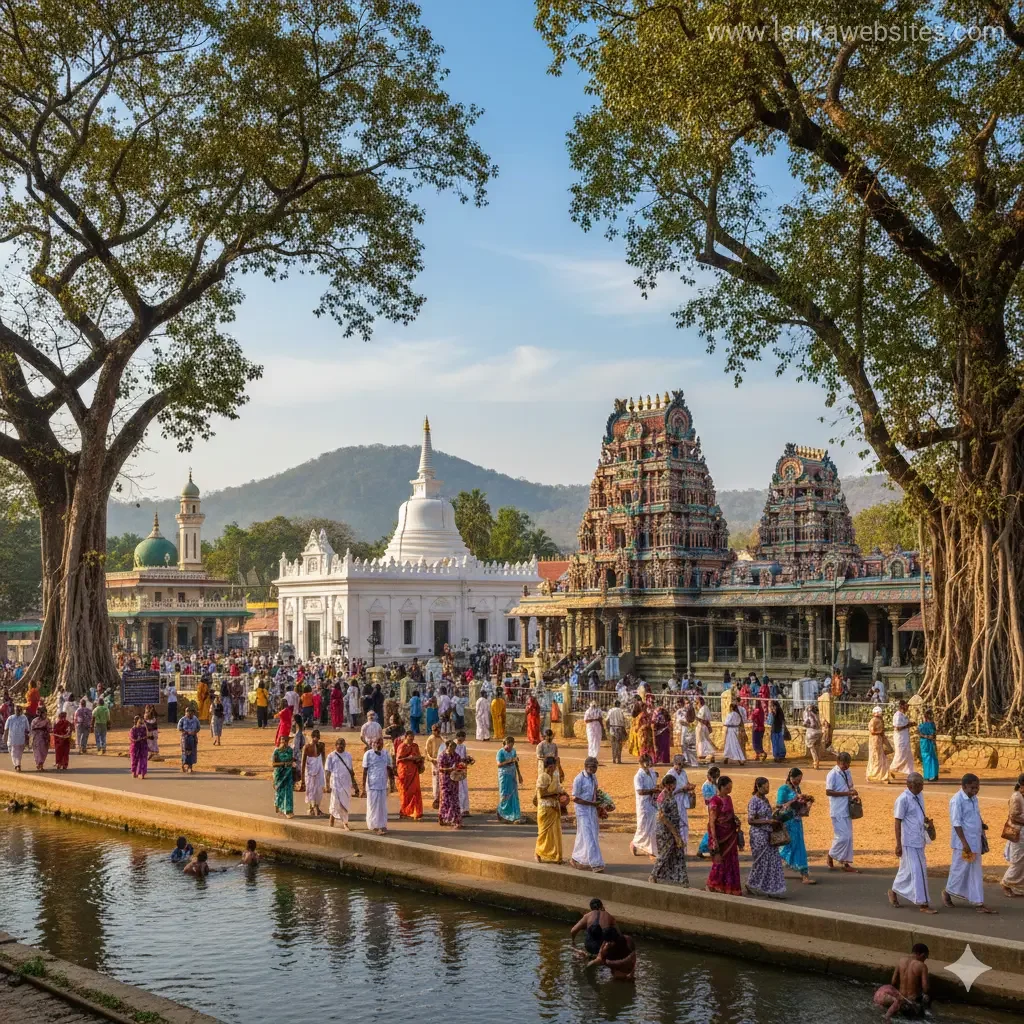
What truly sets Kataragama apart is its character as a place worshipped irrespective of nationality, caste, religion, and politics. The temple complex serves as a unique meeting point where Buddhism and Hinduism coexist, alongside Muslim and Vedda communities who also hold the site sacred.
The shrine is dedicated to the Buddhist guardian deity Kataragama and the Hindu War God Murugan, embodying the spiritual syncretism that defines this sacred space. Pilgrims of all faiths—Buddhists, Hindus, Muslims, and the indigenous Vedda people—gather here to seek blessings and perform their devotions.
The Temple Complex Layout
The Kataragama sacred precinct comprises several key sites, each holding spiritual significance:
- The Main Devalaya – The central shrine dedicated to Kataragama deviyo, where devotees present offerings and participate in rituals
- The Kirivehera Stupa – The ancient Buddhist stupa where pilgrims offer flowers, light oil lamps, and meditate
- The Menik Ganga (Gem River) – The sacred river flowing through the complex where pilgrims purify themselves by bathing before worship
- Hindu temples and a mosque – Additional places of worship within the complex, reflecting the site's multi-faith nature
Religious Rituals and Pilgrimage Practices
Visiting Kataragama is a deeply spiritual experience, and understanding the rituals and practices can enrich your pilgrimage.
Pilgrimage Traditions
Historically, the shrine attracted Tamil Hindus from Sri Lanka and South India who undertook an arduous pilgrimage on foot. This ancient practice reflected the profound devotion pilgrims held for the sacred site. Today, whilst roads have made access easier, the spiritual significance of the journey remains central to the pilgrimage experience.
Ritual Practices
Upon arrival at Kataragama, pilgrims follow time-honoured traditions:
- Purification – Pilgrims typically purify themselves by bathing in the Menik Ganga before proceeding to worship
- Preparation of offerings – Baskets of fruit (especially bananas), flowers, and other items are prepared as symbolic gestures of gratitude and seeking blessings
- Participation in ceremonies – The 'thevava' ceremonies allow pilgrims to present their offerings during scheduled rituals
- Meditation and prayer – Devotees spend time in quiet reflection at various points within the complex
The rituals at Kataragama represent a fascinating blend of various traditions, reflecting its long history as a melting pot of beliefs. This cultural syncretism makes every visit a unique experience, regardless of one's own faith background.
Historical Challenges and Modern Realities
Like many aspects of Sri Lanka's post-independence history, Kataragama's development has been complex and sometimes contentious. It's important for visitors to understand this context when exploring the site.
After Sri Lanka's independence in 1948, significant changes occurred at Kataragama. By the 1940s, roads were constructed and more and more Sinhala Buddhists began to take the pilgrimage, which increased tensions between local Hindus and Buddhists about the ownership and type of rituals to be used. The government interceded on behalf of the Buddhists and enabled the complete takeover of the temple complex, with the shrines becoming an adjunct to the Buddhist Kiri Vehera.
These historical tensions resulted in restrictions being placed on Tamil worship at the shrine, sparking protests in the 1940s. Understanding this history helps us appreciate the ongoing efforts to maintain Kataragama as a truly inclusive spiritual space for all communities.
Visiting Kataragama Today
Whether you're a devout pilgrim or a curious visitor interested in Sri Lanka's cultural heritage, Kataragama welcomes people of all backgrounds. The site remains active year-round, with major festivals drawing particularly large numbers of devotees.
What to Expect
The Kataragama temple complex is an excellent example of how the different religions in the area have been melded together in a way that is distinctly Sri Lankan. You'll encounter:
- Hindu temples and Buddhist stupas within close proximity
- A mosque serving the Muslim community
- Markets offering fruits, flowers, meditation beads, and puja offerings
- Pilgrims from diverse backgrounds engaged in their respective devotional practices
- Serene spaces for meditation and reflection
Practical Tips for Visitors
- Dress respectfully – Wear modest clothing that covers shoulders and knees, as you would at any religious site
- Bathe in the Menik Ganga – If you wish to participate fully in the pilgrimage experience, consider bathing in the sacred river before worship
- Prepare offerings – Bring flowers, fruit, or other offerings if you plan to participate in rituals. These are also available for purchase at the site
- Respect ongoing ceremonies – Be mindful of scheduled rituals and avoid disrupting devotional activities
- Visit during festivals – If possible, time your visit to coincide with major festivals for a more immersive experience
- Engage respectfully – Feel free to observe and learn, but always approach the site with reverence and cultural sensitivity
The Spiritual Significance for Sri Lankans
Kataragama is held in deep veneration as a centre of culture and pilgrimage by both Buddhists and Hindus, as well as Muslims. For Sri Lankans, this sacred site represents something beyond individual religious identity—it embodies our nation's unique ability to maintain spiritual harmony across different faith communities.
The cultural significance of Kataragama extends far beyond religious worship. It is a place where communities interact, share traditions, and reinforce the bonds of Sri Lanka's multicultural heritage. In a world increasingly divided along religious lines, Kataragama stands as a powerful reminder that coexistence and mutual respect are not just ideals—they're lived realities in our island nation.
Frequently Asked Questions
Is Kataragama open to visitors of all faiths?
Yes, absolutely. Kataragama is explicitly a multi-faith pilgrimage site welcoming Buddhists, Hindus, Muslims, and people of all backgrounds. The site's fundamental character is one of religious inclusivity and shared spiritual reverence.
What's the best time to visit Kataragama?
Kataragama is accessible year-round, but the major festivals attract the largest gatherings of pilgrims. These festivals are particularly significant for Hindu devotees. Consider visiting during festival periods if you want to experience the site's full spiritual energy, though quieter times offer a more contemplative atmosphere.
Do I need to follow specific rituals or dress codes?
Whilst there are traditional rituals associated with pilgrimage, visitors aren't required to participate. However, dressing respectfully (covering shoulders and knees) is important as a sign of reverence for the sacred space. If you wish to bathe in the Menik Ganga or participate in ceremonies, follow the guidance of temple staff.
How long should I spend at Kataragama?
This depends on your interest level. A basic visit to the main shrine and Kiri Vehera can take 2-3 hours. If you want to fully experience the rituals, participate in ceremonies, and explore the entire complex mindfully, plan for a full day or even an overnight stay.
Are there accommodation and facilities nearby?
Yes, Kataragama town offers various accommodation options ranging from basic pilgrim rest houses to more comfortable hotels. The town has restaurants, shops selling offerings and religious items, and other facilities to support visitors.
What's the significance of the Menik Ganga river?
The Menik Ganga (Gem River) is considered sacred and flows through the temple complex. Pilgrims traditionally bathe in it as a purification ritual before worship. The river's presence is integral to the spiritual experience of visiting Kataragama.
Conclusion: A Living Testament to Sri Lankan Values
Kataragama represents something profoundly important about who we are as Sri Lankans. In a region where religious tensions have sometimes overshadowed shared cultural heritage, this ancient shrine continues to function as a beacon of coexistence and mutual respect. Whether you visit as a devoted pilgrim seeking spiritual blessings or as a curious traveller interested in our nation's multicultural character, Kataragama offers a meaningful encounter with the values that define our island.
If you're planning a pilgrimage or cultural journey, Kataragama deserves a place on your itinerary. Approach the site with respect, engage with its rich spiritual traditions, and you'll gain not just an understanding of Sri Lanka's religious heritage, but a deeper appreciation for the remarkable ability of our diverse communities to worship, celebrate, and find common ground in sacred spaces.
Related Articles

Multi-Religious Harmony in Sri Lankan Culture
This article references the following sources for accuracy and further reading:

Temple of the Tooth: Sacred Relic in Kandy
Introduction to the Temple of the Tooth The Temple of the Tooth, also known as the Sri Dalada Maligawa, is a sacred Buddhist temple located in the heart of

Islamic Heritage: Mosques and Muslim Culture
Introduction to Islamic Heritage As you explore the diverse cultural landscape of New Zealand, you may come across mosques and Muslim communities that are

The Arrival of Buddhism: Emperor Ashoka's Mission
Introduction to Emperor Ashoka's Mission Buddhism, one of the world's oldest and most influential religions, has a rich history that spans over 2,500 years