Nallur Kandaswamy Temple: Jaffna's Historic Hindu Temple
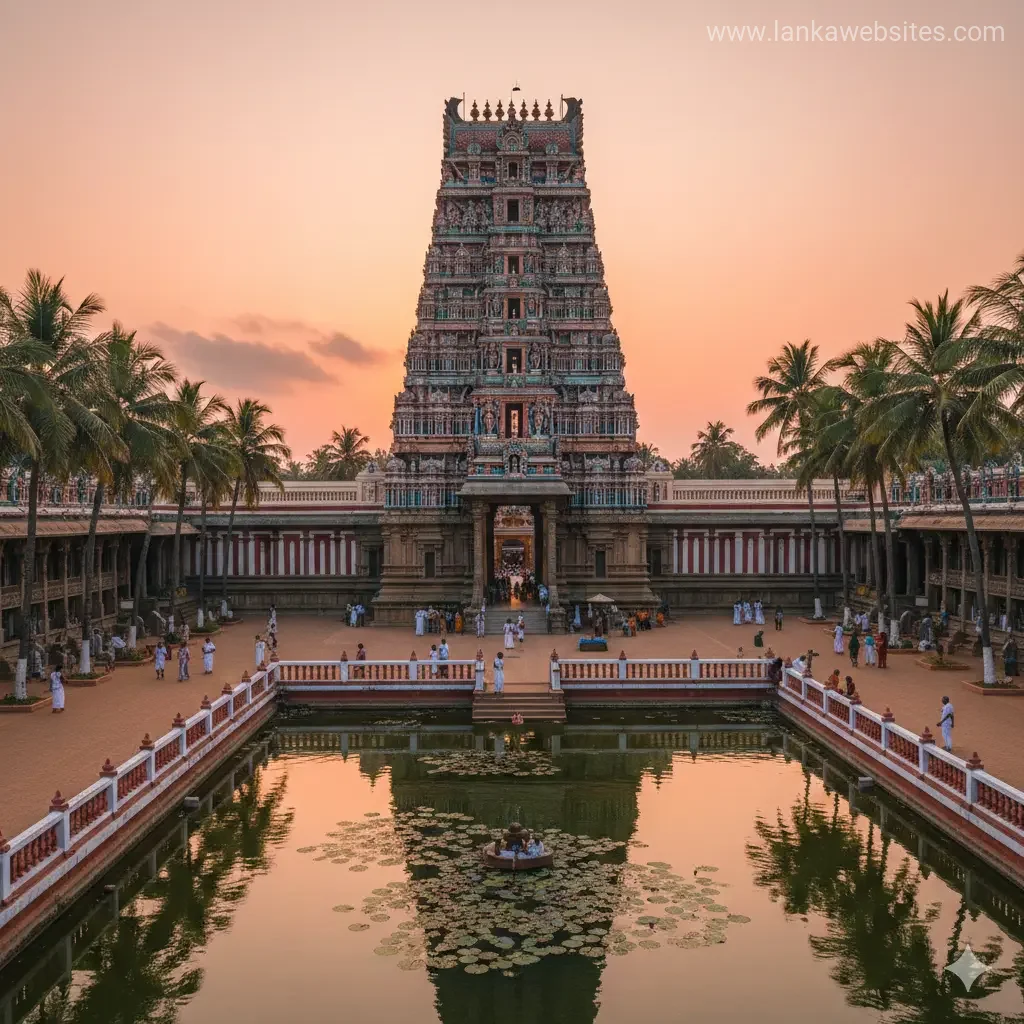
The Nallur Kandaswamy Temple stands as one of South Asia's most extraordinary Hindu temples, representing over a millennium of spiritual devotion, architectural brilliance, and cultural resilience in
The Lankawebsites editorial team curates, fact-checks, and updates guides on personal finance, property, health, immigration, legal, business, and lifestyle topics relevant to Lankawebsites readers. Articles are produced with AI assistance and reviewed by the editorial team before publication.
The Nallur Kandaswamy Temple stands as one of South Asia's most extraordinary Hindu temples, representing over a millennium of spiritual devotion, architectural brilliance, and cultural resilience in the heart of Jaffna. This sacred site has survived centuries of upheaval, been rebuilt multiple times, and today remains the principal centre of Lord Murugan worship in Sri Lanka, drawing thousands of devotees during its spectacular annual festival.
A Temple Born from Ancient Faith
The story of Nallur Kandaswamy Temple begins in 948 CE, when the first temple dedicated to Lord Murugan was established on land called 'Kurukkal Valavu' in Jaffna. However, the temple reached widespread prominence during the 13th century when it was significantly developed by Puvenaya Vaku, a minister to the powerful Jaffna King Kalinga Magha. This period marked the temple's transformation into a major religious and cultural centre in the northern kingdom.
By the 15th century, Sapumal Kumaraya (also known as Chempaha Perumal in Tamil), the adopted son of King Bhuvanekabahu of Kotte, is credited with building or renovating the third Nallur Kandaswamy Temple. At this time, Nallur served as the capital of the Jaffna kings, with the royal palace situated very close to the temple. The city was built with four entrances with gates, two main roadways, and four temples at each gateway, making it a highly organised and defensive fort.
Destruction and Resilience: The Portuguese and Dutch Periods
The temple's journey hasn't been without tragedy. In 1624 CE, Portuguese conqueror Filipe de Oliveira destroyed the third temple during his conquest of the Jaffna Kingdom. The original kovil, which had stood for centuries, was replaced by what is now St. James' Church, Nallur—a church that still stands on the original temple site today. This devastating loss marked one of the darkest chapters in the temple's history.
However, the spirit of the temple's devotees refused to be extinguished. When the Dutch took over the Jaffna District in 1658, religious suppression eased, allowing for the temple's rebirth. The fourth and present temple was constructed in 1749 CE during the Dutch colonial era by Krishna Suba Iyer and Ragunatha Maapaana Mudaliyar in the original 'Kurukkal Valavu' premises. This reconstruction was a triumphant reclamation of sacred space, built using stone and brick with sophisticated Dravidian masonry techniques adapted from South Indian traditions.
Architectural Splendour: Dravidian Excellence
The Nallur Kandaswamy Temple is a masterpiece of Dravidian architecture, showcasing the direct transmission of South Indian temple-building traditions to Sri Lanka. The temple features a magnificent five-storey gopuram (gateway tower) facing east, ornately carved and painted in vibrant colours. These towering gopurams represent some of the finest examples of Dravidian temple architecture in Sri Lanka.
The temple complex demonstrates sophisticated architectural elements including:
- Elaborately carved gopurams with intricate sculptural work
- Ornately designed mandapams (pavilions) featuring traditional South Indian designs
- Golden pillars gleaming in the tropical sun
- Red-white striped walls that have become the temple's signature aesthetic
- A spectacular copper-crusted roof and golden shrines
The construction utilised granite and limestone blocks fitted together with lime mortar, employing techniques derived directly from the Chola and Pandya dynasties of South India. The decorative elements, including sculptures and carvings, were executed using artistic traditions inherited from centuries of South Indian craftsmanship.
Modern Enhancements and Ongoing Development
The 19th century witnessed the temple's transformation from a modest structure into the magnificent complex we see today. The first clock tower was erected in 1899, and the main hall where the Vel (sacred lance) of the deity resides was refurbished using rocks in 1902. The first enclosing wall was constructed in 1909, providing better definition and protection to the sacred space.
Since then, the temple has undergone extensive renovations and additions. The descendants of Ragunatha Maapaana Mudaliyar have served as custodians and trustees of the temple for centuries, maintaining its spiritual and structural integrity. Under the stewardship of successive trustees, including the present incumbent Kumaradasa Mappana Mudaliyar, the temple has been made increasingly spacious and accessible to the large crowds that throng during the festival season.
The temple complex has benefited from extensive archaeological excavations, documentation, structural analysis, and ongoing conservation work, ensuring that this sacred heritage site continues to serve its spiritual purpose whilst preserving its historical significance for future generations.
The Annual Festival: A Spectacular Celebration
One of the most significant aspects of the Nallur Kandaswamy Temple is its annual festival fortnight, celebrated in July/August. This festival is a spectacular event that draws thousands of devotees from across Sri Lanka and beyond. The festival features elaborate rituals, processions, and cultural celebrations that reflect the deep spiritual connection the Tamil Hindu community maintains with this sacred site.
During the festival period, the temple becomes the spiritual heartbeat of Jaffna, with the scent of incense mingling with the sound of temple bells and the rhythmic beating of drums. The festival is not merely a religious observance but a celebration of cultural identity and continuity, particularly significant for Sri Lanka's Tamil Hindu community.
Religious Significance: Centre of Murugan Worship
The Nallur Kandaswamy Temple serves as the principal centre of Lord Murugan (Skanda) worship in Sri Lanka. Lord Murugan, also known as Kandaswamy, is one of the most important deities in Hindu tradition, representing divine knowledge, courage, and victory. The temple's sacred focus on Murugan worship reflects the transmission of Indian Shaivite religious traditions to Sri Lanka, creating a powerful spiritual bridge between the two nations.
The temple houses the Vel, or sacred lance of the deity, which is enshrined in the main hall. This sacred object has been the spiritual centre of devotion for over a thousand years, witnessing the faith and prayers of countless pilgrims.
Visiting the Nallur Kandaswamy Temple
If you're planning to visit this magnificent temple, here's what you should know:
Location and Access
The temple is located in Jaffna, in the northern part of Sri Lanka. The main entrance faces east, making it easily identifiable. The temple is situated in the heart of Jaffna town, making it accessible by road from most parts of the peninsula.
Best Time to Visit
Whilst the temple welcomes devotees year-round, the July/August festival fortnight offers the most spectacular experience. However, if you prefer a quieter visit, other times of the year provide a more intimate experience of the sacred space.
What to Expect
Visitors should be prepared for:
- A deeply spiritual atmosphere with ongoing prayers and rituals
- Beautiful architectural details worthy of careful observation
- Large crowds, especially during festival season
- The need to remove footwear before entering the inner sanctum
- A profound sense of cultural and historical significance
Frequently Asked Questions
When was the Nallur Kandaswamy Temple originally built?
The original temple was founded in 948 CE. However, the temple has been rebuilt four times throughout its history due to various destructions and reconstructions. The current temple structure dates to 1749 CE.
Why was the original temple destroyed?
The original temple was destroyed by Portuguese conqueror Filipe de Oliveira in 1624 CE during the Portuguese conquest of the Jaffna Kingdom. The site was subsequently occupied by what is now St. James' Church, Nallur, which still stands there today.
What architectural style is the temple built in?
The temple is built in the Dravidian architectural style, which originated in South India. It features characteristic elements including ornately carved gopurams (gateway towers), intricately designed mandapams, and sophisticated sculptural work derived from the traditions of the Chola and Pandya dynasties.
When is the annual festival held?
The Nallur Kandaswamy Temple festival is celebrated as a fortnight in July/August. This is the most vibrant and spectacular time to visit the temple, with thousands of devotees participating in elaborate rituals and processions.
Who currently manages the temple?
The descendants of Ragunatha Maapaana Mudaliyar, who was instrumental in rebuilding the temple in 1749 CE, have served as custodians and trustees of the temple for centuries. The present incumbent trustee is responsible for maintaining the temple's spiritual and structural integrity.
Can visitors from other faiths visit the temple?
Yes, the Nallur Kandaswamy Temple welcomes visitors from all backgrounds. However, visitors should be respectful of the sacred nature of the site, remove footwear before entering inner sanctums, and observe any specific guidelines posted by temple authorities.
A Living Testament to Faith and Resilience
The Nallur Kandaswamy Temple is far more than an architectural marvel—it's a testament to the enduring power of faith and cultural resilience. Over more than a thousand years, this sacred site has survived conquest, destruction, and displacement, yet continues to serve as the spiritual heartbeat of Sri Lanka's Tamil Hindu community. The temple's journey from its ancient origins in 948 CE to its present-day magnificence reflects the remarkable ability of communities to preserve their cultural and spiritual identity through centuries of change.
Whether you're a devotee seeking spiritual connection, a history enthusiast interested in Sri Lanka's rich heritage, or simply someone who appreciates extraordinary architecture, the Nallur Kandaswamy Temple offers a profound and enriching experience. The temple stands as a bridge between Sri Lanka and South India, a celebration of Dravidian architectural excellence, and a living centre of worship where ancient traditions continue to flourish.
If you're planning a visit to Jaffna, the Nallur Kandaswamy Temple should be at the top of your itinerary. Whether you visit during the spectacular July/August festival or at a quieter time of year, you'll encounter a place where history, spirituality, and architectural beauty converge in a truly unforgettable way.
Related Articles

Multi-Religious Harmony in Sri Lankan Culture
This article references the following sources for accuracy and further reading:

Temple of the Tooth: Sacred Relic in Kandy
Introduction to the Temple of the Tooth The Temple of the Tooth, also known as the Sri Dalada Maligawa, is a sacred Buddhist temple located in the heart of

Islamic Heritage: Mosques and Muslim Culture
Introduction to Islamic Heritage As you explore the diverse cultural landscape of New Zealand, you may come across mosques and Muslim communities that are

The Arrival of Buddhism: Emperor Ashoka's Mission
Introduction to Emperor Ashoka's Mission Buddhism, one of the world's oldest and most influential religions, has a rich history that spans over 2,500 years