Preparing for Rupee Volatility: Sri Lanka Forex Reserves Outlook 2026
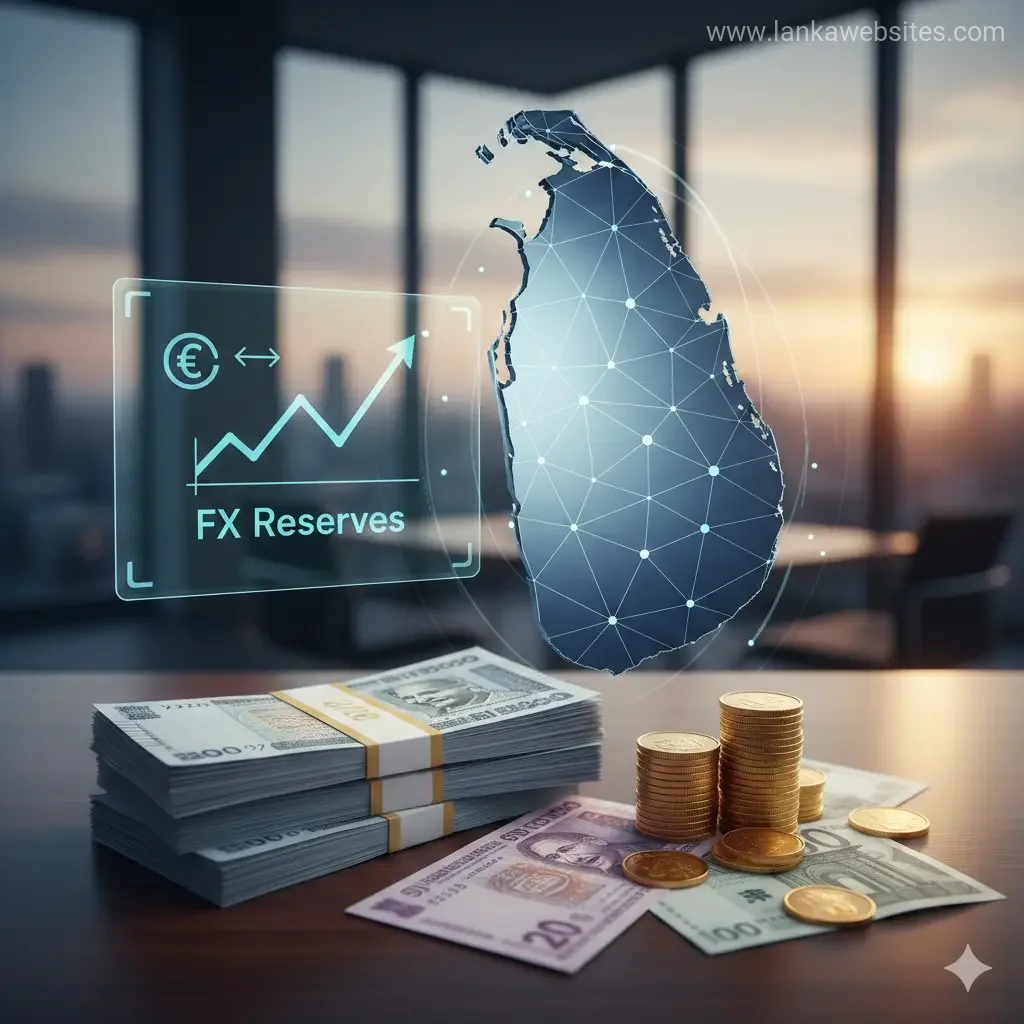
The Sri Lankan rupee's journey through 2026 tells a story that affects nearly every one of us—from the prices we pay at the supermarket to the money we send abroad to family. With exchange rates fluct
The Lankawebsites editorial team curates, fact-checks, and updates guides on personal finance, property, health, immigration, legal, business, and lifestyle topics relevant to Lankawebsites readers. Articles are produced with AI assistance and reviewed by the editorial team before publication.
The Sri Lankan rupee's journey through 2026 tells a story that affects nearly every one of us—from the prices we pay at the supermarket to the money we send abroad to family. With exchange rates fluctuating and forex reserves under constant scrutiny, understanding what's ahead for our currency has never been more important. Whether you're an importer managing costs, a traveller planning your holiday, or simply someone curious about our economic health, this guide will help you navigate the rupee volatility ahead.
The Current State of Sri Lanka's Rupee in 2026
As we move through February 2026, the USD/LKR exchange rate is hovering around 309.41 LKR per US dollar. This represents a significant stabilisation compared to the turbulent years we've experienced. Historically, the rupee reached an all-time high of 372 LKR per dollar back in May 2022, so the current levels suggest we've made meaningful progress in stabilising our currency.
Over the past month, the Sri Lankan rupee has strengthened by 0.14%, though it remains down 4.34% over the last 12 months. This mixed picture reflects the ongoing challenges our economy faces, balanced against recent policy improvements and reserve-building efforts.
The average exchange rate so far in 2026 has been 309.454 LKR per dollar, with the best rate recorded at 311.806 LKR on 1 February 2026. These figures give us a baseline to understand where we stand and where forecasters believe we're heading.
Forex Reserves: Building Our Economic Cushion
Sri Lanka's foreign exchange reserves are the backbone of our economic stability. These reserves allow us to pay for essential imports, service our external debt, and maintain confidence in the rupee. After the severe forex crisis of 2022, when our reserves dropped to critically low levels, the focus on rebuilding has been paramount.
The Central Bank of Sri Lanka has implemented strict monetary policies to conserve and build reserves. This includes managing import payments, encouraging remittances, and attracting foreign investment. These efforts have been supported by policy rate adjustments across the region, including in Sri Lanka itself.
Building reserves isn't just about numbers on a balance sheet—it's about ensuring we can weather global economic shocks, pay for medicines and fuel, and maintain stability for businesses and families across the country. The healthier our reserves, the more confidence international markets have in our rupee, and the more stable our exchange rate becomes.
What Forecasters Predict for the Rupee in 2026
Exchange rate forecasts vary depending on the methodology and assumptions used, but several reputable sources provide insights into where the rupee might head by the end of 2026.
Short-term Forecasts (February to June 2026)
Looking at the next few months, forecasts suggest relatively modest movement. For February 2026, analysts expect the rate to range between 285.00 and 296.64 LKR per dollar, with an average around 290.82 LKR. By June 2026, the forecast points to rates between 291.83 and 303.74 LKR, averaging around 297.78 LKR.
This suggests the rupee may experience some strengthening (appreciation) in the coming months, which would be positive news for importers and those planning foreign travel.
End-of-Year Projections
By the end of 2026, forecasts diverge somewhat:
- Trading Economics estimates the rupee will trade at around 308.81 LKR by the end of Q1 2026, and approximately 305.89 LKR in 12 months' time
- CoinCodex forecasts the USD/LKR rate could reach 320.46 by end of 2026, representing a 3.70% depreciation from current levels
- Traders Union projects the rate could reach 314.30 LKR by the end of 2026
The range of 305–320 LKR per dollar by year-end suggests we should expect modest depreciation of the rupee, but nothing as dramatic as what we experienced in 2022. This relative stability is encouraging and reflects improving economic fundamentals.
Factors Driving Rupee Movement in 2026
Global Economic Conditions
The rupee doesn't exist in isolation. Global interest rates, commodity prices (especially oil), and growth in major economies all influence how our currency performs. The World Bank and other international institutions monitor these factors closely, and any shifts in global monetary policy can ripple through to Sri Lanka.
Tourism and Remittances
Two critical sources of foreign exchange for Sri Lanka are tourism and overseas remittances. Strong tourism arrivals and steady remittance flows help build our forex reserves and support the rupee. Any disruption to either sector—whether from global recession, travel restrictions, or changes in migration patterns—can pressure our currency.
Import Demand and Trade Balance
Sri Lanka is an import-dependent economy. We need foreign currency to pay for fuel, food, medicine, and manufacturing inputs. When import demand is strong (indicating economic growth), it can put downward pressure on the rupee. Conversely, when we export more goods and services, it strengthens demand for our currency.
Monetary Policy and Interest Rates
The Central Bank of Sri Lanka's decisions on policy rates directly affect the rupee. Higher interest rates can attract foreign investment seeking better returns, which increases demand for rupees and strengthens the currency. The Central Bank must balance this against domestic inflation and growth concerns.
What This Means for Different Groups
For Importers and Businesses
If you're importing goods, the forecasts suggest moderate rupee depreciation ahead. This means your import costs could increase slightly as the year progresses. To manage this risk, consider:
- Locking in forward exchange rates for large purchases through your bank
- Diversifying your supplier base across different currency zones
- Building slightly larger inventory buffers if cash flow allows
- Reviewing your pricing strategy to factor in potential currency headwinds
For Travellers and Those Sending Money Abroad
If you're planning international travel or sending money to family overseas, the current rates around 309 LKR per dollar are relatively favourable historically. If rates move toward 320 LKR per dollar by year-end as some forecasts suggest, you'll get slightly less foreign currency for your rupees. Consider:
- Exchanging currency earlier in the year if you're planning travel later
- Using remittance services that offer competitive rates
- Monitoring exchange rate trends if you have flexibility in your travel dates
For Savers and Investors
If you hold rupee savings, currency depreciation erodes the real value of your money. Consider maintaining some portion of savings in foreign currency or foreign-denominated investments. However, ensure you're doing this through proper banking channels and in compliance with Sri Lanka's foreign exchange regulations.
The Importance of Forex Reserves Going Forward
Our forex reserves remain crucial to maintaining rupee stability. The Central Bank's continued focus on building these reserves—through policies that encourage remittances, attract foreign direct investment, and manage import expenditure—is essential for 2026 and beyond.
A stronger reserve position gives the Central Bank more flexibility to intervene in currency markets if needed, helps maintain our credit rating with international agencies, and provides confidence to foreign investors and trading partners. This, in turn, supports a more stable rupee and better economic conditions for all Sri Lankans.
Frequently Asked Questions
Will the rupee continue to weaken against the dollar in 2026?
Based on current forecasts, the rupee is expected to experience modest depreciation, with rates likely moving from around 309 LKR per dollar to somewhere between 305–320 LKR by year-end. This is significantly more stable than the sharp depreciation we saw in 2022, suggesting our economy is on a more stable footing.
Should I exchange my money now or wait?
If you need foreign currency for travel or business, current rates around 309 LKR per dollar are reasonable. If forecasts of 320+ LKR materialise, waiting might cost you more. However, for essential needs, don't try to time the market perfectly—use your bank's services and lock in rates if making large transactions.
How do forex reserves affect the rupee?
Stronger forex reserves give the Central Bank more ammunition to stabilise the currency through market interventions if needed. They also signal economic health to international markets, which supports confidence in the rupee. Weaker reserves can lead to currency pressure as the Central Bank has fewer tools to manage volatility.
What can the government do to strengthen the rupee?
Key measures include maintaining disciplined monetary policy, encouraging foreign investment and tourism, managing imports strategically, and supporting remittance inflows. These efforts help build forex reserves and create conditions for rupee stability.
How does global economic news affect the Sri Lankan rupee?
Global factors like US interest rates, oil prices, and economic growth in major trading partners all influence the rupee. When global conditions are uncertain, investors often move money to safer currencies, which can pressure the rupee. Conversely, strong global growth can support emerging market currencies like ours.
Is it safe to hold foreign currency in Sri Lanka?
Yes, you can hold foreign currency through licensed banks in Sri Lanka. However, ensure you're complying with exchange control regulations and using authorised banking channels. Your bank can advise you on the proper procedures and any limits that may apply.
Moving Forward: What You Should Do Now
As we navigate 2026, here are practical steps to protect yourself from rupee volatility:
- Monitor official sources: Keep an eye on Central Bank announcements and economic data releases
- Plan ahead: If you know you'll need foreign currency later in the year, consider your timing carefully
- Diversify: Don't keep all your savings in one currency or asset type
- Use authorised channels: Always exchange currency through licensed banks and authorised dealers
- Stay informed: Read economic news from reputable sources to understand what's driving currency movements
The Sri Lankan rupee's stabilisation in 2026 compared to the crisis years of 2022–2023 is genuinely encouraging. While some depreciation is expected, the forecasts suggest we're entering a period of relative stability. This reflects the difficult but necessary reforms our economy has undergone and the focus on building forex reserves.
By understanding these trends and planning accordingly, you can make better decisions about your finances, business, and travel plans. The rupee's health is our economic health, and staying informed helps you navigate whatever the year brings.
Useful Tools
Related Articles

Infrastructure Spending: How Reconstruction Fuels Sri Lanka's 2026 Recovery
Imagine driving along the Colombo-Kandy highway, smooth and expanded, or watching a new bridge span the Kelani River, easing traffic for thousands of daily commuters. That's the promise of Sri Lanka's

Corporate Earnings Growth in Sri Lanka 2026: 15-20% Forecast Breakdown
Imagine watching the Colombo Stock Exchange's All Share Price Index (ASPI) climb steadily in 2026, driven by solid corporate profits even as the broader economy navigates headwinds. For us in Sri Lank

Step-by-Step Guide: Accessing Government Reconstruction Contracts in Sri Lanka 2026
Imagine turning the devastation from Cyclone Ditwah into your business's biggest opportunity. With Sri Lanka's economy set to grow over 5% in 2026 thanks to massive reconstruction efforts, SMEs across

Sri Lanka Credit Growth Opportunities: How Businesses Can Leverage 2026 Expansion
Sri Lanka's economy is heating up with private credit hitting a record Rs262 billion in November 2025, signalling strong **Sri Lanka credit growth** that's set to fuel business expansion in 2026.[1] F