How Much Sleep Do I Need

Have you ever wondered how much sleep you really need? I think it's a question we've all asked ourselves at some point, especially after a long night of tossing and turning. You might be surprised to learn that the amount of sleep you need can vary greatly depending on your age, lifestyle, and othe
The Lankawebsites editorial team curates, fact-checks, and updates guides on personal finance, property, health, immigration, legal, business, and lifestyle topics relevant to Lankawebsites readers. Articles are produced with AI assistance and reviewed by the editorial team before publication.
Have you ever wondered how much sleep you really need? I think it's a question we've all asked ourselves at some point, especially after a long night of tossing and turning. You might be surprised to learn that the amount of sleep you need can vary greatly depending on your age, lifestyle, and other factors. In this article, I'll share with you the latest research on sleep needs, and provide you with practical tips to improve the quality of your sleep. By the end of this article, you'll have a better understanding of your sleep needs and how to prioritize them for optimal health and well-being.
You might be thinking, "What's the big deal about sleep, anyway?" Well, the truth is, sleep plays a critical role in our physical and mental health. During sleep, our bodies repair and regenerate tissues, build bone and muscle, and strengthen our immune systems. Sleep also affects our mood, cognitive function, and overall quality of life. So, if you're not getting enough sleep, you might be putting yourself at risk for a range of health problems, from obesity and diabetes to cardiovascular disease and depression.
Introduction to Sleep Needs
Sleep is a complex and multifaceted process that involves different stages and cycles. I think it's fascinating to learn about the different stages of sleep, including light sleep, deep sleep, and REM (rapid eye movement) sleep. During light sleep, our brains are still somewhat active, and we can be easily woken up. Deep sleep, on the other hand, is characterized by slow brain waves and is essential for physical restoration. REM sleep is when we dream, and it's thought to be important for memory consolidation and learning.
Sleep quality is just as important as sleep duration. You might be getting enough hours of sleep, but if your sleep is disrupted or fragmented, you might not be getting the restful sleep you need. Factors that can affect sleep quality include sleep disorders, such as insomnia or sleep apnea, as well as lifestyle factors, such as caffeine consumption, exercise, and stress levels. For example, I know someone who used to drink coffee in the afternoon, only to find themselves lying awake at night, unable to sleep. By cutting out caffeine, they were able to improve the quality of their sleep and wake up feeling more rested and refreshed.
The health impacts of sleep are far-reaching and can be serious. Chronic sleep deprivation has been linked to a range of health problems, including obesity, diabetes, cardiovascular disease, and depression. I think it's alarming to learn that sleep deprivation can also affect our cognitive function, including attention, memory, and decision-making skills. For instance, a study found that sleep-deprived drivers are just as impaired as drunk drivers, highlighting the importance of getting enough sleep before getting behind the wheel.
How Much Sleep Do Adults Need
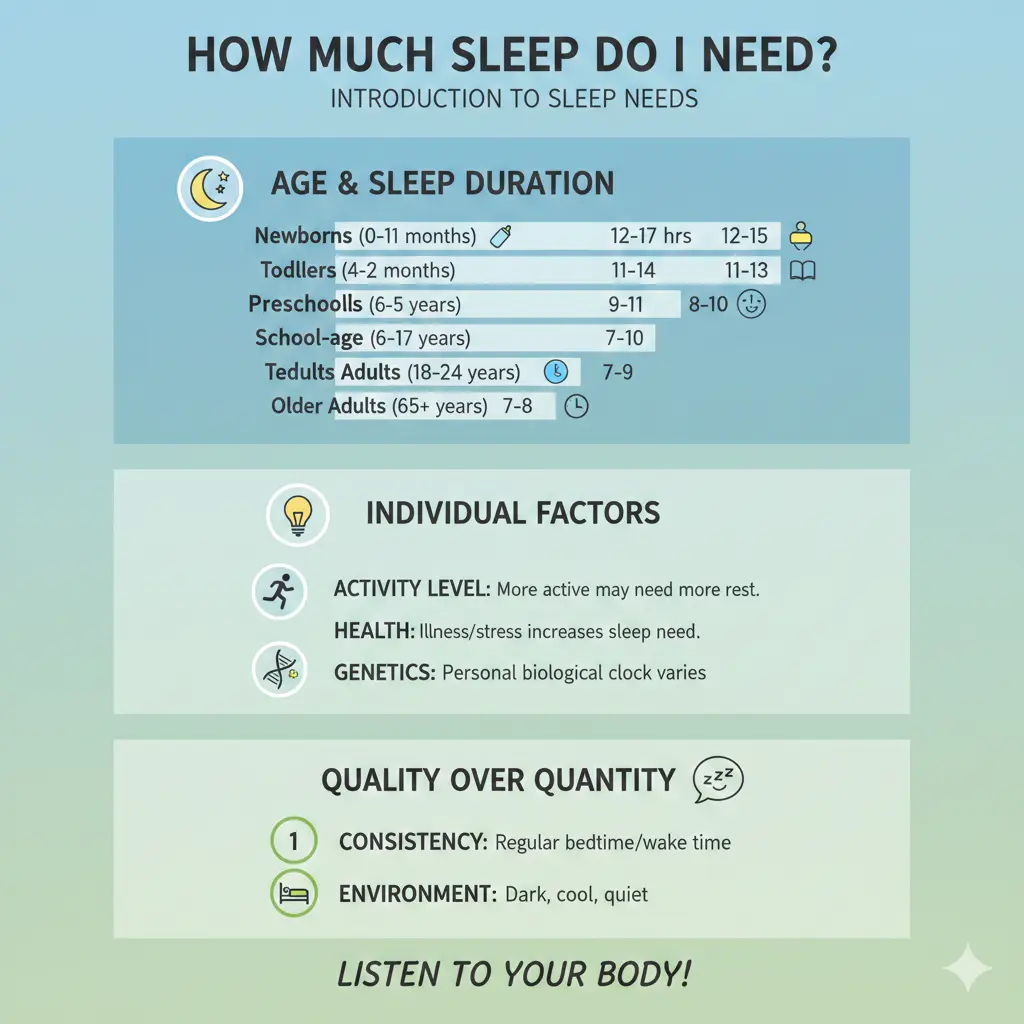
So, how much sleep do adults need? The National Sleep Foundation recommends that adults aim for 7-9 hours of sleep each night. I think it's interesting to note that sleep needs can vary across the lifespan, with older adults tend to need less sleep than younger adults. For example, a study found that adults in their 20s and 30s tend to need around 8-10 hours of sleep, while adults in their 60s and 70s may need only 6-8 hours of sleep.
Sleep stages and cycles are also important to consider. During a typical night's sleep, we go through multiple sleep cycles, each lasting around 90-120 minutes. I think it's fascinating to learn about the different stages of sleep, including Stage 1 (light sleep), Stage 2 (light sleep), Stage 3 (deep sleep), and Stage 4 (REM sleep). Each stage plays a critical role in our physical and mental restoration, and disruptions to these stages can affect our overall sleep quality.
Age-related sleep needs are also important to consider. As we age, our sleep patterns tend to change, and we may need less sleep than we did when we were younger. However, this doesn't mean that sleep is any less important for older adults. In fact, sleep plays a critical role in maintaining physical and cognitive function as we age. For example, a study found that older adults who get regular exercise and prioritize sleep tend to have better cognitive function and a lower risk of dementia.
Sleep Needs for Children and Teenagers
Children and teenagers have different sleep needs than adults. I think it's surprising to learn that infants need around 16-18 hours of sleep per day, while toddlers need around 12-15 hours of sleep. As children get older, their sleep needs tend to decrease, but they still need a significant amount of sleep to support their growth and development.
Teenagers, in particular, tend to have unique sleep needs. During adolescence, the body undergoes significant changes, including the release of hormones that regulate sleep-wake cycles. I think it's interesting to note that teenagers tend to experience a natural shift in their sleep-wake cycles, with their bodies wanting to stay up later and sleep in later. This can be challenging for teenagers who have to wake up early for school, and can lead to sleep deprivation and related problems.
Sleep patterns are also important to consider for children and teenagers. Establishing a consistent sleep schedule and bedtime routine can help regulate sleep patterns and improve sleep quality. For example, a study found that children who have a consistent bedtime routine tend to have better sleep quality and fewer behavioral problems than children who don't have a routine. I think it's also important to create a sleep-conducive environment, such as keeping the bedroom cool, dark, and quiet, and avoiding screens before bedtime.
Consequences of Inadequate Sleep
The consequences of inadequate sleep can be severe and far-reaching. I think it's alarming to learn that chronic sleep deprivation can increase the risk of physical health problems, including obesity, diabetes, and cardiovascular disease. Sleep deprivation can also affect our mental health, leading to anxiety, depression, and mood disorders.
Physical health impacts are a major concern. Sleep deprivation can weaken our immune systems, making us more susceptible to illness and infection. I think it's surprising to learn that sleep deprivation can also affect our appetite and metabolism, leading to weight gain and obesity. For example, a study found that sleep-deprived individuals tend to have higher levels of the hunger hormone ghrelin and lower levels of the fullness hormone leptin, leading to increased food cravings and calorie intake.
Cognitive function is also affected by sleep deprivation. I think it's interesting to note that sleep plays a critical role in memory consolidation and learning, with sleep deprivation leading to impaired attention, memory, and decision-making skills. For instance, a study found that sleep-deprived individuals tend to perform poorly on cognitive tasks, such as attention and reaction time, and are more likely to make mistakes and errors.
Tips for Improving Sleep Quality
So, how can you improve your sleep quality? I think it's essential to establish a consistent sleep schedule and bedtime routine. This can help regulate your body's internal clock and improve the quality of your sleep. For example, you might try going to bed and waking up at the same time each day, including weekends.
The sleep environment is also critical. I think it's surprising to learn that factors such as light, noise, and temperature can affect our sleep quality. For instance, a dark, quiet, and cool bedroom can help promote better sleep, while a bright, noisy, and hot bedroom can disrupt sleep. You might try using earplugs, a white noise machine, or blackout curtains to create a sleep-conducive environment.
Relaxation techniques can also help improve sleep quality. I think it's interesting to note that stress and anxiety can make it difficult to fall asleep and stay asleep. Techniques such as deep breathing, progressive muscle relaxation, and mindfulness meditation can help calm the mind and body, making it easier to fall asleep. For example, you might try practicing yoga or meditation before bed, or listening to calming music or nature sounds to help you relax.
Key Takeaways
In conclusion, getting enough sleep is essential for our physical and mental health. I think it's essential to prioritize sleep and make it a priority in our daily lives. By establishing a consistent sleep schedule, creating a sleep-conducive environment, and practicing relaxation techniques, we can improve the quality of our sleep and wake up feeling rested, refreshed, and ready to take on the day.
So, what's the first step you can take to improve your sleep quality? I think it's essential to start by assessing your sleep needs and habits, and making a plan to prioritize sleep in your daily life. Whether it's establishing a consistent sleep schedule, avoiding caffeine and electronics before bedtime, or practicing relaxation techniques, there are many simple and effective ways to improve your sleep quality. So, what are you waiting for? Take the first step today, and start sleeping your way to better health and well-being.
Frequently Asked Questions
Useful Tools
Related Articles

How Many Feet in a Mile
Have you ever found yourself wondering how many feet are in a mile? Perhaps you're a runner trying to track your progress, a contractor estimating materials for a construction project, or simply someone who's curious about the world around you. Whatever your reason, understanding the relationship b

How Much Water Should I Drink
Have you ever found yourself feeling sluggish, tired, and struggling to focus, only to realize that you haven't had a glass of water all day? You're not alone. Many of us underestimate the importance of staying hydrated, and it can have a significant impact on our overall health and wellbeing. As y

How Many Ounces in a Cup
Did you know that a staggering 75% of home cooks in the United States use cups as their primary unit of measurement when following recipes? This statistic, reported by the National Kitchen and Bath Association, highlights the importance of understanding the relationship between cups and ounces. As

How Many Weeks in a Year
Have you ever found yourself wondering how many weeks are in a year? Perhaps you're planning a long-term project, setting personal goals, or simply trying to get a better sense of time. You're not alone - many people struggle to keep track of the weeks in a year, and it can be frustrating when you