Ancient Irrigation Technology: Anicuts and Canals
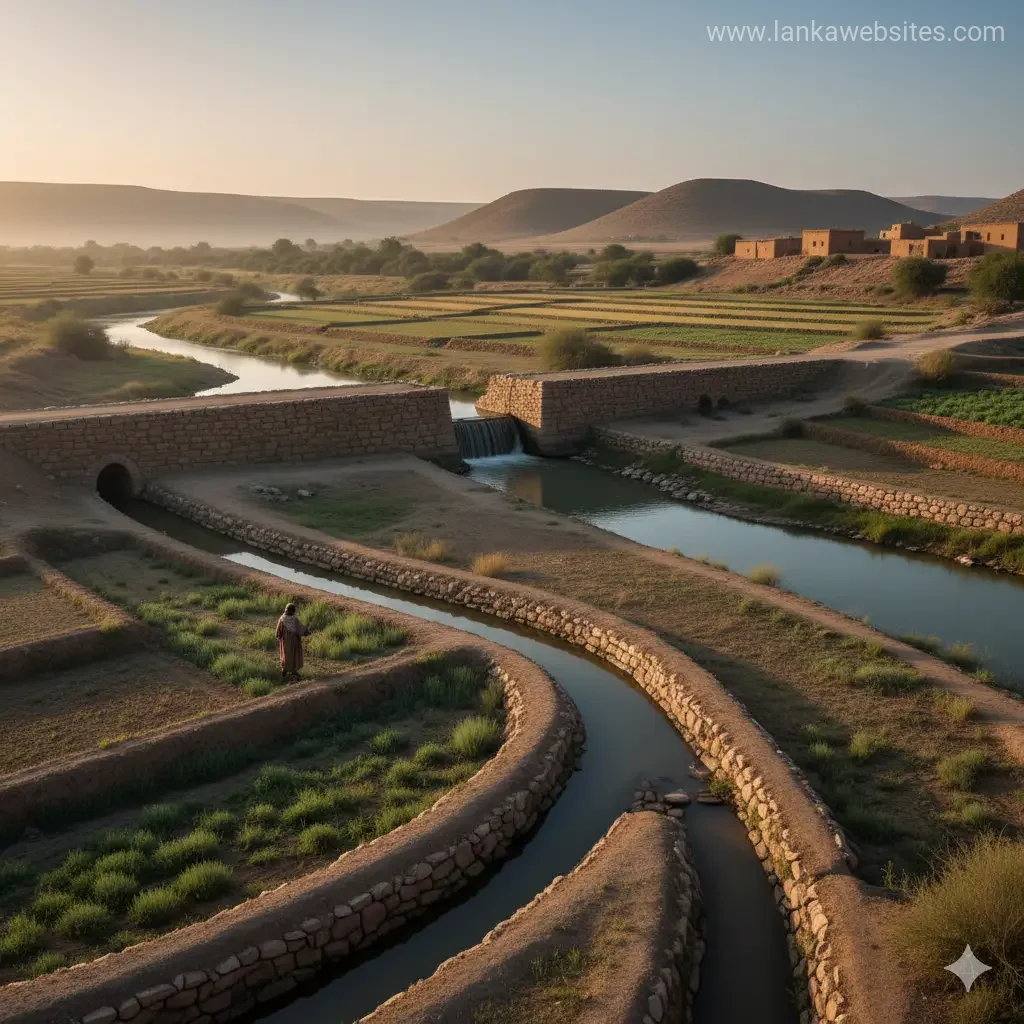
Sri Lanka's ancient irrigation systems stand as one of the world's greatest engineering achievements, rivalling anything built by the Romans, Egyptians, or Chinese civilisations. Our ancestors develop
The Lankawebsites editorial team curates, fact-checks, and updates guides on personal finance, property, health, immigration, legal, business, and lifestyle topics relevant to Lankawebsites readers. Articles are produced with AI assistance and reviewed by the editorial team before publication.
Sri Lanka's ancient irrigation systems stand as one of the world's greatest engineering achievements, rivalling anything built by the Romans, Egyptians, or Chinese civilisations. Our ancestors developed sophisticated networks of anicuts (weirs), canals, and cascading reservoirs that transformed the island into a hydraulic civilisation capable of sustaining kingdoms for over a thousand years. Today, with more than 34,000 tanks and rural reservoirs still dotting our landscape, we're living within the legacy of engineering brilliance that emerged centuries ago.
What Are Anicuts and Why Did Ancient Sri Lankans Build Them?
An anicut (also spelled amuna) is a low dam or weir constructed across a river to divert water into canals and irrigation systems. Unlike massive dams that block entire river valleys, anicuts are relatively modest structures designed to redirect water flow rather than create large reservoirs at the anicut site itself. Rainwater alone wasn't sufficient to fill the large reservoirs like Kala Wewa, Minneriya, Kaudulla, and Kantale, so our ancient engineers built anicuts across permanent rivers to divert water through carefully engineered canal systems.
The genius of this approach lay in understanding that water needed to be captured from flowing rivers and transported to where it was needed most. Ancient engineers selected anicut locations almost 20 kilometres upstream from their target reservoirs, carefully calculating river levels and elevation to ensure water would flow naturally to its destination.
The Birth of Sri Lanka's Irrigation Mastery
Early Foundations (300 BCE – 100 CE)
Sri Lanka's irrigation revolution began around 300 BCE with the first rainwater reservoirs, but King Vasabha (65–109 CE) pioneered large-scale river diversion, constructing 11 reservoirs and 12 canals. His most significant achievement was the Elahera Anicut, built across the Amban Ganga, a major tributary of the Mahaweli River. This single project demonstrated that our engineers could harness one of Sri Lanka's mightiest rivers and redirect its waters across the landscape.
The Elahera Canal that followed this anicut became a lifeline for agriculture, eventually feeding water to the Minneriya, Kaudulla, and Kantale tank complexes. Waters diverted from the Mahaweli travelled along the ancient Yoda Ela over 30 kilometres to reach the Minneriya and Giritale tank complexes, then flowed to Kaudulla and eventually to Kantale Tank, with spent waters finally reaching Tampalakamam Bay in Trincomalee—95 kilometres from the initial diversion.
The Revolutionary Biso Kotuwa (3rd Century BCE)
Perhaps the most sophisticated innovation in ancient Sri Lankan irrigation was the biso kotuwa—a hydraulic surge chamber and valve tower invented as early as the 3rd century BCE, over 2,200 years ago. This ingenious device solved a critical engineering problem: how to safely release water from deep reservoirs without the immense pressure destroying the outlet structures.
The biso kotuwa functioned as the equivalent of a modern valve pit, regulating the outward flow of water to rice fields below. It was the invention of the biso kotuwa which permitted ancient Sinhalese to proceed boldly with the construction of vast reservoirs that still rank amongst the finest and greatest works of its kind in the world. Without this innovation, building larger reservoirs would have been impossible—the pressure from deep water would have destroyed traditional outlet channels.
The Golden Age: King Parakramabahu I and the Parakrama Samudra
The 12th century witnessed the pinnacle of our irrigation engineering. During King Parakramabahu's reign, he constructed or restored 165 dams, 3,910 canals, and 2,539 reservoirs. His most famous creation, the Parakrama Samudra (Sea of Parakrama), amalgamated five existing tanks through enhancement of both the dam and the Akasa Ganga canal.
This enormous reservoir, considered the largest of the ancient world, demonstrated irrigation engineering far superior to what had come before. The interconnected system that emerged was breathtaking in scope. The combined storage capacity of just four tanks—Minneriya, Kaudulla, Parakrama Samudra, and Kantale—equalled approximately 450 million cubic metres.
Key Ancient Irrigation Structures Still Visible Today
Major Anicuts and Their Origins
Several anicuts remain identifiable across Sri Lanka, each telling a story of ancient engineering prowess:
- Thekkam Anicut: Believed to have been built during the Anuradhapura Period, this anicut is constructed with giant granite blocks using a rocky foundation at an angle across the river. The Mahavamsa chronicles that a channel (present Yoda Ela) was made to bring water to the Giants Tank by King Dhatusena (455–473 A.D.) by damming the river Malwathu Oya.
- Elahera Anicut: Built by King Vasabha across the Amban Ganga, this structure fed the northern tank complexes.
- Minipe Anicut: Built by King Aggabodhi I as per the Mahavamsa records.
- Angamedilla Anicut: Also known as Raja Bamma, this structure represents another example of ancient engineering ingenuity.
The Canal Systems: Engineering Marvels of Water Transport
Anicuts alone couldn't solve the problem of water distribution. The conservation of water was accomplished by constructing massive causeways and anicuts across larger rivers and turning the water into excavated channels which conveyed it sometimes many miles over apparently flat country and impounded the water eventually in large reservoirs or chains of reservoirs.
The reservoirs were built in a cascade system at slightly varying elevations so that there often was a series of reservoirs to take the overflow from the one above it. This cascading approach meant that water could be used multiple times as it descended through the landscape, maximising agricultural benefit from every drop diverted from the river.
Famous Canal Systems
Several ancient canals remain partially functional today:
- Yoda Ela (Jaya Ganga): Connected Kala Wewa to Tissa Wewa and Abhay Wewa, representing one of the longest canal systems in the ancient world.
- Elahera Canal: Fed Minneriya, Kaudulla, and Kantale, extending the reach of water from the Mahaweli River system across vast distances.
The Decline and Legacy of Our Hydraulic Civilisation
After the collapse of the island's hydraulic civilisation about 700 years ago, these canals were abandoned. The reasons for this collapse remain debated by historians, but the result was clear: one of humanity's greatest engineering achievements fell into disrepair.
Yet the legacy endures. Today there are more than 34,000 large tanks and rural tanks with large numbers of canals and anicuts. Many continue to function, albeit often in modified forms. Water still flows through ancient irrigation canals built between the 11th and 14th centuries, nurturing different types of vegetation in areas like Somawathiya National Park.
Preserving Our Archaeological Heritage
The Department of Archaeology identifies and conserves this heritage and preserves it for future generations. The advanced knowledge ancient Sri Lankans possessed to collect masses of water between two lands of high elevation by gaining them and also to erect canals and anicuts having constructed the tank bund according to contour lines cannot be matched with any other civilisation of the world.
If you're interested in learning more about these structures, the Department of Archaeology maintains records and conducts ongoing research. Many ancient tank systems are accessible to visitors, offering opportunities to witness these engineering marvels firsthand.
FAQ: Common Questions About Ancient Irrigation Technology
How did ancient Sri Lankan engineers build anicuts without modern machinery?
Ancient engineers used manual labour, animal power, and ingenious techniques to quarry and position massive stone blocks. The Thekkam Anicut, for example, was constructed with giant granite blocks using a rocky foundation at an angle across the river. They relied on understanding water flow, gravity, and careful planning rather than mechanical force.
Why are anicuts different from dams?
Anicuts are low weirs designed to divert water flow rather than create large reservoirs at the structure itself. Dams impound water behind them, whilst anicuts redirect flowing water into canal systems. This distinction allowed ancient engineers to transport water across long distances to where reservoirs were already constructed.
Are any ancient anicuts still in use today?
Yes, several ancient anicuts remain partially functional or have been restored for modern irrigation purposes. However, many have been modified or replaced with modern structures. The Department of Archaeology works to preserve and document these sites.
What made the biso kotuwa such an important invention?
The biso kotuwa solved the critical engineering problem of how to safely release water from deep reservoirs without the immense pressure destroying outlet structures. Without this innovation, building larger reservoirs would have been impossible, making it one of humanity's most important hydraulic innovations.
How much water could the ancient tank systems store?
The combined storage capacity of just four tanks—Minneriya, Kaudulla, Parakrama Samudra, and Kantale—equalled approximately 450 million cubic metres. This demonstrates the scale of our ancestors' engineering ambitions.
What happened to the ancient irrigation systems?
The island's hydraulic civilisation collapsed about 700 years ago, and these canals were abandoned. The reasons remain debated, but the systems fell into disrepair. Today, the Department of Archaeology works to preserve and research these heritage sites.
Conclusion: Understanding Our Engineering Legacy
Ancient irrigation technology—anicuts and canals—represents one of humanity's greatest achievements. Our ancestors transformed Sri Lanka into a hydraulic civilisation that sustained kingdoms for over a thousand years, developing technologies and engineering principles that rival anything built elsewhere in the ancient world.
Today, as we face modern water management challenges, there's much we can learn from these systems. The cascade approach to water conservation, the careful consideration of elevation and gravity, and the sophisticated understanding of hydraulic engineering remain relevant. The Department of Archaeology continues to identify and conserve this heritage, ensuring that future generations understand the brilliance of our ancestors.
If you're interested in exploring this heritage, consider visiting tank systems like Parakrama Samudra, Minneriya, or Kaudulla. These sites offer tangible connections to our engineering past and demonstrate why Sri Lanka deserves recognition as one of the world's great hydraulic civilisations.
Related Articles

The Ancient Kingdom of Ruhuna
Introduction to the Ancient Kingdom of Ruhuna The ancient kingdom of Ruhuna, located in present-day Sri Lanka, is a fascinating piece of history that showc

The Ancient Rajarata (King's Land) Civilization
Introduction to the Ancient Rajarata Civilization The Ancient Rajarata Civilization, also known as the King's Land, is a fascinating and mysterious ancient

Guard Stones and Architectural Elements
Introduction to Guard Stones and Architectural Elements As you wander through the historic sites of New Zealand, you may have stumbled upon intriguing ston

Ancient Forest Monasteries (Aranya Senasana)
Introduction to Ancient Forest Monasteries As you wander through the lush forests of New Zealand, it's easy to imagine a sense of tranquillity and peace th