Complete Guide to Yala National Park: Safaris, Seasons & Leopard Chances
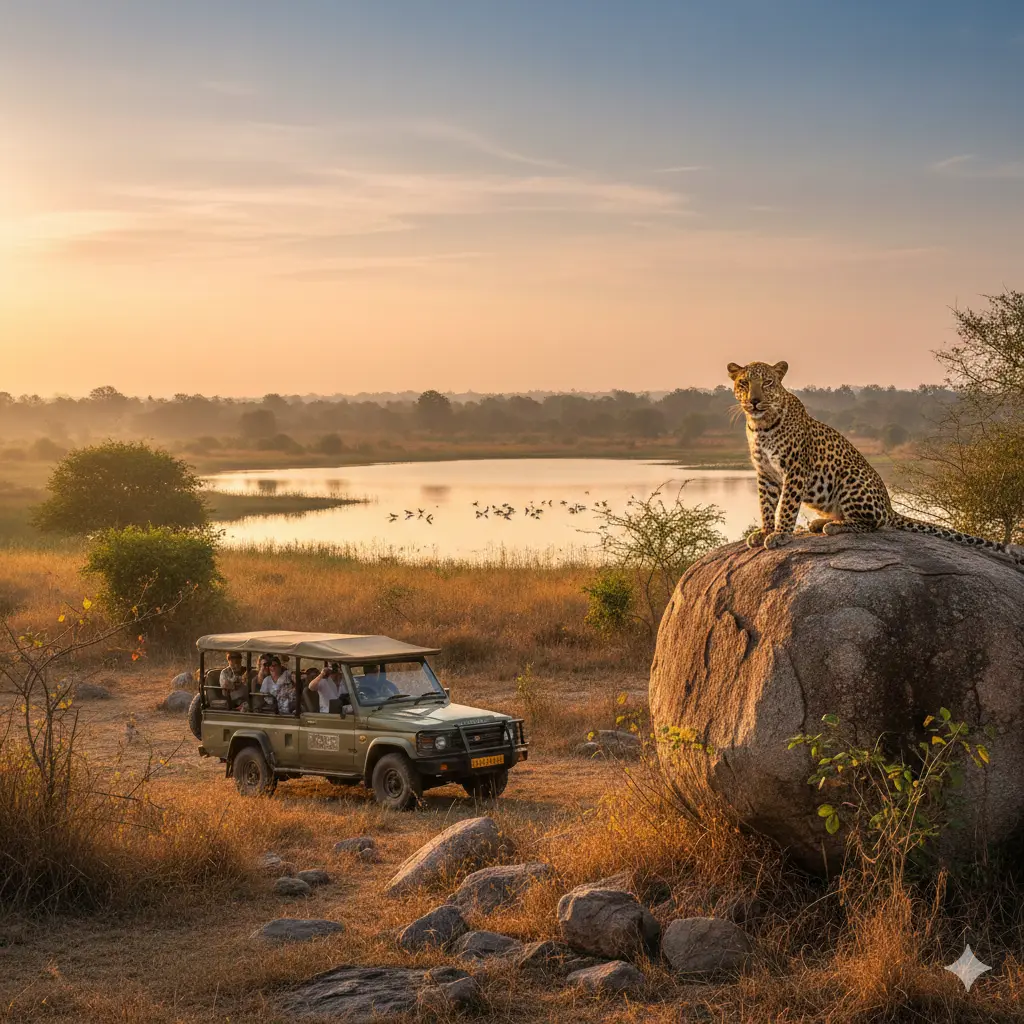
Imagine the thrill of spotting a leopard lounging on a rocky outcrop at dawn, or a herd of wild elephants quenching their thirst at a shimmering lagoon—that's the magic of Yala National Park, right he
The Lankawebsites editorial team curates, fact-checks, and updates guides on personal finance, property, health, immigration, legal, business, and lifestyle topics relevant to Lankawebsites readers. Articles are produced with AI assistance and reviewed by the editorial team before publication.
Imagine the thrill of spotting a leopard lounging on a rocky outcrop at dawn, or a herd of wild elephants quenching their thirst at a shimmering lagoon—that's the magic of Yala National Park, right here in our own backyard. As Sri Lankans, we're lucky to have this world-class wildlife gem in the southeast, boasting the highest leopard density on the planet and drawing eco-lovers from across the globe. Whether you're planning a family day out from Colombo or a weekend escape from the hill country, this complete guide covers everything you need to know for safaris, the best seasons, and maximising your leopard chances in 2026.
Why Yala National Park is a Must-Visit for Locals
Yala, our second-largest national park spanning nearly 979 square kilometres across Southern and Uva Provinces, isn't just for tourists—it's a proud slice of Sri Lanka's natural heritage. From grasslands and wetlands to coastal scrub and lagoons hugging the Indian Ocean, its diverse ecosystems support endemic species that make every visit unique. We're talking leopards (the park's superstar), elephants, sloth bears, crocodiles, and over 200 bird species, plus spotted deer, jackals, wild boars, and playful langurs.
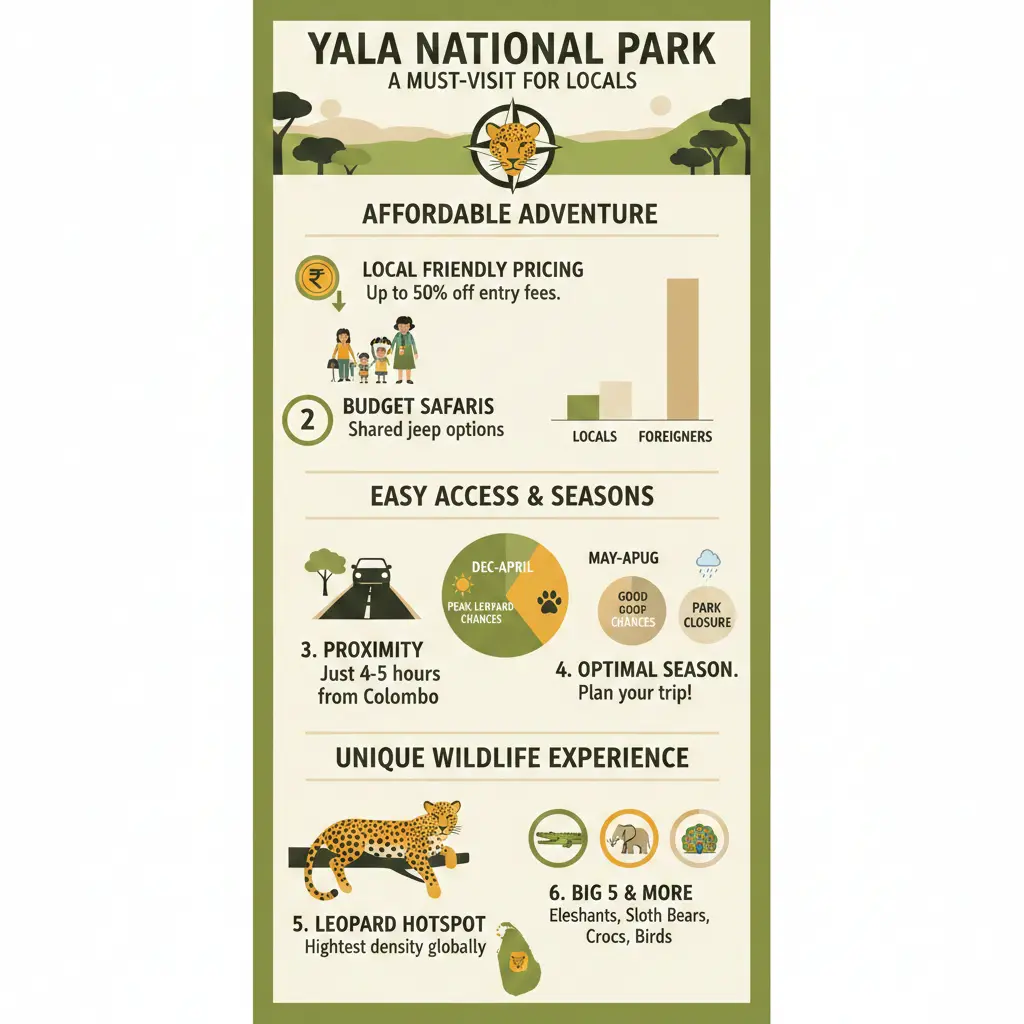
For us locals, Yala offers an affordable way to reconnect with nature. Split jeep costs with family or friends, and you're in for an adventure that rivals African safaris without the long-haul flights. It's perfect for photographers capturing that golden-hour glow, families teaching kids about conservation, or anyone needing a break from city life.
Fun Facts About Yala That'll Impress Your Mates
- Home to the world's highest leopard density—better odds here than anywhere else outside Africa.
- Protects 50 butterfly species and is a key birdwatching hotspot.
- Ancient ruins like Sithulpawwa nearby blend wildlife with our rich history.
Best Time to Visit: Seasons for Optimal Wildlife Viewing
Timing is everything in Yala. The dry season from February to June is prime time, as animals cluster around water sources, making them easier to spot against the sparse landscape. You'll catch leopards basking in the open, elephants in herds, and birds in full display—ideal for us avoiding the wet-season slush.
November to January (post-monsoon) brings lush greenery perfect for photos, though animals spread out more. Avoid August to October when northeast monsoon rains close some blocks for conservation. In 2026, check the Department of Wildlife Conservation website for exact closures, as they prioritise ecosystem protection.
Monthly Breakdown for Leopard Spotting
| Month | Weather | Leopard Chances | Local Tip |
|---|---|---|---|
| February–June | Dry, hot | High (90% sighting reports) | Book early; peak local weekends. |
| November–January | Mild, green | Medium-high | Great post-Avurudu crowds thin out. |
| July | Transition | Medium | Quieter, fewer jeeps. |
| August–October | Rainy | Low (some blocks closed) | Stay home or try Udawalawe instead. |
Safari Options: Half-Day, Full-Day, and Custom Tours
All safaris happen in 4x4 jeeps on designated roads to protect the terrain—no walking tracks here. Entry is via gates like Palatupana (Block I) or Katagamuwa (Block V), with tickets bought on-site: around LKR 8,500 for adults and LKR 4,250 for kids in 2026 (Sri Lankan rates; foreigners pay more). Park hours are 6 AM–6:30 PM, with no night drives.
Popular Safari Types
- Morning Golden Hour (5:30–9:30 AM): Best for leopards active at dawn. ~LKR 25,000–35,000 per jeep (split 6 ways: ~LKR 4,000–6,000 pp).
- Afternoon/Evening (2:30–6:30 PM): Sunset magic with cooling animals. Similar pricing.
- Full-Day (5:30 AM–6 PM): Covers multiple blocks with picnic breaks. LKR 40,000–60,000 per jeep; hotels often pack meals.
Book via licensed operators from Tissamaharama or your hotel to avoid touts. Budget tip: Groups of 6 maximise value. Many tours include binoculars, water, and pick-up from nearby towns like Kataragama or Weerawila.
Yala's Five Blocks: Where to Spot What
- Block I (Palatupana): Leopard central but crowded—90% of sightings here.
- Block V (Katagamuwa): Quieter elephants and birds; less traffic.
- Blocks II–IV: Restricted for breeding; limited access.
Pro guides know animal habits, boosting your odds—essential for that elusive leopard photo.
Boosting Your Leopard Spotting Chances
Yala's leopards are shy but plentiful. Go during dry season, opt for golden hours, and choose Block I with an expert tracker. Stats show 70–90% success rates on morning safaris. Stay patient, silent, and in the jeep—chasing scares them off. Binoculars and zoom lenses are game-changers; many tours provide them free.
Other stars: 300+ elephants, mugger crocodiles in lagoons, sloth bears digging for honey, and 215 bird species including endemics like the Sri Lanka junglefowl.
Practical Tips for a Smooth Yala Trip
Getting there? Drive 4.5 hours from Colombo via Southern Expressway, or 1.5 hours from Tissamaharama. Buses to Tissa, then tuk-tuks to gates. Stay in budget guesthouses (LKR 5,000–15,000/night) or glamping sites nearby.
Essential Packing List
- Hat, sunscreen, water (it's hot!)
- Binoculars, camera with 200mm+ zoom
- Light layers; mornings are chilly
- Snacks if not full-day; no littering
- Mosquito repellent for lagoons
Responsible Tourism Rules
Follow Department of Wildlife Conservation guidelines: Stay in vehicles, no feeding animals, no off-road driving. Fines for violations start at LKR 10,000. Support locals by choosing registered jeeps—helps conservation funds.
Costs Breakdown (2026 Sri Lankan Rates, Per Person in Group of 6)
| Item | Cost (LKR) |
|---|---|
| Park Ticket (Adult) | 8,500 |
| Jeep (Half-Day) | 4,000–6,000 |
| Accommodation (Budget) | 5,000–10,000/night |
| Meals | 2,000 |
| Total Day Trip | ~15,000–20,000 |
Plan Your Yala Adventure Today
Ready to chase leopards and make memories? Start by checking the Department of Wildlife Conservation for updates, book a licensed jeep from Tissamaharama, and hit the road early. Whether it's your first safari or a yearly ritual, Yala delivers raw, unfiltered Sri Lanka. Pack light, respect the wild, and share your sightings—we'd love to hear your stories!
Frequently Asked Questions
Sources & References
-
1
Yala National Park in Sri Lanka: Safari, Wildlife & Travel Guide — www.sithiyam.com
-
2
The BEST Yala National Park National parks 2026 — www.getyourguide.com
-
3
Yala National Park Safari Tours - Half Day & Full Day — www.viator.com
-
4
10 Best Yala National Park Tours & Trips 2026/2027 — www.tourradar.com
-
5
Yala National Park Safari Guide 2026 Everything You Need to Know — yalawildlife.com
-
6
THE 10 BEST Yala Tours & Excursions — www.tripadvisor.com
-
7
Visitors Guide | Must Know Before Coming To Yala — www.yalasrilanka.lk
-
8
Yala National Park | Official Site — www.yalasrilanka.lk
Related Articles
Stargazing & Astro Tourism in Sri Lanka: Dark Sky Spots Around the Island
Imagine lying back on a cool hillside in the central highlands, far from Colombo's glow, as the Milky Way unfurls like a river of diamonds across the sky. That's the magic of stargazing in Sri Lanka—w

Yala vs Wilpattu: Which National Park Is Best for Safaris?
Imagine rumbling through the bush in a 4x4 jeep at dawn, the air thick with anticipation as a leopard's spots flash in your headlights. That's the thrill of a Sri Lankan safari, and right here in our
Whale Watching in Sri Lanka: Mirissa vs Trincomalee Compared
Sri Lanka's southern and eastern coasts have emerged as world-class whale watching destinations, but each location offers distinct advantages depending on what you're seeking. Whether you're planning
Birdwatching Hotspots in Sri Lanka: From Sinharaja to Bundala
Sri Lanka's lush rainforests, misty highlands, and coastal wetlands teem with over 430 bird species, including 34 endemics that make our island a birder's paradise.Birdwatching hotspots in Sri Lanka l