Udawalawe National Park: Elephant Safaris & Photography Tips
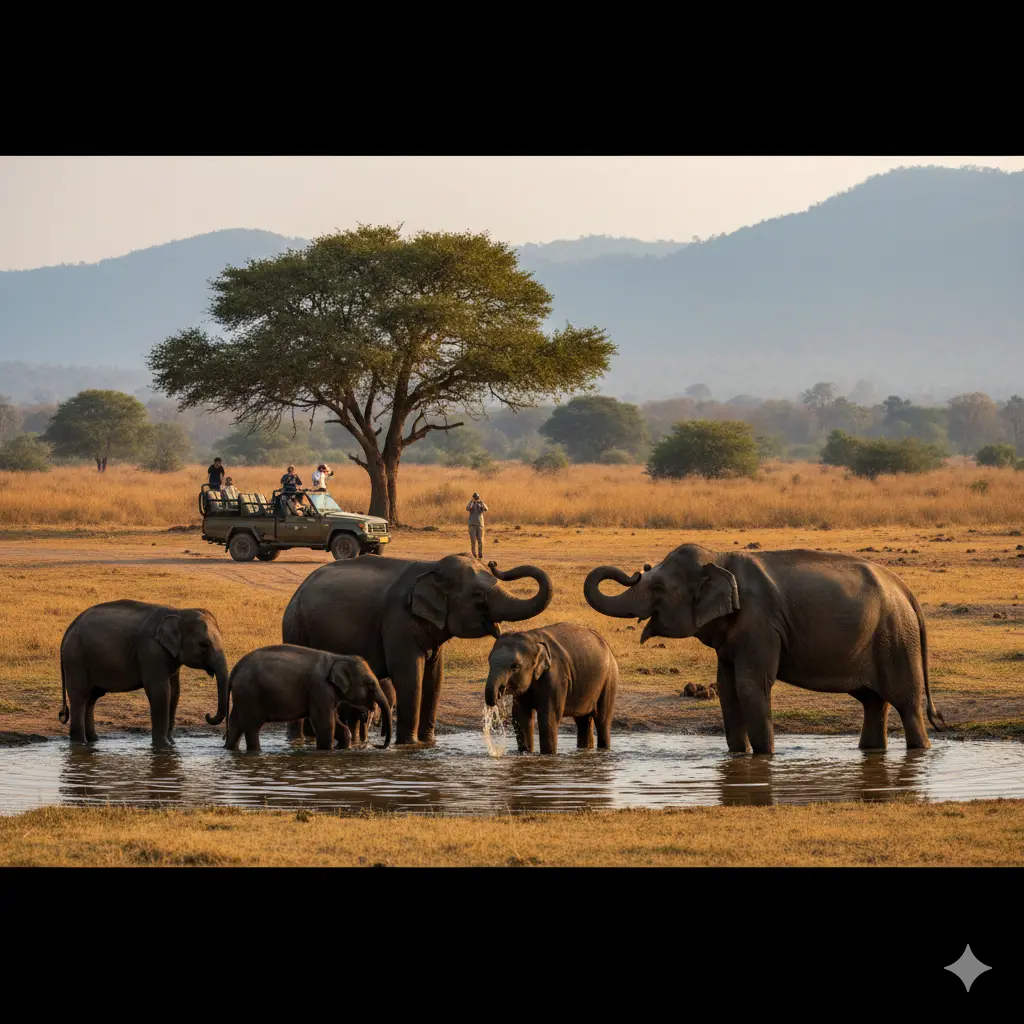
Imagine rumbling through the golden grasslands of Udawalawe National Park in a sturdy 4x4 jeep, just metres from a herd of wild elephants splashing in the reservoir. As one of Sri Lanka's top spots fo
The Lankawebsites editorial team curates, fact-checks, and updates guides on personal finance, property, health, immigration, legal, business, and lifestyle topics relevant to Lankawebsites readers. Articles are produced with AI assistance and reviewed by the editorial team before publication.
Imagine rumbling through the golden grasslands of Udawalawe National Park in a sturdy 4x4 jeep, just metres from a herd of wild elephants splashing in the reservoir. As one of Sri Lanka's top spots for spotting these gentle giants up close, Udawalawe offers locals like us an unbeatable weekend getaway that's both thrilling and accessible from Colombo or the Southern Province.
Whether you're planning your first safari or honing your wildlife photography skills, this guide packs everything you need: from booking tips and current 2026 fees to pro photography advice tailored for our Sri Lankan light and landscapes. Let's dive into why Udawalawe remains our go-to for elephant encounters without the Yala crowds.
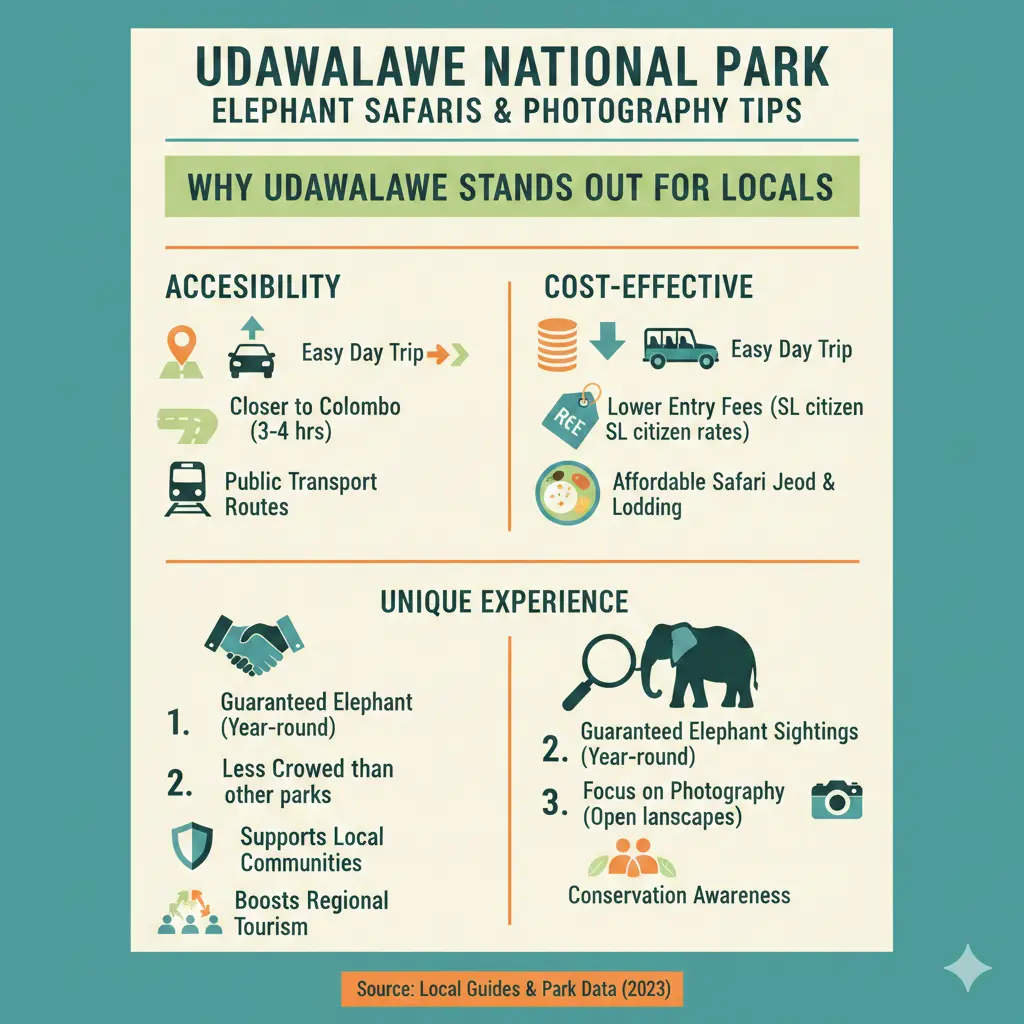
Why Udawalawe National Park Stands Out for Locals
Udawalawe National Park spans 30,821 hectares of dry zone scrub, grasslands, and reservoirs, making it a haven for wildlife year-round. Unlike busier parks, its high elephant density—around 500 resident wild elephants—means you'll almost always spot herds, even on half-day trips. The park's man-made Udawalawe Reservoir draws animals during dry spells, creating natural gatherings perfect for observation.
For us in Sri Lanka, it's just a 4-5 hour drive from Colombo via the Southern Expressway, or closer from Matara and Galle. No need for international tours—local operators offer flexible pickups from Thanamalwila or Embilipitiya, keeping costs low at LKR 8,000-15,000 for a private jeep safari in 2026.
Park Rules and Safety for Sri Lankan Visitors
Stick to Department of Wildlife Conservation (DWC) guidelines: stay inside your jeep at all times, no feeding or touching animals, and maintain a 50m distance from elephants. Fines for violations start at LKR 10,000, enforced strictly to protect our wildlife. Bring your National ID for entry—locals pay subsidised fees of LKR 50 per adult (track fee LKR 1,420, jeep LKR 4,000, guide LKR 2,000 as of 2026).
- Entry gates open 6:00 AM-6:00 PM; no overnight stays inside.
- Wear neutral colours (khaki, green) to blend in—bright clothes scare animals.
- Pack water, hats, and sunscreen; our tropical sun is fierce even in February.
Best Times for Elephant Safaris in Udawalawe
Prime safari slots are early morning (6:00-10:00 AM) or late afternoon (2:30-6:00 PM) when elephants head to water sources. Mornings beat the heat and crowds, letting you catch calves playing and birds active. In 2026, book ahead via DWC app or local jeeps at the entrance—walk-ins fill up fast on weekends.
Safari Options: Private Jeep vs Group Tours
| Option | Duration | Cost (LKR, 2026 est. per group of 6) | Best For |
|---|---|---|---|
| Private 4x4 Jeep | 3-4 hours | 12,000-18,000 (incl. fees) | Photography, families |
| Group Safari | 2-3 hours | 2,500-4,000 pp | Budget solo trips |
| Full-Day Combo (w/ ETH) | 6-8 hours | 20,000-25,000 | Max animal sightings |
Pro tip: Hire at the park gate for better prices than hotels—expect LKR 500-1,000 tip for top guides who know elephant hotspots. Luxury AC jeeps from operators like Ajith Safari Tours add comfort for longer outings.
Wildlife Highlights: What You'll See on Safari
Elephants steal the show, with sightings of 10-40 per trip, including close encounters at the reservoir. Herds forage grasslands, bathe, and interact naturally—pure magic for us locals who see them in cultural festivals but rarely wild.
Beyond Elephants: A Diverse Dry Zone Ecosystem
- Water buffalo, sambar, spotted deer: Common near rivers; buffaloes wallow in mud.
- Crocodiles and reptiles: Lurk in lagoons—spot them basking.
- Birds (200+ species): Peacocks, hornbills, Changeable Hawk Eagle; dawn chorus is epic.
- Rare sights: Leopards (twilight), mongooses, 50 butterfly species.
Our park's open terrain beats Yala's thick scrub for easier viewing—no binoculars needed for most action.
Elephant Transit Home (ETH): A Must-Add for Heartwarming Views
Just outside the park, ETH rehabilitates orphaned or injured calves before wild release. Visit during feeding: 10:30 AM, 2:30 PM, or 6:00 PM (30-45 mins each). LKR 500 entry for locals; arrive 30 mins early for gallery spots. Watch 100+ babies bottle-fed—ethical tourism at its best, run by the DWC.
Combine with safari: Morning park run, then 2:30 PM ETH. No touching, but photos are stunning.
Photography Tips for Udawalawe's Epic Light
Udawalawe's golden hour light and flat horizons make it a photographer's dream. Use a 70-300mm lens for safe close-ups; wide-angle (24-70mm) captures herds against the reservoir.
Actionable Gear and Techniques
- Timing: Shoot 6:30-8:00 AM for soft light on elephants; avoid midday glare.
- Settings: Shutter 1/1000+ for movement; ISO 400-800 in our bright sun. Shoot RAW for editing dusty shots.
- Composition: Frame elephants with acacia silhouettes; use rule of thirds for calves interacting.
- Vehicle hacks: Ask guide to position jeep parallel to animals; shoot from seated height.
- Apps: DWC's iNaturalist for bird ID; Lightroom Mobile for quick edits on your phone.
Locals' edge: Our monsoon greens (May-Oct) add lush backdrops, while dry season (Dec-Apr) offers dramatic dust and gatherings. Share your shots on Instagram with #UdawalaweLocal—tag DWC for features!
"We saw elephants so close, one even put its trunk in our jeep—unforgettable!" – Local reviewer, Ajith Safari Tours
Practical Tips for a Seamless Day Trip
- Getting there: Bus from Colombo Pettah to Embilipitiya (LKR 800), then tuk-tuk to gate. Self-drive via A17; park at designated lots.
- What to pack: Binoculars, snacks (no plastics—DWC ban), insect repellent, spare battery.
- 2026 Updates: New EV charging at visitor centre; cashless payments encouraged.
- Budget breakdown (family of 4): LKR 25,000 total incl. fuel, fees, lunch.
Stay nearby at budget guesthouses like Grand Udawalawe (LKR 10,000/night) for dawn starts.
Plan Your Udawalawe Adventure Today
Udawalawe delivers raw, ethical wildlife magic right in our backyard—perfect for reconnecting with Sri Lanka's natural heritage. Book your jeep via DWC hotline (0112 288 358) or arrive early at the gate. Pack your camera, respect the rules, and create memories that'll outlast any zoo visit. Next weekend, hit the road—what are you waiting for?
Frequently Asked Questions
Sources & References
-
1
The BEST Udawalawa Tours and Excursions in 2026 - GetYourGuide — www.getyourguide.com
-
2
Udawalawe National Park Safari with Elephant Transit Home Visit - Tripadvisor — www.tripadvisor.com
-
3
Udawalawe Safari Guide (2026) - See Elephants In The Wild - Third Eye Traveller — thirdeyetraveller.com
-
4
Udawalawe National Park Safari Tours 2025/2026 - On The Go Tours — www.onthegotours.com
-
5
Udawalawe National Park Private Safari Tour 2026 - Viator — www.viator.com
-
6
Udawalawa National Park Safari (2026) - Tripadvisor — www.tripadvisor.com
-
7
Udawalawe National Park, Sri Lanka - Official Site — udawalawesafari.lk
-
8
Udawalawe & Yala National Park Safari Guide 2026 - Udawalawa.com — www.udawalawa.com
-
9
Udawalawe National Park - Earth Trip — www.earthtrip.co.uk
Related Articles
Stargazing & Astro Tourism in Sri Lanka: Dark Sky Spots Around the Island
Imagine lying back on a cool hillside in the central highlands, far from Colombo's glow, as the Milky Way unfurls like a river of diamonds across the sky. That's the magic of stargazing in Sri Lanka—w

Yala vs Wilpattu: Which National Park Is Best for Safaris?
Imagine rumbling through the bush in a 4x4 jeep at dawn, the air thick with anticipation as a leopard's spots flash in your headlights. That's the thrill of a Sri Lankan safari, and right here in our
Complete Guide to Yala National Park: Safaris, Seasons & Leopard Chances
Imagine the thrill of spotting a leopard lounging on a rocky outcrop at dawn, or a herd of wild elephants quenching their thirst at a shimmering lagoon—that's the magic of Yala National Park, right he
Whale Watching in Sri Lanka: Mirissa vs Trincomalee Compared
Sri Lanka's southern and eastern coasts have emerged as world-class whale watching destinations, but each location offers distinct advantages depending on what you're seeking. Whether you're planning