Whale Watching in Sri Lanka: Mirissa vs Trincomalee Compared
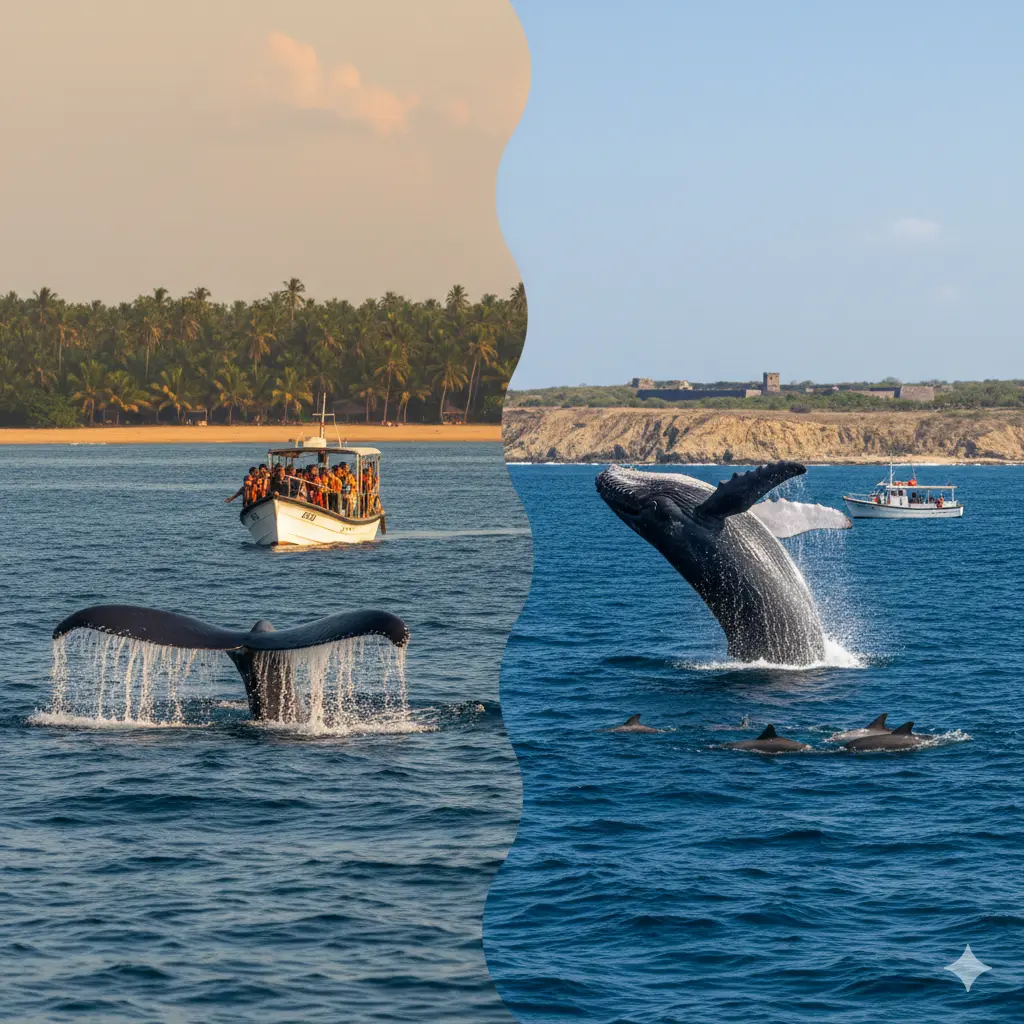
Sri Lanka's southern and eastern coasts have emerged as world-class whale watching destinations, but each location offers distinct advantages depending on what you're seeking. Whether you're planning
The Lankawebsites editorial team curates, fact-checks, and updates guides on personal finance, property, health, immigration, legal, business, and lifestyle topics relevant to Lankawebsites readers. Articles are produced with AI assistance and reviewed by the editorial team before publication.
Sri Lanka's southern and eastern coasts have emerged as world-class whale watching destinations, but each location offers distinct advantages depending on what you're seeking. Whether you're planning a trip from Mirissa or Trincomalee, understanding the differences between these two hotspots will help you choose the experience that's right for you—and ensure you're supporting sustainable, responsible wildlife tourism.
Understanding Sri Lanka's Whale Watching Regulations
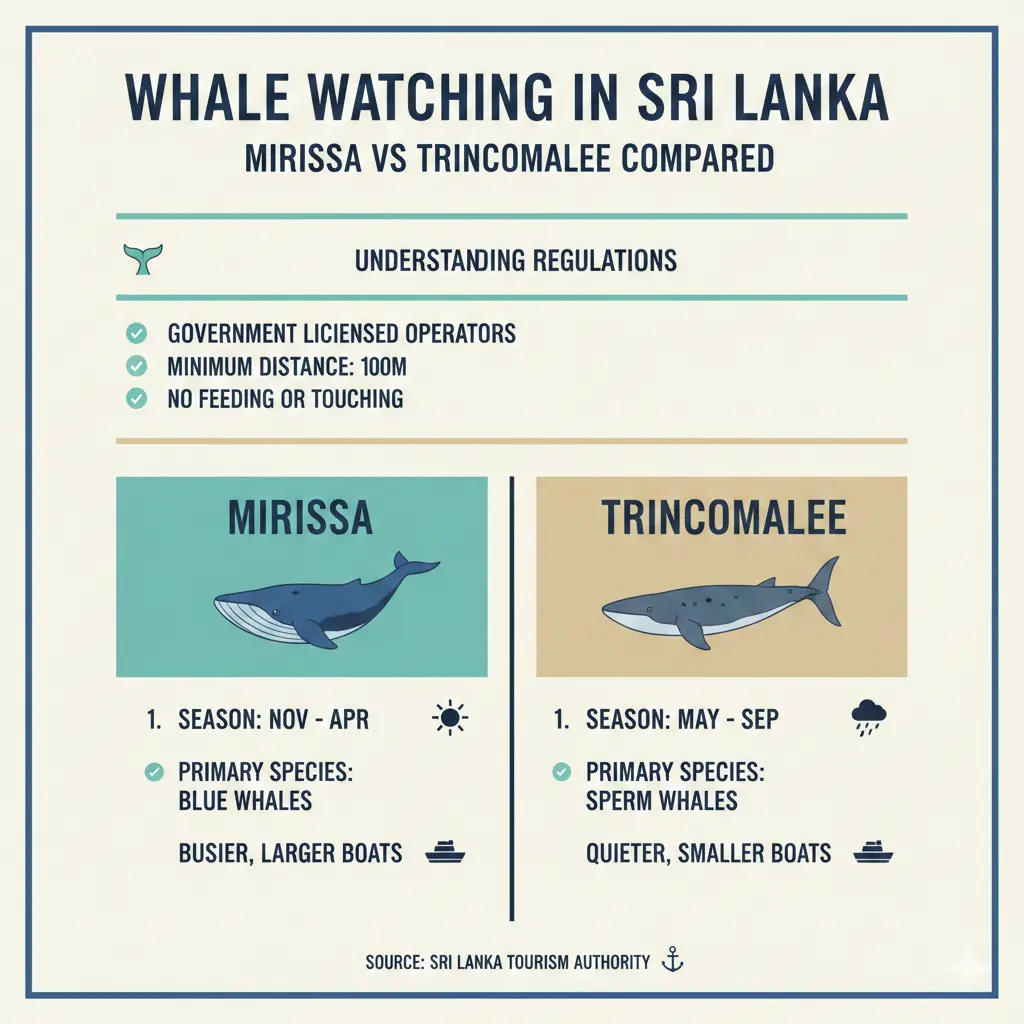
Before comparing the two locations, it's important to know that whale watching in Sri Lanka is officially regulated through the Sea Mammals (Observation, Regulation and Control) Regulations No. 1 of 2012. All commercial tour operators must obtain an annual licence from the Department of Wildlife Conservation (DWC), and as of January 2026, stricter protocols have come into effect to protect marine life.
Under the new 2026 regulations, all vessels must comply with mandatory "No-Wake" zones, maintain speeds under 5 knots within 500 metres of a whale, and carry DWC-certified naturalists on board. Swimming or snorkeling with whales is generally prohibited and only permitted for scientific research with special permits from the DWC Director General.
Mirissa: Sri Lanka's Premier Whale Watching Hub
Location and Accessibility
Mirissa, located on the south coast near Matara, has become Sri Lanka's most popular whale watching destination. It's easily accessible from Galle, Hikkaduwa, and other southern coastal towns. The town itself offers excellent accommodation, restaurants, and tourist facilities, making it convenient for visitors of all budgets.
Best Season and Sighting Rates
The whale watching season in Mirissa runs from November to April, with peak activity between January and April. During this period, you'll encounter primarily Blue Whales and Sperm Whales. The calmer sea conditions along the south coast during these months make for more comfortable boat journeys and better sighting consistency.
According to tour operators in the area, the new 2026 regulations have actually improved sighting consistency, as whales experience less stress from heavy vessel traffic.
What to Expect
Whale watching tours from Mirissa typically depart early in the morning and operate approximately 15 to 20 nautical miles off the southern coast. Tours include experienced naturalists who provide educational commentary about marine life and ensure compliance with DWC regulations.
Under the 2026 protocols, no more than three vessels are permitted within 300 metres of a whale at any given time. This means smaller groups and a more intimate, quieter experience compared to previous years. Head-on approaches and "chasing" behaviours are strictly prohibited and monitored via Coast Guard drone surveillance.
Cost Considerations
The mandatory conservation levy and eco-friendly vessel technology have slightly increased ticket prices compared to previous seasons. However, the improved experience—smaller crowds, quieter environments, and better animal welfare—justifies the additional cost for most visitors.
Trincomalee: The Eastern Alternative
Location and Accessibility
Trincomalee, situated on Sri Lanka's east coast, is the second major whale watching hotspot. It's accessible from Batticaloa and other eastern coastal regions. While slightly less developed than Mirissa in terms of tourist infrastructure, Trincomalee offers a more remote, less crowded experience.
Best Season and Marine Life
Trincomalee's whale watching season differs from Mirissa, with optimal conditions during different months. The eastern waters attract similar species but with varying seasonal patterns. Like Mirissa, all operators in Trincomalee must comply with the same DWC regulations and licensing requirements.
Regulatory Oversight
The Sri Lanka Coast Guard maintains monitoring points and patrol vessels in Trincomalee waters to ensure adherence to whale watching regulations. DWC officers also board vessels to verify compliance with distance and speed protocols.
Mirissa vs Trincomalee: Side-by-Side Comparison
| Aspect | Mirissa | Trincomalee |
|---|---|---|
| Best Season | January–April (peak) | Varies; less predictable |
| Sea Conditions | Generally calmer south coast | More variable east coast |
| Tourist Infrastructure | Excellent (hotels, restaurants) | Developing; more remote |
| Crowds | More visitors; regulated groups | Fewer visitors; quieter |
| Accessibility | Easy from south coast towns | Requires east coast travel |
| Price Range | Higher (eco-certified vessels) | Potentially lower |
Choosing a Licensed, Responsible Operator
Whichever location you choose, it's crucial to book with a licensed operator that holds a valid DWC annual licence. Here's what to look for:
- Confirmation of DWC licensing and annual permits
- Eco-certified vessels with low-noise engines or hybrid-electric propulsion
- DWC-certified naturalists on board
- Clear adherence to distance and speed regulations
- Positive reviews from previous visitors regarding ethical practices
Avoid operators advertising "swim-with-whales" experiences without scientific permits, as these are illegal under current regulations. A May 2025 report identified 32 such illegal operators across Mirissa and Trincomalee, with approximately half owned by foreign nationals.
Sustainable Whale Watching: Your Responsibility
Supporting ethical whale watching protects Sri Lanka's marine ecosystems. When you choose responsible operators, you're helping fund research, monitoring, and conservation efforts. Here are practical ways to be a responsible whale watcher:
- Follow all crew instructions without exception
- Respect wildlife distance rules—never request closer approaches
- Keep noise levels low; avoid loud music or shouting near animals
- Don't throw waste into the sea
- Don't lean over rails or block crew movement
- Remain patient during sightings; don't demand faster speeds
- Share responsible practices with other travellers
As the DWC Director General has emphasised, the industry must impose self-discipline: "If we lose the whales, the industry will collapse. We can only benefit from the industry if the industry survives."
Making Your Choice
Both Mirissa and Trincomalee offer authentic whale watching experiences within a framework of environmental responsibility. Choose Mirissa if you prioritise convenience, predictable seasons, excellent facilities, and a well-established tourism infrastructure. Choose Trincomalee if you're seeking a quieter, more remote experience and have flexibility with timing.
Regardless of your choice, commit to booking with a licensed DWC operator, respecting distance regulations, and supporting sustainable tourism practices. By doing so, you're not just enjoying an unforgettable experience—you're helping protect one of the world's most magnificent marine species for future generations of Sri Lankans.
Ready to book? Start by contacting the Department of Wildlife Conservation or asking your accommodation provider for recommendations of licensed, reputable operators in your chosen location.
Frequently Asked Questions
Sources & References
-
1
Mirissa Whale Watching 2026: New Marine Sanctuary Laws — gosrilanka.no
-
2
Maritime tourism: A whale of a gap in regulations — www.themorning.lk
-
3
Whale Watching in Sri Lanka — www.earthtrip.co.uk
-
4
Whale Watching in Sri Lanka: The Best Practical Guide — srilankatravellife.com
-
5
Whale Watching — www.srilanka.travel
-
6
Sri Lanka | Whale Watching Handbook — wwhandbook.iwc.int
Related Articles
Stargazing & Astro Tourism in Sri Lanka: Dark Sky Spots Around the Island
Imagine lying back on a cool hillside in the central highlands, far from Colombo's glow, as the Milky Way unfurls like a river of diamonds across the sky. That's the magic of stargazing in Sri Lanka—w

Yala vs Wilpattu: Which National Park Is Best for Safaris?
Imagine rumbling through the bush in a 4x4 jeep at dawn, the air thick with anticipation as a leopard's spots flash in your headlights. That's the thrill of a Sri Lankan safari, and right here in our
Complete Guide to Yala National Park: Safaris, Seasons & Leopard Chances
Imagine the thrill of spotting a leopard lounging on a rocky outcrop at dawn, or a herd of wild elephants quenching their thirst at a shimmering lagoon—that's the magic of Yala National Park, right he
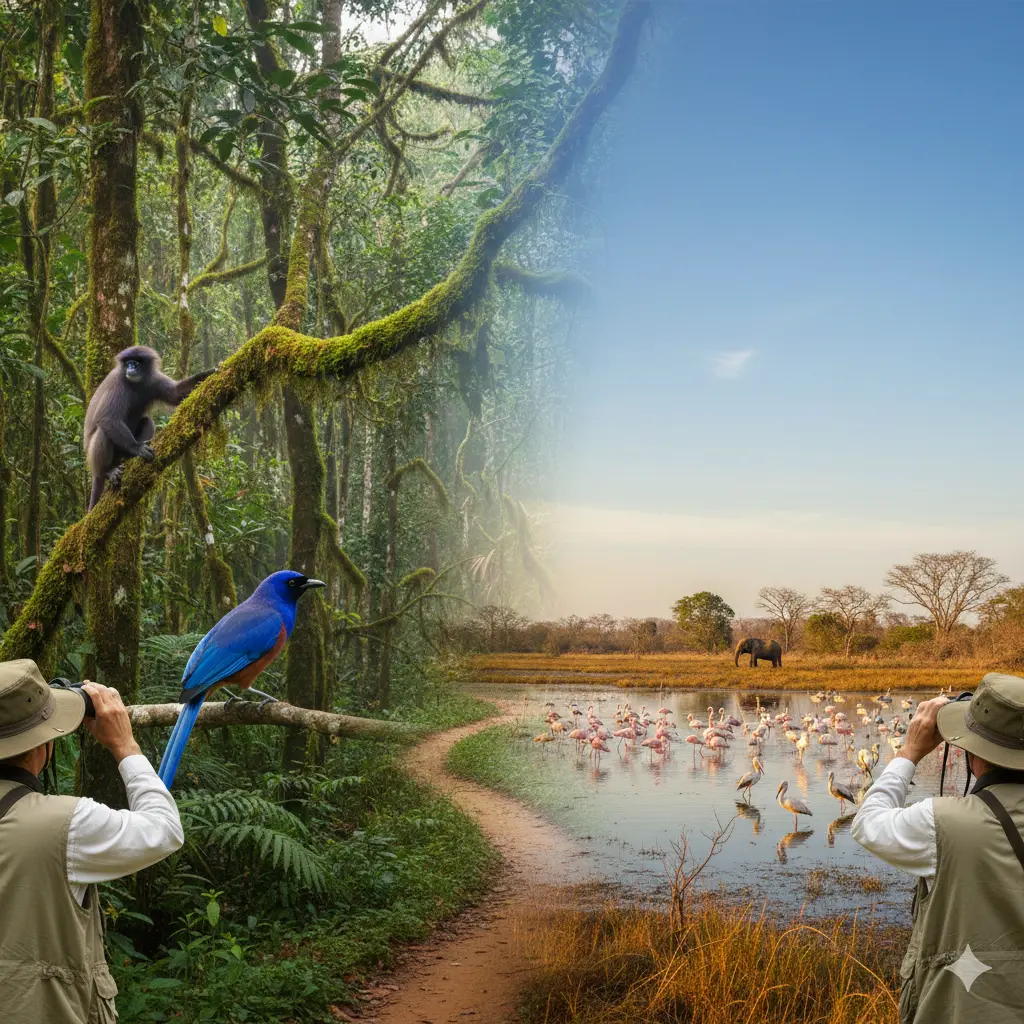
Birdwatching Hotspots in Sri Lanka: From Sinharaja to Bundala
Sri Lanka's lush rainforests, misty highlands, and coastal wetlands teem with over 430 bird species, including 34 endemics that make our island a birder's paradise.Birdwatching hotspots in Sri Lanka l