Birdwatching Hotspots in Sri Lanka: From Sinharaja to Bundala
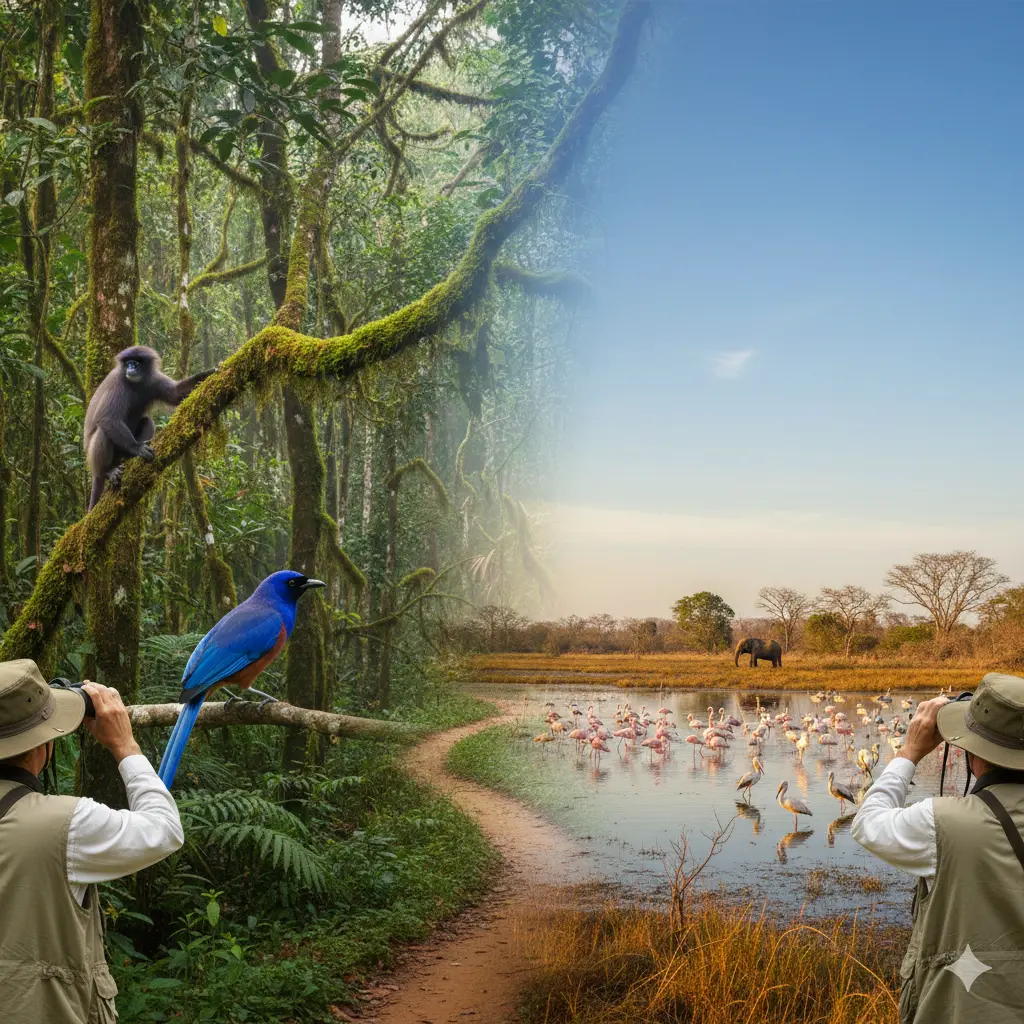
Sri Lanka's lush rainforests, misty highlands, and coastal wetlands teem with over 430 bird species, including 34 endemics that make our island a birder's paradise.Birdwatching hotspots in Sri Lanka l
The Lankawebsites editorial team curates, fact-checks, and updates guides on personal finance, property, health, immigration, legal, business, and lifestyle topics relevant to Lankawebsites readers. Articles are produced with AI assistance and reviewed by the editorial team before publication.
Sri Lanka's lush rainforests, misty highlands, and coastal wetlands teem with over 430 bird species, including 34 endemics that make our island a birder's paradise.Birdwatching hotspots in Sri Lanka like Sinharaja and Bundala offer locals unforgettable encounters with feathered gems right in our backyard.
Whether you're a seasoned birder ticking off lifers or a beginner spotting your first Sri Lanka Blue Magpie, these sites deliver thrilling sightings amid stunning landscapes. From the UNESCO-listed Sinharaja's mixed-species flocks to Bundala's migratory flocks, we'll guide you through the best spots, practical tips, and 2026 entry details to plan your next outing.
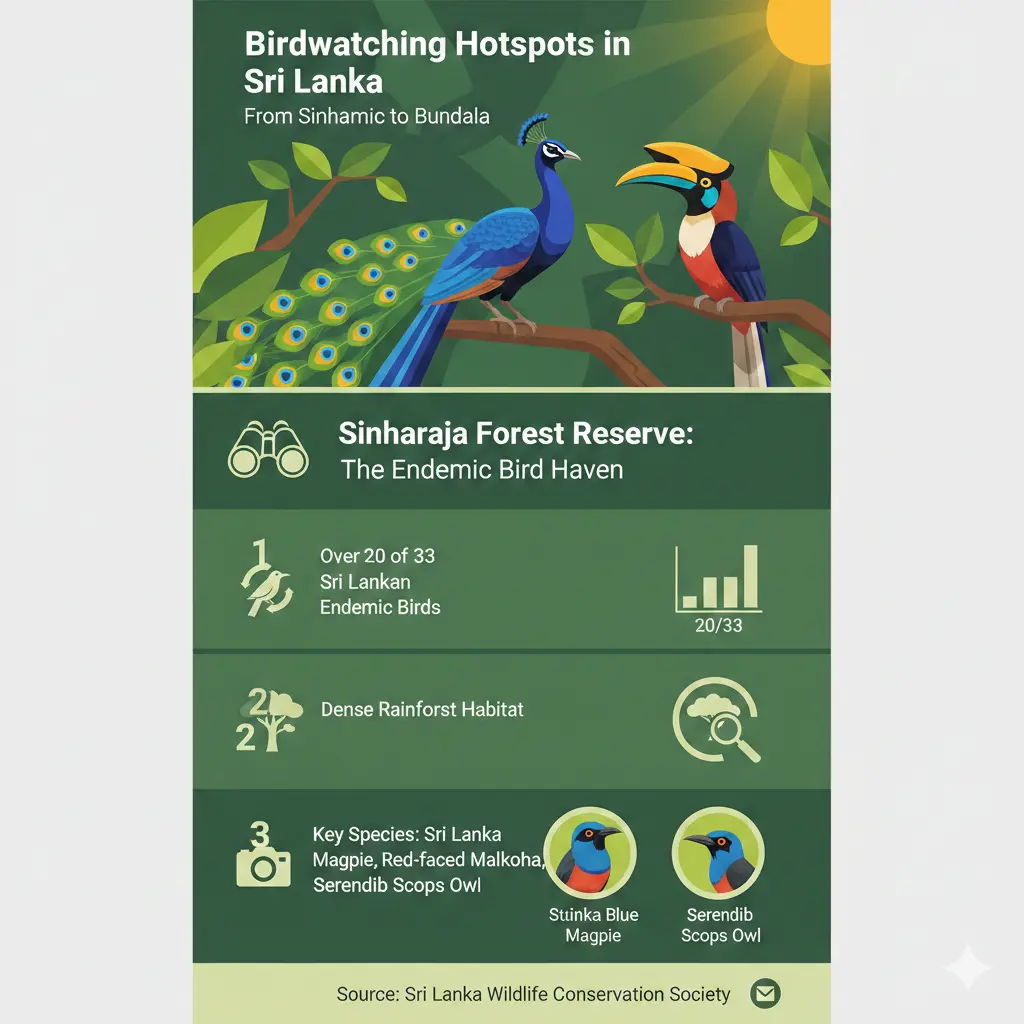
Sinharaja Forest Reserve: The Endemic Bird Haven
Nestled in the southwest, Sinharaja is Sri Lanka's crown jewel for birdwatchers, hosting 90% of our endemic bird species in its pristine rainforest. This UNESCO World Heritage site spans 88 square kilometres of untouched wilderness, where you'll hear the symphony of over 200 bird species, many in vibrant mixed flocks.
Top Birds to Spot
- Sri Lanka Blue Magpie: A dazzling iridescent flyer, often leading flocks—your best chance at dawn trails.
- Green-billed Coucal and Red-faced Malkoha: Skulking lowland endemics in the understorey.
- Sri Lanka Spurfowl: Elusive ground-dweller; listen for calls early morning.
- Over 50% of Sri Lanka's endemic mammals like Purple-faced Leaf Monkeys add to the thrill.
Practical Tips for Locals
Enter via Kudawa or Pitadeniya gates—Kudawa suits day trippers from Ratnapura. In 2026, adult entry is Rs. 115 (locals), with a mandatory guide (Rs. 2,500/group, book via Department of Forest Conservation). Trails like Moulawala (2-3km) are bird-rich but slippery—wear sturdy boots and insect repellent. Best season: December to April for dry weather. Pack water, as no shops inside, and join FOGSL (Field Ornithology Group of Sri Lanka) for guided walks.
Stay nearby at Rainforest Edge or Sinharaja Gateway—budget Rs. 10,000/night. Dawn (6-9am) and dusk sessions yield the most action; avoid weekends for fewer crowds.
Bundala National Park: Wetland Wonderland for Migrants
In the southeast near Hambantota, Bundala Ramsar site shines as a wintering ground for migratory waterbirds, with salt marshes, lagoons, and grasslands hosting flamingos and pelicans. This 6,217-hectare park rivals African savannas, blending birds with elephants and leopards.
Signature Sightings
- Greater Flamingo, Northern Pintail, and Garganey: Flocks of thousands from September to March.
- Spot-billed Pelican, Painted Stork, and Glossy Ibis: Wading in shallow wetlands.
- White-bellied Sea Eagle and Grey-headed Fish Eagle: Raptors soaring overhead.
- Owls like Brown Fish Owl at Tissa tanks' edges.
How to Visit in 2026
Drive from Tissa entrance (open 6am-6pm); locals pay Rs. 475/vehicle + Rs. 95/adult via DWLC (Department of Wildlife Conservation) online booking to skip queues. Jeep safaris (Rs. 12,000/vehicle, 3 hours) are essential for lagoons—book with registered operators. Peak migration: January-March. Bring binoculars, hat, and sunscreen; no food stalls, so pack snacks. Combine with nearby Kumana for more variety.
For overnight, try Haritha Village in Tissa (Rs. 15,000/room). Early mornings spot roosting birds; evenings reveal nocturnal species.
Kitulgala Rainforest: Lowland Endemic Hotspot
Just 2 hours from Colombo, Kitulgala's wet zone forests offer easy access to lowland endemics amid rivers and plantations. Riverside trails buzz with babblers and barbets, perfect for weekend escapes.
Must-See Birds
- Sri Lanka Hanging-Parrot and Sri Lanka Green Pigeon: Fruiting trees in gardens.
- Yellow-fronted Barbet and Crimson-fronted Barbet: Noisy in orchards.
- Chestnut-backed Owlet: Daytime glimpses in dense cover.
Local's Guide
Forest Reserve entry: Rs. 20 (locals), no guide needed for village trails. Stay at Plantation Hotel (Rs. 8,000/night) for on-site birding. Best: February-May. Join FOGSL trips or hire local guides (Rs. 3,000/day).
Highland Gems: Horton Plains and Udawalawe
Horton Plains National Park's misty plateaus near Nuwara Eliya harbour highland specials like Sri Lanka Whistling Thrush and Sri Lanka Bush Warbler amid World's End views. Entry: Rs. 60/adult (2026), vehicles Rs. 950; book via DWLC.
Udawalawe, famed for elephant herds, boasts Crested Hawk Eagle and Sri Lanka Hornbill. Third-most visited park; locals Rs. 475/vehicle. Safaris Rs. 10,000; peak dry season December-April.
Planning Your Birdwatching Adventure: Permits, Seasons, and Tips
2026 Regulations: All national parks require DWLC permits (online at dwlc.gov.lk); locals get discounts. Carry ID. No drones or plastics—fines up to Rs. 50,000. FOGSL membership (Rs. 1,000/year) unlocks expert events.
Best Seasons:
- Lowlands (Sinharaja, Kitulgala): Dec-Apr (dry).
- Wetlands (Bundala): Sep-Mar (migrants).
- Highlands: Year-round, drier May-Sep.
Gear Essentials: Binoculars (8x42), field guide (Deepal Warakagoda's "Birds of Sri Lanka"), apps like eBird. Join local groups via Facebook for sightings.
Next Steps: Get Out and Spot Those Birds
Grab your binoculars, check DWLC for 2026 bookings, and head to Sinharaja or Bundala this weekend. Join FOGSL for community events, share your sightings on eBird, and support conservation—our endemics need us. Happy birding, Lanka lovers!
Frequently Asked Questions
Sources & References
-
1
Birding in Pearl of the Orient – Sri Lanka (13th to 21st Mar, 2026) — natureindiatoursblog.wordpress.com
-
2
Birding | Asia | Sri Lanka: Ceylon Sojourn — www.tropicalbirding.com
-
3
2026 Sri Lanka Birding & Nature Tour - Naturalist Journeys — www.naturalistjourneys.com
-
4
The Best Places for Birdwatching in Sri Lanka — www.bluelankatours.com
Related Articles
Stargazing & Astro Tourism in Sri Lanka: Dark Sky Spots Around the Island
Imagine lying back on a cool hillside in the central highlands, far from Colombo's glow, as the Milky Way unfurls like a river of diamonds across the sky. That's the magic of stargazing in Sri Lanka—w

Yala vs Wilpattu: Which National Park Is Best for Safaris?
Imagine rumbling through the bush in a 4x4 jeep at dawn, the air thick with anticipation as a leopard's spots flash in your headlights. That's the thrill of a Sri Lankan safari, and right here in our
Complete Guide to Yala National Park: Safaris, Seasons & Leopard Chances
Imagine the thrill of spotting a leopard lounging on a rocky outcrop at dawn, or a herd of wild elephants quenching their thirst at a shimmering lagoon—that's the magic of Yala National Park, right he
Whale Watching in Sri Lanka: Mirissa vs Trincomalee Compared
Sri Lanka's southern and eastern coasts have emerged as world-class whale watching destinations, but each location offers distinct advantages depending on what you're seeking. Whether you're planning