St. Anthony's Shrine, Kochchikade: Historic Catholic Church
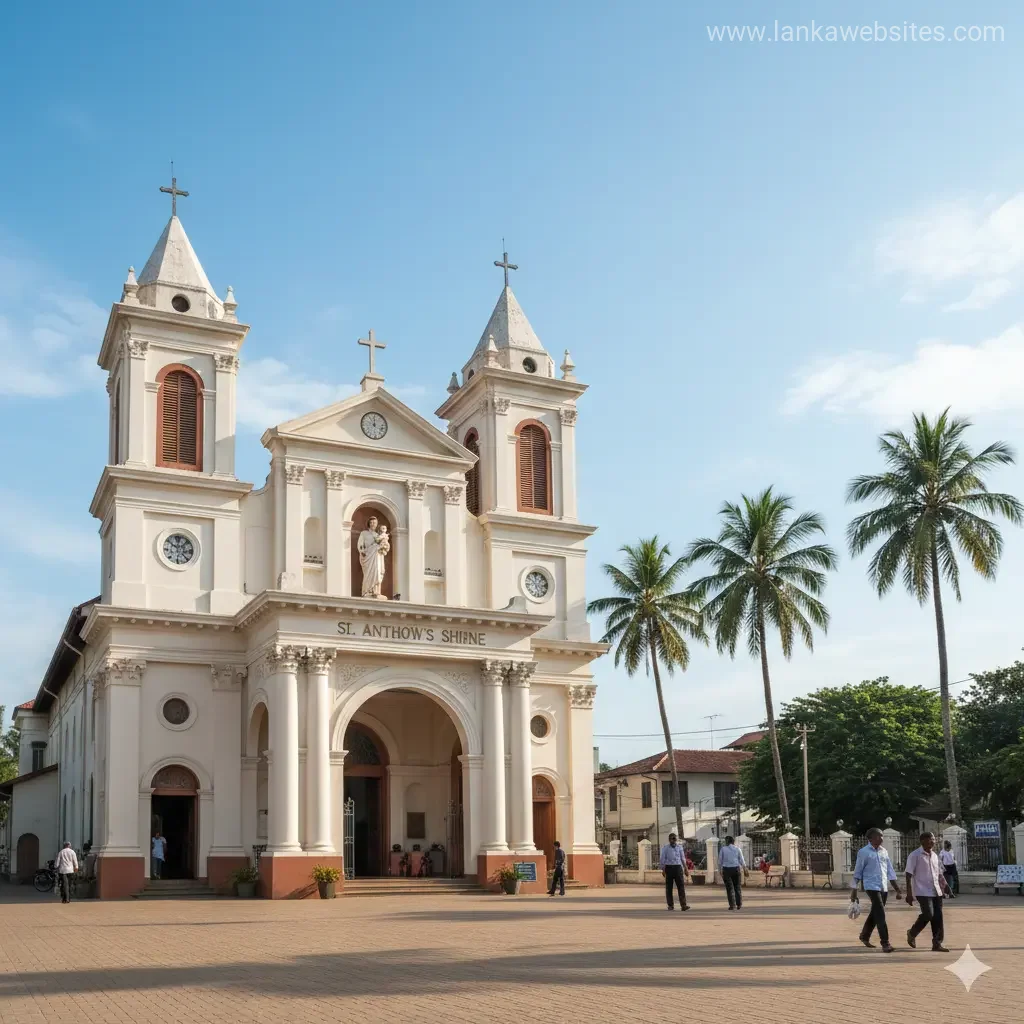
St. Anthony's Shrine in Kochchikade stands as one of Colombo's most significant Catholic landmarks, drawing worshippers and visitors from all faiths seeking spiritual solace and connection to Sri Lank
The Lankawebsites editorial team curates, fact-checks, and updates guides on personal finance, property, health, immigration, legal, business, and lifestyle topics relevant to Lankawebsites readers. Articles are produced with AI assistance and reviewed by the editorial team before publication.
St. Anthony's Shrine in Kochchikade stands as one of Colombo's most significant Catholic landmarks, drawing worshippers and visitors from all faiths seeking spiritual solace and connection to Sri Lanka's rich religious heritage. This historic church, with its striking neo-classical architecture and remarkable origin story, has endured centuries of change to become a beacon of hope and community resilience in the heart of our bustling capital.
A Legacy Born from Faith and Perseverance
The story of St. Anthony's Shrine begins during the Dutch colonial period, when Catholicism faced strict prohibition across the island. Father Antonio, a dedicated priest, risked everything by disguising himself as a local merchant and seeking refuge with a fishing community at Mutwal. According to local legend—and one that many locals still hold dear—Father Antonio prayed for three days to stop the sea from eroding the village. His prayers were answered when a sandbank miraculously emerged, allowing the community to continue their livelihoods and leading them to embrace Catholicism.
Grateful for this divine intervention, the Dutch authorities granted Father Antonio land to conduct his sermons. He built a humble mud brick chapel dedicated to Saint Anthony of Padua, the patron saint of lost things and miracles. This modest beginning would eventually transform into the impressive structure we see today. Father Antonio himself is buried within the church, his legacy continuing to inspire generations of worshippers.
Architectural Evolution and Design
The church's physical transformation reflects the growing faith community and changing times. In 1806, the original chapel was enlarged, and in 1822, a statue of Saint Anthony—brought back from Goa—was installed on one of the church's altars, where it remains to this day.
The construction of the present church began in 1828 and was consecrated on 1 June 1834. The building showcases a distinctive neo-classical architectural style, displaying the typical cathedral façade that characterises many of Colombo's colonial-era churches. The structure also incorporates subtle Gothic Revival elements blended with local Sri Lankan influences, creating a unique architectural statement that reflects our island's multicultural heritage.
Notable Architectural Features
Walking through St. Anthony's Shrine, you'll encounter several remarkable design elements:
- Vaulted Ceilings: The soaring arched structures create a sense of spaciousness and inspire awe, a hallmark of Gothic architecture that draws the eye upward in contemplation.
- Intricate Carvings: From delicate altar decorations to ornate pillars, the church is replete with artistic flourishes that speak to the craftsmanship invested in its construction.
- Religious Artwork: Stained glass windows and religious paintings serve as visual narratives illuminating the teachings of the faith.
- The Reliquary: A special glass case near the church entrance houses a tiny piece of St. Anthony's tongue, preserved as a sacred relic that draws pilgrims seeking blessings.
In 1938, the church underwent significant improvements and enlargement, with the addition of a chorister's gallery, extended side wings, and a mission house and meeting room behind the main altar. Later, under the vision of Reverend Father S. Sylvester beginning in 1954, the church experienced further transformation and expansion, creating the more awe-inspiring space visitors encounter today.
Spiritual Significance and Healing
Beyond its architectural grandeur, St. Anthony's Shrine holds profound spiritual meaning for our community. The church is designated as a national shrine and minor basilica, reflecting its importance within Sri Lanka's Catholic heritage. Locals have long held a strong belief that healing takes place at this sacred site, and people from various faiths visit seeking miracles and divine intervention.
The shrine's significance extends far beyond religious boundaries. Following the devastating Easter Sunday attacks in April 2019, St. Anthony's Shrine became a symbol of resilience and community healing. Despite the tragedy that affected the Catholic community deeply, the shrine continued to serve as a beacon of hope and solace for those affected, demonstrating faith's power to unite people across different backgrounds.
As filmmaker Sulochana Peiris noted in her documentary about the shrine: "The shrine has continued to bring relief to different communities. It's not divided. It's actually a place where people can come together and find common ground." This inclusive spirit reflects the shrine's role as more than just a place of Catholic worship—it's a sanctuary for all seeking spiritual connection.
Visiting St. Anthony's Shrine: Practical Information
Location and Access
St. Anthony's Shrine is conveniently located at Kochchikade, Kotahena, Colombo 13, situated near the Pettah-Fort area, making it easily accessible from most parts of Colombo. The shrine is well-connected by public transport, and you can reach it via bus routes serving the Kotahena area or by private vehicle with parking available nearby.
Opening Hours and Entry
The shrine welcomes visitors throughout the week with the following timings:
- Monday to Sunday: 8:00 AM – 7:00 PM
- Entry Fee: Free entrance
The church attracts worshippers at all times, with particularly large gatherings on Sundays. Despite the crowds, the church maintains a serene and godly atmosphere that invites quiet reflection and prayer.
What to Expect During Your Visit
When you visit, you'll find several areas of interest:
- The Main Church: The impressive central nave with its vaulted ceilings and ornate altar
- The Reliquary: The special glass case at the church entrance housing the relic of St. Anthony's tongue
- The Museum: A small museum on the first floor dedicated to the memory of the patron saint, St. Anthony
- The Gift Shop: A shop where you can purchase religious relics and devotional items
Respectful Visiting Guidelines
As a place of active worship, please observe these courtesies:
- Dress modestly—avoid sleeveless tops and shorts
- Remove your shoes or wear respectful footwear
- Maintain silence during prayer times, especially during services
- Photography may be restricted during Mass; ask permission from staff
- Be mindful of other worshippers and maintain a reverent demeanor
St. Anthony's Shrine in Colombo's Religious Heritage
St. Anthony's Shrine represents a crucial chapter in Colombo's Catholic heritage, a legacy that dates back to the Portuguese and Dutch colonial periods. Today, the shrine stands alongside other significant Catholic churches in Colombo, collectively forming an important part of our island's religious and cultural landscape.
The church's enduring presence reflects the resilience of the Catholic community in Sri Lanka, particularly given the historical challenges they faced during periods of religious prohibition. From its humble beginnings as a mud brick chapel built in secret to its current status as a national shrine, the journey of St. Anthony's speaks to the power of faith and community determination.
Planning Your Visit
If you're planning to visit St. Anthony's Shrine, consider these practical tips:
- Best Time to Visit: Weekday mornings offer a quieter, more contemplative experience, whilst Sundays are vibrant with community worship
- Duration: Allow 30-45 minutes for a meaningful visit
- Nearby Attractions: The shrine's location near Pettah makes it easy to combine with visits to other historic landmarks in Colombo
- Photography: The architectural details are stunning; consider visiting during daylight hours for better natural lighting
- Accessibility: The shrine is accessible to visitors with mobility challenges, though some areas may require assistance
Frequently Asked Questions
Is St. Anthony's Shrine only for Catholics?
No, the shrine welcomes people of all faiths. Many non-Catholic visitors come seeking spiritual solace, miracles, or simply to appreciate the architectural and historical significance of the building. The shrine serves as a unifying space for the broader community.
What is the significance of the relic displayed at the shrine?
The shrine houses a tiny piece of St. Anthony's tongue in a special reliquary, displayed in a glass case at the church entrance alongside a statue of the saint. This relic holds deep spiritual significance for devotees and is a focal point for prayer and veneration.
Can I attend Mass at the shrine?
Yes, St. Anthony's Shrine is an active parish church where regular Masses are held. Visitors are welcome to attend services. For specific Mass timings, it's best to contact the shrine directly or check with the parish office.
Is there a dress code for visiting?
While there's no strict enforced dress code, visitors are expected to dress modestly out of respect for the sacred space. Avoid sleeveless tops, short shorts, and revealing clothing. This applies to both men and women.
Are there facilities for disabled visitors?
The shrine makes efforts to accommodate all visitors, though some areas may have limited accessibility. It's recommended to contact the shrine in advance if you require specific accessibility arrangements.
What's the best way to learn about the shrine's history?
The first-floor museum dedicated to St. Anthony provides historical context and information about the shrine. Staff members are also usually happy to share details about the church's history and significance. Additionally, guided tours may be available—contact the shrine for more information.
A Living Testament to Faith and Community
St. Anthony's Shrine, Kochchikade, remains far more than a historical monument. It's a living, breathing community space where faith continues to flourish and where people from all walks of life find hope, healing, and connection. Whether you're drawn by spiritual seeking, historical curiosity, or architectural appreciation, a visit to this remarkable shrine offers a profound experience of Colombo's rich religious and cultural heritage.
The shrine's journey—from a mud brick chapel built in defiance of religious prohibition to a nationally recognised basilica—mirrors the resilience of our community. As you plan your visit, remember that you're stepping into a space where centuries of prayers have been offered, where miracles are believed to occur, and where the human spirit continues to seek connection with the divine.
Related Articles

Multi-Religious Harmony in Sri Lankan Culture
This article references the following sources for accuracy and further reading:

Temple of the Tooth: Sacred Relic in Kandy
Introduction to the Temple of the Tooth The Temple of the Tooth, also known as the Sri Dalada Maligawa, is a sacred Buddhist temple located in the heart of

Islamic Heritage: Mosques and Muslim Culture
Introduction to Islamic Heritage As you explore the diverse cultural landscape of New Zealand, you may come across mosques and Muslim communities that are

The Arrival of Buddhism: Emperor Ashoka's Mission
Introduction to Emperor Ashoka's Mission Buddhism, one of the world's oldest and most influential religions, has a rich history that spans over 2,500 years