Legge's Flowerpecker: Smallest Endemic Bird
Sri Lanka is home to some of the world's most extraordinary wildlife, and among our most precious treasures is the Legge's Flowerpecker, a tiny endemic bird that's found nowhere else on Earth. If you'
The Lankawebsites editorial team curates, fact-checks, and updates guides on personal finance, property, health, immigration, legal, business, and lifestyle topics relevant to Lankawebsites readers. Articles are produced with AI assistance and reviewed by the editorial team before publication.
Sri Lanka is home to some of the world's most extraordinary wildlife, and among our most precious treasures is the Legge's Flowerpecker, a tiny endemic bird that's found nowhere else on Earth. If you've ever wondered about this remarkable creature or want to know where to spot one, you're in for a treat—this little bird has a big story to tell about our island's biodiversity.
What Is Legge's Flowerpecker?
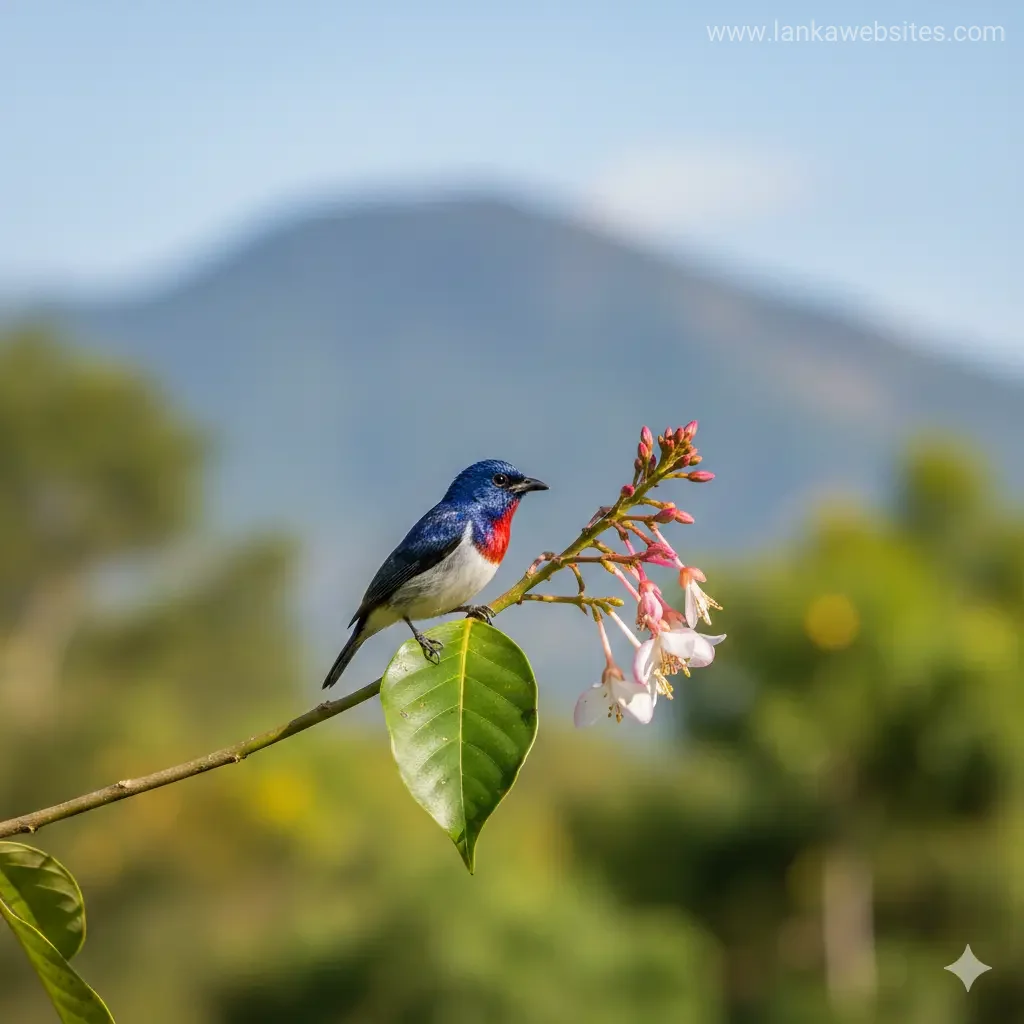
The Legge's Flowerpecker, scientifically known as Dicaeum vincens, is also called the white-throated flowerpecker due to its distinctive white throat and upper breast. This endemic resident bird is found exclusively in Sri Lanka, making it one of our island's most unique avian species.
What makes this bird truly special is its size—it's incredibly small, measuring just 10 cm in length, making it one of Sri Lanka's tiniest birds. Males are slightly larger than females, reaching up to 10.7 cm. Despite their diminutive size, these stout little birds have distinctive features that make them recognisable to birdwatchers and nature enthusiasts.
Distinctive Features and Appearance
The Legge's Flowerpecker has a unique appearance that sets it apart from other Sri Lankan birds. The male bird displays blue-black upperparts with a white throat and upper breast, and a striking yellow lower breast and belly. This colourful plumage makes spotting them rewarding for keen observers.
Beyond its colours, the bird has several physical adaptations that reveal much about its lifestyle. It possesses a short, thick curved bill and a tubular tongue—features that are perfectly designed for its specialised diet. These characteristics reflect the importance of nectar in what it eats, though the bird also consumes berries, spiders, and insects.
The Legge's Flowerpecker has a short tail and a rather stocky build for such a small bird, giving it a distinctive silhouette when perched high in the trees where it spends most of its time.
Behaviour and Habitat
These birds are rather uncommon and are generally found living in pairs, preferring to stay high up in tall trees within forests and well-wooded areas. They're particularly common in the southwestern wet lowlands and adjoining mid-hills, though they rarely venture into higher elevations.
The bird's call is distinctive—a sharp, rapid "kee-kee-kee-kee" pitched much higher than that of the Billed-flowerpecker, which helps birdwatchers identify them even when they're hidden among dense foliage.
One interesting aspect of their behaviour is their breeding pattern. During breeding season, females lay two eggs in a distinctive purse-like nest suspended from a tree. This unique nest construction provides protection for their eggs and young chicks.
Where to Find Legge's Flowerpecker in Sri Lanka
If you're keen to spot this endemic beauty, you'll want to visit the right locations. The best places to see Legge's Flowerpecker include:
- Bodhinagala Rainforest
- Kitulgala Rainforest
- Gilimale
- Morapitiya
- Sinharaja Rainforest
These protected rainforest areas in the southwestern wet zone offer the ideal habitat these birds prefer. Sinharaja, in particular, is a UNESCO World Heritage Site and one of Sri Lanka's most important biodiversity hotspots, making it an excellent destination for birdwatching enthusiasts.
Conservation Status and Why It Matters
The Legge's Flowerpecker holds an important place in Sri Lanka's conservation efforts. According to official records, this species is classified as vulnerable, meaning it faces significant threats to its survival. The bird is also considered endangered in many of its forest habitats.
The primary threat to this species is habitat loss. As our rainforests face pressure from deforestation and development, the Legge's Flowerpecker's population continues to decline. Protecting these birds means protecting the pristine rainforests they depend on for survival.
A Brief History: Named After a Pioneer
The Legge's Flowerpecker carries a fascinating historical connection. It's named after William Vincent Legge, an Australian ornithologist who made significant contributions to our understanding of Sri Lankan birds. This naming honours his pioneering work in documenting the island's avian diversity.
Responsible Birdwatching: How to Observe Without Harm
If you're planning to visit rainforests to spot the Legge's Flowerpecker, it's crucial to do so responsibly. Here are practical guidelines to help protect these birds and their habitat:
Keep Your Group Small
Travel in small groups rather than large tour parties. Mother Nature can't sustain the impact of many footprints at once, and smaller groups are less disruptive to birds and wildlife.
Stay on Designated Trails
Always stick to hardback surfaces and designated trails. This minimises habitat disturbance and prevents damage to the forest floor where many small creatures live.
Leave No Trace
Minimise your use of plastic and polythene, and bring everything you pack in back with you. Don't burn waste in the wilderness—even organic waste can harm animals and the ecosystem.
Be Mindful of Fires and Resources
Avoid unnecessary fires. If you're camping, use portable cookers instead of firewood when possible. If you must use firewood, only use it on the ground and never cut trees or branches.
Protect Water Sources
Don't use soap or shampoo when bathing in natural streams, as these products contaminate water sources and kill wildlife.
Avoid Disturbing Flora
Don't bring plants back with you or unnecessarily cut trees and branches. The forest needs to remain intact for birds like the Legge's Flowerpecker to thrive.
Frequently Asked Questions
Is the Legge's Flowerpecker found anywhere outside Sri Lanka?
No, the Legge's Flowerpecker is endemic to Sri Lanka, meaning it's found nowhere else in the world. This makes it one of our island's most exclusive wildlife species and increases its importance for conservation.
What does the Legge's Flowerpecker eat?
These birds primarily feed on nectar, which is why they have specialised bills and tubular tongues. However, they also consume berries, spiders, and insects to supplement their diet.
How can I identify a Legge's Flowerpecker?
Look for a very small bird (about 10 cm long) with blue-black upper parts, a white throat and upper breast, and yellow lower breast and belly. Males are slightly larger than females. Listen for their distinctive sharp, rapid "kee-kee-kee-kee" call.
What's the best time of year to see Legge's Flowerpeckers?
These are resident birds in Sri Lanka, meaning they stay year-round. However, breeding season may be the best time to observe them as they're more active. Early mornings in rainforests offer the best birdwatching opportunities.
Why is the Legge's Flowerpecker vulnerable?
The primary threat is habitat loss due to deforestation and development in the southwestern wet zone rainforests where these birds live. Protected areas like Sinharaja are crucial for their survival.
Can I visit Sinharaja to see Legge's Flowerpeckers?
Yes, Sinharaja Rainforest is one of the best places to see this bird. It's a UNESCO World Heritage Site and offers guided tours. Remember to follow responsible birdwatching practices and book with reputable guides who understand conservation principles.
Next Steps: Plan Your Birdwatching Adventure
The Legge's Flowerpecker represents everything special about Sri Lanka's endemic wildlife. By visiting responsibly and supporting conservation efforts, you're helping protect not just this tiny bird, but entire rainforest ecosystems.
If you're interested in seeing this remarkable bird, consider planning a visit to one of the rainforest areas mentioned above. Book with experienced, environmentally-conscious guides who can help you spot these elusive birds whilst ensuring minimal impact on their habitat. Every birdwatcher who respects these guidelines contributes to the long-term survival of this species.
Remember, the Legge's Flowerpecker is found nowhere else on Earth—it's uniquely ours to protect.
Related Articles

Sri Lankan Leopard: Apex Predator and Conservation Icon
Introduction to the Sri Lankan Leopard The Sri Lankan leopard is an awe-inspiring creature that roams the forests and grasslands of Sri Lanka. As an apex

Sri Lankan Junglefowl: National Bird of Sri Lanka
Introduction to the Sri Lankan Junglefowl The Sri Lankan Junglefowl is a colourful and fascinating bird species that has captivated the hearts of many wild

Ceylon Frogmouth: Nocturnal Endemic Bird
Introduction to the Ceylon Frogmouth The Ceylon Frogmouth is a fascinating, nocturnal bird that is endemic to Sri Lanka, but in this article, we will be di

Sri Lanka Whipping Frog: Colorful Tree Frog
Introduction to the Sri Lanka Whipping Frog The Sri Lanka Whipping Frog, also known as the Taruga eques, is a colourful tree frog that is native to the bea