“Are You Ready to Work Abroad?” Self-Assessment Guide for Sri Lankans

Working abroad can transform your career and life, but it's not a decision to make lightly. Whether you're dreaming of earning in a stronger currency, gaining international experience, or building a n
The Lankawebsites editorial team curates, fact-checks, and updates guides on personal finance, property, health, immigration, legal, business, and lifestyle topics relevant to Lankawebsites readers. Articles are produced with AI assistance and reviewed by the editorial team before publication.
Working abroad can transform your career and life, but it's not a decision to make lightly. Whether you're dreaming of earning in a stronger currency, gaining international experience, or building a new future overseas, you need to be honest with yourself about whether you're truly ready. This guide will help you assess your readiness across the key areas that matter most.
Understanding Your Motivation
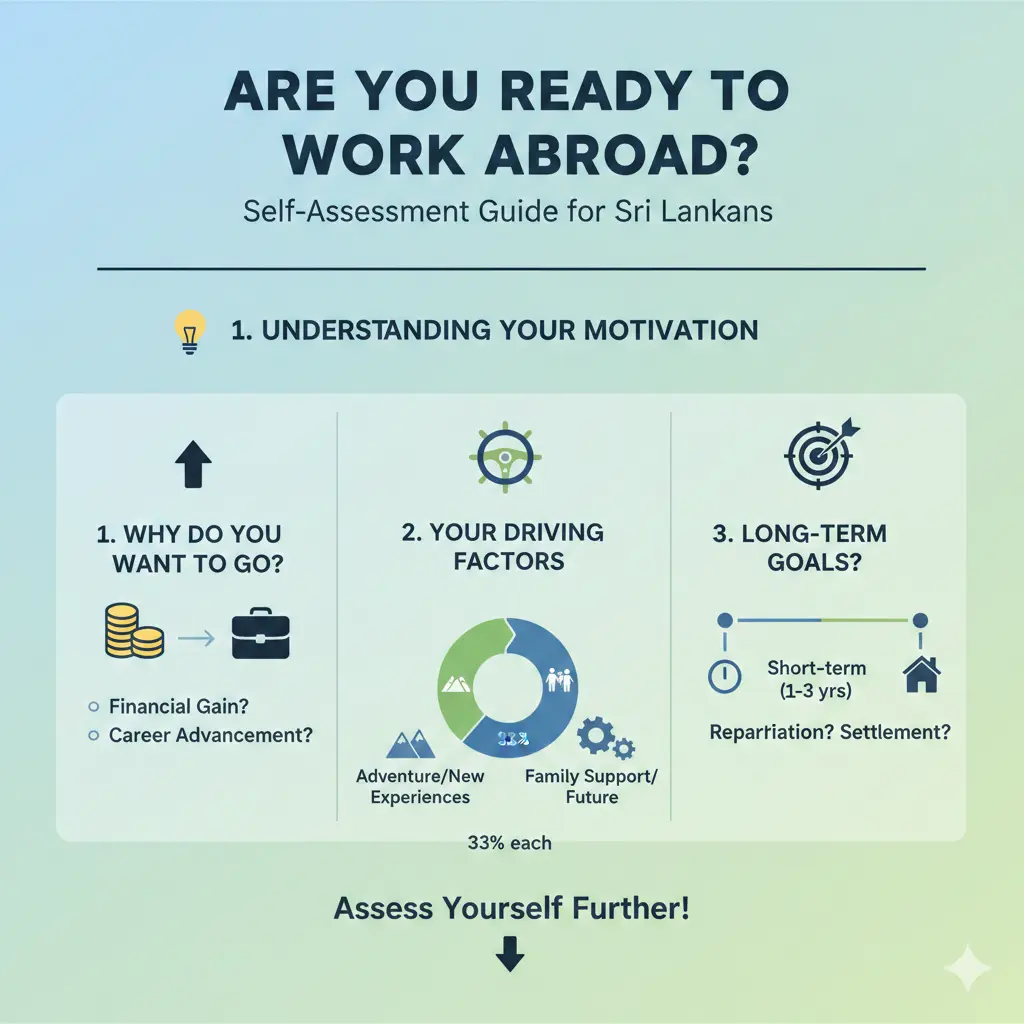
Before you start filling out visa applications, ask yourself why you want to work abroad. Are you running away from something, or running towards something? The best candidates for overseas work have clear, positive reasons: career advancement, skill development, financial goals, or personal growth.
Consider whether your motivation aligns with reality. If you're hoping to escape a difficult situation at home, moving abroad won't solve it—it might just move the problem with you. But if you're excited about a specific opportunity, industry, or country, that's a strong foundation.
Think about your timeline too. Are you looking for a short-term stint (1-2 years), medium-term work (3-5 years), or permanent relocation? Your answer will shape which countries and visa types suit you best.
Financial Readiness
Money matters when you're working abroad. You'll need savings to cover several things before your first paycheck arrives.
Calculate Your Startup Costs
- Visa application fees (typically USD 270–500 depending on the country)
- Medical tests and background checks
- Travel tickets and transport
- Initial accommodation (first month's rent, deposit)
- Insurance and permits
- Living expenses for the first 1–2 months before steady income
Most experts recommend saving at least 3–6 months of living expenses in your destination country before you go. This cushion protects you if you face unexpected costs or job delays.
Understand Your Income Requirements
If you're considering Sri Lanka's Digital Nomad Visa, you'll need to prove a minimum monthly income of USD 2,000 from foreign sources . If you're bringing dependents, you'll need an additional USD 500 per person . This income must come from overseas clients or employers—you cannot work locally in Sri Lanka on this visa .
For other countries, income thresholds vary widely. The UK Employment Visa, for example, requires a minimum income of USD 80,000 annually . Research your target country's specific requirements early.
Skills and Qualifications Assessment
Most countries hiring foreign workers want specific skills. Be honest about where you fit.
In-Demand Fields
Australia actively recruits skilled trades, engineers, and healthcare professionals . The UK focuses on healthcare, nursing, and hospitality roles . Germany and other European countries need technicians, engineers, and skilled trade workers . The Middle East continues to hire for construction, hospitality, and service roles .
If your skills don't match these demand areas, you have two options: upskill before you go, or look at countries with different priorities. Some nations value specific certifications more than others. A nursing qualification from Sri Lanka, for instance, might require additional validation in the UK, but could be highly valued in the Middle East.
Language Considerations
Be realistic about language barriers. While English opens doors in many countries, some European nations prefer or require local language skills . If language isn't your strength, focus on English-speaking destinations or countries with strong English workforces.
Legal and Compliance Readiness
Working abroad isn't just about getting a job—it's about following the rules.
Sri Lanka's Registration Requirement
Every Sri Lankan who leaves the country for employment must register with the Sri Lanka Bureau of Foreign Employment (SLBFE) before departure, as required by the Sri Lanka Bureau of Foreign Employment Act No. 21 of 1985 . You can register online or visit the SLBFE head office or branch office . This isn't optional—it's a legal requirement.
Visa and Work Permit Process
The standard work visa process involves several steps: identify a suitable job, check visa eligibility and requirements, apply for the work visa, complete medical and background checks, and only then travel after visa approval . Never try to bypass this process—it often leads to rejection or bans .
Tax Residency Awareness
If you stay in your destination country for more than 183 days, you typically become a tax resident and may be liable for global income tax . This is crucial: you might need to file taxes in two countries. Consult with a tax professional in both Sri Lanka and your destination country to understand your obligations .
Personal and Emotional Readiness
Technical readiness isn't enough. You also need emotional and personal resilience.
Questions to Ask Yourself
- Can you handle being away from family and close friends for extended periods?
- Are you adaptable to different cultures, food, climate, and social norms?
- Do you manage stress well when facing unfamiliar situations?
- Are you willing to build new social networks from scratch?
- Can you handle potential homesickness or culture shock?
- Are you comfortable navigating bureaucracy in a different language or system?
Working abroad isn't just a job change—it's a lifestyle change. If you've never lived away from home, consider a shorter-term assignment first to test your adaptability.
Research Your Destination Thoroughly
Don't rely on holiday memories or social media impressions. Research your destination seriously.
- Cost of living: Will your salary actually go further?
- Healthcare system: What's covered, and what will you pay out-of-pocket?
- Safety and security: Is it safe for you to live and work there?
- Climate and weather: Can you handle the weather year-round?
- Social community: Are there communities of Sri Lankans or expats you can connect with?
- Career prospects: Will this job advance your long-term goals?
- Return options: Can you come home if things don't work out?
Avoid Common Mistakes
Many Sri Lankans make preventable errors when working abroad:
- Trusting unofficial agents: Always verify job offers and visa requirements directly with official sources . Scams targeting overseas workers are common.
- Ignoring registration requirements: Failing to register with SLBFE can create legal complications.
- Underestimating costs: Visa fees, medical tests, and initial living expenses add up quickly.
- Not understanding tax implications: You could owe taxes in two countries if you're not careful.
- Accepting jobs without proper contracts: Ensure your employment contract clearly documents work location, duration, and any tax-related clauses .
Your Next Steps
If you've honestly assessed yourself and answered "yes" to most of these readiness questions, you're likely prepared to take the next step. Here's what to do:
- Research specific countries and roles that match your skills and goals.
- Start building your qualifications or certifications if needed.
- Save aggressively for startup costs and a safety buffer.
- Connect with others who've made the move—learn from their experiences.
- Consult with a migration agent or immigration lawyer if you're uncertain about visa requirements.
- Register with SLBFE once you have a confirmed job offer.
- Begin your visa application process well in advance.
Working abroad can be one of the most rewarding decisions you make. But it requires honest self-assessment, careful planning, and realistic expectations. Take your time, do your research, and only move forward when you're genuinely ready. The opportunity will still be there when you are.
Frequently Asked Questions
Sources & References
-
1
Sri Lanka Introduces Digital Nomad Visa — deedtrident.in
-
2
Sri Lanka - Guide to Remote Work — wfa.team
-
3
Immigration Job Opportunities for Sri Lankans Abroad (2026 Guide) — vigoimmigration.lk
-
4
Register for a Received Foreign Job - SLBFE — www.slbfe.lk
-
5
Unlock Sri Lanka's Secrets: Digital Nomads Are Flocking to the Island for Year-Long Dream Workations — www.travelandtourworld.com
Related Articles

Long-Distance Marriages: Practical Tips for Sri Lankans Working Overseas
This article references the following sources for accuracy and further reading:

Pathways for Sri Lankan Engineers to Work in Canada, Australia, and the Middle East
This article references the following sources for accuracy and further reading:

Specified Skilled Worker (SSW) Visa for Sri Lankans: Full 2026 Guide
This article references the following sources for accuracy and further reading:

Schooling Abroad: What Sri Lankan Parents Should Know Before Moving with Children
This article references the following sources for accuracy and further reading: