Buying Property in Sri Lanka While Working Abroad: A Guide for Migrant Workers

Imagine wrapping up a long shift abroad, knowing you've secured a piece of home in Sri Lanka—a place to return to, invest in, or pass on to your family. For many of our migrant workers in the Middle E
The Lankawebsites editorial team curates, fact-checks, and updates guides on personal finance, property, health, immigration, legal, business, and lifestyle topics relevant to Lankawebsites readers. Articles are produced with AI assistance and reviewed by the editorial team before publication.
Imagine wrapping up a long shift abroad, knowing you've secured a piece of home in Sri Lanka—a place to return to, invest in, or pass on to your family. For many of our migrant workers in the Middle East, Korea, or Europe, buying property back home is more than an investment; it's a smart way to build stability while earning overseas. This guide breaks down everything you need to know in 2026, from legal rules to practical steps, tailored for Sri Lankans like you working abroad.
Understanding Your Rights as a Sri Lankan Migrant Worker
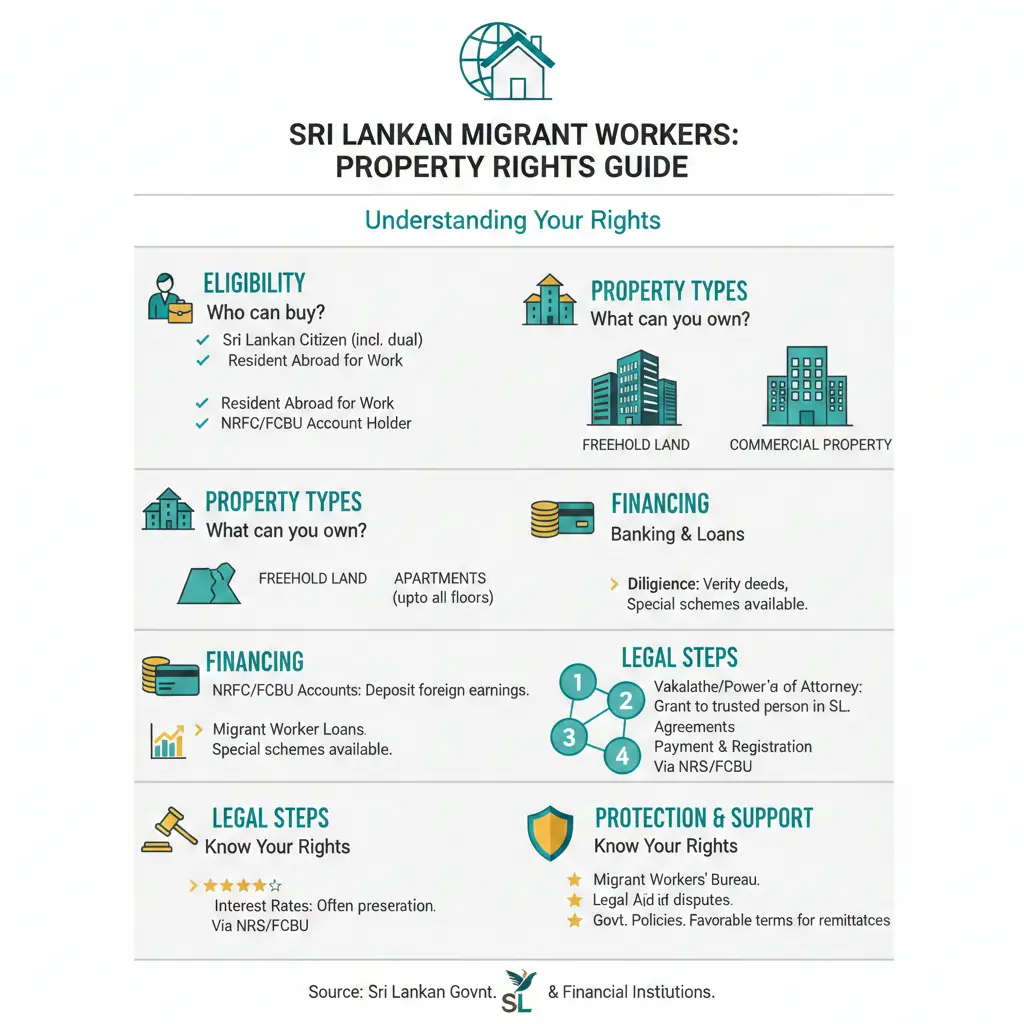
As a Sri Lankan citizen working abroad, you're in a strong position. Unlike pure foreigners, you face no restrictions on buying land, houses, or apartments outright. The Land Ownership Act (Restrictions on Alienation) of 1963 and its amendments don't apply to you or dual citizens. This means you can own freehold property anywhere, including coastal areas, without special taxes or limits.
Many of our locals in places like Dubai or Japan use remittances to buy homes in Colombo, Gampaha, or their village roots. In 2026, with property prices stabilising post-recovery, it's an ideal time—average apartment prices in urban areas hover around LKR 25,000-40,000 per perch, depending on location.
Key Differences: You vs. Pure Foreigners
- You (Sri Lankan citizens abroad): Full ownership rights, no 100% land tax or lease limits.
- Pure foreigners: Can buy apartments above ground floor; land only on 99-year lease; max 50% condo shares.
- Dual citizens: Same freedoms as you—no hurdles.
Legal Framework and Current Regulations (2026)
Sri Lanka's laws prioritise citizens like you. The 2013 amendments eased rules for investment, and 2026 budgets maintain stability with no major changes for non-resident Sri Lankans (NRS). You'll deal with standard taxes, but nothing prohibitive.
Taxes You'll Pay
Expect these on purchase:
| Transaction | Tax Rate (2026) |
|---|---|
| Property Transfer (Stamp Duty) | 3% on first LKR 100,000 + 4% thereafter |
| Land Lease (if applicable, rare for you) | 1% |
| VAT (new builds) | 18% |
| SSCL | 2.5% |
| Legal Fees | 2-3% typical |
Annual property tax is 0.5-1% of value, varying by local council. Rental income tax ranges 4-24%, but owner-occupied homes get exemptions if lived in 2 of last 3 years. Capital Gains Tax (CGT) applies on sale, but pre-2018 assets have reliefs.
"Sri Lankan expatriates benefit from special status, acquiring real estate without constraints."
Step-by-Step Process to Buy Property from Abroad
Don't worry—you can handle most from your phone or laptop. Here's the practical roadmap:
Step 1: Research and Budget
Start with sites like LankaPropertyWeb or Ikman.lk for listings. Factor in 8-10% total costs beyond price. Use remittances via IIA (Inward Investment Account) for clean transfers—mandatory for overseas funds.
Step 2: Hire Local Help
- Lawyer: Specialised in real estate (LKR 50,000-100,000 fee). They'll verify title deeds, check surveys, and ensure no liens.
- Agent: Licensed realtor for viewings—many offer virtual tours for abroad buyers.
- Bank: Open IIA at Commercial Bank or HNB for fund transfers. No source declaration needed under $45,000 USD.
Step 3: Documents Needed
From abroad, prepare:
- Valid passport and NIC copy.
- Proof of income (pay stubs, bank statements last 6 months).
- Power of Attorney (PoA) if not visiting—notarised abroad, attested by SL embassy.
Seller provides: Title deed, plans, building permit, no-easement certificate.
Step 4: Sign and Pay
Sign preliminary agreement (10% deposit). Full payment via IIA before final deed at notary. Register at Land Registry (1-2 months). Total process: 2-4 months.
Tip: Visit during annual leave for inspections—properties in Negombo or Galle are popular for quick ROI via rentals (6-8% yields).
Step 5: Finance Options
No local mortgages for pure foreigners, but as a citizen, you're eligible. Banks like BOC offer 70-80% loans at 12-14% interest (2026 rates). Use overseas savings for down payments.
Financing and Remittance Tips for Migrant Workers
Your hard-earned dirhams or won convert well—use CBSL-approved channels to avoid black market risks. IIA lets you repatriate sale proceeds + gains in original currency.
Practical Advice:
- Track exchange rates via CBSL site.
- Join SL expat Facebook groups (e.g., "Sri Lankans in Qatar") for agent recommendations.
- Budget for maintenance: LKR 5,000-10,000/month for apartments.
Popular Areas and Investment Opportunities
Colombo suburbs (Rajagiriya, Battaramulla) suit families; Southern coast (Bentota) for holiday homes. Yields beat fixed deposits—apartments rent for LKR 50,000-100,000/month.
Next Steps to Get Started
1. Assess your budget and shortlist 3-5 properties online.
2. Contact a lawyer via SL Bar Association directory.
3. Open an IIA and transfer initial deposit.
4. Schedule a video call with agents today.
With discipline, your overseas work can build lasting wealth here. Reach out to Lanka Websites for trusted realtor partners—we're here to help our migrant community thrive.
Frequently Asked Questions
Sources & References
-
1
Foreign Real Estate Purchase in Sri Lanka: Complete Guide — www.jarniascyril.com
-
2
Guide to Buying Property in Sri Lanka for Foreigners & Expats (2026) — colomborealtors.lk
-
3
Guide to foreigners buying property in Sri Lanka — www.lankapropertyweb.com
-
4
Guide for Non-Citizens buying property in Sri Lanka — www.esprit.lk
-
5
Purchasing and building the property - Property Buying Guide — www.lankapropertyweb.com
Related Articles

Long-Distance Marriages: Practical Tips for Sri Lankans Working Overseas
This article references the following sources for accuracy and further reading:

Pathways for Sri Lankan Engineers to Work in Canada, Australia, and the Middle East
This article references the following sources for accuracy and further reading:

Specified Skilled Worker (SSW) Visa for Sri Lankans: Full 2026 Guide
This article references the following sources for accuracy and further reading:

Schooling Abroad: What Sri Lankan Parents Should Know Before Moving with Children
This article references the following sources for accuracy and further reading: