Ancient Stupas: Jetavanaramaya, Ruwanwelisaya, Abhayagiri
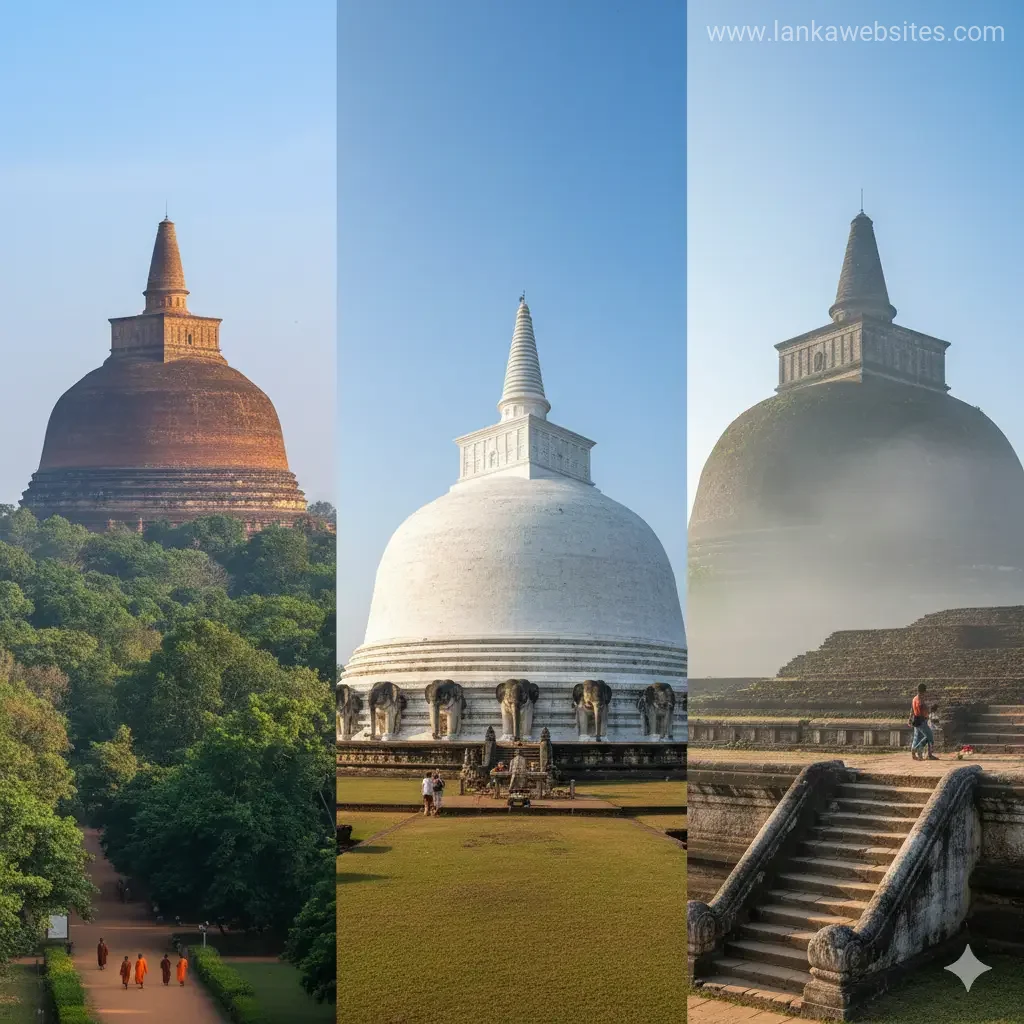
Standing amidst the ancient ruins of Anuradhapura and Polonnaruwa, our island's majestic stupas like Jetavanaramaya, Ruwanwelisaya, and Abhayagiri whisper tales of kings, monks, and unyielding faith
The Lankawebsites editorial team curates, fact-checks, and updates guides on personal finance, property, health, immigration, legal, business, and lifestyle topics relevant to Lankawebsites readers. Articles are produced with AI assistance and reviewed by the editorial team before publication.
Standing amidst the ancient ruins of Anuradhapura and Polonnaruwa, our island's majestic stupas like Jetavanaramaya, Ruwanwelisaya, and Abhayagiri whisper tales of kings, monks, and unyielding faith. These towering symbols of Buddhist devotion aren't just relics—they're engineering wonders that have withstood invasions, jungles, and time, drawing us locals to reflect on Sri Lanka's golden past.
Whether you're planning a family pilgrimage or a solo heritage trek, these sites offer serene escapes and profound history lessons. In 2026, with improved access roads and digital guides from the Department of Archaeology, visiting feels easier than ever. Let's explore these ancient stupas, their stories, and practical tips to experience them yourself.
Jetavanaramaya: The Tallest Brick Marvel of the Ancient World
Jetavanaramaya in Anuradhapura stands as a testament to ancient Sri Lankan ingenuity, once the world's tallest brick structure at 122 metres (400 feet). Built in the 3rd century AD by King Mahasena (273–301 AD), it now rises to 71 metres after restorations, yet its massive base spans 8 acres, built with over 90 million bricks that have endured for over 1,600 years.
Historical Origins and Buddhist Rivalries
King Mahasena initiated construction following the destruction of the Mahavihara monastery amid rivalries between Theravada and Mahayana sects. Supporting Abhayagiri monks, he built Jetavanaramaya as atonement after negotiations quelled a rebellion led by his minister. His son, King Kitthirimevan (Sirimeghavanna), completed it after 15 years, enshrining a relic believed to be part of the Buddha's belt.
The site may also mark where Mahinda Maha Thero, introducer of Buddhism to Sri Lanka, was cremated—recent excavations uncovered ash layers supporting this. Covered in jungle until 1909, when Monk Kumbukee Dhammarama cleared it with Atamasthana Committee approval, it reveals Anuradhapura's role as a trade hub linking India, the Mediterranean, and the Far East.
Architectural Feats and Restoration
Engineers stamped foundations with elephant feet on bedrock, used strong sand bricks, lime plaster for waterproofing, copper sheets, and arsenic-treated oil against pests. King Parakramabahu I in the 12th century renovated it to its current height post-invasions.
Today, the Central Cultural Fund oversees maintenance, ensuring stability against earthquakes and erosion. As locals, we appreciate how these techniques inspire modern conservation.
Ruwanwelisaya: Dutugemunu's Sacred Dome of White Marble
Ruwanwelisaya, another Anuradhapura gem, gleams like a pearl under the sun, built around 140 BC by King Dutugemunu after defeating Chola King Elara. This hemispherical stupa, sacred worldwide, enshrines Buddha relics and symbolises unity across our island.
Legendary Construction and Spiritual Significance
Dutugemunu vowed to build it upon unifying Sri Lanka, fulfilling a promise with white limestone and bricks for its pristine dome. Standing about 55 metres tall today (originally taller), its design influenced countless stupas, embodying perfect symmetry and devotion.
For us Sinhalese Buddhists, it's a pilgrimage must—home to relics that draw poya-day crowds. The surrounding wall with 340 elephant statues (once real elephants holding plaster) adds mythical charm.
Modern Preservation and Visitor Experience
Restored multiple times, including by the British in the 19th century and ongoing 2026 projects by the Department of Archaeology, it remains pristine. Approach via the sacred elephant pathway for that authentic feel—perfect for Instagram but respectful too.
Abhayagiri: The Rival Monastery of Monastic Power
Abhayagiri Stupa, also in Anuradhapura, rises 115 metres, built by King Valagamba (103 BC and 89–77 BC) as a rival to Mahavihara. Enshrining Buddha's forehead relic, it became a Mahayana hub, hosting monks from across Asia.
From Royal Refuge to Global Centre
Valagamba constructed it after retreating from invaders, later expanding it upon victory. Rivalries peaked under later kings like Gothabhaya (253–266 AD) and Mahasena, who favoured Abhayagiri over Theravada sites. It flourished as a knowledge centre, with records of Chinese monk Faxian studying here in the 5th century.
Spanning 350 acres, the complex included hospitals, universities, and observatories—evidence of advanced ancient society.
UNESCO Legacy and 2026 Access
As part of Anuradhapura's UNESCO World Heritage Site (inscribed 1982), Abhayagiri benefits from international funding for 2026 excavations revealing more murals and artifacts. Locals get free entry with National Identity Cards via the Department of Archaeology app.
Practical Tips for Visiting These Ancient Stupas
Planning a trip? Here's how we locals make the most of these sites in 2026:
- Best Time: Early mornings (7-10 AM) avoid heat and crowds; full moon poya days for spiritual vibes, but book transport ahead.
- Getting There: From Colombo, take the A6 highway (4-5 hours by bus/train from Fort Station). Use Lanka Pay app for e-tickets; tuk-tuks from Anuradhapura town cost LKR 500-1000.
- Entry Fees: Locals free with NIC; foreigners LKR 7,500 combo ticket for Sacred City (valid 3 days). Check Department of Archaeology for updates.
- What to Bring: Modest clothing (shoulders/knees covered), water, hat, sunscreen. No drones per Antiquities Ordinance—no. 9 of 1998.
- Guided Tours: Free audio guides in Sinhala/Tamil via QR codes; hire licensed guides (LKR 2,000/hour) from site offices for deeper insights.
- Combine Visits: Cycle the 4km loop (rentals LKR 500/day) linking Jetavanaramaya, Ruwanwelisaya, and Abhayagiri—eco-friendly and scenic.
Respect rules: no climbing, littering, or touching relics. Report issues to site wardens or hotline 1926.
Why These Stupas Matter to Us in Sri Lanka
These aren't dusty ruins—they're our cultural heartbeat. Jetavanaramaya's engineering rivals modern feats, Ruwanwelisaya inspires devotion, and Abhayagiri shows tolerant pluralism. In 2026, with climate threats rising, the Central Cultural Fund pushes sustainable tourism, creating jobs for North Central locals.
Visiting strengthens our heritage pride, especially amid global interest post-Sri Lanka's 2025 tourism boom.
FAQ
1. Which is the tallest among Jetavanaramaya, Ruwanwelisaya, and Abhayagiri?
Jetavanaramaya was originally the tallest at 122m, now 71m; Abhayagiri is 115m, Ruwanwelisaya around 55m.
2. Are these stupas open daily in 2026?
Yes, 6 AM-6 PM; closed Tuesdays for maintenance at some sites—confirm via archaeology.gov.lk.
3. Can locals visit for free?
Absolutely, show your NIC at ticket counters for complimentary access under the Antiquities Ordinance.
4. What's the best way to see all three in one day?
Rent a bicycle or tuk-tuk for the Anuradhapura Sacred City loop; start at Ruwanwelisaya, hit Jetavanaramaya, end at Abhayagiri (4-6 hours).
5. Are there relics inside, and can we see them?
Yes, Buddha relics are enshrined; view chambers from outside—internal access restricted for preservation.
6. How to book group tours?
Contact Central Cultural Fund via ccf.gov.lk or app; school groups get subsidies.
Plan Your Heritage Journey Today
Don't wait—grab your NIC, pack light, and head to Anuradhapura this weekend. Download the Heritage Sri Lanka app for maps and AR reconstructions. Share your photos with #LankaStupas to inspire fellow locals. These stupas remind us: our past powers our future.
Related Articles

The Ancient Kingdom of Ruhuna
Introduction to the Ancient Kingdom of Ruhuna The ancient kingdom of Ruhuna, located in present-day Sri Lanka, is a fascinating piece of history that showc

The Ancient Rajarata (King's Land) Civilization
Introduction to the Ancient Rajarata Civilization The Ancient Rajarata Civilization, also known as the King's Land, is a fascinating and mysterious ancient

Guard Stones and Architectural Elements
Introduction to Guard Stones and Architectural Elements As you wander through the historic sites of New Zealand, you may have stumbled upon intriguing ston

Ancient Forest Monasteries (Aranya Senasana)
Introduction to Ancient Forest Monasteries As you wander through the lush forests of New Zealand, it's easy to imagine a sense of tranquillity and peace th