Ancient Tank-Based Irrigation for Agriculture
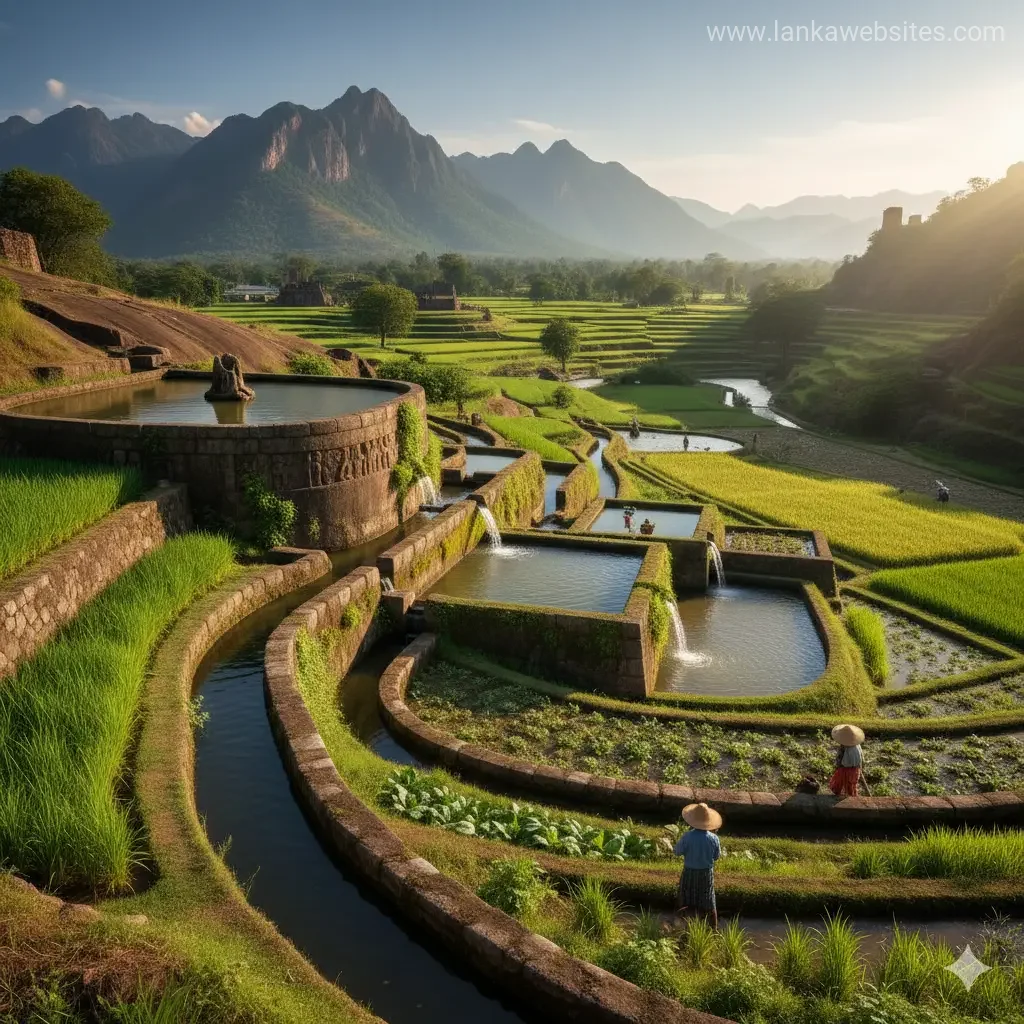
Sri Lanka's ancient tank-based irrigation system stands as one of the world's most remarkable feats of hydraulic engineering, transforming a dry landscape into an agricultural powerhouse over 2,000 ye
The Lankawebsites editorial team curates, fact-checks, and updates guides on personal finance, property, health, immigration, legal, business, and lifestyle topics relevant to Lankawebsites readers. Articles are produced with AI assistance and reviewed by the editorial team before publication.
Sri Lanka's ancient tank-based irrigation system stands as one of the world's most remarkable feats of hydraulic engineering, transforming a dry landscape into an agricultural powerhouse over 2,000 years ago. These interconnected reservoirs, known locally as 'ellangawa', didn't just sustain civilizations—they shaped our nation's identity, culture, and prosperity. Today, as we face water scarcity and climate challenges, understanding how our ancestors managed water offers invaluable lessons for modern agriculture and sustainable development.
The Origins of Tank-Based Irrigation in Sri Lanka
The story of Sri Lanka's irrigation genius begins in 437–366 BCE, when King Pandukabhaya, the founder of the Anuradhapura Kingdom, commissioned the construction of the Abhayavapi (also known as Basawakkulama). This wasn't merely a simple reservoir—it was the first identified artificial water storage system in Sri Lanka's recorded history, with an impressive embankment stretching 5,910 feet long and rising 22 feet high, holding 1,580 acre-feet of water across 1,235 acres.
The ancient chronicles, including the Dīpavaṃsa and the Mahāvaṃsa, recorded these irrigation systems with remarkable detail, documenting tanks, ponds, dams, canals, and even irrigation laws and taxation systems. This wasn't haphazard water management—it was a sophisticated, regulated system that reflected centuries of accumulated knowledge.
An estimated 15,000 tanks were built between 300 and 1300 CE, during the Anuradhapura Kingdom (437 BCE–845 CE) and Polonnaruwa kingdom (846 CE–1302 CE) eras. By the height of this civilization, Sri Lanka had constructed over 30,000 reservoirs of varying sizes spread across the dry zone.
How the Tank Cascade System Works
The Engineering Behind the System
The Tank Cascade System represents a holistic approach to water management that integrated multiple reservoirs into a single, interconnected network. Rather than operating as isolated structures, each tank had a specific function: some stored water for animal husbandry, others for irrigation, and others for household needs.
The system was designed to collect, store, and distribute rainwater efficiently across Sri Lanka's dry region, which receives less than approximately 1,750 mm of rainfall annually and experiences evaporation rates between 1,700 and 1,900 mm. This humidity deficit would have made agriculture impossible without these ingenious water management structures.
Ancient Sri Lankan engineers demonstrated extraordinary precision in their work. Tanks were dug by hand, lined with stone, and positioned with careful understanding of elevation and rainfall patterns. The system incorporated spillways, weirs, and sluices—technologies that represented significant leaps forward in hydraulic engineering at the time.
Royal Patronage and Expansion
Water management became a royal duty and a mark of a righteous king in ancient Sri Lanka. King Vasabha, who ruled in the early centuries of the common era, established the tradition of royal patronage for irrigation, constructing 11 tanks and 12 canals during his reign. However, it was King Mahasena (274–301 AD) who truly earned the title "Father of Tank Construction," overseeing the construction of 16 major tanks and numerous canals during his 27-year reign.
By the 9th century, the system had become so sophisticated that a formal bureaucracy emerged to organise it, including a committee known as the Twelve Great Reservoirs.
Agricultural Impact and Food Security
The most transformative impact of tank-based irrigation was agricultural. The ability to grow multiple crops per year created unprecedented food security and economic prosperity. Rice cultivation, our nation's staple food and main source of nutrition, became viable across the dry zone through this system.
This agricultural surplus became the backbone of Anuradhapura's power and influence, enabling the flourishing of arts, culture, and religion that made the kingdom famous throughout the ancient world. Water management wasn't merely utilitarian—it was foundational to civilisation itself.
The sophistication of this system was so renowned that Sri Lankan irrigation engineers were supposedly summoned or hired by other kingdoms for their expertise.
Beyond Agriculture: Environmental and Social Benefits
Ecosystem Enrichment
Tank cascade systems created far more than just irrigation infrastructure—they created habitats for diverse plant and animal species. These reservoirs support Asian elephants (Elephas maximus L.), numerous birds such as the Indian lapwing (Vanellus indicus) and the crowned hornbill (Anthracoceros coronatus), and various aquatic plants that act as water purifiers and soil protectors.
The interconnected nature of the system created what can only be described as an interconnected and fertile environment that sustained both human communities and natural ecosystems.
Cultural and Religious Significance
In ancient Sri Lankan society, water held immense cultural and religious significance. Tanks were often seen as sacred, integrated into the religious and cultural landscape. The construction and maintenance of vast irrigation systems required extraordinary levels of social organisation and community cooperation, fostering collective responsibility that bound communities together.
Historic uses of the tank cascade system extended beyond agriculture to include human needs (drinking water, sanitation), ecosystem enrichment, urban development, administrative boundary setting ("water cordons"), and natural disaster mitigation.
Famous Examples of Ancient Tank Engineering
Abhayavapi in Anuradhapura
The Abhayavapi rainwater reservoir in Anuradhapura, built by Pandukabhaya (437–366 BCE), remains one of the most famous surviving exemplars of ancient irrigation infrastructure. Its scale and sophistication demonstrate the engineering capabilities of our ancestors.
Sigiriya's Water Management
Perhaps more impressively, Sigiriya—the UNESCO World Heritage Site fortress perched 360 metres atop the plain—relied entirely on rainwater collection for its water supply. This water was cunningly managed through a network of pools, underground channels, and drains, showcasing the ingenuity required to sustain a fortress in such an elevated location.
Modern Relevance: Lessons for Today's Agriculture
As Sri Lanka faces increasing water scarcity and climate variability, the principles embedded in our ancient tank cascade system offer invaluable guidance. The system's decentralised approach—with multiple small and large reservoirs working together—provides resilience that centralised systems often lack.
Modern agricultural communities in the dry zone continue to depend on these ancient systems, many of which remain functional after centuries of use. Understanding and maintaining these structures isn't merely about preserving heritage—it's about ensuring food security for current and future generations.
The integration of ecological considerations into water management, as demonstrated by the tank cascade system, also aligns with contemporary sustainable agriculture practices. Our ancestors understood that productive agriculture and environmental health are inseparable.
Frequently Asked Questions
What exactly is a tank cascade system?
A tank cascade system is a series of interconnected reservoirs designed to collect, store, and distribute water efficiently. Each tank serves specific functions—some for irrigation, others for drinking water or animal husbandry—and together they form an integrated network that maximises water availability throughout the year.
How old are these irrigation systems?
The oldest identified tank, the Abhayavapi, was built around 437–366 BCE, making it over 2,300 years old. However, the system as a whole evolved over centuries, with the most intensive period of tank construction occurring between 300 and 1300 CE.
Are these ancient tanks still used for agriculture today?
Yes, many ancient tanks remain functional and continue to support agriculture in Sri Lanka's dry zone. These systems have proven remarkably durable, with some tanks functioning for over two millennia.
What made ancient Sri Lankan irrigation engineers so skilled?
Ancient engineers developed their expertise through centuries of accumulated knowledge about rainfall patterns, elevation, water flow, and soil conditions. Their work was refined through trial, error, and continuous improvement, resulting in systems sophisticated enough to attract attention from other kingdoms.
How did the tank cascade system support Sri Lanka's ancient kingdoms?
By enabling multiple crop harvests per year, the system created agricultural surplus that provided food security and economic prosperity. This surplus funded the development of arts, culture, religion, and military power that made kingdoms like Anuradhapura famous throughout the ancient world.
What environmental benefits do these tanks provide?
Beyond irrigation, tanks create habitats for wildlife, support diverse plant species that purify water and protect soil, and contribute to natural disaster mitigation. They represent an integrated approach to water management that balances human needs with ecological health.
Conclusion: Honouring Our Water Heritage
Our ancestors built one of the world's most sophisticated irrigation systems without modern technology, driven by necessity, ingenuity, and a deep understanding of their environment. The tank cascade system transformed Sri Lanka's dry zone into an agricultural powerhouse and created the conditions for civilisational flourishing.
Today, as we grapple with water scarcity and climate uncertainty, these ancient systems offer more than historical interest—they offer practical wisdom. The principles of decentralised water management, ecological integration, and community cooperation embedded in tank cascade systems remain relevant to modern agriculture and sustainable development.
Whether you're a farmer relying on these systems, a researcher studying ancient engineering, or simply someone curious about Sri Lanka's heritage, understanding tank-based irrigation connects us to our past whilst informing our future. Our ancestors' mastery of water management is a legacy worth preserving, learning from, and celebrating.
Related Articles

Spice Gardens: Cinnamon, Pepper, and Cardamom
Introduction to Spice Gardens As you wander through the lush greenery of a spice garden, the aroma of cinnamon, pepper, and cardamom envelops you, transpor

Tourism: Major Foreign Exchange Earner
Introduction to Tourism in New Zealand New Zealand is renowned for its stunning landscapes, diverse wildlife, and friendly locals, making it an ideal desti

Tea Plantations in the Hill Country
Introduction to Tea Plantations in the Hill Country Tea plantations have been a staple of New Zealand's agriculture industry for many years, with the hill

Fishing Industry: Marine and Lagoon Fisheries
Introduction to New Zealand's Fishing Industry New Zealand is renowned for its stunning coastline, pristine waters, and abundant marine life. The fishing