Sri Lanka Foreign Reserves Update January 2026: Risks and Government Policy Responses

As we navigate 2026, Sri Lanka's foreign reserves have captured our attention with a slight dip in January, dipping to USD 6,824 million from USD 6,838 million the previous month.[1] This marginal dec
The Lankawebsites editorial team curates, fact-checks, and updates guides on personal finance, property, health, immigration, legal, business, and lifestyle topics relevant to Lankawebsites readers. Articles are produced with AI assistance and reviewed by the editorial team before publication.
As we navigate 2026, Sri Lanka's foreign reserves have captured our attention with a slight dip in January, dipping to USD 6,824 million from USD 6,838 million the previous month. This marginal decline amid ongoing debt repayments raises questions about our economic stability, but the Central Bank's steady policies offer reassurance for locals watching their savings and imports closely.
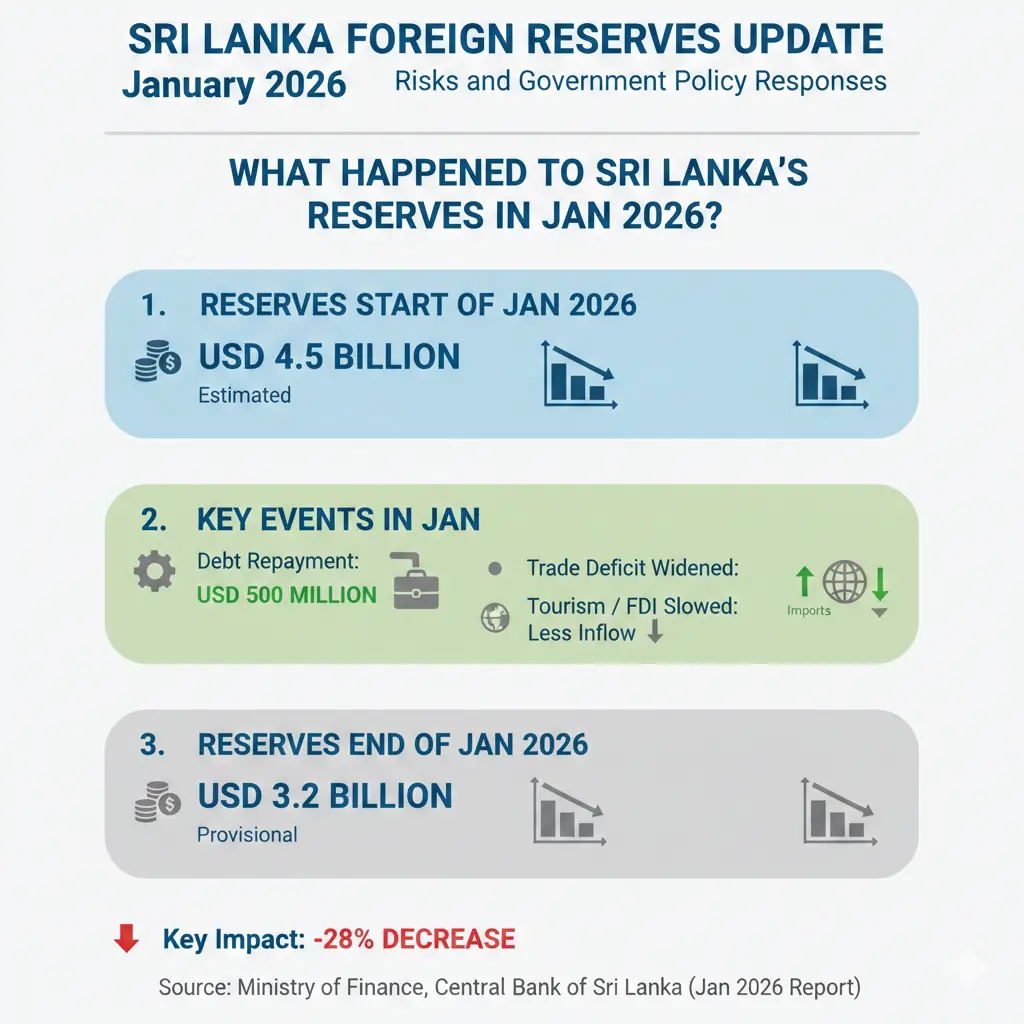
What Happened to Sri Lanka's Reserves in January 2026?
Our official reserve assets, a key buffer against economic shocks, saw a 0.2% drop in January 2026. Foreign exchange reserves—the biggest chunk—fell 1% from USD 6,747 million to USD 6,680 million. On a brighter note, gold holdings surged 26.8% to USD 109 million, providing some offset.
These figures come straight from the Central Bank of Sri Lanka (CBSL), showing reserves held steady around USD 6.8 billion by late 2025 despite heavy debt servicing. Importantly, about USD 1.4 billion of this includes a swap from China's People's Bank, usable under specific conditions. For us in Sri Lanka, this means our ability to import essentials like fuel and medicine remains protected, covering roughly 3.1 months of imports as of late 2025.
Breaking Down the Numbers
- Official Reserves: USD 6,824 million (end-January 2026) vs. USD 6,838 million (end-December 2025).
- Foreign Exchange: USD 6,680 million, down from USD 6,747 million.
- Gold Holdings: Up to USD 109 million from USD 86 million.
- Historical Context: Peak at USD 9.0 billion in 2018; current levels are rebuilding post-crisis.
This dip isn't alarming yet—it's marginal—but it highlights pressures from global factors and our debt obligations.
Key Risks Facing Sri Lanka Reserves in 2026
With Sri Lanka reserves 2026 under scrutiny, several risks loom large. Debt repayments continue to drain our coffers, even as inflows from remittances and multilateral aid help. The trade deficit widened in 2025, though a current account surplus cushioned the blow.
Debt Repayments and External Pressures
We've faced massive outflows for international bonds and loans, yet built reserves to USD 6.8 billion by end-2025 through CBSL forex purchases and agency support. In 2026, expect similar strains: maturing debts, potential oil price spikes, and a depreciating rupee (down 5.6% in 2025).
Domestic Vulnerabilities
- Import Dependence: Fuel, food, and post-cyclone rebuilding imports could pressure reserves if tourism or exports lag.
- Weather and Geopolitics: Adverse events like cyclones or global tensions might hike food/energy costs, eroding reserves.
- Credit Growth: Expanding private credit (up amid vehicle imports and recovery) fuels demand but risks inflation.
For locals, this translates to watching fuel queues or grocery prices—reserves below 3 months' imports signal vulnerability under CBSL guidelines.
Global Comparisons
Our USD 6.7 billion foreign exchange pales against neighbours: Philippines at USD 87 billion, India far higher. But relative to size, we're stabilising—better than 2022 lows.
Government Policy Responses: Steady Hand at the Helm
The CBSL's response? Keeping the Overnight Policy Rate (OPR) at 7.75% in January 2026, balancing growth and inflation. This anchors the rupee and supports reserve rebuilding.
Monetary Tools in Action
Key measures include:
- Forex Interventions: CBSL buys dollars to build reserves, backed by remittances (healthy in 2025).
- Debt Restructuring: Ongoing IMF-backed deals extend maturities, easing 2026 outflows. Check the Finance Ministry's portal for updates.
- Export and Tourism Push: Policies target apparel, tea, and visitor arrivals to boost inflows—tourism hit records pre-2026.
- Swap Lines: The USD 1.4 billion China swap acts as a lifeline, though conditional.
Under the 2022 IMF programme (still guiding us), fiscal discipline caps deficits, with public finance laws mandating reserve adequacy.
What This Means for You
As a local, diversify savings into rupees or gold (mirroring CBSL's strategy). Businesses: Hedge imports via forward contracts from commercial banks. Stay informed via CBSL's weekly bulletins.
Practical Tips for Sri Lankans in 2026
Here's actionable advice to weather reserve fluctuations:
- Households: Build a 3-6 month emergency fund in a mix of LKR fixed deposits (yielding 8-10%) and USD accounts at banks like Commercial Bank or HNB.
- Businesses: Use CBSL's export credit refinance scheme for cheaper loans. Monitor the rupee via the CBSL app.
- Investors: Eye Treasury bills (stable returns) or unit trusts tracking reserves indirectly.
- Track Reserves: Visit CBSL website for real-time data; subscribe to alerts.
Post-cyclone recovery? Government relief funds prioritise essentials, but personal preparedness counts.
Outlook for Sri Lanka Reserves in 2026
Expect modest rebuilding if tourism surges and exports hold. Risks like geopolitical flares could test us, but CBSL's vigilance—OPR steady, inflation contained—positions us well. By mid-2026, reserves could nudge USD 7 billion with favourable winds.
Next Steps for You
Check CBSL's latest data today, review your budget for import costs, and consider rupee-stable investments. Our economy's resilient—stay informed to make smart moves. For personalised advice, consult a licensed advisor via the CBSL registry.
Frequently Asked Questions
Sources & References
- 1
- 2
-
3
Sri Lanka Foreign Exchange Reserves, 1956–2026 | CEIC Data — www.ceicdata.com
-
4
Sri Lanka - International Reserves (excluding Gold) - Trading Economics — tradingeconomics.com
-
5
Monetary Policy Review No. 01 – January 2026 - Central Bank of Sri Lanka — www.cbsl.gov.lk
-
6
Sri Lanka's Reserves Observe Marginal Dip in January 2026 - The Morning Money — themorningmoney.com
Useful Tools
Related Articles

Fiscal Policy Reforms Sri Lanka Post-2022 Crisis: Lessons for 2026 Businesses
Remember the dark days of 2022, when fuel queues stretched for kilometres and ATMs ran dry? We've come a long way since Sri Lanka's economic crisis forced a debt default and sparked nationwide unrest

Comparing Sri Lanka's 2025 vs 2026 Monetary Policies: Key Shifts
Sri Lanka's monetary policy landscape has shifted significantly between 2025 and 2026, moving from aggressive easing to a more measured approach. Understanding these changes is crucial for anyone plan

Navigating Sri Lanka's 2026 Trade Deficit Policies: Import vs Export Balance
Sri Lanka's trade deficit has become one of the most pressing economic challenges facing our nation in 2026. With a deficit of $997.2 million in December 2025[1], significantly wider than the $720 mil

2026 Outlook: Sri Lanka Government Revenue Growth Policies Post-110% Rise
Sri Lanka's government revenue has surged an impressive 110% in recent years, signalling a robust economic recovery that's got everyone talking—from Colombo's business districts to rural markets in th