Sloth Bears: Elusive Forest Dwellers
Sri Lanka is home to one of Asia's most fascinating and mysterious creatures—the sloth bear. Despite sharing our island with these remarkable animals for centuries, most of us know very little about t
The Lankawebsites editorial team curates, fact-checks, and updates guides on personal finance, property, health, immigration, legal, business, and lifestyle topics relevant to Lankawebsites readers. Articles are produced with AI assistance and reviewed by the editorial team before publication.
Sri Lanka is home to one of Asia's most fascinating and mysterious creatures—the sloth bear. Despite sharing our island with these remarkable animals for centuries, most of us know very little about them. These nocturnal forest dwellers are increasingly rare, and understanding their behaviour, habitat, and conservation needs is crucial for their survival. Whether you're a wildlife enthusiast, a nature lover, or simply curious about Sri Lanka's unique fauna, this guide will help you discover why sloth bears matter and how we can protect them.
What Are Sloth Bears?
Sloth bears (Melursus ursinus) are medium-sized bears native to the Indian subcontinent, with a fascinating history behind their unusual name. When European scientists first encountered these bears in the 1700s, they mistakenly classified them as members of the sloth family due to their physical similarities. This error wasn't corrected until 1810, when the first specimen reached Europe from India. The name "sloth bear" stuck, even though these animals have nothing to do with sloths—they're true bears with unique adaptations for their specialised diet.
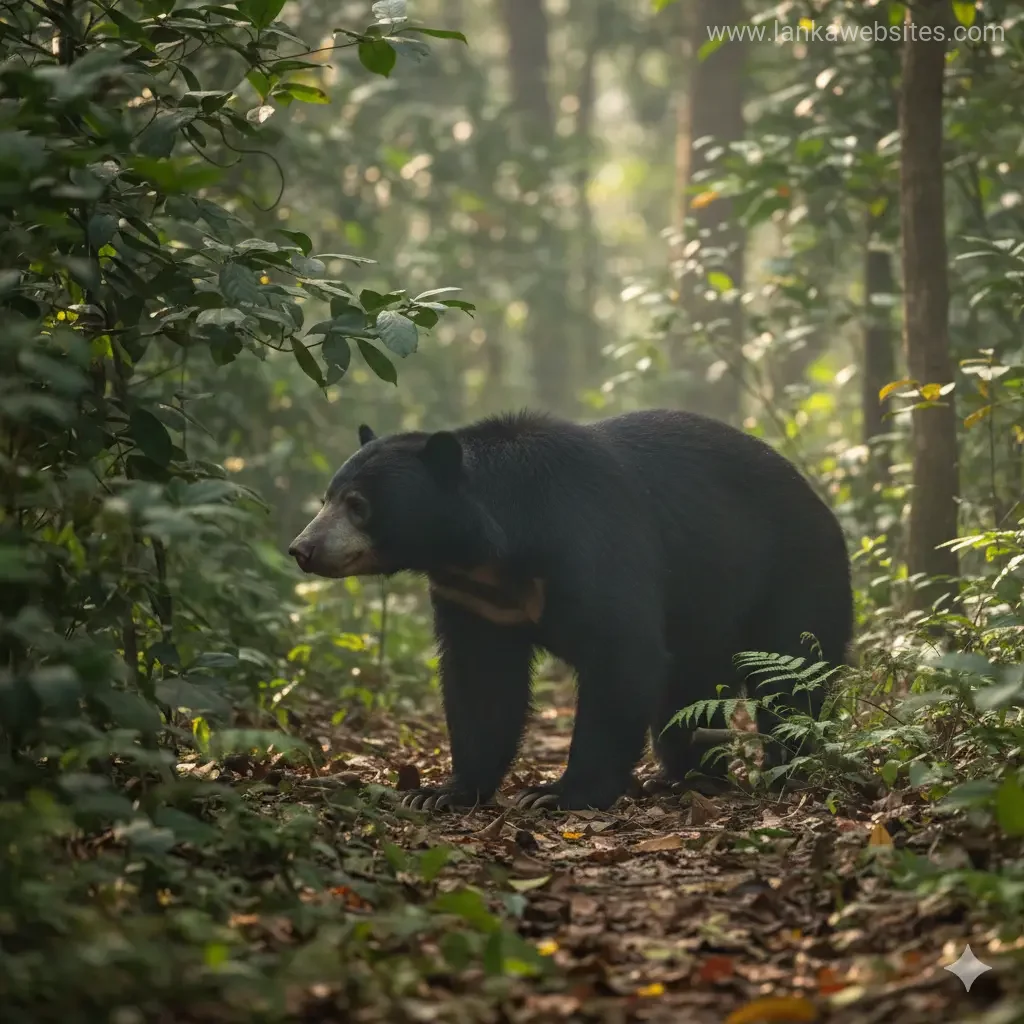
The sloth bear is instantly recognisable by its distinctive appearance: a shaggy coat, long curved claws, and a characteristic white or cream-coloured V-shaped marking on its chest. These physical features aren't just for show—they're perfectly designed for the bear's primary occupation: hunting termites and ants.
Sri Lanka's Sloth Bear Population
In Sri Lanka, we share our island with a unique subspecies: Melursus ursinus inornatus, which is found nowhere else in the world. However, our sloth bear population is critically small and declining. Current estimates suggest only 800 to 1,000 sloth bears remain in Sri Lanka, compared to 7,500 to 8,000 in India and 300+ in Nepal.
These bears are confined to the remaining dry forests in the northern and eastern parts of Sri Lanka, typically found below 300 metres elevation. Wilpattu National Park, one of our largest and oldest protected areas, serves as one of the primary habitats for the Sri Lankan sloth bear. The concentration of our population in these limited areas makes them particularly vulnerable to habitat loss and human-wildlife conflict.
Habitat and Behaviour
Where Sloth Bears Live
Sloth bears prefer heavily forested areas with rock outcrops and caves in Sri Lanka's dry zone. They inhabit a variety of environments, including dry forests, grasslands, and scrublands, though they're most comfortable in areas with dense vegetation that provides shelter and protection. The presence of boulders, scattered shrubs, and trees is essential for their survival, as these features provide the cover they need for their secretive lifestyle.
Nocturnal and Shy
Sloth bears are strictly nocturnal, becoming active as dusk falls and spending their nights foraging for food. They're remarkably shy and reclusive animals, rarely seen by humans. You'll typically only encounter them in pairs during mating season or when a mother is caring for her cubs. Interestingly, sloth bears are the only members of the bear family that carry their cubs on their backs—a behaviour that's both endearing and practical for protecting young bears in the forest.
One fascinating adaptation is their dependence on water: sloth bears must drink every night and cannot survive prolonged periods without water access. This makes them particularly vulnerable in dry seasons and explains why they're found in areas with reliable water sources.
Diet and Feeding Behaviour
The sloth bear's most distinctive feature is its specialised diet. Termites and ants form the foundation of their nutrition, making up 95 percent of their diet during non-fruiting seasons. These bears have evolved remarkable adaptations for this lifestyle: they dig into cement-hard termite mounds using their powerful claws and long snouts, then use their specially adapted lips and tongue to extract insects.
Beyond insects, sloth bears also eat:
- Honey and honeycomb (they climb trees and knock down honeycombs)
- Beetles and grubs
- Seasonal fruits from trees like Palu and Weera
- Carrion during food shortages
- Farm crops (which unfortunately leads to human-wildlife conflict)
Reproduction and Life Cycle
Sri Lanka's sloth bears have a unique breeding pattern compared to their Indian counterparts. Unlike Indian sloth bears, which breed seasonally in late spring and early summer, Sri Lankan sloth bears breed year-round with no specific breeding season. Mating is a noisy affair, lasting several days to weeks.
Sloth bears reach sexual maturity at age 3, but rarely become mothers until later in life. They breed once every three years, though they may breed more frequently if they haven't given birth or have lost their cubs. Unfortunately, sloth bears face significant reproductive challenges: they exhibit low fecundity (low reproductive rate) and high infant mortality, with only about 50 percent of cubs surviving to adulthood.
Conservation Status and Threats
Current Protection Status
Sloth bears in Sri Lanka are legally protected under the Flora and Fauna Protection Ordinance of Sri Lanka. The species is also listed in Appendix I of CITES (Convention on International Trade in Endangered Species), which provides international protection against trade. On the IUCN Red List, sloth bears are classified as "vulnerable" with a decreasing population trend.
Major Threats
Despite legal protection, sloth bears face multiple serious threats:
- Habitat loss: Forests are being converted into human settlements, agriculture, teak and eucalyptus plantations, and areas for fuel wood and timber extraction
- Poaching: Bears are hunted for their gall bladders, which are used in traditional Asian medicine
- Human-wildlife conflict: Farmers kill bears to protect their crops
- Capture for trade: Bears are captured for use in entertainment and other commercial purposes
The global sloth bear population has declined by 30 to 49 percent over the last 30 years, with habitat loss being the primary driver. What's particularly concerning for Sri Lanka is that about half of our sloth bears' occupied range lies outside protected areas, leaving them vulnerable to threats in unprotected regions.
Why Sloth Bears Matter
Beyond their intrinsic value as a unique species, sloth bears play an important ecological role in Sri Lanka's forest ecosystems. As insectivores, they help control termite and ant populations, which can otherwise reach plague proportions. Their presence indicates healthy forest ecosystems with adequate insect populations and structural complexity.
The sloth bear is also a symbol of Sri Lanka's natural heritage—it's a species found nowhere else on Earth, making its conservation a uniquely Sri Lankan responsibility. Protecting sloth bears means protecting the dry forests they depend on, which benefits countless other species and helps maintain the ecological balance of our island.
What We Can Do
If you're concerned about sloth bear conservation, there are practical steps you can take:
- Support protected areas: Visit and support national parks like Wilpattu, which provide critical habitat for sloth bears
- Respect wildlife: If you encounter a sloth bear, maintain a safe distance and never attempt to feed or photograph it at close range
- Report sightings: If you spot a sloth bear, report it to local wildlife authorities to help researchers understand population distribution
- Support conservation organisations: Several NGOs work on sloth bear conservation in Sri Lanka—consider supporting their efforts
- Reduce habitat destruction: Support sustainable agriculture and forestry practices that protect natural habitats
- Spread awareness: Educate others about sloth bears and why their conservation matters
Frequently Asked Questions
Are sloth bears dangerous to humans?
Sloth bears are generally shy and avoid humans. However, they can be aggressive if they feel threatened, especially mothers protecting cubs. It's best to maintain a safe distance and never approach them in the wild.
Where can I see sloth bears in Sri Lanka?
Your best chance of seeing sloth bears is in protected areas like Wilpattu National Park, particularly in the dry zone's northern and eastern regions. However, spotting them requires patience and luck, as they're nocturnal and reclusive.
Why do farmers kill sloth bears?
Sloth bears sometimes raid farm crops, causing significant damage to agricultural areas. Farmers often kill bears in retaliation or to prevent future crop damage, despite legal protections.
How long do sloth bears live?
In the wild, sloth bears typically live 20 to 25 years, though their lifespans can vary depending on environmental conditions and threats.
What's the difference between sloth bears and other bear species?
Sloth bears are unique among bears for their specialised diet of termites and ants, their distinctive chest marking, and their ability to carry cubs on their backs. They're also the smallest Asian bear species and are found only in the Indian subcontinent.
Are sloth bears extinct in Sri Lanka?
No, but they're critically endangered on our island. With only 800 to 1,000 individuals remaining, they're at serious risk of local extinction if conservation efforts aren't strengthened.
Looking Forward
Sri Lanka's sloth bears are at a crossroads. With fewer than 1,000 individuals remaining and half their habitat lying outside protected areas, their future depends on our commitment to conservation. The good news is that legal protections are in place and conservation awareness is growing. By understanding these remarkable animals and supporting efforts to protect their habitat, we can ensure that future generations of Sri Lankans will have the opportunity to share the island with these elusive forest dwellers.
If you're passionate about wildlife conservation, now is the time to get involved. Whether through supporting protected areas, spreading awareness, or backing conservation organisations, every action counts in the fight to save Sri Lanka's sloth bears.
Related Articles

Wild Boar: Widespread Forest Inhabitant
Introduction to Wild Boar in New Zealand Wild boar, also known as feral pigs or wild pigs, are a widespread forest inhabitant in New Zealand. These animal

Saltwater Crocodile: Coastal and Estuarine Resident
Introduction to the Saltwater Crocodile As you explore the coastal and estuarine regions of Northern Australia, Papua New Guinea, and Southeast Asia, you m

Endemic Vs Migratory Bird Species
Introduction to New Zealand's Bird Species New Zealand is renowned for its unique and diverse range of bird species. From the kiwi, our national symbol, t

Sperm Whales: Deep Ocean Residents
Introduction to Sperm Whales Sperm whales are one of the most fascinating creatures in the deep ocean. As a New Zealander, you may have had the opportunit