Trincomalee Harbour: One of the World's Finest Natural Harbours
Trincomalee Harbour stands as one of the world's most remarkable natural ports, yet many Sri Lankans don't fully appreciate the extraordinary geography and rich history that make it so special. Locate
The Lankawebsites editorial team curates, fact-checks, and updates guides on personal finance, property, health, immigration, legal, business, and lifestyle topics relevant to Lankawebsites readers. Articles are produced with AI assistance and reviewed by the editorial team before publication.
Trincomalee Harbour stands as one of the world's most remarkable natural ports, yet many Sri Lankans don't fully appreciate the extraordinary geography and rich history that make it so special. Located on our northeastern coast, this magnificent harbour has shaped empires, inspired trade routes, and continues to hold immense potential for our nation's future. Whether you're interested in Sri Lankan geography, maritime history, or the economic significance of our ports, understanding Trincomalee Harbour reveals why this natural wonder has captivated the world's greatest powers for centuries.
What Makes Trincomalee Harbour Extraordinary?
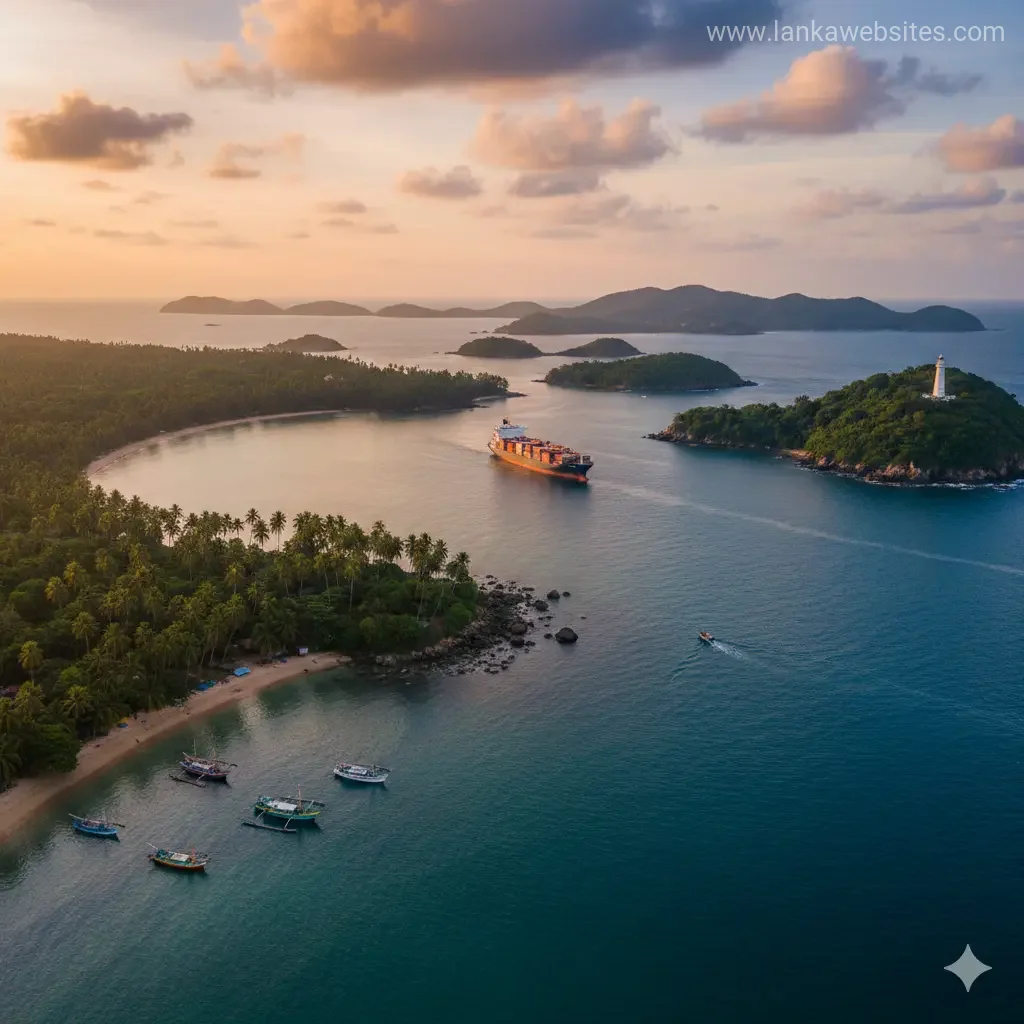
Trincomalee Harbour is the fourth largest natural harbour in the world and arguably one of the finest deep-sea harbours globally. What sets it apart isn't just its size—it's the unique combination of natural features that make it exceptionally valuable for maritime activities.
The harbour covers 1,630 hectares of water, with an entrance channel that's 500 metres wide. More importantly, the bay includes submarine canyons that allow it to accommodate vessels of any size while providing reliable protection from storms at any time of year. This natural shelter is crucial for a port, as it means ships can safely anchor regardless of weather conditions—a rarity in the Indian Ocean.
According to an Asian Development Bank (ADB) report, Trincomalee has water depths ranging from CD -20m to CD -40m, making it the only entirely sheltered harbour in the South Asian sub-continent. The harbour is overlooked by terraced highlands, with its entrance guarded by two headlands, creating a natural fortress that protected ancient traders and later attracted military powers seeking strategic advantage.
A Port Through the Ages: From Gokanna to Modern Times
Ancient Origins and Trade Routes
Long before European powers arrived, Trincomalee was known as Gokanna in ancient texts like the Culavamsa. The name came from the harbour's unique shape—ancient Sri Lankans noticed the land resembled a bull's ear, hence "Gokanna" (from the Pali and Sanskrit word "go" meaning bulls).
Since the 6th century BCE, Gokanna functioned as a naval harbour. By the 7th century BCE, it had become a major commercial port on the trade routes connecting East and West. Merchants from China, Arabia, and the Roman Empire arrived at the port, exchanging goods for local gemstones, ivory, and spices. During the Polonnaruwa era of Sri Lankan history (1055-1232 CE), it was a major commercial port.
What made Trincomalee particularly valuable was its strategic location in the heart of the Indian Ocean, positioned on routes between Southeast Asia and the Middle East. This geography transformed the city into a multinational trading hub where Hindu and Buddhist cultures coexisted harmoniously, reflected in the architecture of ancient temples and monasteries.
Colonial Powers and Strategic Control
The harbour's strategic value didn't escape the attention of European powers. The Portuguese, Dutch, French, and British each held Trincomalee in turn, with numerous sea battles fought for control. The Portuguese first fortified the port following their conquest of the Jaffna kingdom. The Dutch captured Fort Trincomalee in 1639 and later built the present Fort Frederick in 1660.
The British recognised Trincomalee's immense value—so much so that Prime Minister William Pitt stated during the early 19th century that Sri Lanka was the most valuable British colony mainly because Gokanna port was large enough to host all the ships of the British naval fleet in the East.
World War II and Beyond
Before World War II, the British built a large RAF base called RAF China Bay, along with fuel storage and support facilities. After Singapore fell to the Japanese, Trincomalee became the home port of the Eastern Fleet of the Royal Navy. The harbour's strategic importance made it a target—in April 1942, the Imperial Japanese Navy attacked Trincomalee harbour and sank three British warships anchored there. Despite this attack, the installation later served as an important launching point for British naval operations in 1944 and 1945.
As war clouds gathered in the 1930s, the British transformed Trincomalee into an energy hub, building 101 giant oil tanks. These tanks became a key asset that the British wanted to retain even after Sri Lanka's independence, leading them to enter into a Defence Pact in 1947.
Post-Independence Development Challenges
After Sri Lanka's independence, the nationalist government of SWRD Bandaranaike reclaimed these assets in 1957. However, Trincomalee port and the oil tanks subsequently fell into disuse. Successive Lankan governments concentrated on developing the Western coast and Colombo port for political and logistic reasons.
Geopolitical factors further complicated development plans. In 1982, when Sri Lanka called worldwide tenders for developing the Trincomalee oil tanks, India suspected that the deal favoured bidders with links to the US Navy, and the tender was cancelled.
Today, the Sri Lanka Ports Authority (SLPA) is in the process of redeveloping Trincomalee as a metropolis growth centre, with plans for bulk and break-bulk cargo, port-related industrial activities, heavy industries, tourism, and agriculture.
Geographic Advantages and Future Potential
What makes Trincomalee truly special for future development is its combination of natural advantages:
- Deep-water capacity: The submarine canyons allow large modern vessels to dock safely
- All-weather shelter: Unlike many ports, Trincomalee provides reliable protection from storms year-round
- Adequate rainfall: The region receives more than 50 inches of annual rainfall annually, providing water resources
- Strategic location: Positioned in the heart of the Indian Ocean, it offers convenient access to major international shipping routes
However, developing Trincomalee as a major port and industrial zone will require significant infrastructure investment. Beyond the port itself, the region will need adequate social infrastructure including housing, educational facilities, and medical services for the large number of Sri Lankan and foreign personnel who would work there.
Cultural and Historical Significance
Beyond its economic importance, Trincomalee holds deep cultural significance for Sri Lanka. The Koneswaram Temple, a sacred Hindu site, overlooks the harbour. In 1968, disagreements about declaring this holy Hindu site a protected area led to the collapse of the unity government between the United National Party and the ITAK Federal Party—demonstrating how Trincomalee's heritage remains central to our national discourse.
The discovery of underwater and land Hindu ruins has further increased interest in Trincomalee's geostrategic position and historical importance.
Why Hasn't Trincomalee Been Fully Developed?
It's a fair question many Sri Lankans ask: if Trincomalee is truly the world's finest natural harbour, why hasn't it been developed into a major commercial hub like Colombo?
The answer involves a combination of historical, political, and geopolitical factors. After independence, political decisions favoured Colombo's development. Cold War tensions in the 1980s created suspicion around foreign investment in Trincomalee. Additionally, large-scale port development requires massive capital investment, skilled workforce development, and coordinated infrastructure planning—challenges that have delayed progress.
However, recent years have seen renewed interest in developing Trincomalee as part of broader regional development initiatives and Sri Lanka's maritime strategy.
Frequently Asked Questions
How large is Trincomalee Harbour compared to other world ports?
Trincomalee Harbour is the fourth largest natural harbour in the world. It covers 1,630 hectares of water with a 500-metre-wide entrance channel. What makes it exceptional isn't just size but depth and all-weather protection—features that make it one of the finest deep-sea harbours globally.
Why is Trincomalee called "Gokanna"?
The ancient name "Gokanna" comes from the harbour's unique shape, which ancient Sri Lankans thought resembled a bull's ear. In Pali and Sanskrit, "go" refers to bulls and other herbivorous animals. Historical texts like the Culavamsa mention this name.
Has Trincomalee Harbour been attacked or damaged?
Yes, the harbour was attacked during World War II. In April 1942, the Imperial Japanese Navy attacked Trincomalee harbour and sank three British warships anchored there. However, the harbour itself wasn't permanently damaged and later served as an important launching point for British naval operations in 1944-1945.
What is the current status of Trincomalee Harbour development?
The Sri Lanka Ports Authority (SLPA) is currently in the process of redeveloping Trincomalee as a metropolis growth centre. The harbour is being developed for bulk and break-bulk cargo, port-related industrial activities, heavy industries, tourism, and agriculture.
What challenges exist for developing Trincomalee as a major port?
Beyond the port infrastructure itself, developing Trincomalee requires significant investment in social infrastructure including housing, educational facilities, and medical services for workers. The region also needs adequate water management systems, though rainfall levels are adequate.
Why wasn't Trincomalee developed instead of Colombo after independence?
Successive Sri Lankan governments concentrated on developing the Western coast and Colombo port for political and logistic reasons. Additionally, geopolitical tensions during the Cold War complicated foreign investment in Trincomalee, and the massive capital required for port development was directed elsewhere.
Looking Forward: Trincomalee's Potential
Trincomalee Harbour represents an extraordinary natural asset for Sri Lanka. Its position as one of the world's finest natural harbours, combined with its strategic location in the Indian Ocean, makes it invaluable for our nation's maritime future. The harbour's history—from ancient Gokanna to modern times—demonstrates its enduring importance to global trade and geopolitics.
As Sri Lanka continues to develop its maritime economy and port infrastructure, Trincomalee stands ready to play an increasingly important role. Whether through expanded cargo handling, industrial development, or tourism, this magnificent natural harbour holds tremendous potential to contribute to our nation's economic growth and regional importance.
For Sri Lankans interested in our geography, history, or economic development, understanding Trincomalee Harbour means appreciating one of our greatest natural treasures—and recognising the opportunities it offers for our future.
Related Articles

Ella Gap: Scenic Mountain Pass in Central Highlands
Introduction to Ella Gap The Ella Gap is a breathtaking mountain pass located in the Central Highlands of Sri Lanka, but don't worry, we're not talking abo

Sri Lanka's Continental Shelf and Marine Territory
Introduction to Sri Lanka's Continental Shelf and Marine Territory As a New Zealander, you might be familiar with the concept of a continental shelf, but h

The North Central Province: Ancient Reservoir Systems
Introduction to the North Central Province The North Central Province, located in the heart of Sri Lanka, is a region steeped in history and natural beauty

Minneriya-Giritale-Kaudulla Complex Geography
Introduction to Minneriya-Giritale-Kaudulla Complex Geography The Minneriya-Giritale-Kaudulla Complex, located in the North Central Province of Sri Lanka,