Best Bitcoin Wallets 2026
What Is a Bitcoin Wallet and Why Does It Matter? A Bitcoin wallet is software or hardware that stores your private keys—essentially the passwords that prove you own your cryptocurrency.
The Lankawebsites editorial team curates, fact-checks, and updates guides on personal finance, property, health, immigration, legal, business, and lifestyle topics relevant to Lankawebsites readers. Articles are produced with AI assistance and reviewed by the editorial team before publication.
If you're thinking about getting into cryptocurrency, choosing the right Bitcoin wallet is one of your most important decisions. Your wallet is essentially your digital safe—it's where you'll store, send, and receive your Bitcoin and other cryptocurrencies. Whether you're a complete beginner or someone looking to upgrade your current setup, finding a wallet that balances security, ease of use, and features can feel overwhelming. The good news? We've done the research to help you find the best Bitcoin wallets available in 2026, with options specifically suited for people in Sri Lanka.
What Is a Bitcoin Wallet and Why Does It Matter?
A Bitcoin wallet is software or hardware that stores your private keys—essentially the passwords that prove you own your cryptocurrency. Think of it like a bank account, but instead of a bank managing it, you control it directly. Your wallet lets you receive Bitcoin from others, send it to different addresses, and monitor your balance.
The security of your wallet directly affects the safety of your funds. A compromised wallet means someone else could access and steal your Bitcoin. That's why choosing a reputable, well-designed wallet is crucial, especially if you're holding significant amounts.
Types of Bitcoin Wallets Available
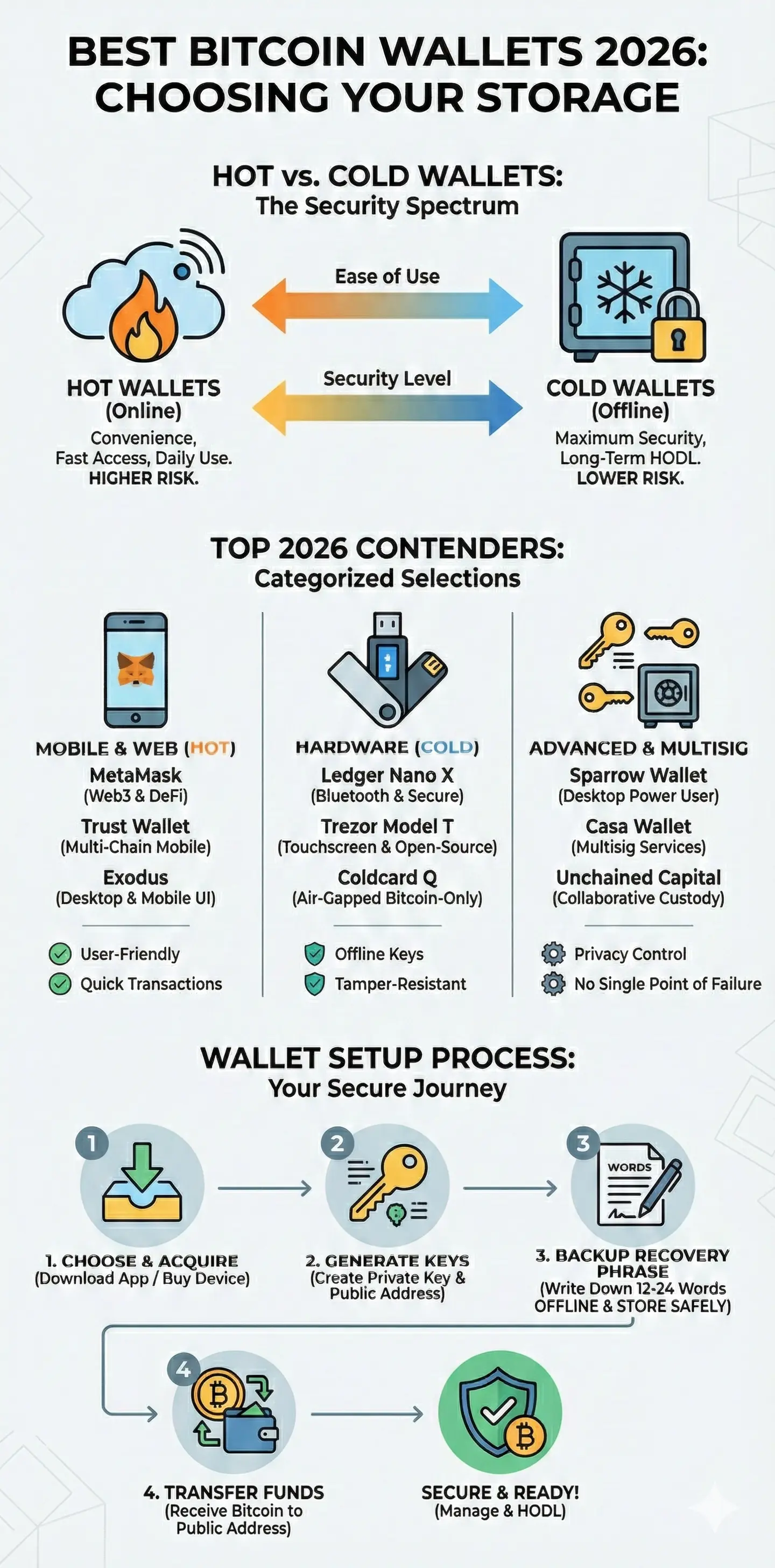
Before we dive into specific recommendations, it helps to understand the main categories of wallets:
- Hot Wallets (Software Wallets): These connect to the internet and are convenient for regular trading and spending. They're easier to use but slightly more vulnerable to online attacks.
- Cold Wallets (Hardware Wallets): These store your Bitcoin offline, making them much more secure. They're ideal if you're holding Bitcoin long-term and don't need frequent access.
- Mobile Wallets: Apps on your phone that let you manage Bitcoin on the go. Great for convenience, though security depends on your phone's security.
- Web Wallets: Browser-based wallets accessible from any device. Convenient but require you to trust the provider's security.
Best Bitcoin Wallets for Beginners in Sri Lanka
1. Coinbase Wallet
Coinbase Wallet has become a preferred choice for beginners. The platform supports both mobile and web browser extensions, making it accessible whether you're on your phone or computer. What makes it particularly beginner-friendly is its straightforward interface—you can buy, store, and manage Bitcoin without dealing with complex technical details.
The wallet is integrated with advanced security features including Two-Factor Authentication and encryption, which protects your assets from hacks and breaches. You can also store different types of assets like cryptocurrencies and NFTs within the same wallet. For locals in Sri Lanka just starting their crypto journey, Coinbase Wallet's simplicity and strong security make it an excellent entry point.
2. MetaMask
MetaMask offers multi-chain support for Ethereum and other blockchains, and it's DeFi-ready with smart contract integration. It's available as a browser extension and mobile app, giving you flexibility in how you access your wallet. The wallet uses encrypted private keys to keep your funds secure.
MetaMask is particularly useful if you're interested in exploring decentralised finance (DeFi) applications or trading on different blockchain networks beyond just Bitcoin.
3. Trust Wallet
Trust Wallet supports over 100 coins, making it excellent if you plan to hold multiple cryptocurrencies alongside Bitcoin. It's available on both iOS and Android, and includes biometric and password security. The wallet also supports staking, which means you can earn rewards on certain cryptocurrencies you hold.
For Sri Lankan users who want a single wallet to manage a diverse crypto portfolio, Trust Wallet provides good versatility without sacrificing ease of use.
4. Exodus Wallet
Exodus is a popular multicurrency wallet that supports both desktop and mobile platforms. It supports 291 cryptocurrencies, so you'll have plenty of options if you decide to diversify beyond Bitcoin. The wallet includes an in-built exchange that allows swift currency swaps without leaving the platform.
One standout feature is that there are no network fees for receiving assets, which can save you money over time. You can also perform asset staking directly through the wallet. The setup process is simple, making it suitable for newcomers.
Best Hardware Wallets for Maximum Security
Ledger Wallets
If you're serious about security and planning to hold Bitcoin long-term, hardware wallets like Ledger offer offline cold storage. These physical devices keep your private keys completely offline, making them virtually impossible to hack remotely.
Ledger wallets support thousands of coins and tokens, and they integrate with mobile and desktop apps for easy management. The trade-off is that they're slightly less convenient for frequent trading, but the security benefits are substantial if you're holding significant amounts of Bitcoin.
Crypto Exchanges vs. Wallets: What's the Difference?
It's important to note that while you can hold Bitcoin on crypto exchanges like Binance, OKX, and Bybit, these aren't technically wallets—they're custodial services. The exchange holds your private keys, not you. For larger amounts or long-term holding, moving your Bitcoin to a personal wallet you control is generally recommended for security reasons.
If you're in Sri Lanka and just starting out, you might use an exchange to buy Bitcoin, then transfer it to your personal wallet for safekeeping.
Key Features to Look for in a Bitcoin Wallet
When evaluating wallets, consider these essential features:
- Security: Look for Two-Factor Authentication, encryption, and offline storage options.
- Ease of Use: The interface should be intuitive, especially if you're new to crypto.
- Platform Support: Ensure it works on your devices (phone, computer, etc.).
- Customer Support: Good wallets provide responsive support if you encounter issues.
- Backup Options: Recovery seeds or backup methods ensure you can regain access if you lose your device.
- Fee Structure: Some wallets charge transaction fees; understand these costs upfront.
How to Get Started with Your First Bitcoin Wallet
Here's a practical step-by-step approach for locals in Sri Lanka:
- Choose Your Wallet: Pick one from our recommendations based on your needs (beginner-friendly, security-focused, etc.).
- Download and Install: Get the app or extension from official sources only—never download from third-party sites.
- Set Up Security: Enable Two-Factor Authentication and create a strong password. Write down your recovery seed phrase and store it safely offline.
- Buy Bitcoin: Use a local exchange or service like SpectroCoin which offers multiple deposit methods for Sri Lankan users, including bank transfers and cards.
- Transfer to Your Wallet: Once you've purchased Bitcoin, transfer it from the exchange to your personal wallet address.
- Verify the Address: Always double-check wallet addresses before sending funds—transactions are irreversible.
Security Tips for Bitcoin Wallet Users
- Never share your recovery seed phrase or private keys with anyone.
- Use strong, unique passwords for your wallet and email account.
- Enable all available security features (2FA, biometric authentication, etc.).
- Keep your devices and apps updated with the latest security patches.
- For large amounts, consider using a hardware wallet or keeping Bitcoin offline.
- Be cautious of phishing emails or fake wallet websites—always verify URLs carefully.
Making Your Decision
The best Bitcoin wallet for you depends on your specific needs. If you're just starting out, prioritise ease of use and security—Coinbase Wallet or Trust Wallet are excellent choices. If you're holding a significant amount of Bitcoin long-term, a hardware wallet like Ledger offers superior security despite being less convenient.
Remember that you're not locked into one wallet forever. Many people use multiple wallets for different purposes: a mobile wallet for small transactions, an exchange account for trading, and a hardware wallet for long-term storage. As you become more experienced with cryptocurrency, you can adjust your setup to match your evolving needs.
Start with whichever wallet appeals to you most, secure it properly, and take your time learning how it works. The cryptocurrency space can feel complex, but taking these foundational steps now will set you up for success as you explore Bitcoin and other digital assets.
Frequently Asked Questions
Sources & References
-
1
Top 10 Crypto Wallets for Seamless Trading in 2026 — Antier Solutions — www.antiersolutions.com
-
2
Top 10+ Best Crypto Wallet Apps in 2026 (Secure & Trusted Picks) — Coherent Lab — www.coherentlab.com
-
3
Best Crypto Exchanges in Sri Lanka for February 2026 — Traders Union — tradersunion.com
-
4
Bitcoin in Sri Lanka — SpectroCoin — spectrocoin.com
Related Articles

How to Analyze Stocks for Beginners
If you're thinking about investing in stocks but don't know where to start, you're not alone. Many Sri Lankan investors feel overwhelmed by market jargon, complex charts, and endless investment options.

Best Retirement Accounts for Self-Employed
If you're self-employed in Sri Lanka, you're responsible for your own retirement planning—and that's both a challenge and an opportunity.
Cryptocurrency Trading for Beginners
A staggering 27% of millennials prefer investing in cryptocurrencies over traditional stocks, according to a Charles Schwab survey. This shift in investment preferences is not surprising, given the potential for high returns in the cryptocurrency market. If you're considering joining the ranks of c

How to Start an Online Business
Starting an online business in Sri Lanka is more accessible than ever, but success requires understanding the legal requirements, tax obligations, and practical steps involved.