Bank of Ceylon Launches Sri Lanka's Largest Sustainability Bond: Green Lending Revolution

Bank of Ceylon has launched Sri Lanka's largest sustainability bond, raising up to Rs. 20 billion to fuel a green lending revolution that's transforming how we finance a sustainable future.This Basel
The Lankawebsites editorial team curates, fact-checks, and updates guides on personal finance, property, health, immigration, legal, business, and lifestyle topics relevant to Lankawebsites readers. Articles are produced with AI assistance and reviewed by the editorial team before publication.
Bank of Ceylon has launched Sri Lanka's largest sustainability bond, raising up to Rs. 20 billion to fuel a green lending revolution that's transforming how we finance a sustainable future.This Basel III-compliant Tier II instrument, oversubscribed on day one, channels funds into renewable energy, energy efficiency, and social projects aligned with our national green taxonomy.
From solar microgrids lighting up rural homes to electric vehicle infrastructure in Colombo, this move by our leading state-owned bank signals a bold step towards climate resilience and inclusive growth. As Sri Lankans, we're seeing our financial institutions step up to meet global ESG demands while tackling local challenges like energy costs and agricultural sustainability.
What is the Bank of Ceylon Sustainability Bond?
The Bank of Ceylon (BOC) opened subscriptions for this landmark sustainability bond on 22 December 2025, marking the largest such issuance in Sri Lankan history.Initially comprising 100 million bonds at Rs. 100 each, it raised Rs. 10 billion, with options to expand to 200 million bonds for up to Rs. 20 billion based on demand. The subscription list ran for 14 market days but closed early due to overwhelming interest, oversubscribed 2.5 times by local institutions like the EPF, and international ESG funds from Singapore and Norway [2][3][4].
This isn't just another debt instrument—it's BOC's first Basel III-compliant Tier II sustainability bond, listed on the Colombo Stock Exchange with a ceremonial bell-ringing event.Chairman Kavinda de Zoysa highlighted it as a benchmark for transparency and credibility in sustainable finance. Proceeds fund eligible green and social projects, verified against international standards [1][3].
Key Features and Structure
- Size and Flexibility: Starts at Rs. 10 billion, scalable to Rs. 20 billion [1].
- Compliance: Aligned with ICMA Green Bond Principles (June 2025), Social Bond Principles (June 2025), Sustainability Bond Guidelines (June 2021), and CBSL's Sri Lanka Green Finance Taxonomy (2022) [1].
- Reporting: Independent external review and blockchain-based audit trails for transparency, cutting greenwashing risks [2].
- Investor Appeal: Offers yield premiums in a market where global ESG assets hit $40 trillion in 2025, with emerging market green bonds commanding 15% higher yields [2].
For us in Sri Lanka, this means pension funds like EPF can now allocate up to 10% to sustainability instruments, unlocking Rs. 100 billion domestically [2]. BOC's investment banking team, which raised LKR 35 billion in 2025 (26% of CSE debt issuances), structured this in-house [3].
How This Bond Drives Sri Lanka's Green Lending Revolution
BOC's Sustainable Finance Framework directs funds to projects delivering measurable impact, supporting Sri Lanka's Nationally Determined Contributions under the Paris Agreement [1].Eligible sectors span renewable energy, energy efficiency, sustainable water and waste management, plus social areas like agriculture, MSMEs, healthcare, education, and infrastructure.
Real-World Projects Getting Funded
Imagine solar microgrids powering 100,000 rural households, reducing reliance on costly diesel generators—a game-changer for villages in the Dry Zone.Or EV charging stations dotting Colombo's commercial hubs, easing urban traffic emissions. Women-led agro-processing in tea regions gets a boost too, enhancing livelihoods while cutting emissions by 30% within three years, per CBSL taxonomy certifications [2].
BOC's digital green loan portals slash approval times from 30 days to 72 hours, making finance accessible for SMEs and households.This positions us competitively against India's $10 billion green bond market and Indonesia's sustainability financing, drawing co-financing from ADB and World Bank green funds.
"This bell ringing marks a historical achievement for the Bank of Ceylon and for Sri Lanka’s sustainable finance journey as it is the largest issuance in the history of Sri Lanka." — Chairman Kavinda de Zoysa [3].
Why This Matters for Sri Lankan Investors and Borrowers
As retail investors, you can participate in future issuances via CSE platforms, earning returns while supporting national goals. Institutional players like EPF have already shown strong appetite [2][3]. For borrowers, expect streamlined loans for solar panels on your roof or energy-efficient factory upgrades—check BOC branches or their online portal.
Under CBSL guidelines, these bonds strengthen bank capital while financing development. With Sri Lanka's vulnerability to climate risks—think 2024 floods—green lending builds resilience, lowering long-term energy costs for all of us [1].
Practical Tips for Sri Lankans
- Assess Eligibility: Visit BOC's website for green loan criteria matching CBSL taxonomy.
- Apply Digitally: Use BOC's portals for quick approvals on solar, EV, or efficiency projects.
- Monitor EPF/ETF: Watch for increased allocations to green bonds, benefiting your retirement savings.
- Stay Informed: Follow CSE and CBSL updates at cse.lk and cbsl.gov.lk.
- Business Owners: Leverage for MSME loans in sustainable agriculture or waste management.
Sri Lanka's Broader Sustainable Finance Landscape
BOC's issuance builds on 2025 momentum, where it led CSE debt raises. Aligned with Paris Agreement goals, it counters regional greenwashing via verifiable impacts [1][2]. Globally, ESG growth offers premiums; locally, it unlocks pension funds and international capital, positioning Sri Lanka as South Asia's climate finance hub [2].
Compared to peers, our entry timing is spot-on, with digital tools ensuring execution [2]. This could inspire other banks like People's Bank or NSB to follow suit.
Get Involved in Sri Lanka's Green Future
BOC's sustainability bond isn't just finance—it's our pathway to lower bills, resilient farms, and cleaner cities. Whether you're an investor eyeing ESG returns or a homeowner eyeing solar, act now: explore BOC green loans, track CSE listings, and advocate for green policies via IRD or BOI incentives.
Stay ahead by subscribing to BOC and CBSL updates. Together, we're building a sustainable Sri Lanka that works for everyone.

Photo by AI Generated from pollinations
Frequently Asked Questions
Sources & References
- 1
- 2
- 3
-
4
BOC Sustainable Bonds Oversubscribed (YouTube Video) — youtube.com — www.youtube.com
Related Articles
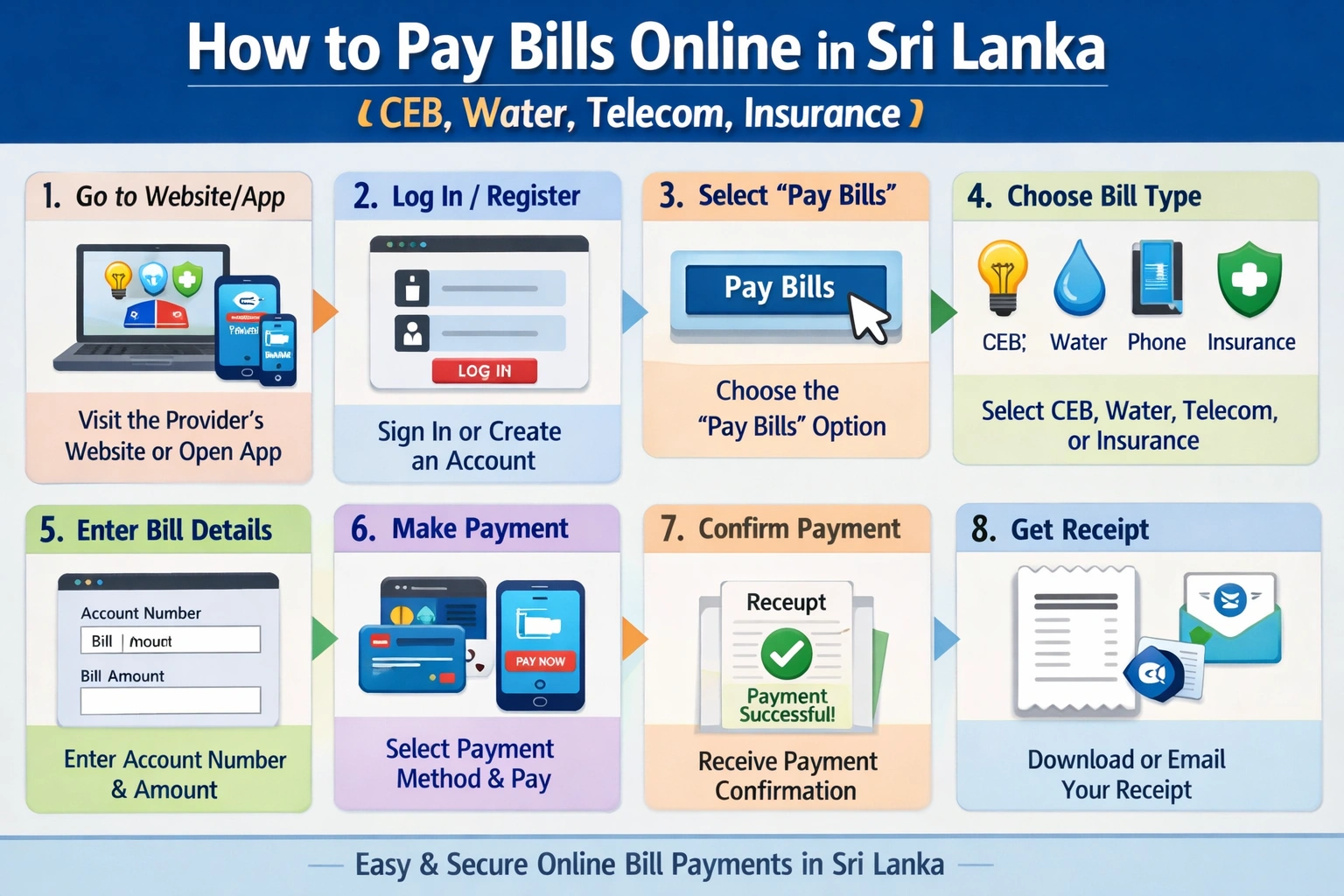
Step‑by‑step guide to paying bills online in Sri Lanka (CEB, water, telecom, insurance)
Why pay your bills online in Sri Lanka? Benefits, safety and what you need first More Sri Lankans now pay everyday bills online, helped by wider internet banking, mobile apps and government platforms such as GovPay operated via LankaPay’s real‑time payment network.[1][2][4][7] What bills can you p

Sri Lanka Stock Market Halts After Error Trade on Wealth Trust Securities
The Colombo Stock Exchange (CSE) shut down trading for an entire session and cancelled all transactions after a series of error trades on newly listed Wealth Trust Securities sent its share price from single digits to tens of thousands of rupees within minutes. The incident triggered an emergency r
Remittance guide for Sri Lankans: Best ways to receive money from UAE/Italy/UK/AUS/NZ with low fees.
Why remittances matter for Sri Lankans and what to look for in a transfer For many Sri Lankan families, money sent from the UAE, Italy, the UK, Australia and New Zealand is a lifeline that pays for food, rent, school fees and medical bills. Personal remittances to Sri Lanka are worth over USD 6–7 b
How to safely use online banking in Sri Lanka: Security checklist for BOC, HNB, Com Bank , Sampath bank users
Online and mobile banking usage in Sri Lanka has surged as people increasingly rely on smartphones and digital channels for everyday transactions, investments and payments.[2] With Bank of Ceylon (BOC), HNB, Commercial Bank and Sampath among the largest retail banks, their broad customer bases and h