Red Slender Loris: Nocturnal Endemic Primate
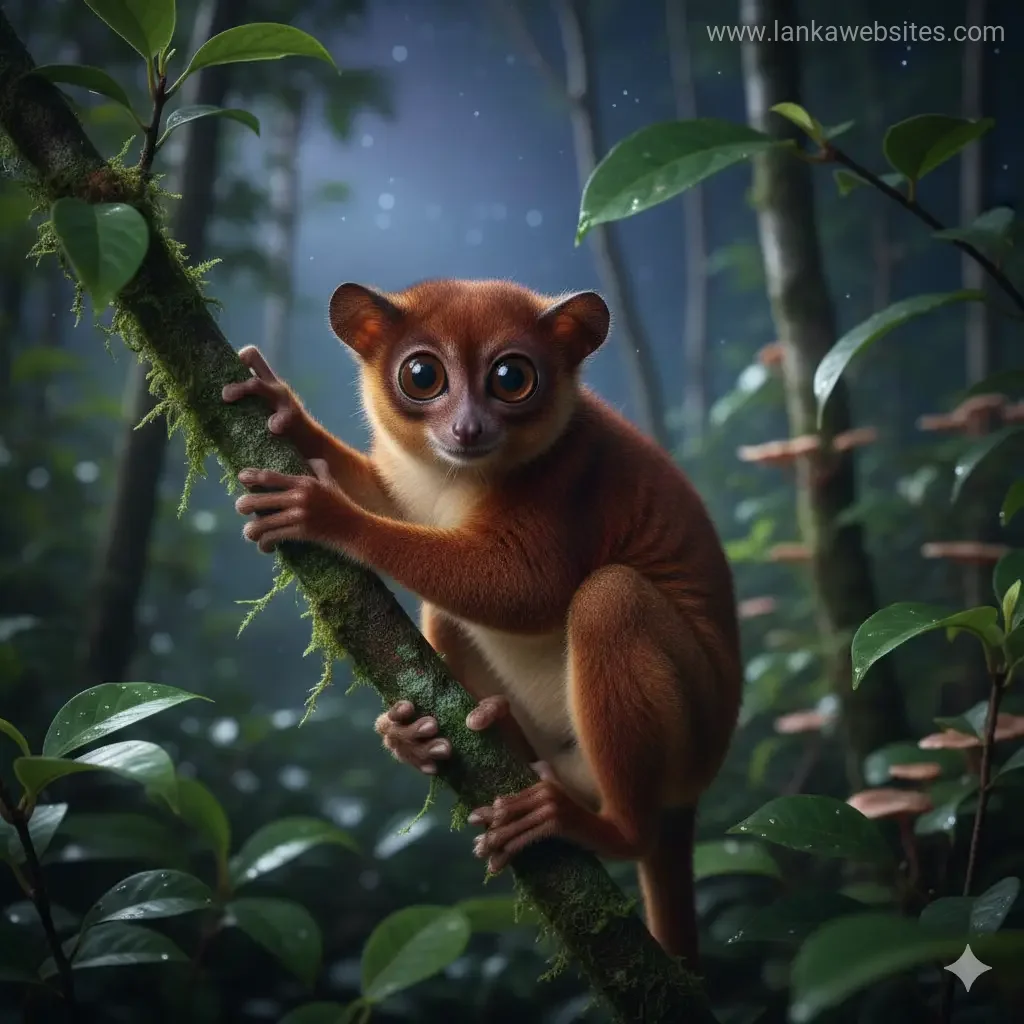
Imagine gliding silently through the misty canopy of Sinharaja Forest Reserve at night, your eyes catching a glimpse of a tiny, wide-eyed creature with reddish fur peering back at you. That's the red
The Lankawebsites editorial team curates, fact-checks, and updates guides on personal finance, property, health, immigration, legal, business, and lifestyle topics relevant to Lankawebsites readers. Articles are produced with AI assistance and reviewed by the editorial team before publication.
Imagine gliding silently through the misty canopy of Sinharaja Forest Reserve at night, your eyes catching a glimpse of a tiny, wide-eyed creature with reddish fur peering back at you. That's the red slender loris, our nocturnal endemic primate that's as mysterious as it is precious to Sri Lanka's biodiversity. As locals, we've got a unique responsibility to protect this elusive survivor of our island's ancient rainforests.
What is the Red Slender Loris?
The red slender loris (Loris tardigradus) is a small, nocturnal strepsirrhine primate found only in Sri Lanka, making it a true island endemic. Known locally as "thevangu," this primate ranks as No. 6 of the 10 focal species and No. 22 of the 100 EDGE mammal species worldwide, highlighting its evolutionary distinctiveness and global endangerment. Measuring just 20-25 cm long with long, slender limbs, a rounded head, and a pointed muzzle, it lacks a tail and weighs around 100-200 grams.
Its reddish-brown fur gives it the "red" moniker, distinguishing it from the grey slender loris found elsewhere on the island. There are two main subspecies: the southwestern L. t. tardigradus (Endangered) in districts like Matara, Ratnapura, Kalutara, and Kegalle, and L. t. nycticeboides. These primates are arboreal masters, favouring the dense understorey of our wet zone forests up to 700m altitude.
Physical Adaptations for Nighttime Life
Adapted perfectly for nocturnal living, the red slender loris boasts enormous eyes that dominate its tiny face, providing superior night vision to spot prey in the dark. Its long, thin fingers and toes grip branches with precision, allowing slow, deliberate movements—hence the name "tardigradus," meaning slow-moving. When threatened, it freezes motionless, growls, or releases a foul odour from its armpits to deter predators.
Habitat and Distribution in Sri Lanka
Exclusively endemic to Sri Lanka's southwestern wet zone, the red slender loris thrives in lowland rainforests, tropical rainforests, and inter-monsoon forests from sea level up to 2,100m. Its range stretches from Colombo through Kalutara, Ratnapura, Kegalle, Galle, and Matara, possibly into wetter parts of Hambantota.
Key Locations to Spot Them
- Sinharaja World Heritage Site (Sabaragamuwa Province): A biodiversity hotspot with fragmented forests hosting populations.
- Kanneliya Forest Reserve (Southern Province): Prime habitat in the wet zone.
- Peak Wilderness Sanctuary: Elevations up to 700m support their arboreal lifestyle.
- Masmullah Proposed Forest Reserve: One of the few remaining strongholds, considered a biodiversity hotspot.
- Other sites: Horton Plains National Park, Hakgala Strict Nature Reserve, Yagirala, and Polgahakanda.
We're losing these habitats fast—Sri Lanka has shed 97% of its forest cover in the last 50 years due to development, farming, roads, and utilities. As locals in the south or Sabaragamuwa, you'll notice this in fragmented patches near tea estates or cinnamon plantations.
Behaviour and Daily Life
Strictly nocturnal, red slender lorises sleep curled up in vine tangles or branch forks by day, emerging at dusk to forage alone or in small family groups. They're solitary hunters, moving slowly (about 1-1.5 km/h) through the understorey, using their keen senses to detect insects.
Diet: A Hunter's Menu
Insects dominate their diet—ants, termites, beetles, and moths—but they also eat lizards, mice, small rats, fruit, leaves, buds, and bird eggs. They'll lick gum from trees or snatch prey with lightning-quick hands, despite their sluggish pace.
Mating and Reproduction
Mating peaks in two seasons: April-May and October-November, aligning with our monsoons for food abundance. Females hang upside down from branches to support the male during copulation, gestating 5-6 months before birthing one (rarely two) offspring. The mating system is likely polygynandrous, with both sexes having multiple partners. Infants cling to their mother's belly for months, learning survival in our dense forests.
Conservation Status and Threats
Classified as Endangered globally, the red slender loris faces severe threats from habitat loss and fragmentation. In Sri Lanka, illegal logging, agriculture, and urban sprawl have decimated their range, isolating populations. Hunting and trapping for traditional medicine or the pet trade persist, despite protections.
Sri Lanka's Legal Protections
Under the Fauna and Flora Protection Ordinance (Chapter 469), as amended up to 2026, the red slender loris is fully protected—no hunting, trapping, or trade allowed. Key reserves like Sinharaja and Peak Wilderness are gazetted, managed by the Department of Forest Conservation (FD). Report violations to FD hotlines or the Wildlife and Nature Protection Society (WNPS). Penalties include fines up to LKR 100,000 and imprisonment.
Community efforts, like those by the Wildlife Conservation Society Galle, monitor populations in Kanneliya-Dedduwa.
How Locals Can Help Protect the Red Slender Loris
As Sri Lankans, we're on the front lines. Here's practical advice tailored to our context:
Actionable Tips
- Report sightings and threats: Use the FD app or call 1926 (Forest Department helpline, 2026). Apps like mFallow track wildlife.
- Avoid habitat harm: If farming near reserves, plant native trees like hora or na to create corridors. Don't use pesticides that kill insects.
- Eco-tourism: Join night walks in Sinharaja via registered guides (check DFCC permits). Funds support conservation.
- Reduce light pollution: In villages near forests, use low-LED lights—lorises avoid bright areas.
- Educate your community: Share with schools via WNPS resources. Avoid buying "thevangu" charms.
- Plant for wildlife: Grow fruit trees in home gardens to buffer forests.
In 2026, citizen science projects via the Field Ornithology Group of Sri Lanka (FOGSL) welcome loris data submissions.
FAQ
1. Where can I see a red slender loris in Sri Lanka?
Best spots are Sinharaja, Kanneliya, and Peak Wilderness. Go on guided night tours—daytime sightings are rare.
2. Is the red slender loris dangerous?
No, it's harmless to humans. It avoids us but may release a smell if cornered.
3. Why is it called 'nocturnal endemic primate'?
Nocturnal means active at night; endemic means only in Sri Lanka.
4. What should I do if I find an injured loris?
Don't touch it—call Wildlife Vet Services at 011-2888538 or FD immediately.
5. How many red slender lorises are left?
Exact numbers unknown, but populations are declining rapidly due to habitat loss.
6. Can I keep one as a pet?
Illegal under national law—fines and jail await. They're protected.
Next Steps for Conservation Lovers
Ready to make a difference? Start by visiting a protected forest responsibly this weekend, or join a local WNPS chapter. Download the Forest Department app for real-time alerts, and plant a native tree in your garden. Together, we can ensure the red slender loris swings through our canopies for generations. Contact FD or WNPS today—your action counts.
Related Articles

Sri Lankan Leopard: Apex Predator and Conservation Icon
Introduction to the Sri Lankan Leopard The Sri Lankan leopard is an awe-inspiring creature that roams the forests and grasslands of Sri Lanka. As an apex

Sri Lankan Junglefowl: National Bird of Sri Lanka
Introduction to the Sri Lankan Junglefowl The Sri Lankan Junglefowl is a colourful and fascinating bird species that has captivated the hearts of many wild

Ceylon Frogmouth: Nocturnal Endemic Bird
Introduction to the Ceylon Frogmouth The Ceylon Frogmouth is a fascinating, nocturnal bird that is endemic to Sri Lanka, but in this article, we will be di

Sri Lanka Whipping Frog: Colorful Tree Frog
Introduction to the Sri Lanka Whipping Frog The Sri Lanka Whipping Frog, also known as the Taruga eques, is a colourful tree frog that is native to the bea