Hump-Nosed Viper: Venomous Endemic Snake
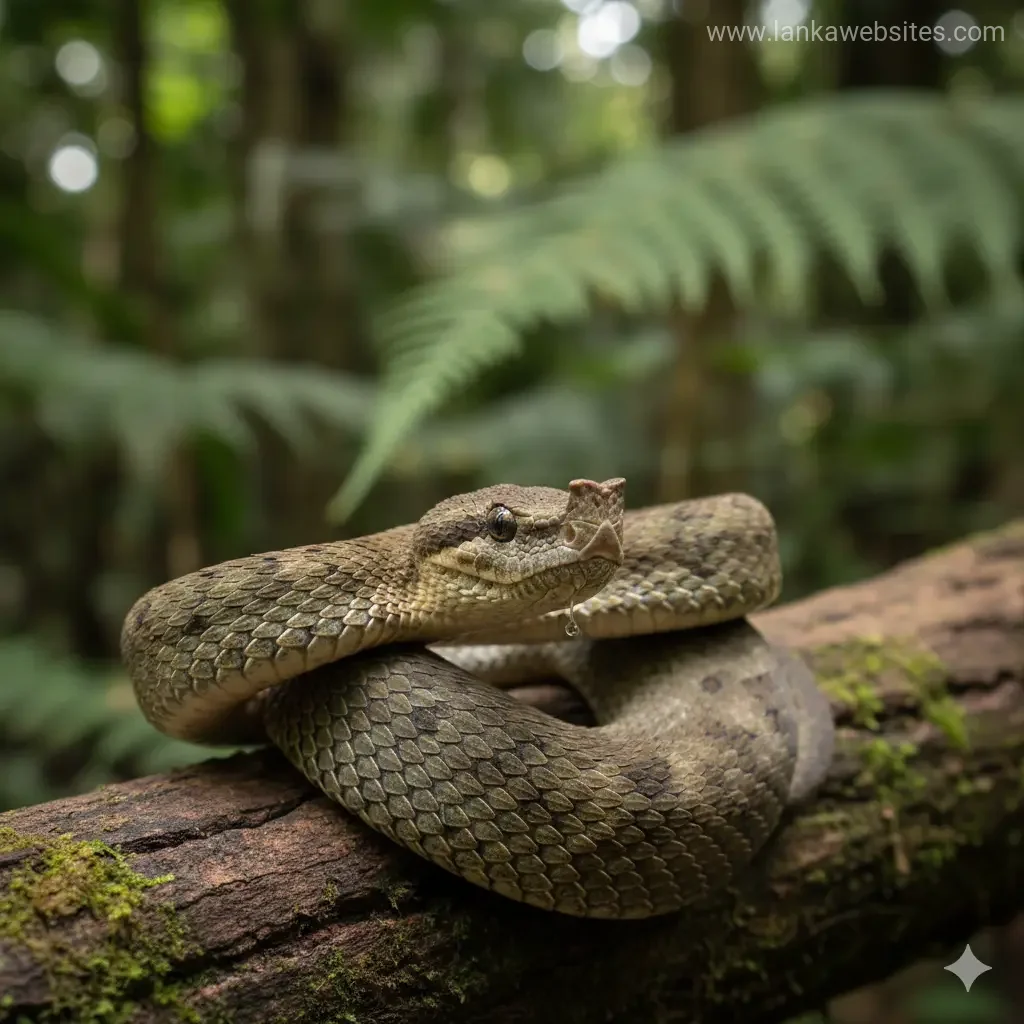
Sri Lanka is home to one of the world's most distinctive and dangerous snakes—the hump-nosed viper, a venomous endemic species found nowhere else on Earth. Known locally as mukalan thelissa in Sinhala
The Lankawebsites editorial team curates, fact-checks, and updates guides on personal finance, property, health, immigration, legal, business, and lifestyle topics relevant to Lankawebsites readers. Articles are produced with AI assistance and reviewed by the editorial team before publication.
Sri Lanka is home to one of the world's most distinctive and dangerous snakes—the hump-nosed viper, a venomous endemic species found nowhere else on Earth. Known locally as mukalan thelissa in Sinhala, this small but highly venomous pit viper is responsible for some of the most serious snake bites in our country, yet many locals remain unaware of its characteristics, habitat, and the risks it poses. Understanding this remarkable reptile is essential for anyone living in or visiting Sri Lanka's forested areas, particularly in our central highlands and wet-zone regions.
What Is the Hump-Nosed Viper?
The hump-nosed viper, scientifically known as Hypnale nepa, is a venomous pit viper species endemic to Sri Lanka. This means it's found only in our country and nowhere else in the world, making it a uniquely Sri Lankan reptile. The snake belongs to the pit viper family, a group of venomous snakes equipped with heat-sensing pits that help them detect prey in darkness.
What makes this snake instantly recognisable is its distinctive upturned snout, which gives the species its common name. This unusual feature is caused by an extended rostral scale followed by a raised, wart-like hump covered with 7 to 14 tiny scales. This distinctive nose isn't just for show—it's a key identifying feature that separates it from other similar viper species found in our region.
Physical Characteristics and Size
The hump-nosed viper is relatively small compared to other venomous snakes in Sri Lanka. According to records from the Colombo Museum, the largest specimen ever recorded measured just 39.2 centimetres in total length, with a tail of 5.9 centimetres. In general, the tail makes up between 13 and 18 percent of the snake's total body length.
Despite its modest size, the snake has several distinctive physical features:
- Body shape: Moderately slender with a head that's clearly distinct from the neck
- Scales: 17 rows of dorsal scales at midbody that are weakly keeled or smooth, 124–142 ventral scales, and 33–41 subcaudal scales
- Hemipenes: Clearly visible spines that distinguish it from related species
- Colour: Varies, but typically brown or reddish tones that help it blend into forest environments
Where You'll Find the Hump-Nosed Viper in Sri Lanka
The hump-nosed viper is distributed throughout forested areas across Sri Lanka, from lowland rainforests to elevations exceeding 1,800 metres. However, not all regions of the island have equal populations. Research shows that different species of hump-nosed vipers occupy different ecological zones:
Highland Populations (Above 900 Metres)
Hypnale nepa is restricted to montane regions above 900 metres in elevation. This means you're most likely to encounter this species in our central highlands, including areas around Kandy, Nuwara Eliya, and the Horton Plains region.
Lowland and Wet-Zone Populations
The lowland hump-nosed pit viper (Hypnale zara) is widely distributed in the island's south-western wet-zone lowlands. This species is distinguished from Hypnale nepa by its variably coloured body and less upturned snout.
Why the Hump-Nosed Viper Is Medically Important
The hump-nosed viper isn't just an interesting endemic species—it's a serious public health concern in Sri Lanka. These snakes are included among the five snakes most frequently associated with life-threatening envenoming in humans in our country. This makes understanding their behaviour and knowing how to respond to bites absolutely critical.
The venom of hump-nosed vipers can cause severe tissue damage, coagulopathy (blood clotting disorders), and potentially fatal complications if left untreated. Because these snakes are small and well-camouaged in forest environments, people often accidentally step on them or encounter them whilst working in agricultural or forest areas.
Habitat and Behaviour
The hump-nosed viper thrives in forested environments throughout Sri Lanka. They're nocturnal hunters, using their heat-sensing pits to locate warm-blooded prey in darkness. These snakes are relatively sedentary and tend to remain in small home ranges, making them predictable in certain areas.
Their preferred habitats include:
- Dense forest undergrowth
- Leaf litter and fallen logs
- Areas with high humidity
- Both montane and lowland rainforests
The snake's small size and cryptic colouration mean it's easily overlooked, which is why most encounters are accidental rather than deliberate.
Conservation Status
The hump-nosed viper is classified as Endangered on the IUCN Red List. This reflects habitat loss due to deforestation and human development in Sri Lanka's forested regions. As an endemic species, the loss of forest habitat directly threatens the survival of these snakes.
Protecting the hump-nosed viper requires maintaining healthy forest ecosystems across both lowland and montane regions. Conservation efforts should focus on preserving the natural habitats where these snakes live, particularly in our central highlands and south-western wet zones.
Safety Tips for Locals and Visitors
If you live in or visit forested areas of Sri Lanka, here are practical steps to reduce your risk of encountering a hump-nosed viper:
- Wear protective footwear: Sturdy boots or snake-proof gaiters when walking through forests or tall grass
- Watch where you step: Look carefully at the ground, especially in leaf litter and undergrowth
- Avoid handling snakes: Never attempt to catch or kill a snake you encounter
- Clear your surroundings: If you're working in gardens or forests, clear away leaf litter and fallen logs
- Seek immediate medical attention: If bitten, go to the nearest hospital immediately, even if symptoms seem minor
- Keep the snake's location noted: If possible, remember where you saw the snake to help medical professionals
What to Do If You're Bitten
Snake bites from hump-nosed vipers require urgent medical attention. If you or someone near you is bitten:
- Remain calm and keep the affected limb immobilised
- Remove any jewellery or tight clothing near the bite site
- Go to the nearest hospital immediately—do not delay
- Bring the snake with you if it can be safely captured (in a container), as identification helps with treatment
- Inform medical staff that you suspect a hump-nosed viper bite
- Antivenom treatment may be necessary and should be administered by trained medical professionals
Frequently Asked Questions
Are hump-nosed vipers aggressive?
No, hump-nosed vipers are not aggressive by nature. They're small, shy snakes that prefer to avoid humans. Most bites occur when people accidentally step on them or disturb them whilst working in forests or gardens. The snake bites defensively only when it feels threatened.
How can I identify a hump-nosed viper?
The most distinctive feature is the strongly upturned snout with a raised wart-like hump. Look for a small viper (usually under 40 centimetres) with this characteristic nose shape. In the highlands, you're more likely to encounter Hypnale nepa, whilst in lowland wet zones, Hypnale zara is more common.
Is the hump-nosed viper found throughout Sri Lanka?
Hump-nosed vipers are found throughout forested areas of Sri Lanka, but different species occupy different zones. Hypnale nepa is restricted to montane regions above 900 metres, whilst Hypnale zara is found in lowland wet zones. Your risk of encountering one depends on your location and the forests you visit.
What should I do if I see a hump-nosed viper?
The best action is to leave it alone and move away slowly. Don't attempt to catch, kill, or provoke the snake. If it's in a dangerous location (like near your home), contact a local wildlife authority or experienced snake handler for safe removal.
How venomous is the hump-nosed viper?
The hump-nosed viper is highly venomous and is included among the five snakes most frequently associated with life-threatening envenoming in Sri Lanka. Its venom can cause severe tissue damage and blood clotting disorders. Any bite should be treated as a medical emergency.
Can the hump-nosed viper be kept as a pet?
Given that it's venomous, endangered, and endemic to Sri Lanka, keeping a hump-nosed viper as a pet is neither advisable nor legal without proper permits. These snakes belong in their natural forest habitats, and their capture threatens already vulnerable populations.
Conclusion: Living Safely with Sri Lanka's Endemic Viper
The hump-nosed viper is a remarkable example of Sri Lanka's unique wildlife—a small, distinctively featured snake found nowhere else on Earth. Whilst its venomous bite demands respect and caution, understanding its behaviour, habitat preferences, and identifying features allows us to coexist safely with this endemic species.
Whether you're a forest worker, agricultural labourer, or nature enthusiast exploring Sri Lanka's highlands and wet zones, awareness is your best defence. Wear protective footwear, watch your step, and know what to do in the unlikely event of an encounter or bite. By respecting these snakes and their forest habitats, we protect both ourselves and a species that's found nowhere else in the world.
If you live or work in forested areas, share this information with your family and colleagues. And remember: if you encounter a hump-nosed viper, the safest response is to simply leave it alone and move away—they're far more interested in hunting small prey than in interacting with humans.
Related Articles

Sri Lankan Leopard: Apex Predator and Conservation Icon
Introduction to the Sri Lankan Leopard The Sri Lankan leopard is an awe-inspiring creature that roams the forests and grasslands of Sri Lanka. As an apex

Sri Lankan Junglefowl: National Bird of Sri Lanka
Introduction to the Sri Lankan Junglefowl The Sri Lankan Junglefowl is a colourful and fascinating bird species that has captivated the hearts of many wild

Ceylon Frogmouth: Nocturnal Endemic Bird
Introduction to the Ceylon Frogmouth The Ceylon Frogmouth is a fascinating, nocturnal bird that is endemic to Sri Lanka, but in this article, we will be di

Sri Lanka Whipping Frog: Colorful Tree Frog
Introduction to the Sri Lanka Whipping Frog The Sri Lanka Whipping Frog, also known as the Taruga eques, is a colourful tree frog that is native to the bea