Online Freelancing vs Traditional Migration: Better Option for Sri Lankans in 2026?
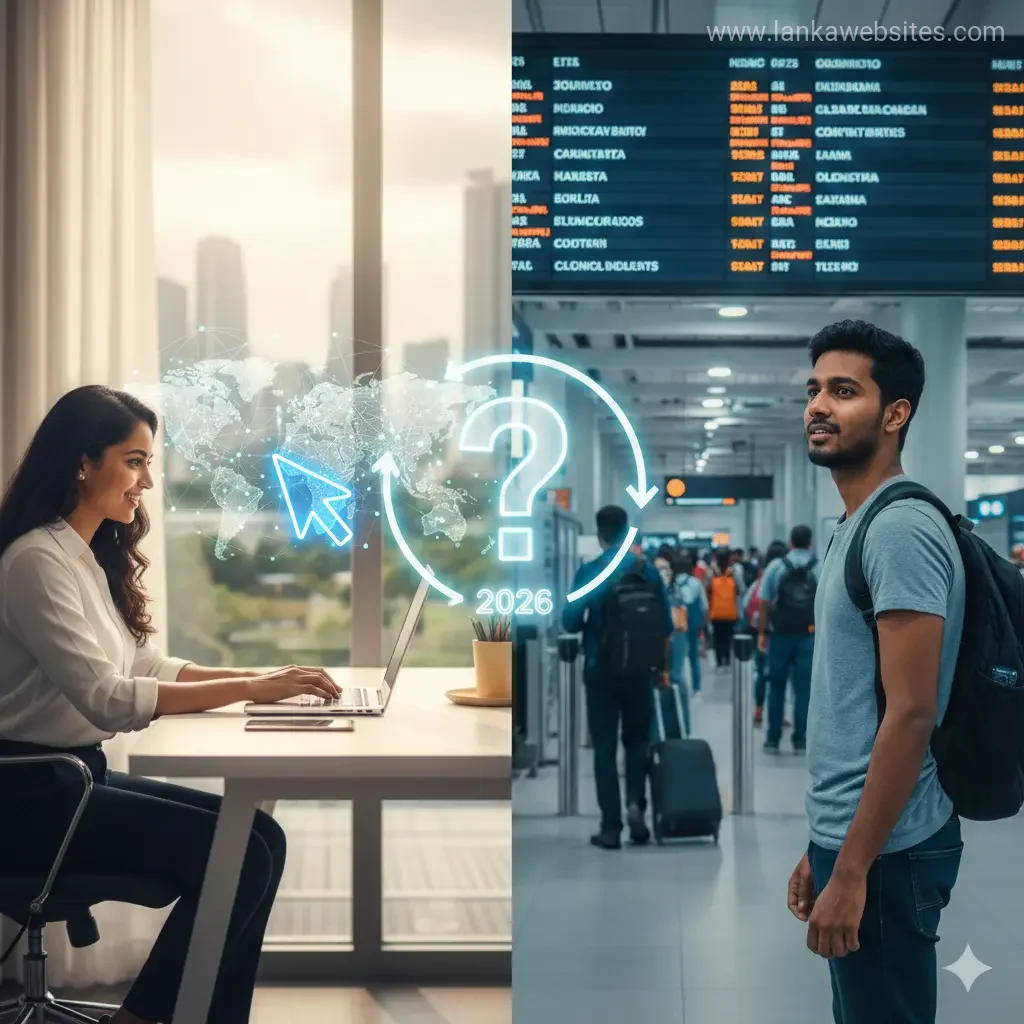
For decades, Sri Lankans have viewed migration abroad as the golden ticket to financial security and better opportunities. But in 2026, a quieter revolution is happening right here at home—one where y
The Lankawebsites editorial team curates, fact-checks, and updates guides on personal finance, property, health, immigration, legal, business, and lifestyle topics relevant to Lankawebsites readers. Articles are produced with AI assistance and reviewed by the editorial team before publication.
For decades, Sri Lankans have viewed migration abroad as the golden ticket to financial security and better opportunities. But in 2026, a quieter revolution is happening right here at home—one where you can earn international dollars without leaving your bedroom. Online freelancing is reshaping how young Sri Lankans think about work, offering flexibility, decent income, and a path forward that migration simply can't match. So which option is really better for you?
The Financial Reality: What You'll Actually Earn
Let's start with the numbers, because that's what matters most when you're deciding your future.
Online freelancers in Sri Lanka earn an average monthly income of approximately Rs20,000–30,000 for as little as 2–3 hours of work a day. But here's the exciting part: skilled professionals can earn significantly more. Around 2% of freelancers aged 20–35 earn more than $10,000 per month, whilst over 16% earn between $5,000–10,000 monthly. For context, that's Rs3–5 million monthly—well above the average Sri Lankan salary.
Once you establish yourself in high-demand fields like IT, digital marketing, and data analytics, you're looking at LKR 200,000+ monthly. SEO specialists and Google Ads experts earn $45–$150 per hour, whilst AI-enhanced analytics specialists command $80–$200 per hour.
Traditional migration offers steady employment abroad, but you're working for local wages in those countries (often just above minimum wage in developed nations), sending remittances home after living expenses. You're also away from family for years at a time.
Flexibility and Work-Life Balance: The Hidden Advantage
One of the biggest reasons younger Sri Lankans are choosing freelancing? Control over your own life.
The younger generation doesn't prefer traditional 9-to-5 full-time jobs; instead, they prefer flexible working hours. With freelancing, you're not locked into someone else's schedule. You can work around family commitments, study schedules, or other responsibilities. You're based in Sri Lanka, with your family, your community, and your support system intact.
Migration, by contrast, means being away for years. You miss weddings, births, your parents aging. You're building a life in a foreign country whilst your roots are here.
Research on successful Sri Lankan freelancers revealed that work-life balance is one of six key factors enabling success. You're not choosing between career and family—you're building both.
The Tax Advantage (And Yes, It's Real)
Here's something many people don't realise: the government now recognises freelance income under simplified tax rules for digital earners. You file via the Inland Revenue Department's ETA system with legitimate deductions for home office expenses and internet bills.
This is crucial. You're not dodging taxes or working in a grey area. You're a legitimate self-employed professional, building a taxable income history that helps with loans, visas, and credibility.
Migration, whilst it offers higher absolute wages, also means navigating foreign tax systems, visa restrictions, and often remitting money home at unfavourable exchange rates.
Barriers You'll Actually Face (And How to Overcome Them)
Let's be honest: freelancing in Sri Lanka isn't without challenges.
Internet connectivity and data costs: Sri Lanka's internet infrastructure and data pricing can be frustrating, but it's workable. Invest in a reliable broadband connection (fibre if available in your area) and budget for backup mobile data. Many successful freelancers use this as their baseline operating cost.
Building your initial reputation: You won't earn $200 per hour on day one. Beginners typically earn LKR 50,000–100,000 monthly whilst building their portfolio. This requires patience and strategic positioning on platforms like Upwork and Fiverr.
Competing globally: You're competing with freelancers worldwide, but here's the advantage: your lower cost of living means you can undercut competitors whilst still earning well above Sri Lankan wages. As you gain experience and testimonials, you can raise your rates significantly.
The Numbers on Freelancers in Sri Lanka
You're not alone in this. According to the Information and Communication Technology Agency (ICTA), there were nearly 150,000 registered freelancers in Sri Lanka as of 2022. That number has likely grown substantially by 2026.
The government is backing this too. The ICTA initiated the National Freelancer Development Endeavour to equip Sri Lankan youth with necessary skills and digital proficiencies for freelancing, with the aim of strengthening the contribution of freelancers to the national digital economy.
Migration: When It Still Makes Sense
We shouldn't dismiss migration entirely. It still makes sense if:
- You want permanent residency and citizenship in another country
- You need access to specific professional credentials or industries not available in Sri Lanka
- You value the structured career progression of traditional employment
- You want to establish yourself abroad for long-term family relocation
But if your primary goal is earning better income, having flexibility, and maintaining your life in Sri Lanka? Freelancing is increasingly the smarter choice.
Getting Started: Your Practical Next Steps
If you're leaning towards freelancing, here's what to do:
- Identify your skill: IT, digital marketing, data analytics, writing, design, or virtual assistance are all high-demand fields.
- Learn for free: Use Coursera (Google certificates), freeCodeCamp, YouTube, or ICTA free courses.
- Build a portfolio: Take a few low-paying projects on Fiverr or Upwork to get testimonials and build your profile.
- Set up professionally: Register with the IRD, get a tax file number, and keep proper records.
- Network locally: Join Sri Lankan freelancer communities online. Learn from those already earning $5,000+ monthly.
FAQ: Your Questions Answered
How long does it take to earn decent money from freelancing?
Beginners typically earn LKR 50,000–100,000 monthly. Within 6–12 months of consistent work, skilled freelancers move into the Rs200,000+ range. It requires patience, but you're building this whilst staying in Sri Lanka.
Is freelancing income stable enough to rely on?
It can be, once you build a client base. Many successful freelancers have recurring clients and long-term contracts. The key is diversifying across multiple platforms and clients so you're not dependent on one source.
Do I need to leave Sri Lanka to earn international rates?
No. This is the whole point. You earn international rates (often $40–$200 per hour for top skills) whilst living in Sri Lanka where your cost of living is a fraction of that.
What about the tax situation? Is it legal?
Yes. The Inland Revenue Department now recognises freelance income under simplified tax rules for digital earners. You file via ETA with legitimate deductions. It's legal and increasingly formalised.
Can I do both—freelance whilst working a regular job?
Yes. Many Sri Lankans start freelancing as a side hustle whilst employed. As income grows, you can transition to full-time freelancing. Most registered freelancers work part-time initially.
What if I fail at freelancing? Can I still migrate?
Absolutely. Freelancing experience actually strengthens your migration prospects. You've proven self-discipline, remote work capability, and income generation—all valuable to employers abroad.
The Real Choice Ahead
Online freelancing isn't a replacement for migration—it's an alternative path that's increasingly viable for Sri Lankans in 2026. You can earn substantial income, maintain your family connections, build a legitimate business, and avoid years away from home.
Migration still has value for those seeking permanent relocation or specific opportunities. But if your goal is financial security and flexibility? Freelancing offers that faster, with fewer personal sacrifices.
The question isn't really "migration or freelancing?" It's "Do I want to leave Sri Lanka to earn international income, or earn international income whilst staying here?" For most young Sri Lankans today, the answer is becoming clear.
Ready to start? Pick one skill you're interested in, find one free course this week, and commit to learning for the next three months. By mid-2026, you could be earning your first dollars from your laptop. That's not just a side hustle—that's your future taking shape.
Related Articles

Long-Distance Marriages: Practical Tips for Sri Lankans Working Overseas
This article references the following sources for accuracy and further reading:

Pathways for Sri Lankan Engineers to Work in Canada, Australia, and the Middle East
This article references the following sources for accuracy and further reading:

Specified Skilled Worker (SSW) Visa for Sri Lankans: Full 2026 Guide
This article references the following sources for accuracy and further reading:

Schooling Abroad: What Sri Lankan Parents Should Know Before Moving with Children
This article references the following sources for accuracy and further reading: