Buddhist Monastic Education: Pirivenas
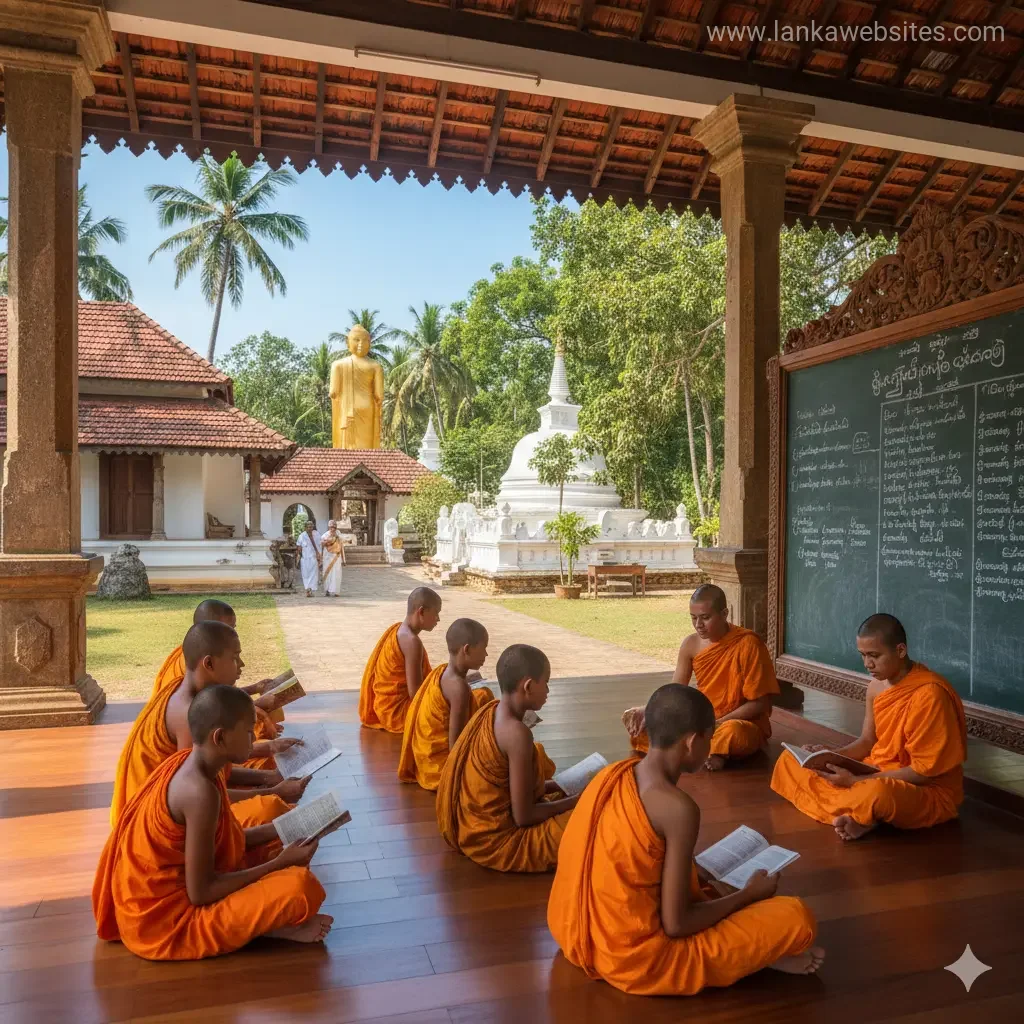
Buddhist monastic schools, known as pirivenas, have been central to Sri Lankan education and spiritual life for centuries. These institutions serve as both educational and spiritual centres where youn
The Lankawebsites editorial team curates, fact-checks, and updates guides on personal finance, property, health, immigration, legal, business, and lifestyle topics relevant to Lankawebsites readers. Articles are produced with AI assistance and reviewed by the editorial team before publication.
Buddhist monastic schools, known as pirivenas, have been central to Sri Lankan education and spiritual life for centuries. These institutions serve as both educational and spiritual centres where young boys receive formal schooling alongside Buddhist training, preserving ancient traditions whilst preparing students for modern life. Today, pirivenas continue to play a vital role in our society, offering free education to thousands of students, many from disadvantaged backgrounds.
What Are Pirivenas?
A pirivena is a Buddhist monastic school that combines religious education with academic learning . These institutions welcome both ordained Buddhist monks and lay students, creating unique communities where spiritual development and formal education go hand in hand. The word "pirivena" itself reflects the Sinhala Buddhist heritage that defines much of Sri Lanka's cultural identity.
Pirivenas function as comprehensive educational centres rather than purely religious institutions. Students attend regular classes in subjects like mathematics, science, languages, and history, whilst also participating in Buddhist practices, meditation, and scriptural study. This dual approach ensures that young people develop both intellectually and spiritually.
The Role of Pirivenas in Sri Lankan Society
Educational Access for Disadvantaged Youth
One of the most important functions of pirivenas is providing free education to families who cannot afford private schooling . Many young boys from poorer families join pirivenas not only as a spiritual choice but out of practical necessity. These institutions offer food, shelter, clothing, and education—meeting material needs that families struggle to provide.
The government recognises this crucial role. In 2026, the Ministry of Education, Higher Education and Vocational Education distributed free school uniforms to student Buddhist monks and lay students of government-approved pirivenas across the island . This support demonstrates the state's commitment to ensuring that pirivena students receive the same educational resources as their peers in government schools.
Preserving Buddhist Heritage
Pirivenas serve as guardians of Sri Lanka's Buddhist intellectual tradition. They maintain the study of Pali texts, Buddhist philosophy, and ancient scriptures that form the foundation of Theravada Buddhism. Through these institutions, knowledge that has been passed down for over two thousand years continues to be transmitted to new generations.
Recent initiatives have expanded access to Buddhist texts globally. The SuttaCentral Pirivena Project, supported by Bhante Sujato, presented 1,000 sets of English translations of the Tripitaka to educational institutions, including pirivenas . This modernisation effort ensures that ancient Buddhist teachings remain relevant and accessible to contemporary students.
Community and Spiritual Development
Beyond academics, pirivenas foster strong community bonds and moral development. Students learn discipline, compassion, and mindfulness through daily monastic routines. Many young boys enter pirivenas as a rite of passage, a tradition that strengthens their connection to Buddhist culture and their families' spiritual heritage.
Pirivena Education Structure
Academic Curriculum
Modern pirivenas follow government-approved curricula whilst maintaining their distinctive character. Students study core subjects required for national examinations, ensuring they can progress to higher education or employment if they choose to leave monastic life. The curriculum balances traditional Buddhist education with contemporary academic standards.
Monastic Training
Alongside formal schooling, pirivena students participate in Buddhist practices including:
- Daily meditation and mindfulness training
- Study of Pali language and Buddhist texts
- Monastic discipline and ethical conduct
- Participation in temple ceremonies and rituals
- Service to the wider Buddhist community
This integration of spiritual and academic learning creates a holistic educational experience that shapes character alongside intellectual development.
Supporting English Language Education in Pirivenas
English language skills have become increasingly important for Sri Lankan students' future opportunities. Many pirivenas have recognised this need and actively seek English teachers to support their students.
Volunteer Teaching Opportunities
Several organisations facilitate volunteer teaching programmes in pirivenas across Sri Lanka, particularly in areas like Galle . These programmes typically run for 4-12 weeks and accept volunteers aged 18 and above. By teaching English to young monks and community students, volunteers help prepare them for higher education and employment whilst gaining valuable international experience themselves.
The demand for English education in pirivenas reflects a broader recognition that students need modern language skills to succeed in today's world. As one spiritual leader has noted, "having modern education is extremely important" for achieving progress appropriate for modern times .
Impact of English Education
English proficiency opens doors for pirivena graduates. It enables them to access higher education, pursue professional careers, engage with international Buddhist scholarship, and contribute more effectively to their communities. For students from disadvantaged backgrounds, English literacy can be transformative.
Government Support and Recognition
The Sri Lankan government formally recognises pirivenas as educational institutions worthy of public support. This recognition includes:
- Distribution of free school uniforms to pirivena students through the Ministry of Education
- Approval of pirivena curricula to ensure educational standards
- Inclusion of pirivena students in national educational programmes
- Support for both ordained monks and lay students attending these institutions
In January 2026, approximately 4.4 million students received free school uniforms, including pirivena students across the island . This demonstrates that pirivenas are integrated into Sri Lanka's broader educational system whilst maintaining their unique spiritual character.
Challenges and Modern Developments
Balancing Tradition and Modernity
Pirivenas face the ongoing challenge of maintaining their spiritual mission whilst adapting to modern educational requirements. Younger generations expect access to technology, contemporary teaching methods, and globally recognised qualifications. Successfully navigating this balance ensures pirivenas remain relevant without losing their distinctive identity.
Expanding Educational Opportunities
Forward-thinking pirivenas are embracing initiatives like English language programmes and digital literacy training. These developments prepare students for an increasingly globalised world whilst honouring the institutions' Buddhist heritage.
Frequently Asked Questions
What's the difference between a pirivena and a regular school?
Whilst both provide formal education, pirivenas combine academic learning with Buddhist monastic training and spiritual development. Pirivenas typically have smaller class sizes, emphasise ethical development, and integrate Buddhist philosophy into the curriculum. They also provide residential facilities for students.
Can lay students attend pirivenas?
Yes, many pirivenas accept both ordained Buddhist monks and lay students from the local community. This allows families to access quality education whilst maintaining the institution's spiritual character.
Do pirivena students receive government support?
Yes, pirivena students are eligible for government support programmes. In 2026, the Ministry of Education distributed free school uniforms to student Buddhist monks and lay students of government-approved pirivenas .
What happens to pirivena students after they graduate?
Pirivena graduates have various paths. Some continue monastic life and pursue higher Buddhist education. Others leave the monastery and pursue secular careers, having received a strong academic foundation. Many pirivena students progress to universities and professional careers.
How can I support pirivena education?
You can support pirivenas through donations to specific institutions, volunteering as an English teacher, or advocating for educational policies that benefit these schools. Many pirivenas welcome support from their local communities.
Are pirivenas only found in Sri Lanka?
Whilst pirivenas are distinctly Sri Lankan institutions, similar monastic schools exist throughout Buddhist Asia, including in Thailand, Cambodia, Laos, Tibet, and Nepal. Sri Lanka's pirivena system is particularly well-established and integrated into the national education framework.
Conclusion
Pirivenas represent a uniquely Sri Lankan approach to education—one that recognises that learning encompasses far more than academic subjects. These institutions have educated generations of Sri Lankans, providing opportunity to those who might otherwise have none, whilst preserving our Buddhist heritage and values.
As Sri Lanka continues to develop, pirivenas adapt and evolve. From initiatives like the SuttaCentral Pirivena Project bringing Buddhist texts into English, to volunteer programmes strengthening English education, these schools are finding ways to honour tradition whilst preparing students for the modern world.
If you're interested in supporting pirivena education—whether through volunteering, donations, or simply learning more about these important institutions—there are many ways to get involved. By strengthening pirivenas, we invest in the future of disadvantaged youth, the preservation of our Buddhist heritage, and the development of compassionate, educated citizens who can contribute meaningfully to Sri Lankan society.
Related Articles

Multi-Religious Harmony in Sri Lankan Culture
This article references the following sources for accuracy and further reading:

Temple of the Tooth: Sacred Relic in Kandy
Introduction to the Temple of the Tooth The Temple of the Tooth, also known as the Sri Dalada Maligawa, is a sacred Buddhist temple located in the heart of

Islamic Heritage: Mosques and Muslim Culture
Introduction to Islamic Heritage As you explore the diverse cultural landscape of New Zealand, you may come across mosques and Muslim communities that are

The Arrival of Buddhism: Emperor Ashoka's Mission
Introduction to Emperor Ashoka's Mission Buddhism, one of the world's oldest and most influential religions, has a rich history that spans over 2,500 years