Cybersecurity Certification Roadmap: CompTIA vs EC-Council
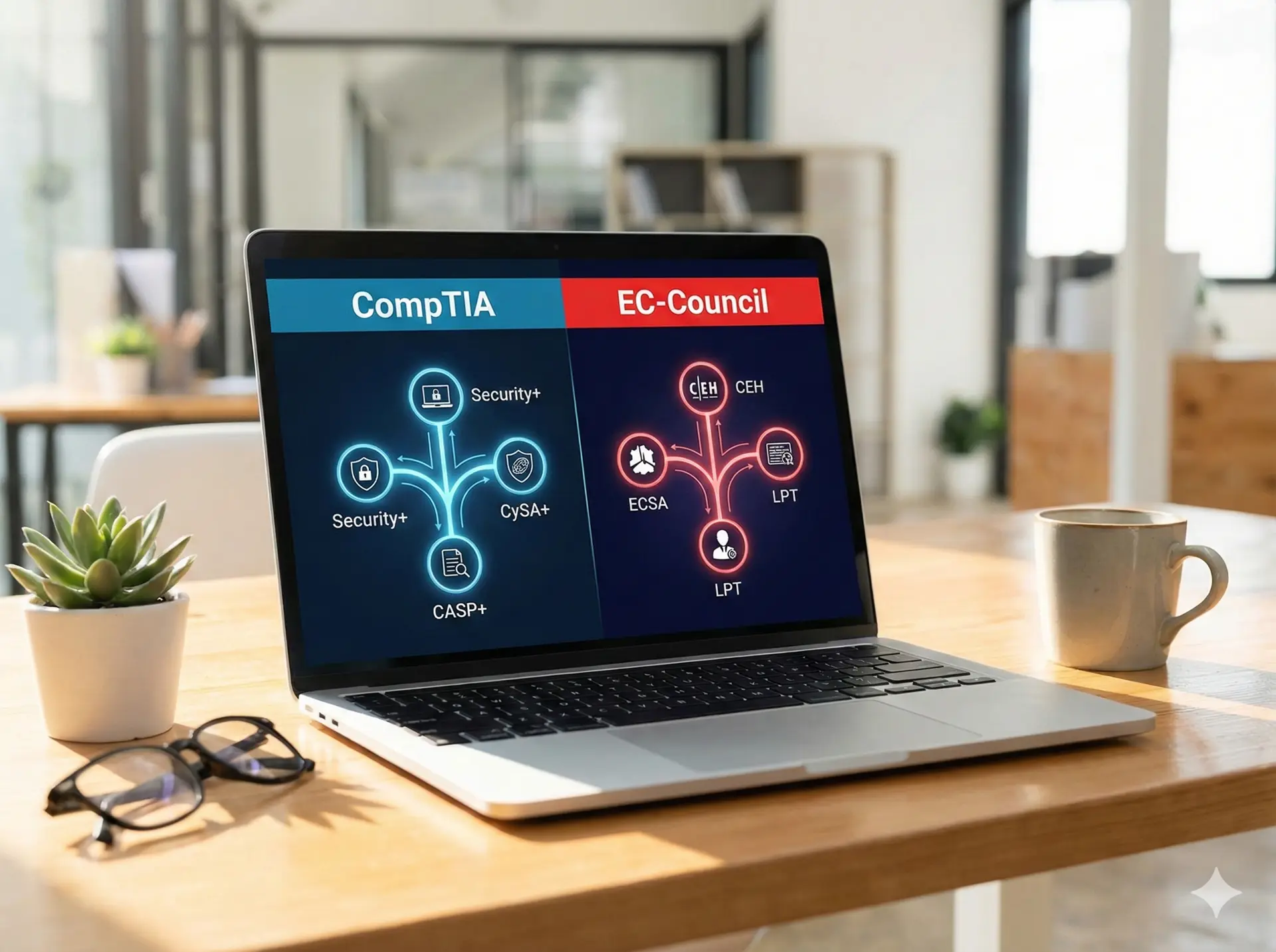
You're considering a career in cybersecurity, but with so many certifications available, it's difficult to know where to start. You've likely heard of CompTIA and EC-Council, two of the most well-known certification providers in the industry. But which one is right for you? The answer may not be as
The Lankawebsites editorial team curates, fact-checks, and updates guides on personal finance, property, health, immigration, legal, business, and lifestyle topics relevant to Lankawebsites readers. Articles are produced with AI assistance and reviewed by the editorial team before publication.
You're considering a career in cybersecurity, but with so many certifications available, it's difficult to know where to start. You've likely heard of CompTIA and EC-Council, two of the most well-known certification providers in the industry. But which one is right for you? The answer may not be as straightforward as you think. While many professionals swear by one or the other, the truth is that the best certification for you depends on your specific career goals and job aspirations. In this article, we'll explore the world of cybersecurity certifications, compare CompTIA and EC-Council, and provide you with a roadmap to help you achieve your career objectives.
By the end of this article, you'll have a clear understanding of the different types of cybersecurity certifications, their benefits, and how to choose the right one for your career. You'll also learn about the specific job roles and specializations that each certification can lead to, and how to create a personalized career advancement plan. Whether you're just starting out in cybersecurity or looking to advance your existing career, this article will provide you with the insights and guidance you need to succeed.
Introduction to Cybersecurity Certifications
Cybersecurity certifications are a crucial part of any cybersecurity professional's career. They demonstrate a level of expertise and knowledge in a specific area of cybersecurity, and can be a key factor in determining job eligibility and career advancement. There are many different types of cybersecurity certifications, ranging from entry-level to advanced, and covering a wide range of topics, including security fundamentals, risk management, and penetration testing.
The benefits of cybersecurity certifications are numerous. For one, they can significantly increase your earning potential. According to a survey by the International Association for Computer Information Systems, certified cybersecurity professionals can earn up to 20% more than their non-certified counterparts. Additionally, certifications can open up new job opportunities and provide a competitive edge in the job market. Many employers require or prefer candidates with specific certifications, such as CompTIA Security+ or EC-Council CEH.
In addition to the benefits, cybersecurity certifications can also provide a sense of personal satisfaction and achievement. Earning a certification requires a significant amount of time and effort, and can be a great way to demonstrate your expertise and commitment to the field. Furthermore, many certifications require ongoing education and training to maintain, which can help you stay up-to-date with the latest developments and advancements in cybersecurity.
Some examples of cybersecurity certifications include CompTIA Security+, EC-Council CEH, and Cisco CCNA Security. Each of these certifications has its own unique focus and requirements, and can lead to different job roles and specializations. For instance, CompTIA Security+ is a great starting point for those new to cybersecurity, while EC-Council CEH is more advanced and focused on penetration testing and vulnerability assessment.
CompTIA Security+ Certification Overview
The CompTIA Security+ certification is an entry-level certification that covers the basics of network security, compliance, and risk management. The certification is designed for IT professionals with 2-3 years of experience, and covers a wide range of topics, including network security, compliance and operational security, and threats and vulnerabilities. The certification is vendor-neutral, meaning it's not specific to any one company or technology, and is widely recognized and respected in the industry.
The CompTIA Security+ syllabus includes topics such as network architecture, security protocols, and incident response. The certification exam consists of 90 questions, and candidates have 90 minutes to complete it. The passing score is 750 out of 900, and the certification is valid for 3 years.
Job roles for CompTIA Security+ certified professionals include security administrator, network administrator, and help desk technician. These roles typically involve implementing and maintaining network security measures, monitoring for threats and vulnerabilities, and responding to security incidents. For example, a security administrator might be responsible for configuring firewalls and intrusion detection systems, while a network administrator might focus on securing network protocols and architectures.
In terms of career advancement, CompTIA Security+ is a great starting point for those new to cybersecurity. It can lead to more advanced certifications, such as CompTIA Cybersecurity Analyst (CSA+) or CompTIA PenTest+, and can provide a foundation for specialized roles, such as security consultant or penetration tester.
EC-Council CEH Certification Overview
The EC-Council CEH (Certified Ethical Hacker) certification is an advanced certification that focuses on penetration testing and vulnerability assessment. The certification is designed for IT professionals with 2-5 years of experience, and covers a wide range of topics, including network scanning and reconnaissance, system hacking, and web application hacking. The certification is highly respected in the industry, and is often required for roles such as penetration tester or security consultant.
The EC-Council CEH syllabus includes topics such as footprinting and reconnaissance, scanning and enumeration, and system exploitation. The certification exam consists of 125 questions, and candidates have 4 hours to complete it. The passing score is 70%, and the certification is valid for 3 years.
Job roles for EC-Council CEH certified professionals include penetration tester, security consultant, and incident response specialist. These roles typically involve identifying and exploiting vulnerabilities, conducting risk assessments, and developing mitigation strategies. For example, a penetration tester might use tools such as Nmap or Metasploit to identify vulnerabilities in a network, while a security consultant might develop and implement security policies and procedures.
In terms of career advancement, EC-Council CEH is a highly respected certification that can lead to advanced roles, such as security architect or chief information security officer (CISO). It can also provide a foundation for specialized certifications, such as EC-Council ECSA (Certified Security Analyst) or EC-Council CHFI (Computer Hacking Forensic Investigator).
CompTIA vs EC-Council: Choosing the Right Certification
When it comes to choosing between CompTIA and EC-Council, it's essential to consider your career goals and job aspirations. If you're new to cybersecurity, CompTIA Security+ may be a better starting point, as it covers the basics of network security and risk management. On the other hand, if you have more experience and are looking to specialize in penetration testing or vulnerability assessment, EC-Council CEH may be a better choice.
It's also important to consider the level of difficulty and the amount of time required to prepare for each certification. CompTIA Security+ is generally considered easier to prepare for, with a shorter study period and a more straightforward exam format. EC-Council CEH, on the other hand, is more challenging and requires a significant amount of time and effort to prepare for.
In terms of career advancement, both certifications can lead to advanced roles and specializations. However, EC-Council CEH is often more highly respected in the industry, and can provide a competitive edge in the job market. Ultimately, the choice between CompTIA and EC-Council will depend on your individual circumstances and career goals.
For example, if you're interested in a role such as security administrator or network administrator, CompTIA Security+ may be a better choice. On the other hand, if you're interested in a role such as penetration tester or security consultant, EC-Council CEH may be more suitable. It's essential to research and understand the requirements and expectations of your desired role, and to choose the certification that best aligns with your career objectives.
Cybersecurity Certification Roadmap: Career Advancement
Cybersecurity certifications can provide a clear roadmap for career advancement, and can help you achieve your long-term career objectives. By starting with entry-level certifications such as CompTIA Security+, you can build a foundation for more advanced certifications, such as CompTIA Cybersecurity Analyst (CSA+) or EC-Council CEH.
As you progress in your career, you can specialize in specific areas, such as penetration testing, incident response, or security consulting. You can also pursue advanced certifications, such as EC-Council ECSA (Certified Security Analyst) or EC-Council CHFI (Computer Hacking Forensic Investigator).
In addition to certifications, it's essential to stay up-to-date with the latest developments and advancements in cybersecurity. This can include attending conferences and workshops, participating in online forums and communities, and pursuing ongoing education and training. By combining certifications with ongoing education and training, you can stay ahead of the curve and achieve your long-term career objectives.
For example, you might start with CompTIA Security+, then move on to CompTIA Cybersecurity Analyst (CSA+), and finally pursue EC-Council CEH. Alternatively, you might start with EC-Council CEH, then move on to EC-Council ECSA (Certified Security Analyst), and finally pursue a specialized certification such as EC-Council CHFI (Computer Hacking Forensic Investigator).
Ultimately, the key to career advancement in cybersecurity is to stay flexible, adapt to changing circumstances, and continuously update your skills and knowledge. By following a clear roadmap and pursuing ongoing education and training, you can achieve your long-term career objectives and succeed in this exciting and rapidly evolving field.
Key Takeaways
In conclusion, cybersecurity certifications are a critical part of any cybersecurity professional's career. By choosing the right certification and following a clear roadmap, you can achieve your long-term career objectives and succeed in this exciting and rapidly evolving field. Remember to consider your career goals and job aspirations, and to choose the certification that best aligns with your objectives.
Don't be afraid to start with entry-level certifications and build your way up, and don't forget to stay up-to-date with the latest developments and advancements in cybersecurity. With the right certification and ongoing education and training, you can stay ahead of the curve and achieve your long-term career objectives.
So, what's the next step in your cybersecurity career? Will you choose CompTIA Security+ or EC-Council CEH? Whatever your decision, remember to stay focused, stay motivated, and always keep learning. The world of cybersecurity is constantly evolving, and it's up to you to stay ahead of the curve and achieve your goals.
Frequently Asked Questions
Related Articles

Best UX Design Certifications 2026
Imagine being a UX designer, tasked with creating an intuitive and user-friendly interface for a new mobile app. You've spent countless hours researching, sketching, and prototyping, but you're not sure if your design meets the industry standards. This is where UX design certifications come in - a

Google Career Certificates vs Coursera vs LinkedIn Learning
A staggering 72% of employers consider Google Career Certificates to be equivalent to a four-year degree, according to a recent survey by Google. This statistic highlights the growing recognition of alternative education pathways in the job market. As you consider upskilling or reskilling to advanc

Best Data Analytics Certifications 2026
As you consider advancing your career in data analytics, you may be wondering which certifications will give you the greatest competitive edge. With so many options available, it can be difficult to know where to start. You may have heard that certifications are essential for career advancement, bu

Project Management Certifications: PMP vs Google PM vs CAPM
A staggering 88% of organizations report using project management practices, with 71% of these organizations having a project management office (PMO) in place, according to a report by the Project Management Institute (PMI). If you're looking to boost your career prospects and salary potential in t