Language Revival Efforts: Vedda Language
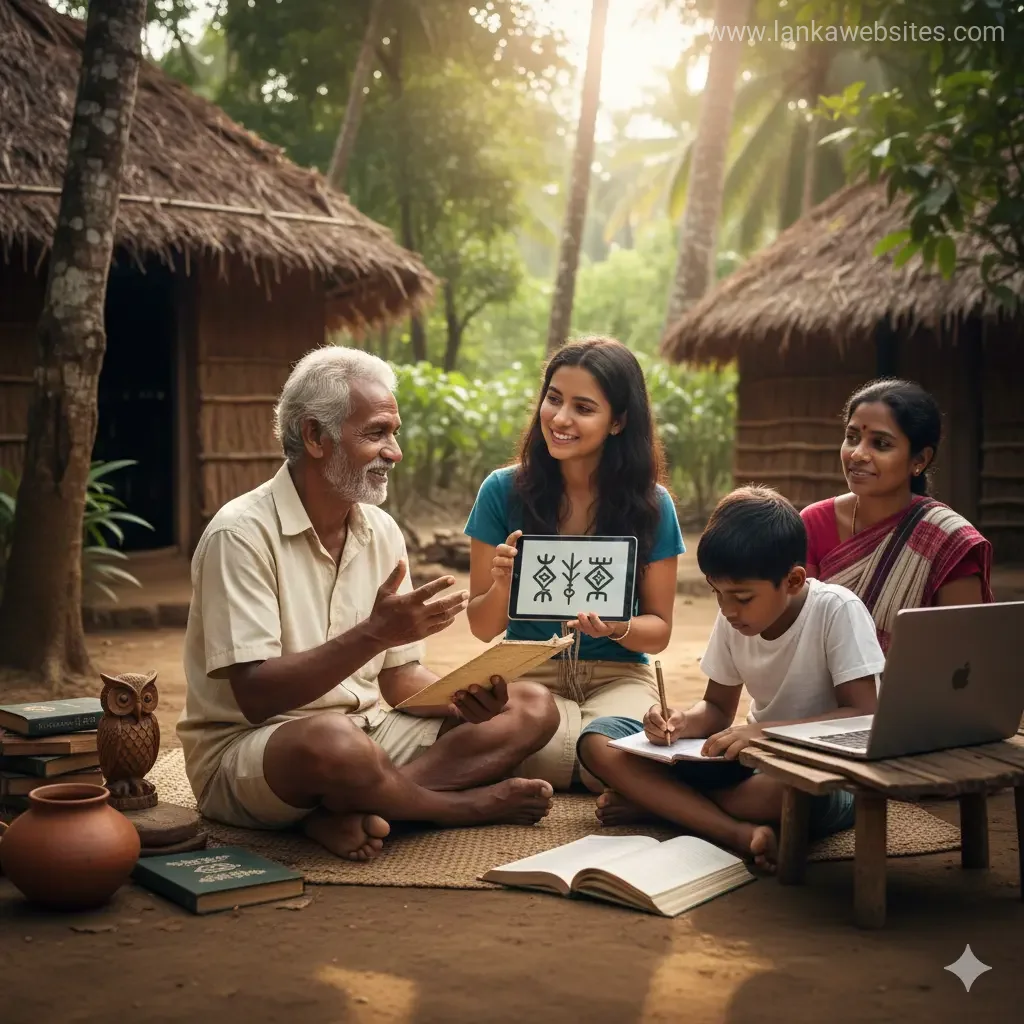
The Vedda language, spoken by Sri Lanka's indigenous Vedda people, stands at a critical crossroads. Once the voice of our island's original inhabitants, this ancient tongue now faces the threat of ext
The Lankawebsites editorial team curates, fact-checks, and updates guides on personal finance, property, health, immigration, legal, business, and lifestyle topics relevant to Lankawebsites readers. Articles are produced with AI assistance and reviewed by the editorial team before publication.
The Vedda language, spoken by Sri Lanka's indigenous Vedda people, stands at a critical crossroads. Once the voice of our island's original inhabitants, this ancient tongue now faces the threat of extinction, with only around 300 speakers remaining. Yet there's growing recognition that preserving this linguistic heritage isn't just about saving words—it's about protecting a unique cultural identity and worldview that has shaped Sri Lanka for millennia. Understanding the challenges facing the Vedda language and the efforts to revive it is essential for anyone interested in our nation's cultural preservation.
Understanding the Vedda Language and Its Significance
The Vedda language is an endangered indigenous language used by the Vedda people, Sri Lanka's original inhabitants who settled the island prior to the arrival of the Aryans in the 5th century BCE. The name "Veddas" literally means "hunters," reflecting their traditional way of life based on hunting and gathering.
Linguistically, Vedda has a unique structure that sets it apart from other languages in Sri Lanka. It features three main word classes: nouns, verbs, and invariables, with distinctive gender distinctions in animate nouns. Rather than borrowing words from Sinhalese or Tamil when new concepts emerge, the Vedda language creates combinations from its existing limited lexical stock, demonstrating a remarkable linguistic creativity within constraints.
What makes the Vedda language particularly significant is that it represents an entirely different worldview. The Vedda community has profound relationships with nature that aren't fully recognized by current Sri Lankan law. Their language encodes knowledge about forests, hunting practices, and environmental stewardship developed over thousands of years—knowledge that modern conservation efforts are only beginning to appreciate.
The Critical State of Language Endangerment
How Endangered Is the Vedda Language?
The situation is dire. Recent studies reveal that the Vedda language is on the verge of facing extinction. The language is now primarily spoken only by the interior Vedda community of Dambana, a region in the North Central Province. With approximately 300 speakers remaining, the language faces pressure from multiple directions.
The generational divide is stark. According to linguistic research conducted in 1959, the language was already restricted to older generations in the Dambana region, whilst younger Veddas were shifting to Sinhalese. Today, this trend has accelerated dramatically. Younger members of the Vedda community primarily use Sinhala-influenced vocabulary, and when they do use words unique to the Vedda language, they often need to explain their meanings in Sinhalese.
Why Is the Language Disappearing?
The decline of the Vedda language isn't accidental—it's the result of systemic pressures. Research identifies several key factors contributing to language loss:
- Fragmentation of settlements: As Vedda communities have been dispersed, opportunities for intergenerational language transmission have diminished
- Economic policies: Development initiatives have disrupted traditional hunting and gathering practices that sustained Vedda culture
- National education structure: Schools teach in Sinhalese and Tamil, not Vedda, making these languages the pathway to education and employment
- Dominant regional languages: Younger Veddas are influenced by the dominant language of their region—Sinhalese in some areas, Tamil dialects in others
- Political factors: National language policies have historically marginalised minority languages
For Coast Veddas, the situation differs slightly. Rather than speaking pure Vedda, they've adopted a dialect of Sri Lankan Tamil used in their coastal regions, further fragmenting the linguistic community.
Legal Recognition and Policy Challenges
One significant obstacle to language revival is the contested status of the Vedda as an indigenous community in Sri Lanka. Whilst international definitions recognise the Veddas as indigenous based on historical continuity, cultural distinction, and their determination to preserve their ancestral territories and ethnic identity, this recognition isn't universal within Sri Lanka.
Some government officials and scholars argue that Veddas aren't a separate indigenous community but rather "an inseparable part of the Sinhalese civilisation," historically entrusted with forest protection by ancient kings. This perspective fundamentally affects policy decisions regarding cultural and linguistic preservation.
Notably, Sri Lanka has not ratified the International Labour Organization (ILO) Convention No. 169 concerning Indigenous and Tribal Peoples in Independent Countries. This non-ratification demonstrates that the state hasn't formally committed to recognising the Vedda community's indigenous status or undertaking international responsibilities towards language preservation and cultural protection.
Current Language Revival Efforts
Despite the challenges, there are efforts underway to document and preserve the Vedda language. Linguistic research continues, with scholars conducting comprehensive studies to record vocabulary, grammar, and usage patterns before the language disappears entirely. These academic efforts serve as a crucial archive of the language's structure and content.
However, formal, government-backed language revival programmes remain limited. The absence of dedicated funding, educational curricula, or official recognition means that revival efforts depend largely on individual researchers, cultural organisations, and community members committed to preservation.
What Language Revival Could Look Like
Successful language revival requires a multi-faceted approach. In other countries, effective strategies have included:
- Creating immersion programmes for younger generation Veddas
- Developing educational materials in the Vedda language
- Establishing community language centres in Dambana and other Vedda settlements
- Recording oral histories and traditional knowledge from elder speakers
- Integrating Vedda language and culture into local school curricula
- Securing government recognition and funding for preservation initiatives
For Sri Lanka specifically, revival efforts would need to address the fragmentation of Vedda communities and create economic incentives for younger Veddas to value their linguistic heritage alongside education in dominant languages.
The Broader Context: Sri Lanka's Linguistic Landscape
Understanding the Vedda language situation requires context about Sri Lanka's broader linguistic policy. The island's official languages are Sinhalese (spoken by 69% of the population) and Tamil (spoken by 25.2%). English is widely spoken as a second language.
In 1948, when Sri Lanka gained independence, and particularly in 1959 when Sinhalese was declared the sole official language, this policy shift had profound effects on minority languages. The decision to privilege Sinhalese reflected the demographic majority but marginalised speakers of other languages, including the Vedda.
Frequently Asked Questions
How many people still speak the Vedda language?
Approximately 300 people speak Vedda, making it one of the world's most endangered languages. Most speakers are elderly members of the Dambana Vedda community in the North Central Province.
Is the Vedda language related to Sinhalese or Tamil?
The Vedda language is distinct from both Sinhalese and Tamil, though it has been influenced by Sinhalese over time. Linguistically, it's classified as an independent language with its own unique structure, though it has simplified and reduced many Sinhalese forms.
Where can I learn about the Vedda language?
Academic research on the Vedda language is limited. The most comprehensive linguistic study was conducted by Manniku W. Sugathapala De Silva in 1959. University departments studying linguistics or indigenous studies may have resources, and cultural organisations focused on Sri Lankan indigenous heritage occasionally offer information.
Why is language preservation important for the Vedda community?
Language preservation is crucial because the Vedda language encodes unique knowledge about forests, hunting practices, environmental relationships, and cultural identity developed over thousands of years. Losing the language means losing irreplaceable cultural and ecological knowledge.
What's the difference between Dambana Veddas and Coast Veddas linguistically?
Dambana Veddas (interior Veddas) traditionally speak the Vedda language, though increasingly they're shifting to Sinhalese. Coast Veddas speak a dialect of Sri Lankan Tamil rather than the Vedda language itself.
Could the Vedda language be revived?
Yes, though it would require significant effort. Language revival is possible with dedicated educational programmes, community involvement, government support, and economic incentives for younger generations to learn and use the language. However, this would require formal recognition of the Vedda as an indigenous community and commitment to cultural preservation from national policymakers.
Moving Forward: What Needs to Happen
Reviving the Vedda language requires action at multiple levels. First, there's a need for formal recognition of the Vedda as an indigenous community with distinct linguistic and cultural rights. This could involve ratifying international conventions and updating national policy frameworks.
Second, dedicated funding and resources are essential. Language preservation requires investment in documentation, education, and community programmes—resources that currently aren't adequately allocated.
Third, the Vedda community itself must be central to revival efforts. Any successful language preservation initiative must be community-led, respecting Vedda agency and priorities rather than imposing external solutions.
Finally, broader Sri Lankan society needs to recognise the value of linguistic diversity. The Vedda language represents a unique perspective on our island's history and environment. Its preservation enriches all of us, not just the Vedda community.
The Vedda language stands at a crossroads. With only 300 speakers remaining and the youngest generation increasingly adopting Sinhalese, the window for revival is narrowing. Yet it's not closed. With recognition, resources, and commitment—from both the Vedda community and the broader Sri Lankan society—this ancient language can be preserved for future generations. The question isn't whether revival is possible, but whether we'll choose to make it happen.
Related Articles

Sinhala Language: Script and History
Introduction to the Sinhala Language The Sinhala language, also known as Sinhalese, is a beautiful and historic language spoken by millions of people aroun

Burghers: Descendants of European Colonizers
Introduction to Burghers: Descendants of European Colonizers The history of New Zealand is a rich tapestry of cultures, with various ethnic groups contribu

Pali and Sanskrit Influence on Sinhala
Introduction to Sinhala and its Influences As you explore the diverse world of languages, you may come across Sinhala, the native language of Sri Lanka. W

Indian Tamils: Plantation Workers' Descendants
Introduction to Indian Tamils: Plantation Workers' Descendants As you explore the diverse cultural landscape of New Zealand, you may come across the Indian