Tea vs Paddy Landscapes: Photographic Road Trips in the Hill Country

Sri Lanka's hill country offers two distinctly different yet equally captivating landscapes for photography enthusiasts – the verdant tea plantations that blanket the highlands and the emerald rice pa
The Lankawebsites editorial team curates, fact-checks, and updates guides on personal finance, property, health, immigration, legal, business, and lifestyle topics relevant to Lankawebsites readers. Articles are produced with AI assistance and reviewed by the editorial team before publication.
Sri Lanka's hill country offers two distinctly different yet equally captivating landscapes for photography enthusiasts – the verdant tea plantations that blanket the highlands and the emerald rice paddies that sprawl across the fertile southern plains. Whether you're a seasoned photographer or someone with a smartphone and a passion for capturing authentic moments, these contrasting landscapes provide endless opportunities to document the heart of Sri Lankan agriculture and rural life.
Understanding the Two Landscapes
Tea Plantations: The Misty Highlands
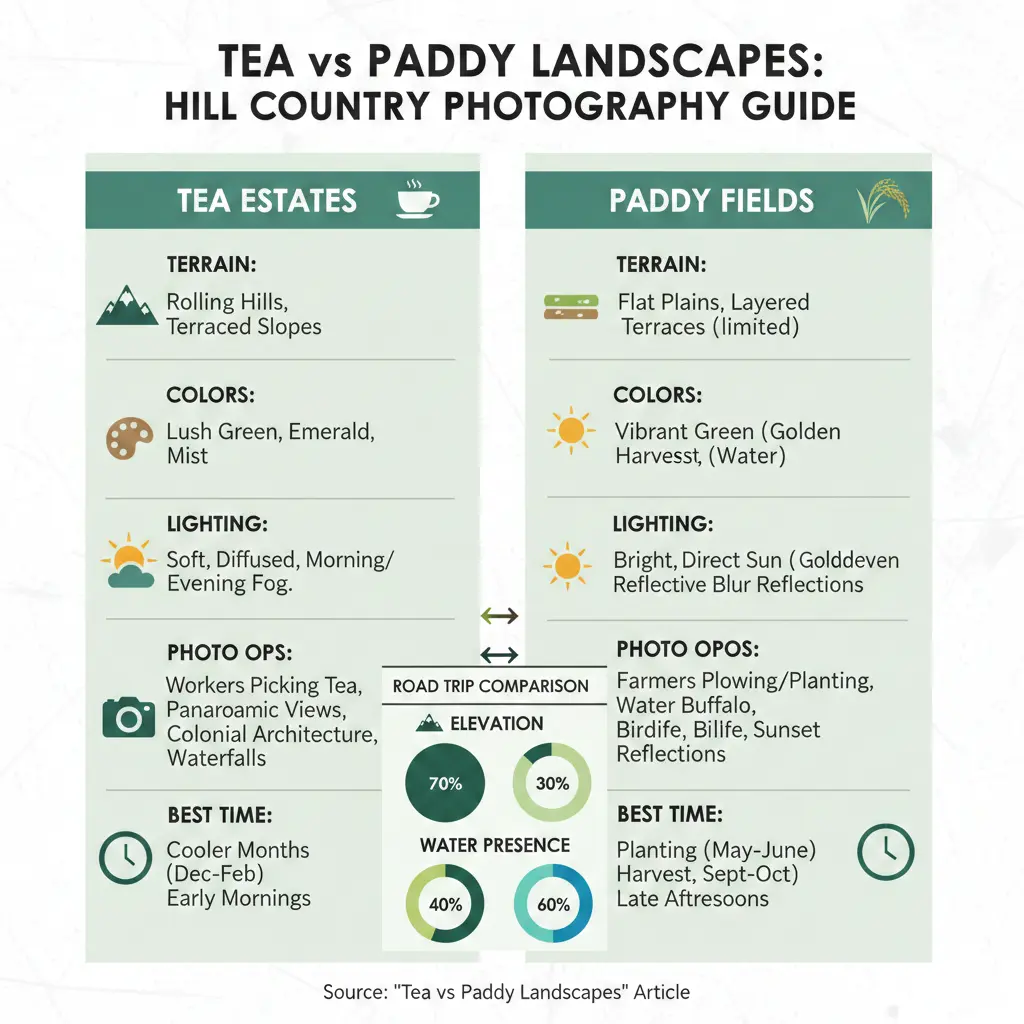
The tea plantations of Sri Lanka's central highlands represent one of the most iconic and photographically rewarding environments on the island. These vast estates, often shrouded in mist and cloud cover, create dramatic natural lighting conditions that photographers dream about. The rolling hills covered in emerald-green tea bushes, combined with the cool mountain air and the sight of tea pickers moving gracefully through the fields, offer a compelling narrative of Sri Lanka's agricultural heritage.
What makes tea plantation photography particularly special is the interplay between human activity and natural landscape. The tea fields aren't static scenery – they're living workspaces where daily routines unfold against stunning backdrops. Early morning visits capture the mist settling over the valleys, while afternoon light creates golden hues across the hillsides. The contrast between the manicured tea bushes and the wild mountain terrain creates natural compositional depth.
Paddy Fields: The Fertile Plains
As you descend from the highlands toward Sri Lanka's southern plains, the landscape transforms dramatically. The paddy fields that characterise these regions present a completely different photographic challenge and opportunity. These checkerboard patterns of water-filled rice paddies, especially during the monsoon season, create mirror-like reflections that capture sky, clouds, and surrounding vegetation with stunning clarity.
Paddy field photography rewards patience and timing. The flooded fields during planting season offer entirely different compositions than the mature crops ready for harvest. The human element – farmers wading through water, families working together, water buffalo ploughing the fields – adds narrative depth to landscape images.
Planning Your Photographic Road Trip
The Highland Route: Tea Plantation Circuit
A comprehensive tea plantation photography journey typically begins in Kandy, Sri Lanka's cultural heart. From here, you'll journey toward Nuwara Eliya via one of Asia's most scenic train routes. This legendary train ride from Kandy to Nuwara Eliya offers endless photo opportunities of rolling hills, misty mountains, and life along the tracks, making it an essential component of any hill country photography trip.
Once in Nuwara Eliya, the surrounding tea-growing regions beckon. The villages nestled among the tea fields provide authentic glimpses into the lives of tea pickers and their families. These aren't staged tourist experiences – they're genuine communities where daily work rhythms continue regardless of your camera's presence. This authenticity translates powerfully into photographs.
Key stops on the tea plantation circuit include:
- Kandy's vibrant markets and the surrounding hill villages
- The train journey itself, with its dramatic viaducts and tunnel passages
- Tea field villages in the Nuwara Eliya region
- Haputale, home to Lipton's Seat, offering panoramic views across the southern coast
- The descent toward the southern plains, capturing the landscape transformation
The Southern Route: Paddy Field Journey
The journey from the highlands down toward the southern plains showcases the agricultural diversity of Sri Lanka's fertile regions. As you descend, you'll witness the gradual transition from tea to paddy cultivation, each offering distinct photographic opportunities.
The lush fields and villages that characterise this abundant landscape provide excellent subjects for capturing rural Sri Lankan life. The best time to photograph paddy fields is during the planting season (typically May-June and November-December) when fields are flooded and reflections are at their most dramatic.
Technical Considerations for Hill Country Photography
Weather and Lighting
The hill country's weather is notoriously unpredictable. Morning mist in the tea plantations can be either a blessing or a challenge, depending on your creative vision. The mist creates atmospheric depth and softens harsh sunlight, but it can also obscure distant details you might want to capture.
Plan your shooting schedule around the mist patterns. Early mornings often feature thicker mist that burns off by mid-morning. Afternoon light, particularly during the golden hour before sunset, creates warm tones across the tea fields and paddy landscapes.
Camera Settings for Landscape Work
For tea plantation and paddy field photography, you'll want to prioritise depth of field to keep both foreground and background in sharp focus. Use apertures between f/8 and f/16 for landscape work. The misty conditions in the highlands often mean you'll need to increase your ISO or use slower shutter speeds – a sturdy tripod is invaluable.
For capturing people working in the fields, faster shutter speeds (1/250s or faster) help freeze motion, whilst slower speeds can convey the rhythm and flow of agricultural work.
Equipment Recommendations
You don't need expensive gear to capture compelling images. A smartphone with a good camera and editing apps can produce professional-quality results. If you're using a dedicated camera, bring:
- A versatile zoom lens (24-70mm equivalent) for landscape and detail work
- A telephoto lens (70-200mm equivalent) for compressed perspectives and wildlife
- A sturdy tripod for stability in misty conditions
- Neutral density filters for controlling exposure in bright conditions
- A cleaning kit – moisture and dust are constant challenges in these regions
Respecting Local Communities
As you photograph in tea plantations and paddy fields, remember that you're documenting people's workplaces and livelihoods. Always seek permission before photographing individuals, particularly tea pickers and farmers. Many communities appreciate a small gesture of respect – sharing your photos afterwards or purchasing tea or local products supports the communities you're photographing.
Be mindful of safety around agricultural machinery and water-filled paddy fields. Wear appropriate footwear and stay aware of your surroundings, particularly when walking through fields during work hours.
Best Times to Visit
The tea plantations are photographically rewarding year-round, but February to October offers the most reliable conditions for Wilpattu National Park and surrounding areas. However, the hill country's weather patterns mean that mist and cloud cover can appear at any time, which often creates the most dramatic lighting conditions.
For paddy field photography, plan your visit around the planting seasons (May-June and November-December) when fields are flooded and at their most photogenic. The contrast between water, sky, and vegetation creates the strongest compositions during these periods.
Creating a Practical Itinerary
5-6 Day Photography Road Trip
Day 1: Arrive in Kandy, explore the vibrant markets and surrounding villages. The lively Kandy market offers rich details and energy for photography.
Day 2: Take the legendary train from Kandy to Nuwara Eliya, capturing endless photo opportunities throughout the journey.
Day 3: Spend the full day in tea field villages, photographing daily life and the landscape. Return to review your images and refine techniques.
Day 4: Visit Lipton's Seat near Haputale for panoramic views, then begin your descent toward the southern plains.
Day 5-6: Explore the paddy fields and rural villages of the southern plains. Capture the landscape transformation and agricultural diversity.
Conclusion: Capturing Sri Lanka's Agricultural Soul
A photographic road trip through Sri Lanka's tea plantations and paddy fields isn't just about collecting beautiful images – it's about understanding and documenting the agricultural heritage that defines much of Sri Lankan life. The misty highlands and fertile plains tell the story of a nation where tradition, hard work, and natural beauty intertwine.
Whether you're drawn to the dramatic landscapes of the tea country or the serene beauty of paddy fields, these journeys offer authentic experiences that challenge you creatively whilst connecting you to Sri Lankan communities and their daily rhythms. Start planning your route, pack your camera, and prepare to see your country – or discover it for the first time – through a photographer's lens.
Frequently Asked Questions
Sources & References
-
1
Sri Lanka Photo Tour - Pics of Asia — www.picsofasia.com
-
2
The Top 5 Photography Spots in Sri Lanka - Glenn Mckimmin — glennmckimmin.com
Related Articles

Badulla & Demodara: Nine Arch Alternatives & Heritage Railway Town
Introduction to Badulla and Demodara If you're looking for a unique travel experience that combines stunning natural beauty, rich history, and a touch of n

Ella Travel Guide: Nine Arch Bridge, Little Adam’s Peak & More
Imagine waking up to crisp mountain air, the scent of fresh tea leaves, and views that stretch across endless green hills—that's Ella calling you home. Tucked away in Sri Lanka's Uva Province, this ge
Madulsima & Mini World’s End: Sky-High Tea and Cliff-Edge Views
Introduction to Madulsima & Mini World's End If you're looking for a unique and breathtaking experience in New Zealand, look no further than Madulsima
Hidden Hill Country Villages to Stay in Instead of Ella
Introduction to Hidden Hill Country Villages If you're planning a trip to Sri Lanka, you've likely heard of Ella, a popular hill town that attracts many to