How to Spot Fake Car Parts in Sri Lankan Markets
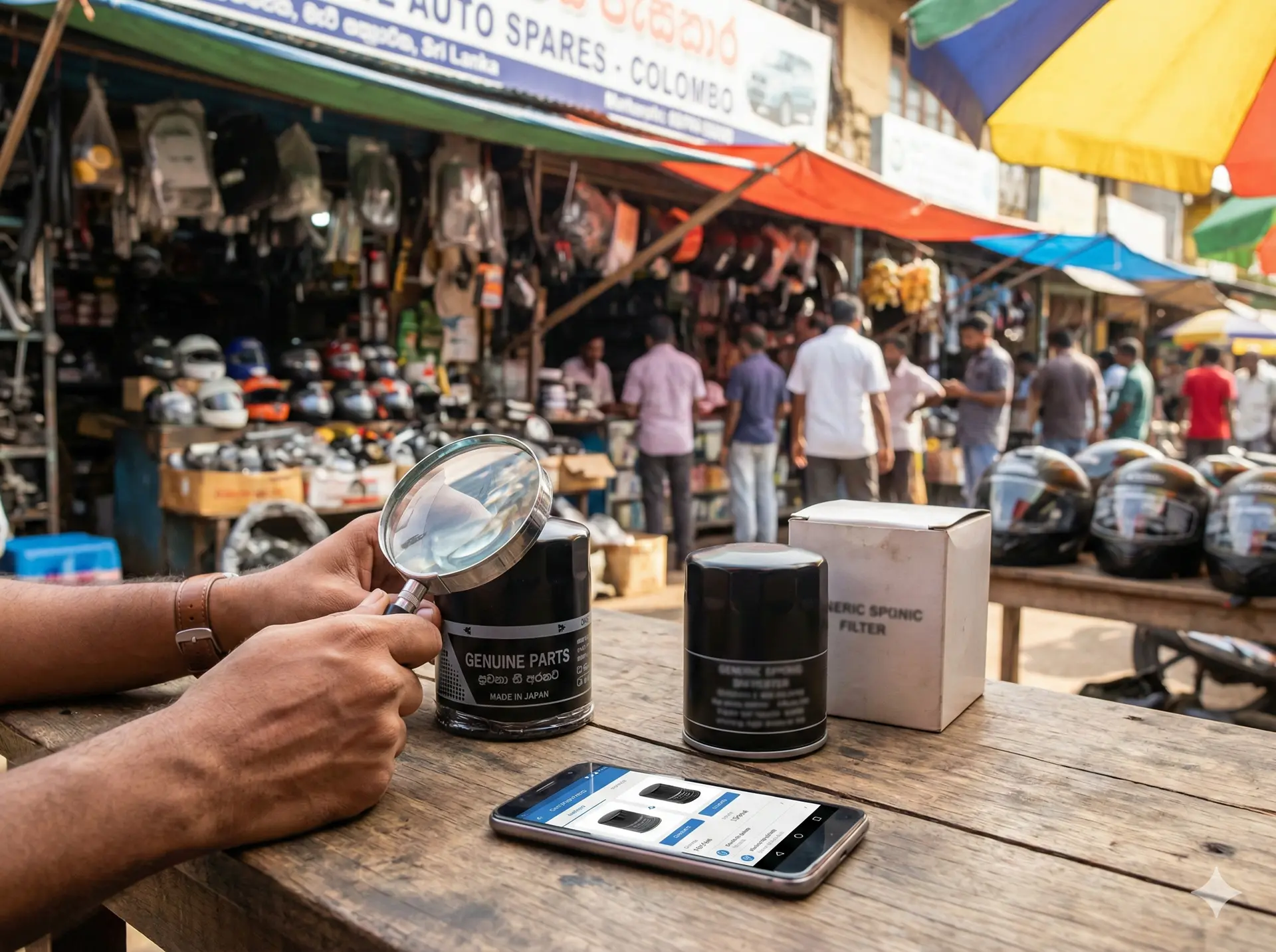
Learn to identify fake car parts in Sri Lankan markets. Expert tips on spotting counterfeits, finding genuine parts, and protecting your safety and wallet.
The Lankawebsites editorial team curates, fact-checks, and updates guides on personal finance, property, health, immigration, legal, business, and lifestyle topics relevant to Lankawebsites readers. Articles are produced with AI assistance and reviewed by the editorial team before publication.
You walk into a spare parts shop in Pettah, quoted Rs. 2,500 for a brake pad that usually costs Rs. 8,000 at an authorised dealer. The shopkeeper assures you it's 'original Japanese quality', the packaging looks convincing, and you're tempted to save Rs. 5,500. But here's the uncomfortable truth: counterfeit car parts flood Sri Lanka's automotive market, and that 'bargain' brake pad could fail catastrophically when you need it most, putting your life and your passengers' lives at risk . The Ceylon Motor Traders Association has raised serious concerns about vehicles being restored with counterfeit spare parts, particularly as the used vehicle market expands .
Fake car parts aren't just about losing money—they're about safety, reliability, and protecting your vehicle's long-term health. Whether you're shopping in Colombo's bustling markets or smaller town garages, knowing how to spot counterfeits protects you from dangerous products and unethical sellers. Let's explore exactly how to identify fake parts and where to buy genuine components with confidence.
Why Fake Car Parts Are Dangerously Common
The counterfeit auto parts industry thrives on consumer desire for lower prices combined with limited awareness of authenticity markers. Fake parts manufacturers replicate packaging, logos, and even serial numbers with increasing sophistication, making detection challenging for average buyers .
The Real Dangers
Counterfeit parts pose severe safety risks that far outweigh any initial cost savings. Fake brake pads may use inferior friction materials that fail under heat, dramatically increasing stopping distances. Counterfeit oil filters can allow debris into your engine, causing accelerated wear and eventual failure. Fake airbag components may not deploy properly during accidents, removing crucial life-saving protection . These aren't theoretical risks—they're documented failures that have caused injuries and deaths globally.
Beyond safety, counterfeit parts damage your vehicle in ways that create expensive cascading failures. A fake fuel filter allowing contaminants through can destroy fuel injectors costing hundreds of thousands of rupees to replace. Counterfeit bearings that fail prematurely can damage surrounding components, turning a Rs. 5,000 repair into a Rs. 150,000 nightmare . The financial cost of fake parts eventually far exceeds what you 'saved' initially.
Visual Inspection: Your First Line of Defence
Spotting fake parts often starts with careful examination before purchase. Developing a trained eye for quality differences protects you from the most obvious counterfeits.
Packaging Quality Assessment
Genuine parts come in high-quality packaging with sharp, clear printing and accurate colour reproduction. Examine the box or wrapping closely for blurry logos, misspelled words, or inconsistent fonts—these are telltale signs of counterfeit packaging . Authentic packaging typically includes tamper-evident seals that cannot be resealed once opened. If seals are missing, damaged, or look like they've been reapplied, question the part's authenticity .
Check for security features like holograms, special inks, or embossed logos that counterfeiters find difficult to replicate perfectly. Toyota, Honda, and Nissan parts often include these features. Compare the packaging to images from the manufacturer's official website if you're uncertain—genuine packaging will match exactly .
Logo and Font Examination
Manufacturers invest heavily in consistent branding. Study the manufacturer's logo carefully—counterfeiters often get subtle details wrong, such as font thickness, letter spacing, or logo proportions . Toyota's logo, for instance, has specific ellipse proportions that fakes frequently distort slightly. Honda's 'H' has precise angles that counterfeits may not reproduce accurately.
Font quality provides another clue. Genuine parts use crisp, professionally printed text with consistent sizing and spacing. Fake parts often show uneven printing, incorrect fonts, or text that looks fuzzy or poorly registered . Even slight differences indicate you're not looking at an authentic part.
Build Quality and Finish
Handle the part itself and assess its physical characteristics. Genuine components exhibit superior finish quality with smooth edges, precise moulding, and consistent colouring throughout. Counterfeit parts often feel lighter due to inferior materials, show rough surfaces or sharp edges from poor manufacturing, display uneven texture or inconsistent colour, and have visible moulding imperfections or flash .
Compare weight if possible—many fake parts use cheaper, lighter materials. A genuine Toyota brake disc, for example, has a specific heft that a counterfeit made from inferior metal won't match. Trust your hands—if something feels cheap or poorly made, it probably is .
Serial Numbers and Barcodes: Digital Verification
Modern genuine parts include trackable identifiers that counterfeiters struggle to replicate properly.
Serial Number Verification
Most major manufacturers stamp or etch unique serial numbers on genuine parts. Toyota includes barcodes and serial numbers that can be cross-referenced in their database to verify authenticity . When purchasing a part, note the serial number and contact the official dealer to verify it matches their records. If the seller refuses to provide the serial number or claims it's worn off, treat this as a red flag.
Some counterfeiters copy serial numbers from genuine parts, but each legitimate number should be unique. If you verify a serial number and discover it's been registered to a different part or vehicle, you're definitely looking at a fake . This verification step takes minutes but provides definitive confirmation of authenticity.
QR Code Scanning
Many manufacturers now embed QR codes on parts and packaging that link to authenticity verification systems. Scan these codes using your smartphone—genuine parts will direct you to the manufacturer's official website with product details and confirmation. If the QR code doesn't work, directs to a suspicious website, or has been used multiple times (indicating copies), the part is likely counterfeit .
Price Reality Check: When Deals Seem Too Good
Understanding market prices helps you spot suspiciously cheap offers that indicate fake parts.
Knowing Genuine Part Prices
Before shopping, research the typical price range for the specific part you need from authorised dealers. Check prices from established suppliers like GS Auto, Maruichi, Jayasiri Motors, or authorised brand service centres . If an independent seller offers the 'same' part for 50-70% less, question why the dramatic difference exists.
Remember that genuine parts carry inherent costs including manufacturer quality control, warranty coverage, proper materials and manufacturing standards, and legitimate import duties and taxes. These factors set a price floor below which genuine parts cannot realistically be sold . When someone offers prices well below this floor, they're either selling stolen goods or counterfeits—neither of which you should buy.
The Pettah Market Reality
One Reddit user shared their experience with mobile repair vendors in Colombo's posh areas charging Rs. 8,500 for a part they later found genuine at Polek Trade Centre in Pettah for Rs. 1,500 . This illustrates price variations across Sri Lankan markets, but it also highlights the importance of verification. Pettah offers competitive prices, but its massive market also attracts counterfeit sellers. Always verify authenticity rather than assuming low price means fake or high price guarantees genuine.
Where to Buy Genuine Parts in Sri Lanka
Purchasing from trusted sources dramatically reduces your counterfeit risk.
Authorised Dealers and Service Centres
Authorised dealers remain the safest choice for guaranteed genuine parts. Toyota, Honda, Nissan, Mitsubishi, and other major brands operate authorised service centres throughout Sri Lanka that stock only manufacturer-approved components . Kia Motors Lanka, for instance, operates a state-of-the-art spare parts centre fully stocked with original Kia parts, and offers a 5-year/150,000km warranty that transfers to subsequent owners .
These centres cost more, but you're paying for authenticity guarantees, proper warranty coverage, expert installation advice, and manufacturer accountability. If you're uncertain about a part's authenticity elsewhere, visit an authorised dealer to compare—they'll show you what genuine parts should look like .
Reputable Independent Suppliers
Several established independent importers have built strong reputations for genuine parts. GS Auto, one of Sri Lanka's leading providers, distributes 100% Japanese genuine parts for Toyota, Lexus, and other brands, with multiple locations across Colombo . Maruichi (Pvt) Ltd, established in 2003 in Nugegoda, is renowned for reliable imports of body parts, engine parts, and accessories with a commitment to genuine quality .
Alltrade Enterprises specialises in genuine Nissan, Infiniti, Subaru, Toyota, and Lexus parts, offering wholesale prices whilst maintaining authenticity standards . Vikasitha Auto imports parts directly from Japan and specialises in reconditioned engines and transmissions . These established businesses stake their reputations on selling authentic parts, making them safer than unknown street vendors.
Verifying Smaller Suppliers
If you're considering a smaller shop or new supplier, ask for proof of authenticity including original supplier invoices, import documentation showing legitimate sources, and warranty paperwork from manufacturers. Legitimate businesses can provide this documentation; counterfeit sellers cannot or will make excuses .
Understanding Warranties and Consumer Rights
Knowing your legal protections helps you demand accountability from sellers.
Manufacturer Warranties
Genuine parts come with manufacturer warranties covering defects in materials and workmanship under normal use. These warranties typically last 6-12 months for regular parts and longer for major components. Reconditioned parts from reputable suppliers offer 1-3 month warranties depending on the component . Always request written warranty documentation—if a seller refuses or claims warranties 'aren't necessary', walk away.
Consumer Affairs Authority Protection
The Consumer Affairs Authority (CAA) of Sri Lanka protects consumers from defective goods and fraudulent practices . If you discover you've purchased counterfeit parts, you can file a complaint with the CAA. The authority has powers to conduct inquiries, order refunds or replacements, and take action against sellers engaging in fraud .
Document everything when purchasing parts: keep receipts, take photos of packaging and parts, note seller details and location, and save any written or digital communications. This documentation supports your case if you need to file a complaint .
Common Counterfeit Parts in Sri Lankan Markets
Certain components are more frequently counterfeited due to high demand and easier manufacturing.
High-Risk Categories
Brake pads and discs are among the most commonly faked parts due to high replacement frequency and relatively simple manufacturing . Oil filters, air filters, and fuel filters are also frequent counterfeits—their simple construction makes them easy to copy. Spark plugs, particularly for popular models like the Toyota Aqua and Honda Fit, appear widely in counterfeit versions.
Electrical components including sensors, ignition coils, and alternators are increasingly counterfeited with sophisticated-looking packaging. Bearings, timing belts, and water pumps round out the commonly faked categories. Exercise extra caution when purchasing these items from unfamiliar sources .
Least Likely Counterfeits
Complex assemblies like complete engines, transmissions, and electronic control units are rarely counterfeited due to manufacturing complexity and cost. Body panels with precise fitment requirements and unique styling are difficult to fake convincingly. Highly specialised components for luxury or uncommon vehicles typically don't attract counterfeiters due to limited market size.
Red Flags That Scream 'Fake'
Certain warning signs should immediately raise suspicion about part authenticity.
The seller cannot or will not provide verifiable documentation of the part's origin. Packaging lacks security features, has obvious quality issues, or doesn't match manufacturer standards. The part is significantly lighter, differently coloured, or lower quality than genuine versions . No warranty is offered, or the seller downplays warranty importance. Serial numbers are missing, worn off, or can't be verified through manufacturer channels .
The price is dramatically lower than authorised dealers without reasonable explanation. The seller pressures you to buy quickly or discourages comparison shopping. Multiple shops in the same area offer identical 'too good to be true' prices—suggesting a common counterfeit supplier. The seller becomes defensive or evasive when you ask detailed authenticity questions .
Smart Shopping Practices
Adopting careful purchasing habits protects you from counterfeits whilst getting fair prices.
Research Before You Shop
Know exactly what part you need including manufacturer part numbers, which are typically found in your vehicle's manual or available from authorised dealers. Having the specific part number prevents sellers from substituting similar-looking but incorrect components—genuine or fake. Research the genuine part's appearance online so you know what to expect .
Check current genuine part prices from multiple authorised sources to understand the legitimate price range. Join online automotive communities on platforms like AutoLanka forums where experienced members share supplier recommendations and fake part warnings . This crowdsourced knowledge helps you identify trustworthy sellers and avoid known problem shops.
In-Person Inspection
Never buy significant parts sight-unseen or based solely on phone descriptions. Visit shops personally to inspect parts before purchase. Bring a knowledgeable friend or mechanic if you're uncertain about your own ability to assess authenticity . Take time to examine packaging, part quality, and documentation thoroughly—don't let sellers rush your decision.
If buying online, purchase only from established platforms with buyer protection and review systems. Read reviews carefully, particularly negative ones describing counterfeit experiences. Request detailed photos showing all angles, markings, and serial numbers before committing .
Building Relationships with Trusted Mechanics
Develop a relationship with a reputable mechanic who sources genuine parts. Good mechanics stake their reputation on using quality components and typically have established supply chains ensuring authenticity . They can often purchase parts at trade prices, reducing the cost gap between independent shops and authorised dealers.
Ask your mechanic where they source parts and request to see packaging and documentation. Mechanics who use quality parts will happily show you and explain their sourcing. Those who become defensive or secretive may be cutting corners with counterfeit components.
What to Do If You've Bought Fake Parts
Discovering you've purchased counterfeits after installation requires immediate action to protect your rights and vehicle.
Immediate Steps
Stop using the vehicle if the fake part is safety-critical like brakes, steering components, or suspension parts. Document the fake part thoroughly with photographs showing all angles, serial numbers, packaging, and installation location. Gather all purchase documentation including receipts, communication records, and seller information .
Remove the counterfeit part and have it inspected by an authorised dealer who can provide written confirmation of its fake status. This documentation is crucial for complaints and potential legal action .
Seeking Recourse
Return to the seller first and demand a refund or replacement with a genuine part, presenting your evidence. Many sellers will cooperate when confronted with clear proof to avoid escalation. If the seller refuses, file a complaint with the Consumer Affairs Authority providing all documentation and evidence . The CAA can investigate and order remedies.
Leave detailed online reviews on Google, Facebook, and automotive forums warning others about the seller and your experience. Be factual and specific—emotion undermines credibility. Share part photos and your evidence to help others avoid the same seller .
The Long-Term Value of Genuine Parts
Whilst genuine parts cost more initially, they deliver superior long-term value that justifies the premium.
Genuine parts last significantly longer than counterfeits, reducing replacement frequency and labour costs. They maintain your vehicle's warranty validity—using counterfeit parts can void manufacturer warranties on new or certified pre-owned vehicles . Genuine components preserve vehicle resale value—buyers pay more for vehicles with documented genuine parts service history.
Perhaps most importantly, genuine parts provide peace of mind about safety and reliability. You're not wondering whether your brakes will work in an emergency or your oil filter is protecting your engine properly. This confidence is genuinely valuable, particularly when transporting family or navigating Sri Lanka's challenging roads .
Protecting Yourself in 2026 and Beyond
The counterfeit parts problem isn't disappearing—if anything, counterfeiters are becoming more sophisticated with their replicas. Your defence is knowledge, vigilance, and commitment to purchasing from verified sources even when temptation to save money is strong.
Start by educating yourself about the specific parts your vehicle needs most frequently. Research authorised dealers and reputable independent suppliers in your area, visiting them to understand what genuine parts look like and cost. Build relationships with trustworthy mechanics who prioritise quality over profit margins. Join online automotive communities where members share experiences and warnings about counterfeit sellers.
When shopping, take your time. Inspect carefully, ask questions, demand documentation, and verify serial numbers. If something seems off—packaging quality, price, seller behaviour—trust your instincts and walk away. The few thousand rupees you might save isn't worth the safety risks, vehicle damage, or eventual repair costs from counterfeit parts.
Remember that authorised dealers and reputable suppliers exist throughout Sri Lanka offering genuine parts with proper warranties and accountability. Yes, they cost more than suspicious bargains in back-alley shops, but that premium buys authenticity, safety, reliability, and peace of mind. Your vehicle is likely one of your most valuable assets, and your safety and your family's safety depend on it functioning properly. Don't compromise either by gambling on counterfeit parts.
Report suspected counterfeit sellers to the Consumer Affairs Authority to protect other consumers. Share your experiences—both positive with trustworthy suppliers and negative with fake part sellers—on online forums and review platforms. Together, we can make Sri Lanka's automotive parts market safer and more transparent, protecting consumers and honest businesses whilst making life harder for counterfeiters and fraudulent sellers. Your vigilance and informed decisions don't just protect you—they help protect everyone.
Frequently Asked Questions
Sources & References
-
1
How to Verify Genuine Auto Parts: A Comprehensive Guide — blog.acviss.com
-
2
Surging Frauds in the Used-Vehicle Market - Ceylon Motor Traders Association — www.theinvestor.lk
-
3
How to Identify and Avoid Counterfeit Car Parts — www.bestmotorpart.com
-
4
Fake vs. Genuine: Spotting Counterfeit Car Parts — greenwayautorecycling.com
-
5
Don't Get Fooled: How to Spot and Avoid Counterfeit Car Parts — greenwayautorecycling.com
-
6
6 Ways To Spot Fake vs Genuine Toyota Car Parts — yotashop.com
-
7
How to Identify Genuine vs Fake Car Parts — www.linkedin.com
-
8
Original VS Fake Spare Parts - How to Tell the Difference — www.carsome.my
-
9
Checking Barcodes and Serial Numbers - Toyota Parts — www.yotashop.com
- 10
-
11
Maruichi Pvt Ltd - Genuine Spare Parts Importer Sri Lanka — maruichiauto.com
-
12
Warranty Information - Auto Parts Sri Lanka — autopartssrilanka.com
-
13
Beware of Scams by Repair Vendors in Colombo - Reddit Discussion — www.reddit.com
-
14
After Sale Services - Kia Motors Lanka — www.kia.lk
-
15
Toyota Sri Lanka - GS Auto Genuine Parts — gsauto.lk
-
16
Alltrade Enterprises - Sri Lanka Genuine Auto Parts Supplier — alltradeenterprises.com
-
17
Vikasitha Auto - Japan Vehicle Spare Parts in Sri Lanka — www.vikasitha.com
-
18
Jayasiri Motors - Genuine Auto Spare Parts — jayasirimotors.lk
- 19
-
20
AutoLanka Forums - Sri Lanka Automotive Community — forums.autolanka.com
Related Articles
Best Engine Oils for Sri Lankan Roads in 2026: Comparisons and Recommendations
Driving on Sri Lanka's roads means battling heat, humidity, dust from the dry zones, and heavy traffic in Colombo. With temperatures often soaring above 30°C and our tropical climate accelerating engi
Preparing Your Car for Sri Lanka's 2026 Southwest Monsoon
Protect your vehicle from monsoon damage with this comprehensive preparation guide for Sri Lanka's 2026 southwest monsoon season.
Top Mechanics in Colombo for 2026 Car Servicing
Discover Colombo's most trusted mechanics for 2026, from DIMO and Sterling to independent workshops. Get expert tips on choosing reliable car service.
Hybrid vs Petrol Cars: Best Choice for Sri Lanka 2026
Comparing hybrid vs petrol cars in Sri Lanka for 2026. Discover real fuel costs, maintenance expenses, and which option suits your driving needs best.