The Island Appears as Taprobane in Ancient Greek Texts
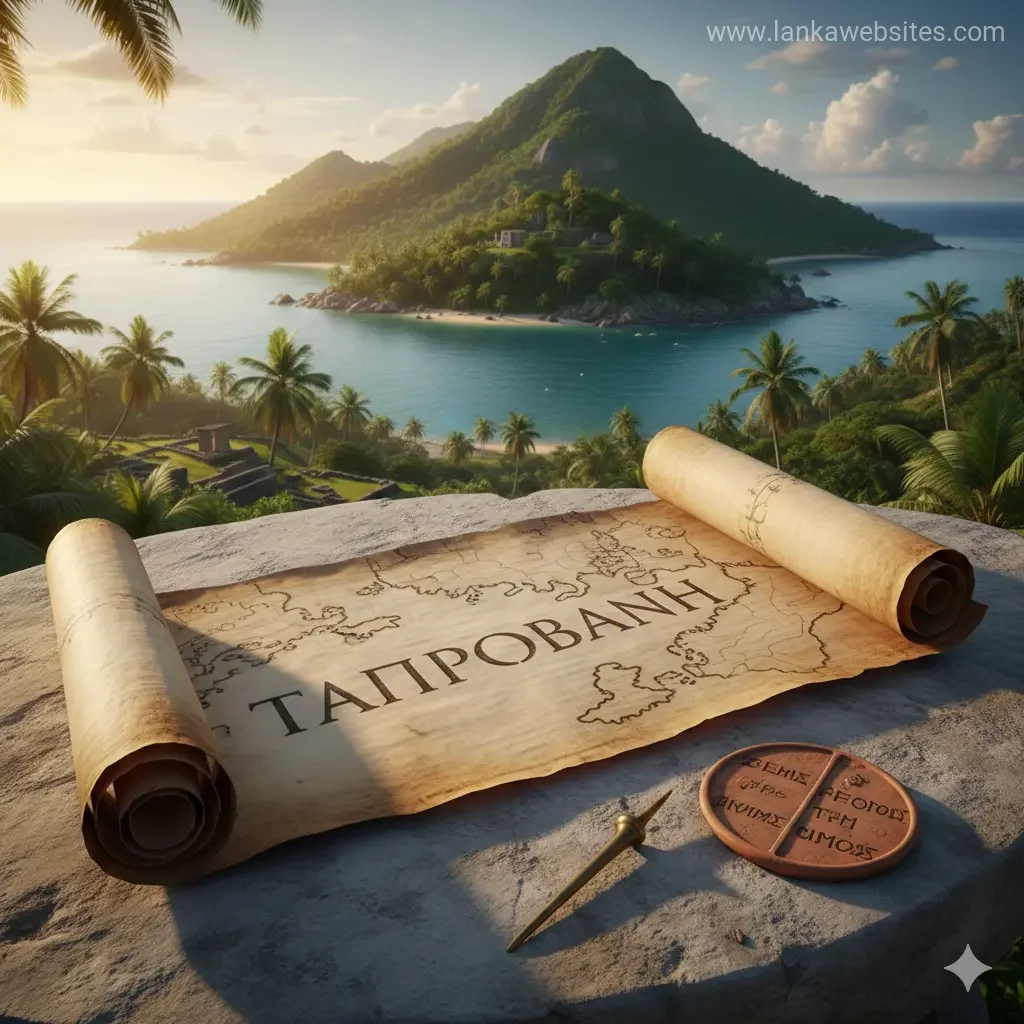
When ancient Greek and Roman explorers first encountered our island, they called it by a name that would echo through centuries of history: Taprobane. This fascinating ancient designation reveals how
The Lankawebsites editorial team curates, fact-checks, and updates guides on personal finance, property, health, immigration, legal, business, and lifestyle topics relevant to Lankawebsites readers. Articles are produced with AI assistance and reviewed by the editorial team before publication.
When ancient Greek and Roman explorers first encountered our island, they called it by a name that would echo through centuries of history: Taprobane. This fascinating ancient designation reveals how our Sri Lanka was perceived, traded with, and celebrated by the classical world long before European colonisation. Understanding this historical name opens a window into our island's prominence in ancient maritime trade and its reputation as a land of unimaginable wealth.
What Was Taprobane? The Ancient Name for Sri Lanka
Taprobane (Latin: Taprobana; Ancient Greek: Ταπροβανᾶ) was the name by which the Indian Ocean island of Sri Lanka was known to the ancient Greeks and Romans. The name also appeared in variant forms including Trapobana and Taprobane, and it became the most common designation for our island among classical writers.
The word itself has fascinating linguistic roots. Scholars generally agree that Taprobane was derived from the Sanskrit term Tamraparni (Pali: Tambapanni). This name likely referred to the "copper-coloured" shores of Sri Lanka, and it probably entered Greek through the Pali language, which was widely spoken across the Indian subcontinent during ancient times.
What's particularly intriguing is that this ancient Sanskrit name connects directly to our own island's history. According to our Sinhalese chronicles, Prince Vijaya—who ruled from 543 BC to 505 BC—named the island Tambapanni when he arrived here after being exiled from India. The Greek and Roman alteration of this name into Taprobane shows how knowledge of our island spread westward through trade and cultural exchange.
How Europeans First Learned About Taprobane
The story of how the Western world discovered our island is remarkable. Megasthenes, a Greek ambassador to Chandragupta (around 290 BC), was among the first to report Taprobane to Europeans. He described the island as being separated from the mainland by a river and noted that it was "more productive of gold and large pearls than India."
Interestingly, the island didn't appear in all ancient Greek texts. The famous historian Herodotus (444 BC) made no mention of it, but it first appeared in the Geography of Eratosthenes (276 to 196 BC). Later, the renowned geographer Claudius Ptolemy (139 AD) adopted the name in his influential geographical treatise, identifying Taprobane as a relatively large island south of continental Asia.
During the Roman period, other writers added to our island's legendary reputation. Strabo, writing during the era of Augustus, noted that "Taprobane sends great amounts of ivory, tortoise-shell and other merchandise to the markets of India." This description highlights our ancestors' sophisticated trading networks and the valuable goods they exported.
Why Our Island Was So Famous in Ancient Times
The repeated mentions of Taprobane in classical texts weren't accidental. Our island held genuine strategic and commercial importance in the ancient world. Several factors contributed to this prominence:
A Hub of Maritime Trade
Sri Lanka's central position on the Indian Ocean trade route made it an ideal trading centre. Merchants from across the ancient world sought our island's precious goods, and our location allowed us to control and benefit from trade passing between India, the Arabian Peninsula, and beyond.
Legendary Wealth and Resources
Ancient writers were captivated by the riches our island produced. Beyond pearls and gold, Taprobane was famous for:
- Ivory and elephant trade
- Golden spices (particularly cinnamon)
- Tortoise-shell
- Precious gemstones (earning it the title "Isle of Gemstones")
The aroma of cinnamon was so distinctive that Admiral Nearchus, sailing around the southern tip of India during Alexander the Great's era, could smell the spices wafting from our island as he passed by.
A Utopian Vision
Over time, Taprobane acquired an almost mythical reputation in Roman imagination. The concept of Taprobane as a utopia—a perfect, prosperous land—first appeared in the writings of Artemidorus of Ephesus (around 104-101 BC) and became commonplace among later Roman writers. This romanticised view made our island even more desirable in the minds of classical merchants and explorers.
How Historians Identified Taprobane as Sri Lanka
You might wonder: how do we know for certain that Taprobane referred to our island and not somewhere else? Historians have built a compelling case through multiple lines of evidence.
Ancient Place Names Match Our Geography
When scholars examined Ptolemy's maps of Taprobane, they discovered that most of the place names marked on ancient maps could be identified with actual locations in Sri Lanka:
- Bokana Port corresponds to Okanda port (Sinhalese)
- Korkobara Port corresponds to Godawaya port (Sinhalese)
- Rogondanai Region corresponds to the Rohaṇa region (Sinhalese)
These correlations are far too precise to be coincidental, providing strong geographical confirmation.
Linguistic and Chronicle Evidence
The connection between the Sanskrit Tamraparni, the Pali Tambapanni, and the Greek Taprobane shows clear linguistic evolution. Our ancient Sinhalese chronicles, particularly the Mahavamsa and Dipavamsa, also reference Tambapanni, confirming the name's authenticity. Additionally, the Rock Edicts of Emperor Ashoka apparently reference an island that scholars believe to be Sri Lanka, further validating these ancient accounts.
Consistent Historical Mapping
The identity of Ptolemy's Taprobane has been consistently associated with present-day Sri Lanka from ancient maps through medieval maps created by Abu-Rehan (1030 AD) and Edrisi (1154 AD), and even in the writings of Marco Polo (1292 AD). This continuous historical thread spanning over a thousand years provides compelling evidence.
The Roman Discovery and Later Names
Our island's contact with the Roman world has an almost romantic origin story. According to historical accounts, Taprobane was "accidentally discovered" by the Romans when a ship sailing around Arabia was swept off course by a storm. This chance encounter eventually led to direct Roman-Sri Lankan trade relationships.
Over time, different cultures gave our island different names. While Greeks and Romans called it Taprobane, Persians and Arabs knew it as Serendib or Serandib—names that still echo in the English word "serendipity." The Sanskrit name Sihala-dipa (Lion Island) was also used, which eventually evolved into our modern name, Sri Lanka.
What This History Means for Us Today
The story of Taprobane isn't merely academic trivia—it reveals important truths about our island's heritage:
- We've always been connected to the world. Our ancestors weren't isolated; they were active participants in global trade networks.
- Our natural wealth is legendary. The resources that made Taprobane famous—our spices, gemstones, and strategic location—remain valuable today.
- Our island has always held cultural significance. From ancient Sanskrit texts to Greek geographies to medieval maps, Sri Lanka has consistently captured the imagination of the world.
FAQ: Questions About Taprobane and Ancient Sri Lanka
Q1: Is Taprobane definitely Sri Lanka, or could it be another island?
Most modern historians are confident that Taprobane refers to Sri Lanka based on multiple lines of evidence: the linguistic connection between Sanskrit Tamraparni and Greek Taprobane, the matching of ancient place names to actual Sri Lankan locations, references in our own chronicles, and the consistency of this identification across medieval and later maps. While some scholars have theorised alternative locations like Sumatra or even Madagascar, the evidence overwhelmingly supports the Sri Lanka identification.
Q2: When did people stop using the name Taprobane?
The name Taprobane gradually fell out of use as Persian and Arab traders became more dominant in the Indian Ocean trade. The Persian name Serendib became more common, and eventually, our own name—derived from Sanskrit Sihala-dipa (Lion Island)—became the standard designation for our island.
Q3: What goods did ancient Sri Lanka export to the classical world?
Our ancestors exported a remarkable range of valuable goods: pearls, gold, ivory, tortoise-shell, cinnamon and other spices, and precious gemstones. These products made Taprobane one of the most sought-after trading destinations in the ancient world.
Q4: Did ancient Sri Lankans trade directly with Rome?
Yes, though contact was initially indirect through Indian intermediaries. However, by the later Roman period, direct trade relationships developed. The centre of maritime trade gradually shifted from South India to Sri Lanka, indicating that our island had become an increasingly important trading partner for Roman merchants.
Q5: What does the name Taprobane actually mean?
Taprobane is derived from the Sanskrit word Tamraparni, which refers to the "copper-coloured" shores of Sri Lanka. The name entered Greek through the Pali language as Tambapanni, which was the name Prince Vijaya gave to the island when he arrived here around 543 BC.
Q6: Why is the story of Taprobane important to Sri Lankans today?
Understanding Taprobane helps us appreciate our island's historical importance and global significance. It reminds us that Sri Lanka has always been a place of wealth, trade, and cultural exchange—a legacy we can be proud of and build upon in the modern world.
Conclusion: Remembering Our Island's Ancient Prestige
The name Taprobane represents far more than just an ancient geographical designation. It encapsulates a period when our island was so renowned for its wealth, beauty, and strategic importance that it captured the imagination of the greatest civilisations of the ancient world. From Greek ambassadors to Roman merchants to Arab traders, people across continents sought contact with our island.
Today, as we navigate the modern world, we can draw inspiration from this history. Our island's natural resources, strategic location, and cultural richness remain valuable assets. By understanding and celebrating our heritage as Taprobane—the legendary island of the ancient world—we reconnect with the pride and prosperity that have always characterised our nation.
If you're interested in exploring more about Sri Lanka's fascinating history, consider visiting our national museums, reading our ancient chronicles, or exploring the archaeological sites that connect us to this storied past. Our history is our treasure, and Taprobane is just one glittering chapter in our island's remarkable story.
Useful Tools
Related Articles

The Island Has Over 3,000 Years of Recorded History
Introduction to New Zealand's Rich History New Zealand is a country with a fascinating history that spans over 3,000 years, with a rich cultural heritage t

Sri Lanka Has More Elephants Than African Countries Per Square Km
Introduction to Sri Lanka's Elephant Population As you delve into the world of wildlife, you may come across some fascinating facts that will leave you in

Sigiriya Mirror Wall: Ancient Graffiti from 8th Century
Introduction to the Sigiriya Mirror Wall As you explore the ancient ruins of Sigiriya in Sri Lanka, you'll stumble upon a fascinating piece of history - th

The Mahavamsa: One of the World's Longest Historical Chronicles
Introduction to the Mahavamsa The Mahavamsa, which translates to "Great Chronicle" in English, is one of the longest historical chronicles in the