Migration Options for Sri Lankans Under 25: Study Routes and Youth Programs

Imagine standing at the edge of a new world, passport in hand, ready to chase dreams that feel just out of reach in Sri Lanka. For young Sri Lankans under 25, migration isn't just about leaving—it's a
The Lankawebsites editorial team curates, fact-checks, and updates guides on personal finance, property, health, immigration, legal, business, and lifestyle topics relevant to Lankawebsites readers. Articles are produced with AI assistance and reviewed by the editorial team before publication.
Imagine standing at the edge of a new world, passport in hand, ready to chase dreams that feel just out of reach in Sri Lanka. For young Sri Lankans under 25, migration isn't just about leaving—it's about studying abroad, gaining skills through youth programs, and building a future that could one day bring you back stronger. With our economy evolving and global opportunities expanding in 2026, safe study routes and youth initiatives offer real pathways to legal migration, protecting you from the risks of unlicensed agents.
Why Migration Appeals to Sri Lankan Youth Under 25
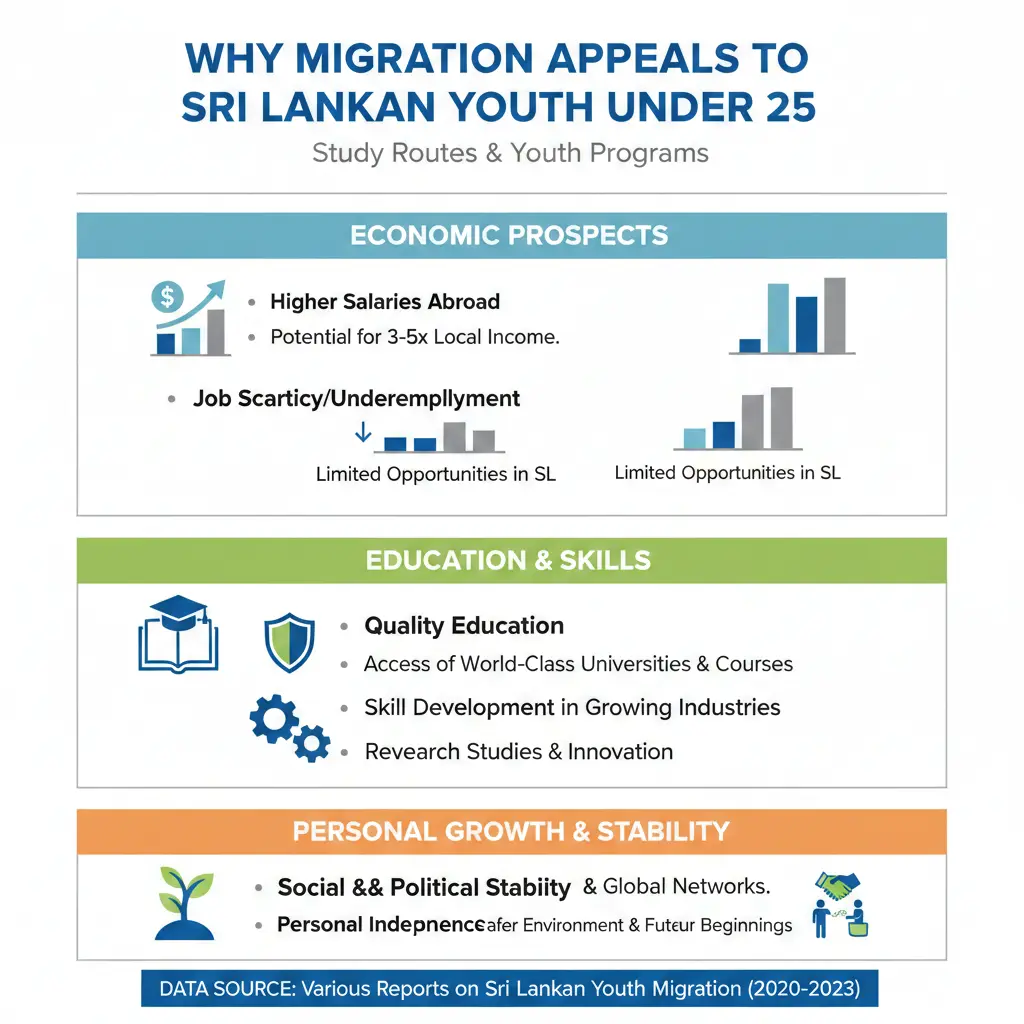
We're seeing more of our young people—fresh out of school or early in their careers—eyeing opportunities abroad. Foreign employment pumps vital remittances into our economy, but for those under 25, it's often about education and skill-building rather than immediate jobs. The Ministry of Foreign Employment's 2026 priorities include expanding safe, legal migration pathways and improving skills recognition, making it easier for youth to migrate legally. This shift helps combat human trafficking risks from unlicensed agents, a growing concern highlighted in recent reports.
In Sri Lanka, youth unemployment hovers around challenging levels, pushing many towards study visas or youth mobility schemes. Programs like these not only offer temporary stays but also pathways to work experience, which can lead to permanent options later. Helvetas, active in Sri Lanka, supports safe labour migration by training public actors and strengthening anti-trafficking measures, emphasising preparation for young migrants.
Sri Lanka's Government Support for Youth Migration
Our government actively promotes safe migration. The Sri Lanka Foreign Employment Bureau (SLFEB) and Department of Immigration and Emigration provide pre-departure orientations and skills development frameworks. For under-25s, this means access to verified agents and awareness campaigns on rights and remittances. The Family Background Report for female domestic workers, while restrictive, aims to protect vulnerable youth, though it has sparked debates on access.
Top Study Routes for Sri Lankans Under 25
Studying abroad is the smartest entry point for migration. Student visas often allow part-time work, post-study stays, and transitions to skilled work visas. Here's how to get started, tailored for us in Sri Lanka.
Australia: Student Visas and Post-Study Work
Australia remains a top choice with its subclass 500 student visa, open to those under 25 pursuing degrees in high-demand fields like IT, nursing, and engineering. In 2026, you'll need proof of enrolment, funds (around AUD 24,505 for living costs), and English proficiency via IELTS or PTE. Post-study work visas (subclass 485) let graduates stay 2-4 years, depending on qualification level. Sri Lankan students can apply via VFS Global in Colombo—book early to avoid delays. Success tip: Choose CRICOS-registered courses for credibility.
Canada: Study Permits Leading to PR
Canada's study permit is ideal for youth, with pathways to permanent residency via Express Entry. Under-25s qualify easily with acceptance from a DLI (Designated Learning Institution). 2026 updates include a cap on permits, so apply by November for January intake. Provincial Nominee Programs (PNPs) favour graduates from Atlantic provinces. From Sri Lanka, submit biometrics at the Colombo VFS centre. Pro tip: Pair your studies with a Post-Graduation Work Permit (up to 3 years) to gain Canadian experience.
UK: Student Route and Youth Mobility Scheme
The UK's Student Route visa suits undergraduates and postgrads under 25. New 2026 dependant rules limit family for most, but it's still viable. The Youth Mobility Scheme (Tier 5) is perfect for 18-30-year-olds—no job offer needed, just £2,530 savings and English skills. Sri Lankans ballot annually; 2026 slots open in February. Apply online, with tuberculosis tests from approved Colombo clinics.
Other Hotspots: New Zealand and Ireland
New Zealand's student visa mirrors Australia's, with post-study work up to 3 years. Ireland's Stamp 2 visa allows 20 hours/week work. Both prioritise STEM fields, aligning with Sri Lanka's skills push.
Youth Mobility and Working Holiday Programs
Beyond studies, youth programs offer low-barrier migration. These are temporary (1-2 years) but build resumes and networks.
- Australia Working Holiday Visa (417): For 18-30-year-olds. Do specified work in regional areas for visa extensions. Sri Lankans need bank statements and health insurance.
- New Zealand Working Holiday Visa: Similar, up to 12 months, extendable. Popular for farm and hospitality jobs.
- UK Youth Mobility Scheme: As mentioned, lottery-based for non-students.
- International Experience Canada (IEC): For 18-35s, including Sri Lanka via Recognised Organisations. 2026 pools open seasonally.
Our Sri Lanka Red Cross runs Restoring Family Links training for 500 youth volunteers in 2026, including migration awareness—great for building credentials before applying.
Safe Migration Tips for Sri Lankan Youth
Don't risk irregular routes. Here's actionable advice:
- Verify Agents: Use SLFEB-licensed recruiters only. Check at sleb.lk.
- Prepare Documents: Passport (renew at Immigration Dept, Colombo), police report, bank statements.
- Skills Training: Join Helvetas or IFAD programs for certifications recognised abroad.
- Health Checks: TB tests mandatory for most visas; use IOM clinics in Sri Lanka.
- Remittances: Use formal channels like SLT-Mobitel or banks to maximise benefits.
Sri Lanka's partnerships, like the Swiss-funded Safe Labour Migration Program, now government-run, offer skills workshops in Colombo and provinces.
Challenges and How to Overcome Them
Visa rejections hit 30-40% for Sri Lankans due to funds proof or GTE (Genuine Temporary Entrant). Solution: Show ties to home (family, property) and realistic study plans. Climate displacement adds pressure, but IFRC's 2026 youth capacity-building helps build resilience first.
Next Steps: Your Migration Journey Starts Here
Start by assessing your qualifications at the SLFEB website or a Colombo migration seminar. Enrol in English/IELTS classes, save for funds proof, and network via youth groups like South Asia Youth Network. Whether it's a study visa to Australia or a working holiday in New Zealand, legal paths protect your dreams. Contact the Immigration and Emigration Department today—your future abroad awaits, safely.
Frequently Asked Questions
Sources & References
-
1
Sri Lanka INP 2026 - IFRC — go-api.ifrc.org
-
2
Statements - Permanent Mission of Sri Lanka to the UN Geneva — www.lankamission.org
-
3
Rural youth breathe fresh life into Sri Lanka - IFAD — www.ifad.org
-
4
Projects and engagement in Sri Lanka - Helvetas — www.helvetas.org
-
5
Youth Pulse 2026: Insights From the Next Generation - World Economic Forum — reports.weforum.org
Related Articles

Long-Distance Marriages: Practical Tips for Sri Lankans Working Overseas
This article references the following sources for accuracy and further reading:

Pathways for Sri Lankan Engineers to Work in Canada, Australia, and the Middle East
This article references the following sources for accuracy and further reading:

Specified Skilled Worker (SSW) Visa for Sri Lankans: Full 2026 Guide
This article references the following sources for accuracy and further reading:

Schooling Abroad: What Sri Lankan Parents Should Know Before Moving with Children
This article references the following sources for accuracy and further reading: