How to Reunite with Your Family After Getting PR Abroad as a Sri Lankan
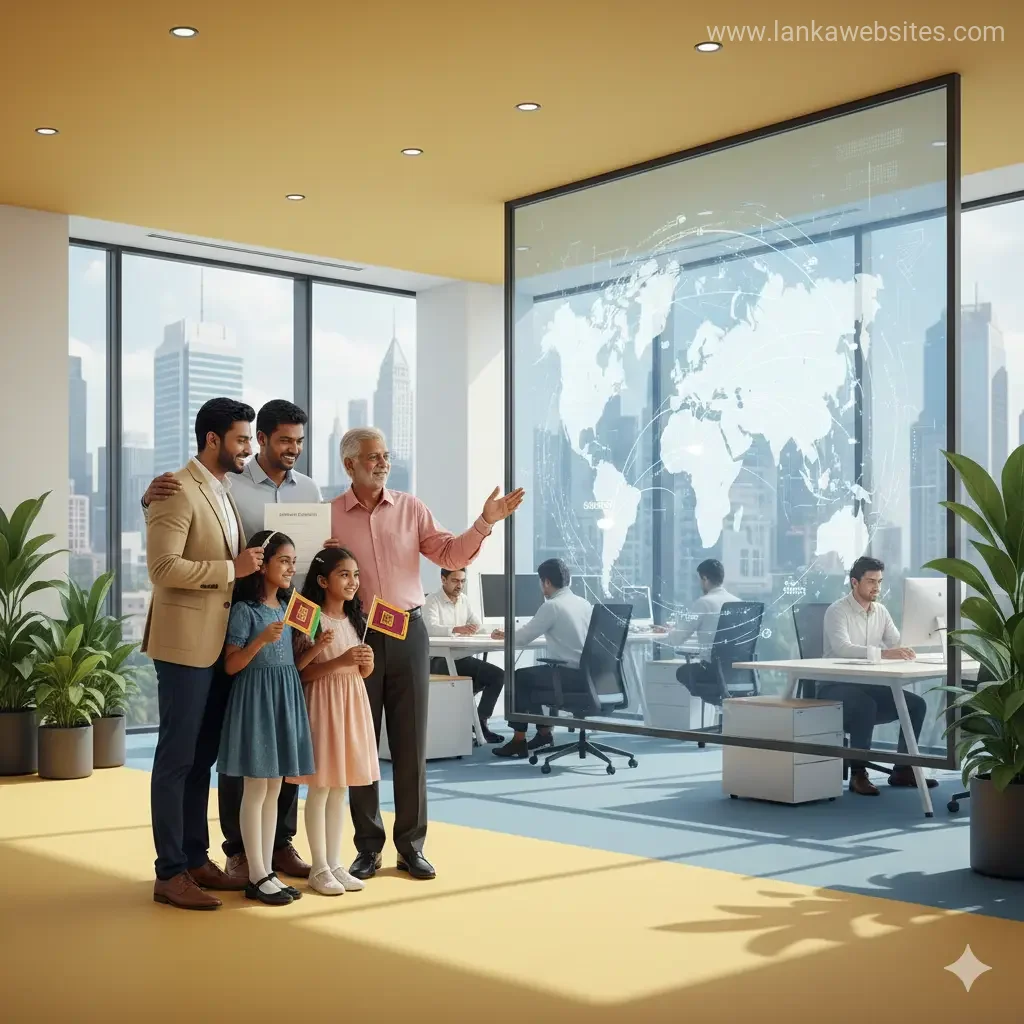
Getting permanent residency (PR) abroad is a major achievement for Sri Lankan families, but it often means leaving loved ones behind. The good news? There are proven pathways to reunite with your fami
The Lankawebsites editorial team curates, fact-checks, and updates guides on personal finance, property, health, immigration, legal, business, and lifestyle topics relevant to Lankawebsites readers. Articles are produced with AI assistance and reviewed by the editorial team before publication.
Getting permanent residency (PR) abroad is a major achievement for Sri Lankan families, but it often means leaving loved ones behind. The good news? There are proven pathways to reunite with your family once you've secured your PR status. Whether you're looking to bring your spouse, children, or parents, understanding the options available to you—both in your new country and back in Sri Lanka—can make the process smoother and faster.
Understanding Family Reunification as a PR Holder
Once you've obtained PR status in your destination country, most nations offer family reunification programs that allow you to sponsor dependents. The specific rules vary significantly by country, but the general principle is the same: as a PR holder with stable income and housing, you become eligible to bring family members to join you.
Many visa categories allow dependent spouses and children to migrate either immediately or after meeting certain conditions, though each country has different family migration rules. The timeline for family reunification typically ranges from several months to a few years, depending on your country of residence and the complexity of your application.
Key Steps to Reunite Your Family
Step 1: Check Your New Country's Family Reunification Rules
Before anything else, you need to understand your specific country's family reunification policies. Different nations have different requirements:
- Income requirements: Most countries require you to earn above a certain threshold to sponsor family members
- Housing standards: You'll typically need to prove you have adequate accommodation
- Processing times: Some countries process family reunification quickly (90 days or less), whilst others take 12-24 months
- Eligible dependents: Generally, spouses and children under 22 years qualify, though some countries have different age limits
Research your country's immigration website thoroughly or consult with a migration agent who specialises in family reunification.
Step 2: Prepare Required Documentation
Documentation is the backbone of any family reunification application. You'll typically need:
- Your PR certificate or visa
- Proof of income (employment letter, payslips, tax returns)
- Proof of accommodation (rental agreement, property deed, or mortgage documents)
- Marriage certificate (for spouse sponsorship)
- Birth certificates (for children)
- Police clearance certificates for all family members
- Medical examination reports
- Valid passports for all applicants
- Bank statements showing financial capacity
Ensure all documents are official, certified copies. Many countries require documents to be translated into their official language by a certified translator.
Step 3: Gather Documents from Sri Lanka
Your family members in Sri Lanka will need to obtain several documents from local authorities:
- Police Clearance: Available from your local police station or the Criminal Investigation Department (CID)
- Marriage Certificate: From the Registrar of Marriages in your district
- Birth Certificates: From the Registrar of Births in your district
- Educational Certificates: From schools and universities attended
- Medical Reports: From a certified medical practitioner
Collect these well in advance, as obtaining official documents in Sri Lanka can take 2-4 weeks.
Step 4: Submit Your Family Reunification Application
Once you've gathered all documents, submit your application through your country's immigration portal or office. Keep detailed records of:
- Application reference numbers
- Submission dates
- All correspondence with immigration authorities
- Payment receipts for visa fees
Most countries allow you to track your application status online.
Special Considerations for Sri Lankan Families
Spousal Sponsorship from Sri Lanka
If you're sponsoring a non-Sri Lankan spouse from abroad, they may still need to maintain a residence visa in Sri Lanka during the processing period. Sri Lanka offers spouse visas for non-Sri Lankan spouses of Sri Lankan citizens, with the first issuance being free of charge. This can be useful if your spouse needs to remain in Sri Lanka whilst waiting for their family reunification visa to be processed.
The New Sri Lankan Permanent Residency Scheme
It's worth noting that Sri Lanka has introduced a new permanent residency scheme for individuals of Sri Lankan descent and their dependents. Whilst this doesn't directly help you reunite abroad, it's useful context: if you're considering returning to Sri Lanka or if family members want to maintain ties, this scheme offers a pathway for persons of Sri Lankan descent to obtain permanent residency in Sri Lanka, with application costs ranging from USD 400 to USD 1,000.
Timeline Expectations
Family reunification timelines vary dramatically:
- Fast-track countries: Some European nations process family reunification in 90 days or less
- Standard processing: Most countries take 6-12 months
- Complex cases: Applications with additional security checks can take 18-24 months
Start the process as soon as your PR status is confirmed. Don't wait, as processing times are rarely shorter than expected.
Financial Considerations
Budget for the following expenses:
- Visa application fees: Typically USD 300-1,500 per family member
- Medical examinations: USD 150-400 per person
- Police clearance certificates: LKR 500-2,000 per person in Sri Lanka
- Document certification and translation: LKR 5,000-15,000
- Travel costs: Airfare for your family (typically USD 400-1,200 per person from Sri Lanka)
- Immigration agent fees: If you hire a professional (optional but recommended), USD 1,000-3,000
Common Mistakes to Avoid
Many Sri Lankan families make costly errors during family reunification:
- Incomplete documentation: Missing even one document can delay your application by months
- Incorrect visa selection: Choosing the wrong visa category wastes time and money
- False information: Providing inaccurate details is grounds for immediate rejection and potential future visa bans
- Poor planning: Not starting early enough and underestimating processing times
- Expired documents: Medical reports and police clearances have validity periods—ensure they're current when you submit
Frequently Asked Questions
Q: Can my parents join me on my PR visa?
A: Most countries don't include parents in standard family reunification. However, some nations offer parent sponsorship visas with higher income requirements. Check your country's specific policies. Some PR holders use alternative routes, such as parent visitor visas or retirement visas, to bring parents for extended stays.
Q: How long does it take to bring my family after getting PR?
A: Processing times range from 90 days to 24 months depending on your country. Start the application immediately after securing PR status. Most countries process applications faster if you submit complete documentation upfront.
Q: Do my children need separate visas?
A: Children under 22 years can typically be included in your family reunification application as dependents. However, children aged 16 and above may face visa fees in some countries. Each child will need their own visa document, but they're processed together as dependents.
Q: What if my spouse doesn't speak English?
A: Language requirements vary by country. Some nations require spouses to meet language proficiency standards before or after arrival. Check your country's requirements early, as your spouse may need to take language tests (IELTS or equivalent) before submitting the application.
Q: Can I bring my family whilst my PR application is still being processed?
A: No. You must have confirmed PR status before sponsoring family members. However, your family can visit you on tourist visas whilst you're waiting for your PR to be finalised.
Q: What happens if my family reunification application is rejected?
A: Rejections usually happen due to incorrect visa selection, incomplete documents, weak eligibility, or false information. If rejected, you can typically appeal or reapply with corrected information. Consult with an immigration lawyer to understand the specific reasons for rejection.
Next Steps
Family reunification is achievable, but it requires careful planning and attention to detail. Start by:
- Researching your specific country's family reunification policies on their official immigration website
- Creating a checklist of all required documents for both you and your family members
- Gathering documents from Sri Lanka well in advance
- Consulting with a migration agent if you're unsure about any requirements
- Submitting your application as soon as your PR status is confirmed
Reuniting with your family abroad is one of the most rewarding outcomes of securing PR. With proper planning and organisation, you can bring your loved ones to join you sooner than you might think. Start today, stay organised, and keep your eye on that reunion date.
Related Articles

Long-Distance Marriages: Practical Tips for Sri Lankans Working Overseas
This article references the following sources for accuracy and further reading:

Pathways for Sri Lankan Engineers to Work in Canada, Australia, and the Middle East
This article references the following sources for accuracy and further reading:

Specified Skilled Worker (SSW) Visa for Sri Lankans: Full 2026 Guide
This article references the following sources for accuracy and further reading:

Schooling Abroad: What Sri Lankan Parents Should Know Before Moving with Children
This article references the following sources for accuracy and further reading: