Rubber Plantations: Historic Cash Crop
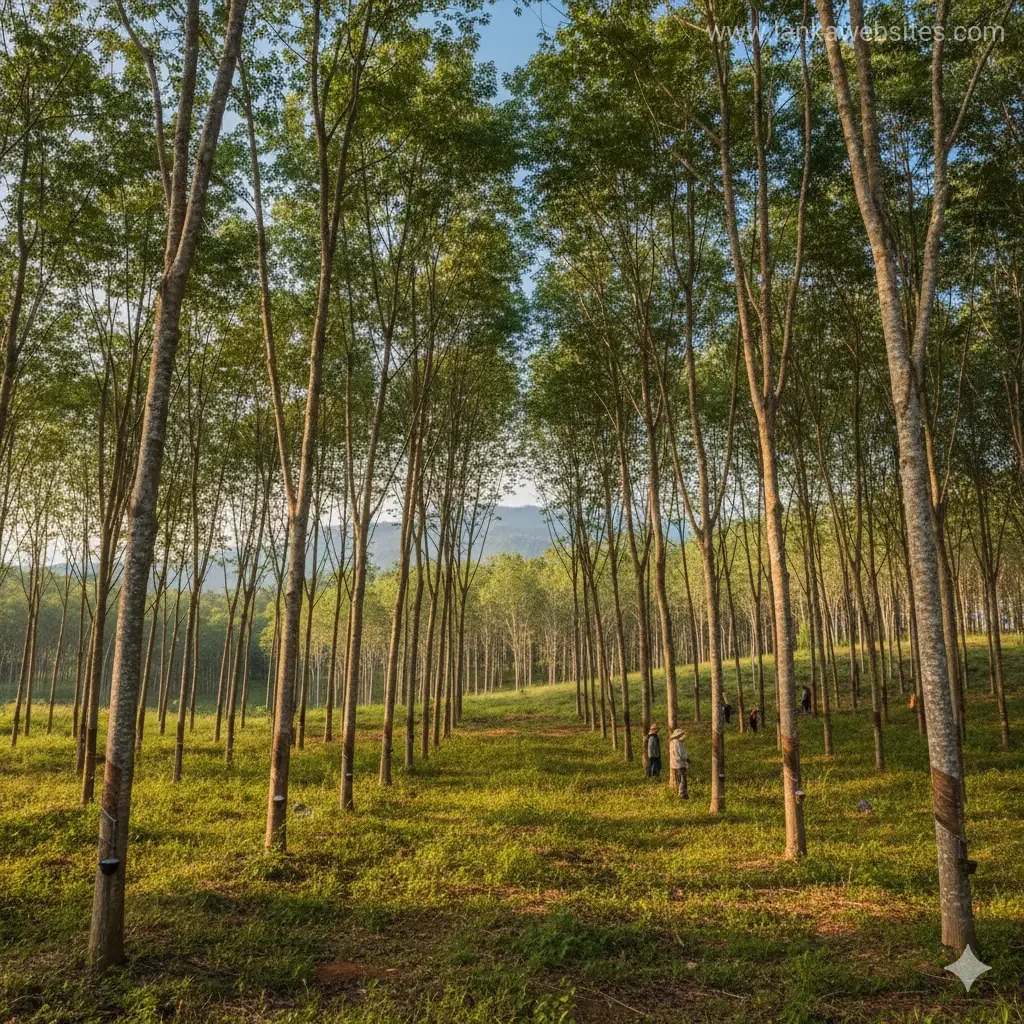
Rubber has been woven into Sri Lanka's economic fabric for nearly 150 years, transforming from an experimental crop into one of our nation's most significant export industries. Today, as we face new c
The Lankawebsites editorial team curates, fact-checks, and updates guides on personal finance, property, health, immigration, legal, business, and lifestyle topics relevant to Lankawebsites readers. Articles are produced with AI assistance and reviewed by the editorial team before publication.
Rubber has been woven into Sri Lanka's economic fabric for nearly 150 years, transforming from an experimental crop into one of our nation's most significant export industries. Today, as we face new challenges and opportunities, understanding rubber's journey—and its future—matters more than ever for our economy, our farmers, and our communities.
A Brief History: From Experiment to Export Powerhouse
Rubber cultivation arrived in Sri Lanka during the 1880s, introduced to the lower hilly areas as an experimental venture. Unlike some crops that struggled to adapt to our climate, rubber thrived. By the 1890s, planters—both British and Sri Lankan—recognised its commercial potential. The Para rubber variety proved most suitable for our conditions, whilst other varieties like Castillo and Sira were abandoned.
The growth was remarkable. What began as a small experiment exploded into a major industry: approximately 1,750 acres were under cultivation by 1900, but this figure skyrocketed to 203,000 acres just a decade later. By 1910, rubber had replaced coconut as our island's primary export crop.
Initially concentrated in the Kalutara and Kelani Valley districts, rubber cultivation spread westward and southward, eventually reaching the Western, Central, and Southern Provinces. What made rubber particularly attractive to local capitalists wasn't just its profitability—it was the employment opportunities it created for village labourers across plantation communities.
Rubber Today: Economic Significance and Current Status
Fast forward to 2026, and rubber remains a cornerstone of Sri Lanka's export economy. Rubber is our third-largest export sector, contributing 8.33% of total export earnings. In 2024 alone, the rubber industry generated USD 1,001.54 million in export revenue.
Our current rubber plantation landscape covers approximately 98,583 hectares of land. The industry comprises two distinct groups: about 70% smallholder farmers and 30% Regional Plantation Companies (RPCs). This mix reflects our unique agricultural structure, where family-run smallholdings work alongside larger commercial operations.
However, production figures tell a more complex story. Sri Lanka currently produces around 70,867 tonnes of rubber annually, placing us 12th globally in natural rubber production. Whilst this remains substantial, it represents a significant decline from our historical peaks and reflects the multiple challenges the sector now faces.
The Challenges Threatening Our Rubber Industry
Declining Production and Export Earnings
The numbers are sobering. Export earnings from rubber and rubber finished products have decreased by 19.70% in recent years. Several interconnected factors drive this decline, and understanding them is crucial for anyone involved in or concerned about our agricultural sector.
Rubber Leaf Fall Disease: A Silent Threat
One of the most serious threats to our rubber plantations is the rubber leaf fall disease. This disease has caused production declines of 30-40% globally, and Sri Lanka hasn't been spared. Out of our 98,583 hectares of rubber plantation land, approximately 15,000 hectares are affected by this disease.
In response, the Rubber Research Institute of Sri Lanka (RRISL) and the Rubber Development Department launched a national plan in October 2023 to combat the disease across our plantations. This ongoing initiative represents a critical investment in protecting our industry's future.
Soil Degradation and Low Productivity
Beyond disease, the fertility of our plantation land has declined significantly. Poor soil health and disease susceptibility reduce productivity across many estates. This isn't simply a matter of applying more fertiliser—it reflects decades of intensive cultivation without adequate soil management practices.
Labour Shortages and Changing Demographics
Perhaps the most immediate crisis facing our rubber industry is the shortage of skilled rubber tappers. Young people are migrating to cities and other sectors, leaving fewer experienced workers to maintain our plantations. The physically demanding nature of rubber tapping, combined with limited career advancement opportunities, makes it increasingly difficult to attract and retain workers.
Traditionally, the government supported smallholder farmers through subsidies, but this support has largely ceased. Today, beyond providing planting material, the state lacks the funds to support these vital farmers, leaving many to struggle with rising production costs and declining incomes.
Climate Variability and Extreme Weather
Sri Lanka is already experiencing the effects of climate change on our plantations. Erratic rainfall patterns—including the heavy rainfall of recent years that was three times higher than in 2022—disrupt rubber production cycles and create conditions favourable to diseases. By 2030, the challenges of droughts and floods are expected to intensify, requiring urgent investment in climate-resilient practices.
Strategic Responses: New Directions for the Industry
Geographic Diversification
Rather than accepting decline, industry leaders are implementing strategic changes. New plantations are being developed in non-traditional areas like Ampara and Monaragala, where labour is more readily available and rainfall patterns are more favourable. These regions also support disease-resistant rubber varieties, offering a more sustainable approach to expansion.
The Ten-Year Roadmap (2026–2035)
Recognising the urgency of change, the Ministry of Plantations and Community Infrastructure initiated a dialogue with all stakeholders in both the public and private sectors to develop a ten-year roadmap (2026–2035) covering the entire rubber value chain. The initial workshop for this strategic planning was successfully concluded on 28 October 2025.
This new roadmap builds on the earlier "Rubber Industry Master Plan (2017–2026)", which was approved by the Cabinet of Ministers as the national agenda for rubber development. The fresh approach acknowledges new challenges including COVID-19 impacts, climate change, the European Union Deforestation Regulation (EUDR), US tariff increases, and the financial difficulties our nation has faced.
Mechanisation and Modernisation
To address labour shortages, the sector must embrace mechanisation and automation. Improving labour conditions, offering competitive wages, and implementing training programmes will help attract younger workers. Creating clear career development pathways within the rubber industry can enhance job satisfaction and reduce turnover.
What This Means for Smallholder Farmers
If you're a smallholder rubber farmer, the current environment presents both challenges and opportunities. The withdrawal of government subsidies means you'll need to focus on productivity improvements and cost management. Consider these practical steps:
- Invest in disease-resistant rubber varieties if your plantation is affected by leaf fall disease
- Explore soil improvement practices, including composting and organic matter management
- Connect with industry associations and cooperative groups for market access and shared resources
- Monitor government initiatives and support programmes through the Ministry of Plantations and Community Infrastructure
- Consider diversification if rubber alone cannot sustain your farm's profitability
The Path Forward: Opportunities in a Changing Industry
Despite the challenges, Sri Lanka's rubber industry remains resilient and dynamic. With nearly 150 years of history and expertise, we possess the knowledge and experience to navigate current difficulties. The sector's focus on quality, sustainability, and innovation positions us well in global markets increasingly demanding responsibly-sourced natural rubber.
The development of a comprehensive ten-year roadmap signals serious commitment to revitalising the industry. Success will require collaboration between government agencies, private sector operators, smallholder farmers, and research institutions like the RRISL.
Frequently Asked Questions
How much rubber does Sri Lanka produce compared to other countries?
Sri Lanka produces approximately 70,867 tonnes of rubber annually, making us the 12th largest rubber producer globally. Thailand leads world production with 4.8 million tonnes, followed by Indonesia and Vietnam. Whilst our production volume is smaller, our rubber maintains a reputation for quality.
What is rubber leaf fall disease, and how does it affect production?
Rubber leaf fall disease causes 30-40% production declines globally and affects approximately 15,000 hectares of Sri Lanka's 98,583 hectares of rubber plantations. The RRISL and Rubber Development Department launched a national control plan in October 2023 to combat this disease.
Are government subsidies still available for rubber farmers?
Government subsidies for smallholder rubber farmers have largely ceased. Today, beyond providing planting material, the state lacks sufficient funds for direct financial support. Farmers must rely on improved productivity, market access through cooperatives, and private sector support.
Where are new rubber plantations being established?
New rubber plantations are being strategically developed in non-traditional areas like Ampara and Monaragala, where labour is available and rainfall patterns are more suitable for disease-resistant varieties.
What is the government's plan for the rubber industry?
The Ministry of Plantations and Community Infrastructure is developing a comprehensive ten-year roadmap (2026–2035) for the entire rubber value chain, with the initial workshop completed in October 2025. This roadmap addresses challenges including climate change, labour shortages, and market pressures.
How much does the rubber industry contribute to Sri Lanka's economy?
Rubber is our third-largest export sector, contributing 8.33% of total export earnings and generating USD 1,001.54 million in 2024.
Moving Forward
Sri Lanka's rubber industry stands at a crossroads. The challenges are real—disease, labour shortages, climate variability, and declining productivity all demand urgent attention. Yet our history demonstrates resilience and adaptability. With a strategic ten-year roadmap now in development, investment in disease control, geographic diversification, and modernisation, our rubber sector has a genuine opportunity to regain its position as a thriving pillar of our economy.
Whether you're a farmer, industry professional, or simply interested in Sri Lanka's agricultural future, staying informed about these developments matters. The decisions we make today will shape the rubber industry—and our rural communities—for generations to come.
Related Articles

Spice Gardens: Cinnamon, Pepper, and Cardamom
Introduction to Spice Gardens As you wander through the lush greenery of a spice garden, the aroma of cinnamon, pepper, and cardamom envelops you, transpor

Tourism: Major Foreign Exchange Earner
Introduction to Tourism in New Zealand New Zealand is renowned for its stunning landscapes, diverse wildlife, and friendly locals, making it an ideal desti

Tea Plantations in the Hill Country
Introduction to Tea Plantations in the Hill Country Tea plantations have been a staple of New Zealand's agriculture industry for many years, with the hill

Fishing Industry: Marine and Lagoon Fisheries
Introduction to New Zealand's Fishing Industry New Zealand is renowned for its stunning coastline, pristine waters, and abundant marine life. The fishing