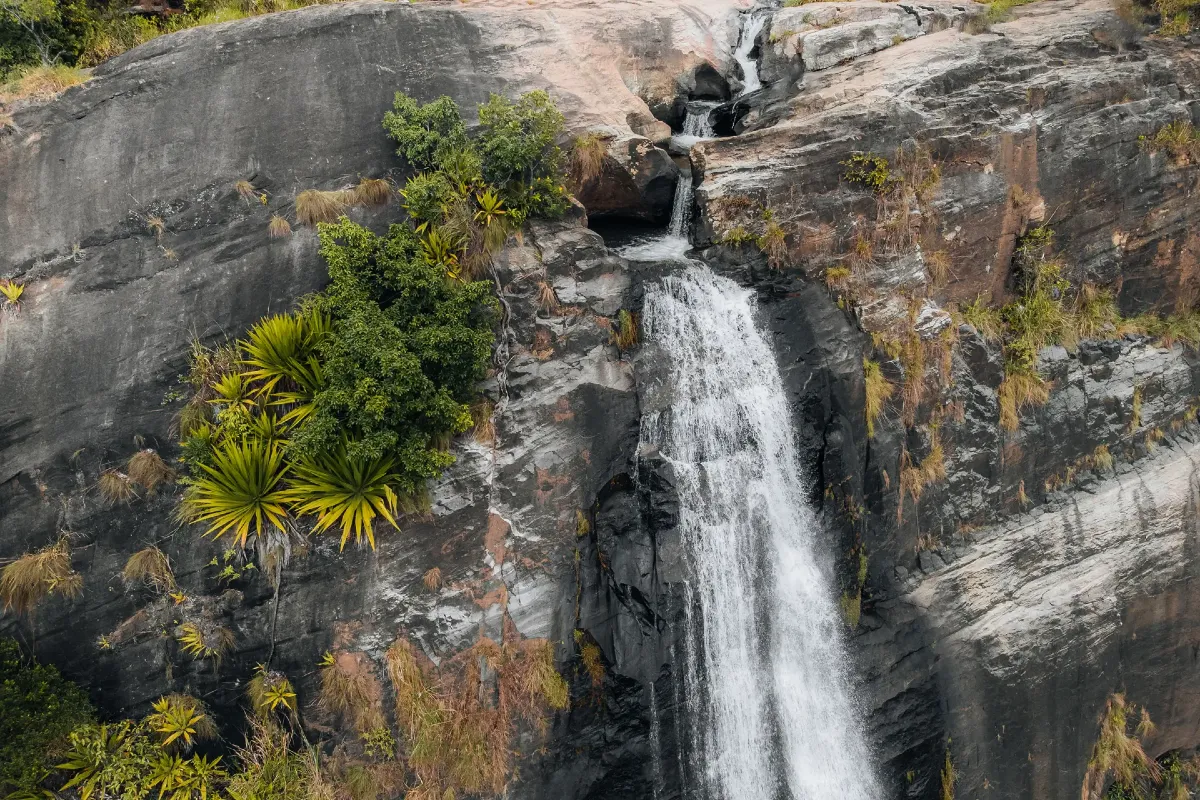
Alibodadola Ella Falls
Southern Province, Matara
About Alibodadola Ella Falls
Tucked away in the southern lowlands of Sri Lanka, where streams from the central highlands make their final descent through dense forest before reaching the coastal plain, Alibodadola Ella Falls plunges 12 metres through lowland rainforest with massive buttress-rooted trees, wild cinnamon, and streams lined with giant ferns and pandanus palms.
Sri Lanka, despite its compact size, harbours over 500 waterfalls — more per square kilometre than almost any country on Earth. The Matara District alone contains dozens of cascades, ranging from thundering plunges visible from main roads to hidden gems deep in roadless jungle. Alibodadola Ella Falls, at 12 metres, represents the kind of intimate, undiscovered cascade that makes waterfall hunting in Sri Lanka endlessly rewarding.
What to Expect
Tucked away from the main paths, this small waterfall is a local secret. The surrounding vegetation closes in overhead, creating a green grotto effect. Small fish dart in the clear pool below, and dragonflies hover in the spray.
Flora and Fauna
The forest surrounding Alibodadola Ella Falls is characteristic of the southern lowlands of Sri Lanka, where streams from the central highlands make their final descent through dense forest before reaching the coastal plain. lowland rainforest with massive buttress-rooted trees, wild cinnamon, and streams lined with giant ferns and pandanus palms create a rich habitat for wildlife. Birdwatchers may spot grey slender loris (nocturnal), yellow-fronted barbet, and freshwater fish endemic to southern Sri Lanka's streams. Near the waterfall itself, the constant spray supports a micro-habitat of moisture-loving plants — look for tree ferns unfurling new fronds, cushions of bright green moss on rocks, and perhaps a flash of iridescent blue as a kingfisher darts along the stream.
Best Time to Visit
The waterfall is at its most impressive during the southwest monsoon (May to September), when heavy rainfall swells the streams feeding the cascade. However, trails can be slippery and leeches more active during peak rains. The inter-monsoon months of March-April and September-October often provide the best balance — decent water flow with more manageable trail conditions and clearer skies for photography. Early morning visits reward with the best light and the dawn chorus of the surrounding forest.
How to Get There
Matara is the southern terminus of the coastal railway from Colombo. Interior waterfall sites require local transport from the main road. As a lesser-visited waterfall, finding Alibodadola Ella Falls may require local knowledge. The nearest settlement can usually provide directions. Carry sufficient water and supplies as there are no facilities near the falls. Sturdy, non-slip footwear is essential as rocks near waterfalls are often covered in algae and can be treacherous when wet.
Visitor Tips
- Bring a waterproof bag for electronics — spray from the falls can travel surprisingly far
- Swimming is possible at many falls, but check water depth and current first, especially after rain
- Leeches are common near waterfalls during wet months — wearing long socks tucked into trousers helps
- Leave no trace — carry out all rubbish and respect the natural environment